avatarJames Patrick Nelson

Free AI web copilot to create summaries, insights and extended knowledge, download it at here

4544

Abstract

I’ve said before, when I came out to my father, he told me to “be Will instead of Jack”.</p><figure id="0144"><img src="https://cdn-images-1.readmedium.com/v2/resize:fit:800/1*brpJRG94z33I3v69u3snFA.png"><figcaption>“Will and Grace” (IMDb)</figcaption></figure><p id="f1b0">But I knew I didn’t fit into either binary category. I wasn’t an overtly hetero-presenting person, but I also didn’t relate to the sassy, swishy stereotype.</p><p id="11f0">This is no shade to anyone who sees themselves in that archetype. It’s just that I was struggling to figure out my place in the community, because that archetype — authentic or otherwise — was the only reference point I had in media for who gay people were… or so I thought.</p><div id="d1f0" class="link-block"> <a href="https://readmedium.com/the-most-beautiful-gay-film-that-nobodys-ever-heard-of-215df63375bb"> <div> <div> <h2>The Most Beautiful Gay Film That Nobody’s Ever Heard Of</h2> <div><h3>How “A Home at the End of the World” Made Me Who I Am.</h3></div> <div><p>medium.com</p></div> </div> <div> <div style="background-image: url(https://miro.readmedium.com/v2/resize:fit:320/1*8lXiJMfwFY7MB0ReFJbW-w.png)"></div> </div> </div> </a> </div><figure id="6509"><img src="https://cdn-images-1.readmedium.com/v2/resize:fit:800/1*svbs8CNu3HR_597rdHVshg.png"><figcaption>“Gods and Monster,” “The Talented Mr. Ripley,” “Dead Poets Society,” and “Pleasantville” (IMDb, author’s collage)</figcaption></figure><p id="cc8b"><a href="https://readmedium.com/the-gays-who-lived-modern-queer-martyrs-and-monsters-on-film-a23089c8e7c2">My recent articles</a> have given me a surprisingly profound sense of self, as I’ve compiled <a href="https://readmedium.com/the-most-beautiful-gay-film-that-nobodys-ever-heard-of-215df63375bb">films that inspired me as a teenager</a>, and drawn parallels between them, both tonally and thematically.</p><p id="b4e0">Each explicitly or implicitly queer film — <b><i>Gods and Monsters</i></b>, <b><i>The Talented Mr. Ripley, The Hours</i></b>, <b><i>American Beauty</i></b>, <b><i>Dead Poets Society</i></b>, <b><i>Pleasantville</i></b>, and <b><i>Philadelphia — </i></b>is earnest, poetic, and unabashedly romantic.</p><p id="d368">The implicitly queer spirit in some of them — disrupting social convention and living with a riotous heart (by howling Whitman from the rooftops and painting nudes on the soda shop window) — resonates far more deeply with me than when queer rebellion is equated to callousness and cruelty.</p><p id="b690">So perhaps that is the most concise way of describing what I resisted. I don’t like queerness being associated with cruelty. And that sentiment has followed me into adulthood, off the silver screen and out into real life.</p><figure id="372f"><img src="https://cdn-images-1.readmedium.com/v2/resize:fit:800/1*W3p99DbTfrE-YkIXu_Kb7w.png"><figcaption>Photo by <a href="https://unsplash.com/@raphaellovaski?utm_source=medium&amp;utm_medium=referral">Rosa Rafael</a> on <a href="https://unsplash.com?utm_source=medium&amp;utm_medium=referral">Unsplash</a></figcaption></figure><p id="2561">I try to make generous assumptions that anyone who grew up thinking the world was against them is prone to build up armor and defenses, and that it must be some blessing in my life that allowed me to stay so vulnerable and open, but still… callous cruelty within the community always hurts me.</p><p id="ec02">Of course, the solution is to remember that no one who hurts me is part of my community. It was a heterosexist culture that tried to convince me that there are only a small handful of queer cliques to which I have to belong if I’m ever going to belong anywhere at all.</p><p id="51db">As an earnest, artsy, sensitive person, it has been the journey of a lifetime to find my people — people for whom adventure, and a rebellious spirit and a riotous heart mean what they mean to me. I want to “sound my barbaric yawp over the rooftops of the world!” — not “read somebody to filth.”</p><figure id="23c1"><img src="https://cdn-images-1.readmedium.com/v2/resize:fit:800/1*vazY7F_xkDIhPGoWy-cV5A.png"><figcaption>“Who’s Afraid of Virginia Woolf” and “Pink Flamingos” (IMDb, author’s collage)</figcaption></figure><p id="f4aa">Of course, “cruelty” and “camp” are not the same thing. So where did I see queer cruelty on film? How did I know it well enough to resist it

Options

? And <i>did</i> I even resist it? So far, all the campy films I can think of, I really enjoyed!</p><p id="5ec0">Some people would argue that <b><i>Who’s Afraid of Virginia Woolf</i></b>, by famed gay playwright Edward Albee, is very campy. And it’s certainly cruel — but I just love it! Every component of its artistry is absolutely brilliant!</p><p id="b961">By contrast, I’ll admit — and I’ll renounce my gay-card if you insist — aside from <b><i>Serial Mom</i></b>, I’ve never made it through a John Waters movie. On an artistic level and a personal one, they’ve never appealed to me. But since I have never seen them, I won’t presume to define their aesthetic.</p><p id="732b">And I don’t want to say my disinterest is relevant to my sense of my identity. I’m discovering that drawing contrasts is less essential than I had originally thought. That’s just another limited, binary way of thinking. Because what I love and who I am are not defined by what I don’t love or who I’m not.</p><figure id="c75d"><img src="https://cdn-images-1.readmedium.com/v2/resize:fit:800/1*mDNxvoFfx76ZfEBrQLKCAw.png"><figcaption>Photo by <a href="https://unsplash.com/@slavromanov?utm_source=medium&amp;utm_medium=referral">Slav Romanov</a> on <a href="https://unsplash.com?utm_source=medium&amp;utm_medium=referral">Unsplash</a></figcaption></figure><p id="4c9f">So while I started this article thinking I had to define the queer aesthetic I resisted as kid, maybe it’s for the best that I can’t. The queer aesthetic I <i>do</i> relate to, that shows up in the art I love — it can’t be defined either.</p><p id="54cd">My queerness is as distinct and complex as every other part of me. And amazingly, now that I understand that queer community and queer art are whatever I make of them, I’m less afraid of indulging in the queer things I maybe thought were too stereotypical when I was a kid.</p><figure id="f4af"><img src="https://cdn-images-1.readmedium.com/v2/resize:fit:800/1*-S6wkezoIBun79rQD78qkg.png"><figcaption>“Rocky Horror Picture Show” (IMDb)</figcaption></figure><p id="9f1d">Favoring more earnest, poetic aesthetics, I never revisited <i>The Rocky Horror Picture Show</i> until last Halloween at a friend’s party, where he taught all of us the shout-outs, prop moments, and dances from the live experience, and we all lay there arm-in-arm, draped over each other in front of the TV in delirious hysterics… That was some gorgeously riotous queer community.</p><p id="3819">Also, real talk, despite my lifelong misgivings about musicals… my “Covid quarantine jams” on Spotify were from <i>Gypsy</i>, <i>Victor/Victoria</i>, <i>Come From Away</i>, <i>Hair</i>, <i>Les Miserable</i>, <i>Pippin</i>, <i>Sweet Charity</i>, and <i>La Cage Aux Folle</i>.</p><p id="1834">… Girl!</p><figure id="e0c0"><img src="https://cdn-images-1.readmedium.com/v2/resize:fit:800/1*K9yYgvUsajDfEyugRqhYsg.png"><figcaption></figcaption></figure><p id="7f93">This story is a response to the Prism & Pen writing prompt, <a href="https://readmedium.com/how-have-lgbtq-film-literature-shaped-you-2dba09310632"><b>(How) Have LGBTQ Film & Literature Shaped You?</b></a></p><div id="8d93" class="link-block"> <a href="https://readmedium.com/how-have-lgbtq-film-literature-shaped-you-2dba09310632"> <div> <div> <h2>(How) Have LGBTQ Film & Literature Shaped You?</h2> <div><h3>A Prism & Pen writers prompt</h3></div> <div><p>medium.com</p></div> </div> <div> <div style="background-image: url(https://miro.readmedium.com/v2/resize:fit:320/1*C5AVyKbnlxbWsB-ITZ23Vw.jpeg)"></div> </div> </div> </a> </div><p id="9e1e">Here are other brilliant stories based on this prompt:</p><div id="5aab" class="link-block"> <a href="https://jonnymasters.medium.com/list/a3e62da60002"> <div> <div> <h2>Prism and Pen Writing Prompt Stories: Films and Literature</h2> <div><h3>Prism and Pen stories written in response to the writing prompt: How Have LGBTQ Film & Literature Shaped You?</h3></div> <div><p>jonnymasters.medium.com</p></div> </div> <div> <div style="background-image: url(https://miro.readmedium.com/v2/resize:fit:320/0*fc8c06155b723de6a9606aee7a5a744b8e642ff3.jpeg)"></div> </div> </div> </a> </div></article></body>

(HOW) HAVE LGBTQ FILM & LITERATURE SHAPED YOU?

Why Did I Resist the “Campy” Gay Aesthetic?

Out of the closet and into a box
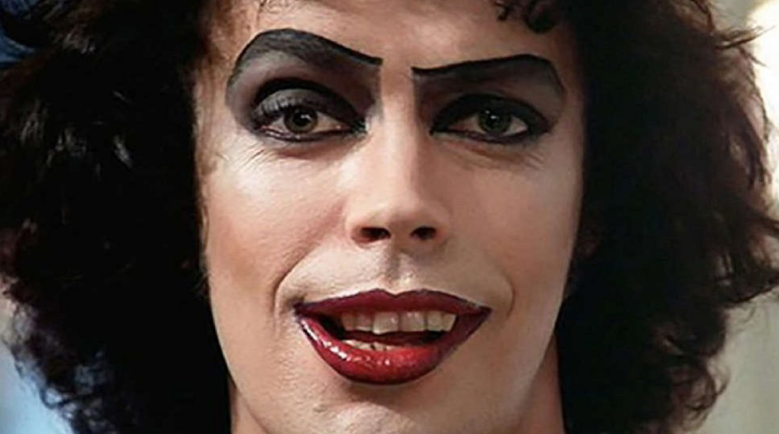
“The Rocky Horror Picture Show” (IMDb)

I came out to myself around the age of 10 and started coming out to other people at about 13. I was still very much discovering who I was, but I knew queer people were associated with certain “aesthetics” to which I was very resistant… But what were those aesthetics?

The first time I put on Cabaret I turned it off right away. Joel Grey’s face staring directly at me, covered in make-up and lipstick was way too much for me to handle. I could have claimed it scared me in the way Pennywise the clown scared me — but I know it was really because it was “too gay.”
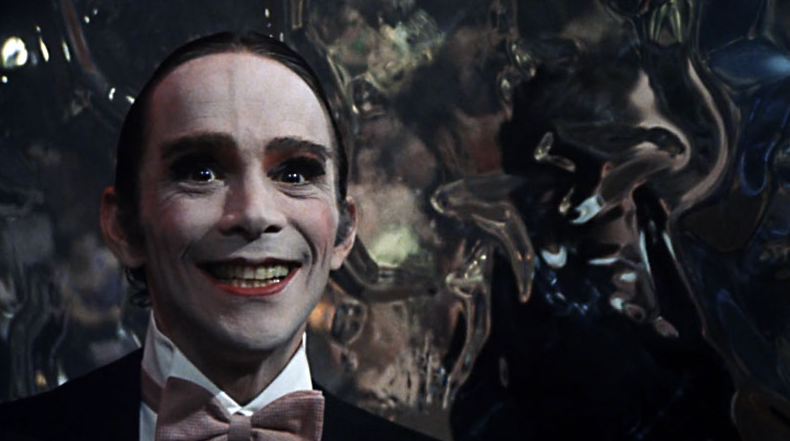
“Cabaret” (IMDb)

Around the same time, someone lent me a tape of Eddie Izzard’s Dress to Kill, and again I couldn’t get into it. It was only later, watching it with my parents howling with laughter, that I realized makeup and overt queerness are nothing to fear — and I’ve been quoting Izzard’s special ever since.

Same with Cabaret. On second viewing, I was absolutely enchanted. What struck me at first as hyper-camp now seemed hopelessly romantic, poetic, and a fierce affirmation of life and art… It’s the rare musical I can stand!

When I first saw Tim Curry in The Rocky Horror Picture Show with his pale make-up, dark lipstick, tight corset and fishnets, I remember thinking — “Joel Grey is tame compared to this!”
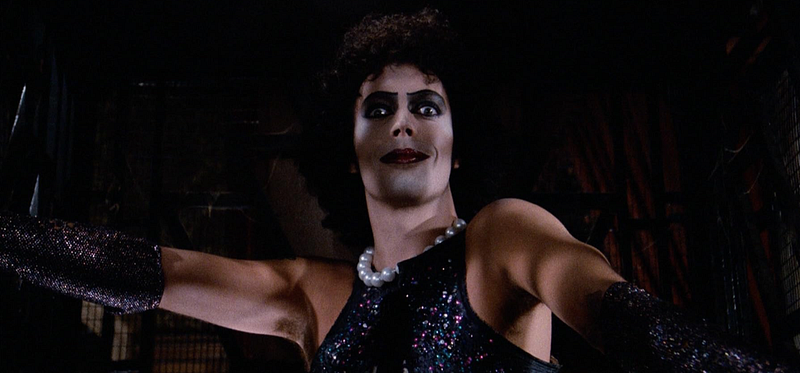
“The Rocky Horror Picture Show” (IMDb)

In my article on queer allegory, I reference films in which the protagonist’s struggle, passion, goal etc. implicitly echoes a common queer experience.

But when I google “queer allegory movies,” what pops up are films where the queerness is embodied by fierce divas dragging each other, like Death Becomes Her, or a generally trashy or campy aesthetic, like Batman and Robin. I admit I enjoyed those two films a lot as a child, and once again, I never noticed how queer they were back then.

So, if I grew to love Cabaret for its sweeping romance, and I always enjoyed Death Becomes Her for its wit and innovation, and I went to see Batman and Robin five times in the theater, despite the bad puns and leather Bat-butts — then really, what was the aesthetic I was consciously resisting back then?
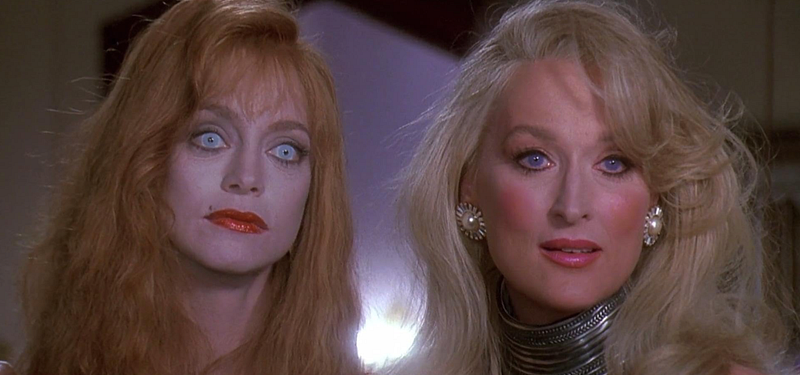
“Death Becomes Her” (IMDb)

Whatever it was, part of it was because of the internalized homophobia we were all taught back then, for which I hope I can forgive myself now.

But there was also a profound need to carve out a unique sense of self. How I stood out from the straight world was obvious…But how I stood out from the gay world was an ever-ongoing and often self-conscious exploration.

I never wanted to come out of a closet, to go into a box.

Back when I was growing up — really not that long ago— there were very limited, binary references for what it meant to be gay. As I’ve said before, when I came out to my father, he told me to “be Will instead of Jack”.
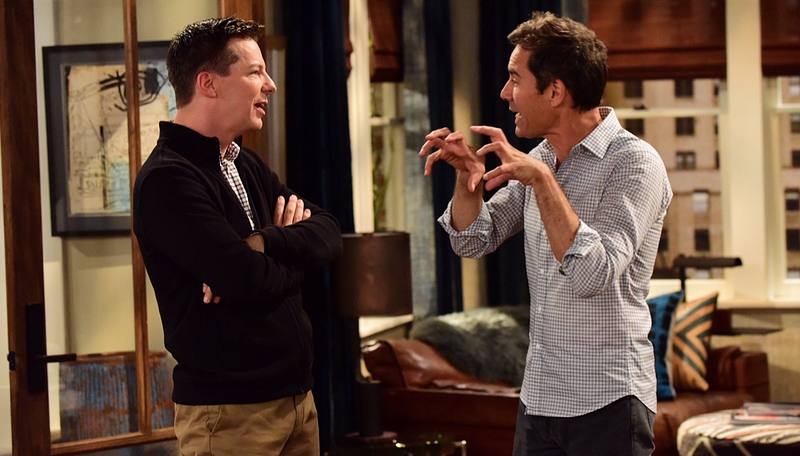
“Will and Grace” (IMDb)

But I knew I didn’t fit into either binary category. I wasn’t an overtly hetero-presenting person, but I also didn’t relate to the sassy, swishy stereotype.

This is no shade to anyone who sees themselves in that archetype. It’s just that I was struggling to figure out my place in the community, because that archetype — authentic or otherwise — was the only reference point I had in media for who gay people were… or so I thought.
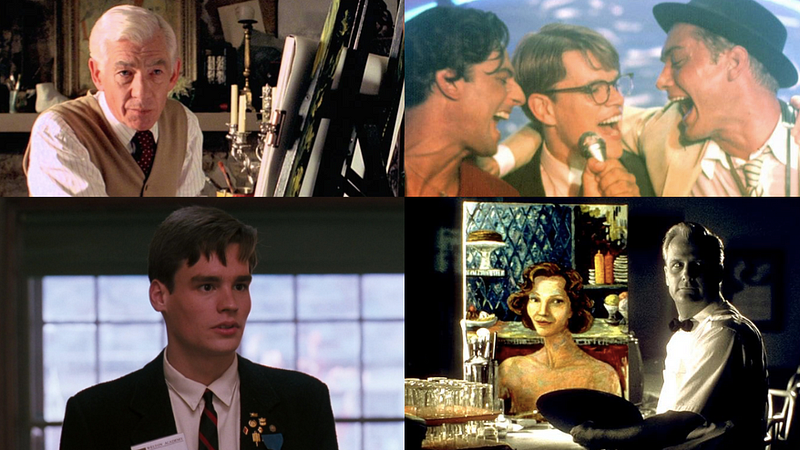
“Gods and Monster,” “The Talented Mr. Ripley,” “Dead Poets Society,” and “Pleasantville” (IMDb, author’s collage)

My recent articles have given me a surprisingly profound sense of self, as I’ve compiled films that inspired me as a teenager, and drawn parallels between them, both tonally and thematically.

Each explicitly or implicitly queer film — Gods and Monsters, The Talented Mr. Ripley, The Hours, American Beauty, Dead Poets Society, Pleasantville, and Philadelphia — is earnest, poetic, and unabashedly romantic.

The implicitly queer spirit in some of them — disrupting social convention and living with a riotous heart (by howling Whitman from the rooftops and painting nudes on the soda shop window) — resonates far more deeply with me than when queer rebellion is equated to callousness and cruelty.

So perhaps that is the most concise way of describing what I resisted. I don’t like queerness being associated with cruelty. And that sentiment has followed me into adulthood, off the silver screen and out into real life.
Photo by Rosa Rafael on Unsplash

I try to make generous assumptions that anyone who grew up thinking the world was against them is prone to build up armor and defenses, and that it must be some blessing in my life that allowed me to stay so vulnerable and open, but still… callous cruelty within the community always hurts me.

Of course, the solution is to remember that no one who hurts me is part of my community. It was a heterosexist culture that tried to convince me that there are only a small handful of queer cliques to which I have to belong if I’m ever going to belong anywhere at all.

As an earnest, artsy, sensitive person, it has been the journey of a lifetime to find my people — people for whom adventure, and a rebellious spirit and a riotous heart mean what they mean to me. I want to “sound my barbaric yawp over the rooftops of the world!” — not “read somebody to filth.”
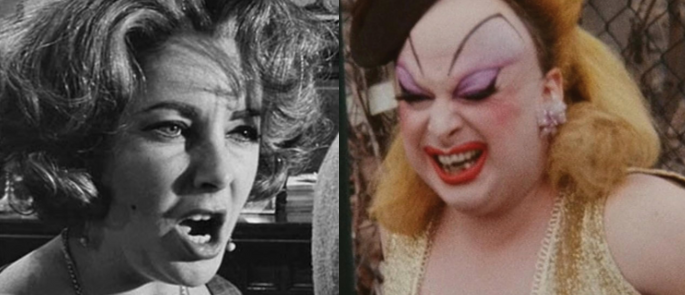
“Who’s Afraid of Virginia Woolf” and “Pink Flamingos” (IMDb, author’s collage)

Of course, “cruelty” and “camp” are not the same thing. So where did I see queer cruelty on film? How did I know it well enough to resist it? And did I even resist it? So far, all the campy films I can think of, I really enjoyed!

Some people would argue that Who’s Afraid of Virginia Woolf, by famed gay playwright Edward Albee, is very campy. And it’s certainly cruel — but I just love it! Every component of its artistry is absolutely brilliant!

By contrast, I’ll admit — and I’ll renounce my gay-card if you insist — aside from Serial Mom, I’ve never made it through a John Waters movie. On an artistic level and a personal one, they’ve never appealed to me. But since I have never seen them, I won’t presume to define their aesthetic.

And I don’t want to say my disinterest is relevant to my sense of my identity. I’m discovering that drawing contrasts is less essential than I had originally thought. That’s just another limited, binary way of thinking. Because what I love and who I am are not defined by what I don’t love or who I’m not.
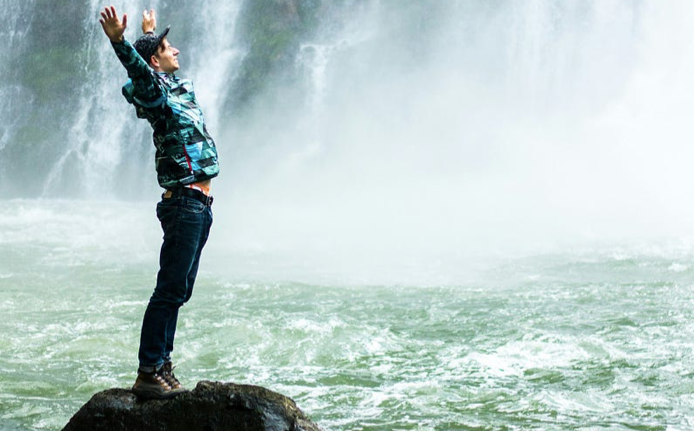
Photo by Slav Romanov on Unsplash

So while I started this article thinking I had to define the queer aesthetic I resisted as kid, maybe it’s for the best that I can’t. The queer aesthetic I do relate to, that shows up in the art I love — it can’t be defined either.

My queerness is as distinct and complex as every other part of me. And amazingly, now that I understand that queer community and queer art are whatever I make of them, I’m less afraid of indulging in the queer things I maybe thought were too stereotypical when I was a kid.
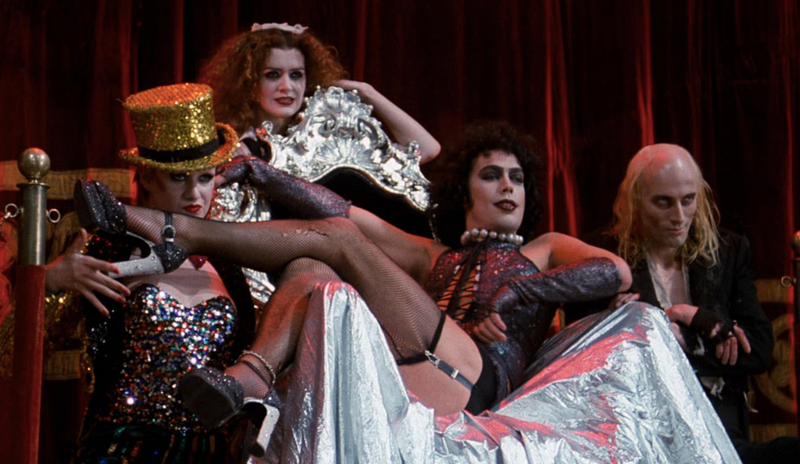
“Rocky Horror Picture Show” (IMDb)

Favoring more earnest, poetic aesthetics, I never revisited The Rocky Horror Picture Show until last Halloween at a friend’s party, where he taught all of us the shout-outs, prop moments, and dances from the live experience, and we all lay there arm-in-arm, draped over each other in front of the TV in delirious hysterics… That was some gorgeously riotous queer community.

Also, real talk, despite my lifelong misgivings about musicals… my “Covid quarantine jams” on Spotify were from Gypsy, Victor/Victoria, Come From Away, Hair, Les Miserable, Pippin, Sweet Charity, and La Cage Aux Folle.

… Girl!

This story is a response to the Prism & Pen writing prompt, (How) Have LGBTQ Film & Literature Shaped You?

Here are other brilliant stories based on this prompt:

LGBTQ
Movies
Life Lessons
Culture
Film
Recommended from ReadMedium