
Why ‘Barbie’ Beats ‘Oppenheimer’ — A Countdown of the Top 23 Movies of 2023
But top place in my annual round-up goes to a riveting, based-on-reality gem that’s completely absent from the Oscar nominations
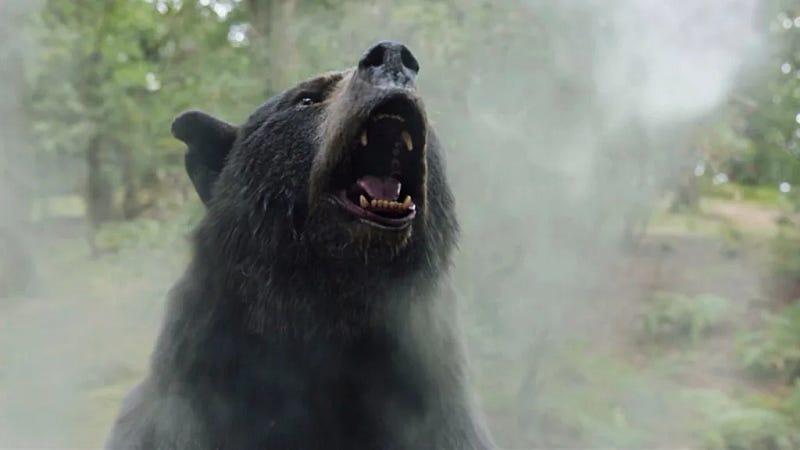
It’s tempting to draw state-of-the-cinema lessons from a list of the year’s best movies, but sometimes you have to hold yourself back.
The appearance, book-ending 2023, of two high-profile films about conductors of classical music can surely be nothing but coincidence. Similarly, don’t read too much into the presence, high on my list, of two courtroom dramas about women in France. We may go another decade without getting a good one.
Some themes are discernible, though — and though I don’t pick the movies with thematic issues consciously in mind, they may say something about the moment. Guilt, family, language (and things unsaid and things misunderstood), the passing of long stretches of time: all these figure prominently throughout the list, in some cases providing the driving concept of whole movies.
What that cluster of thematic preoccupations means I’ll leave you to decide, with the caveat that this is (of course) a subjective list, so maybe I just happen to like movies about guilt-ridden bad communicators growing old and lonely.
Diversity
Like the film industry itself, my annual list seems to have grown much more diverse over the years, although there is still some way to go. Of course, my selection is based purely on merit (as I see it); in some cases I might not even know the gender of a director before finalising the list, for example.
This year, seven of the 23 films are directed by women, including two of the top five. Perhaps more significantly, four of the top five are primarily about women, too. (A pass on the Bechdel Test at last?)
Unsurprisingly given that I live in an English-speaking country, the majority of the films on the list are in that language, and nearly all of them are American; there is only one fully British film (though there was British co-production involvement in several others) and one Canadian.
However, it’s certainly not an exclusively Anglophone list. Two of the top five films come from France, and the strong showing of the Nordic nations is also interesting. Last year two of the top five came from Norway; this year none of them made the leading five, but the top 23 includes four Nordic movies in all (two from Finland, one from Sweden, and one from Denmark/Iceland).
Of course, I can only review what I see; and potentially important films from 2023 I haven’t seen (yet) include The Boy and the Heron, May December, and Showing Up.
How it works
As for the criteria… well, of course that could be an essay in itself, but in essence it’s pretty simple.
First, I cover feature-length fictional or fictionalised movies (i.e. not pure documentaries, although around a third of this year’s selections are strongly grounded in fact) that have had some form of general release in the UK (where I live) during the calendar year, whether in cinemas or on streaming. (Note that some films, for example American Fiction and Poor Things, are released a bit later in the UK than the US and thus might be ineligible for my list even if they made the Oscar noms.)
Then, if the film sets out to do something interesting, whether that’s in terms of ideas, characters, storyline, style or even setting, and achieves this, it goes on the longlist. Occasionally (though not in fact often), a film that has no aspirations to originality but simply does the familiar exceptionally well may also make it. (2022’s The Lost City would fall into that category.)
Finally, I put this longlist in approximate, instinctive order and then go through a process of weighing each film against its neighbours over and over again (is #6 really better than #7?), adjusting as necessary until the order seems stable. Still, it’s not a scientific exercise, so please don’t assume that (say) #20 is necessarily head and shoulders above #21. As with all such lists, it’s probably more meaningful to think of a top five, second five, and so on.
One more thing: a word on countries of origin. In an age of multinational co-productions it seems increasingly meaningless to list every single country that provided some investment or some technical contribution, so I identify what I see as the film’s primary country or countries of cultural origin.
Sometimes, of course, this is difficult. I eventually decided that Tarik Saleh’s Cairo Conspiracy is, on balance, more Swedish than anything — but it’s difficult to pin it down to any one country, or even two or three. In so many ways it is thoroughly rooted in the Middle East, and yet it undeniably was European-made.
Other times it’s easier. Jalmari Helander’s Sisu, for example, may have mostly English dialogue and may have American and British, as well as Finnish, production companies behind it; but it’s set and was filmed in Finland, the main cast are largely Finnish, it’s about a Finn at an important moment in Finnish history, and it’s written and directed by a Finn. From the audience’s point of view, if not the accountants’, it’s a Finnish movie.
And now, on with it. Links, by the way, are to my own reviews.
23. The Whale (USA, dir. Darren Aronofsky)
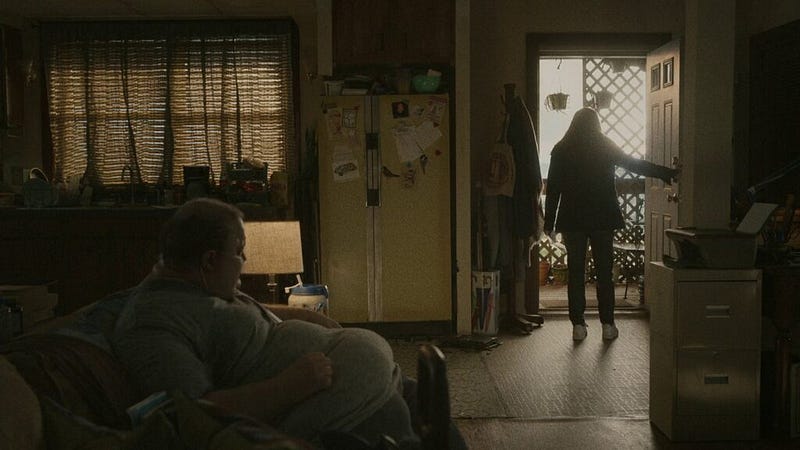
Two of the most common criticisms levelled at The Whale are fair enough: it might as well have a proscenium arch, and at many points it can seem mawkish.
But (to address another common concern) it doesn’t, I think, make fun of obesity or really care about obesity per se very much (it’s essentially a plot device here). Nor, though it might edge close at moments, does it stray into presuming the saintliness of the sick and the disabled.
What’s most successful about Darren Aronofsky’s film of Samuel D. Hunter’s play about a terminally overweight man and his final-days efforts to reconnect with his estranged daughter is the sheer watchability, its capacity to engage you from beginning to end.
It’s essentially an extended deathbed scene in a morose, Stygian single-room setting, but its emotional range is wider — at one point deep into Who’s Afraid of Virginia Woolf? territory, for sure, but at others genuinely tender or ruefully funny.
Brendan Fraser excels in a difficult lead role, hardly absent for a moment; Samantha Morton is effective as his wife, too, as is Ty Simpkins as a young missionary (especially before his secret is revealed); the most interesting of all the characters, though, is Hong Cheu as a friend of Fraser’s who’s become his de facto carer.
Her possessiveness of him is a thing far darker than the family rift which is The Whale’s ostensible concern. And, given the way that characters in this film so rarely do connect to one another on honest, equal terms even when they are trying to, perhaps The Whale is a lot less bathed in beatific light than its reputation suggests.
22. Leave the World Behind (USA, dir. Sam Esmail)

Cinephiles disillusioned by Netflix’s recent focus on quantity over quality will find at least some renewed faith in the streamer with the release of Sam Esmail’s Leave the World Behind, a thought-provoking, gripping apocalyptic drama with an exceptional cast.
Rather like Mahalia Belo’s The End We Start From, released only weeks later, Leave the World Behind is focused not so much on the end of the world itself — don’t expect spectacle — but on the way it affects a few characters, in this case a family renting a country home near New York and the owners who return to it unexpectedly when trouble begins.
Esmail’s film restricts itself almost exclusively to this small group, introducing only one additional significant figure, a survivalist played by Kevin Bacon, near the end. It also confines itself resolutely to what they know about their situation, which isn’t much. (All this is also what The Walking Dead succeeded in doing before it got silly, of course.)
Julia Roberts, Mahershala Ali, Ethan Hawke and Myha’la as Ruth Scott as the four adults in the house deliver outstanding performances that bring their characters to life with depth and nuance, and create believable relationships between them. (So do the two kids, but in less closely examined roles.) Confident direction brings it all home effectively, and though they are few, the set pieces are masterfully orchestrated, including one with an oil tanker and another with self-driving cars.
Touches of magical realism don’t quite work, but in general Leave the World Behind is much more convincing than most more vivid depictions of apocalypse. If it happens we would, after all, experience it as individuals — and doubtless learn, as this tight-knit ensemble cast does, that our survival depends as much on getting on with each other as it does on technology.
21. BlackBerry (Canada, dir. Matt Johnson)
It was quite a year for business movies: Ben Affleck’s Air and Michael Mann’s Ferrari are as much about commerce as sport, Jon S. Baird’s Tetris examined an industry which for all its wide appeal and visual orientation is still hardly ever treated in any depth by film-makers, and Craig Gillespie’s Dumb Money was a mostly successful attempt to extract drama from that most difficult of subjects, the stock market.
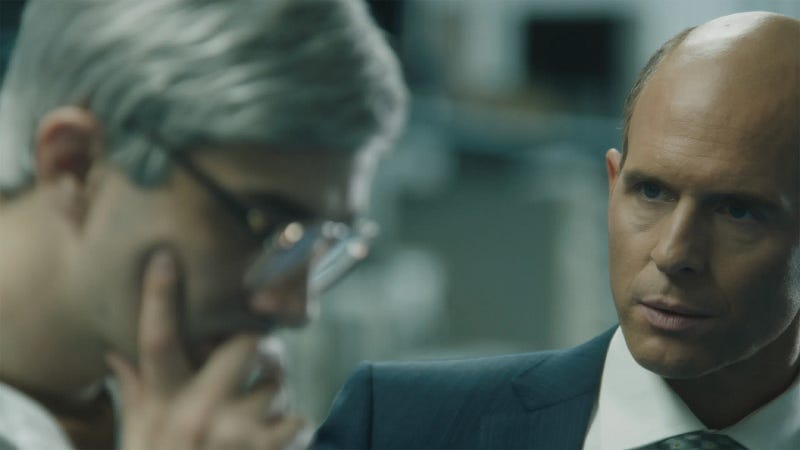
BlackBerry makes the list not because there is anything unusual about the tale it tells; “unworldly inventors make it big, but at a cost to their integrity” is a movie we’ve seen once or twice before. Nor does it win any prizes for subtlety. But where it does score is in making a not obviously promising story — the rise and fall of a cellphone company which was once a household name but which now most people outside that business will have forgotten — eminently watchable and even suspenseful.
It’s commendably even-handed — there are more and less likeable individuals, but no-one is bigged up as a hero or a villain, everyone has at least half-understandable motivations, and tiresome evil-corporate-suit tropes are avoided. It’s sometimes funny, and it’s always well-explained (I think; I already knew a fair bit about the story, having been a tech journalist at the height of the BlackBerry era).
Highlights include Jay Baruchel as the company’s first CEO, Baruchel’s hair, Glenn Howerton as a more conventional executive brought in to rescue the business, Michael Ironside as a tough-talking COO, and the excellent Rich Sommer as a Google engineer; not all techies in BlackBerry are stereotypical nerds.
An interesting selection of songs on the soundtrack adds to atmosphere and pace, and a few scenes are masterfully revealing. Baruchel tells his team to be quiet and thus distances himself from them forever, at that moment becoming a manager rather than a colleague; Baruchel fumblingly makes up an iPhone-killer product on the spur of the moment to convince customers, and perhaps himself, that the BlackBerry has a future.
It didn’t, and as the other side of the tech garage-to-riches dream, this would make a great double bill with Danny Boyle’s 2015 Steve Jobs.
20. Sisu (Finland, dir. Jalmari Helander)
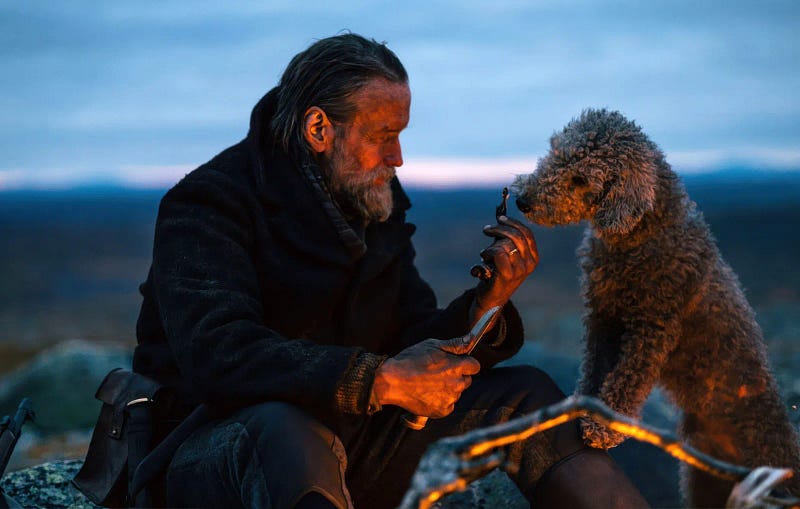
The resemblance of Sisu both to spaghetti westerns and to Inglourious Basterds (2009) has been widely noted, but the former influence is surely much stronger. Jalmari Helander’s saga of a middle-aged Finnish loner fighting doggedly back against the Nazis in 1944 only superficially resembles the Tarantino film, in plot and setting, but much of its considerable effectiveness comes from an existential bleakness with definite echoes of Sergio Leone and Clint Eastwood.
The precise physicality of Helander’s direction, the hellish crepuscular world of Kjell Lagerroos’s photography, and Jorma Tommila’s almost wordless performance in the lead are so compelling (at least until the film falters a little in its last half-hour) that it’s easy to ignore a few holes in the storyline.
Nazis and Finns are not really the point here, and it’s not quite a film of good versus evil either, because we don’t know enough about Tommila’s character to be completely sure that he’s pursuing anything beyond his own interests. Sisu is, though, a joyously dour survival adventure that pulls absolutely no punches, and indeed seems to rather enjoy the most vicious ones.
19. Cairo Conspiracy (Sweden, dir. Tarik Saleh)
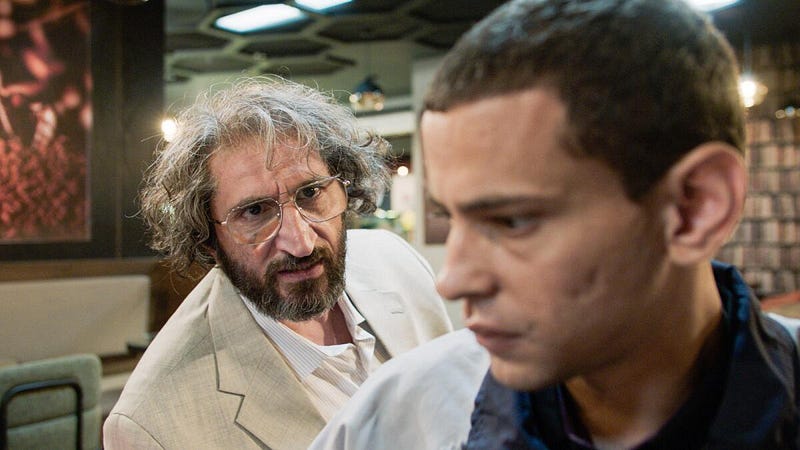
On the most obvious level, Tarik Saleh’s Cairo Conspiracy is a robust, exciting but believable commercial thriller with a highly unusual setting, at least for western audiences: an Islamic university in Cairo where the protagonist, Adam (Tawfeek Barhom), comes from his fishing village to study and where he is soon thrust into religious and secular power struggles usually kept well hidden from the outside world.
The milieu is all the more intriguing since we (again, I mean western viewers) so rarely see Islam portrayed beyond a few obvious tropes — from the terrorist to the long-suffering immigrant parents — and the story is well delivered by performers including Barhom and Fares Fares as an Egyptian government agent.
Pierre Aïm’s cinematography is handsome, too, even if Krister Linder’s score is a little overdone. And, while the film certainly doesn’t wear any allegorical import on its sleeve, both the name of the lead character Adam and the movie’s own alternative title, Boy From Heaven, suggest that there may be even more going on here than meets the eye.
In that respect Cairo Conspiracy differs from another fascinating Middle Eastern movie from 2023, Abdulmohsen Aldhabaan’s The Matchmaker. That extraordinarily rare and new thing, a Saudi film released in the west, The Matchmaker is also a thriller on paper, and an ambitious one, but ends up being too metaphorical and allusive for its own good.
Cairo Conspiracy never falls into that trap, and though maybe it would be even better if it went just a bit further in that direction, it is so well-made that it leaves you wanting more of the cast, the director, and the story. A sequel, maybe?
18. Are You There God? It’s Me, Margaret. (USA, dir. Kelly Fremon Craig)
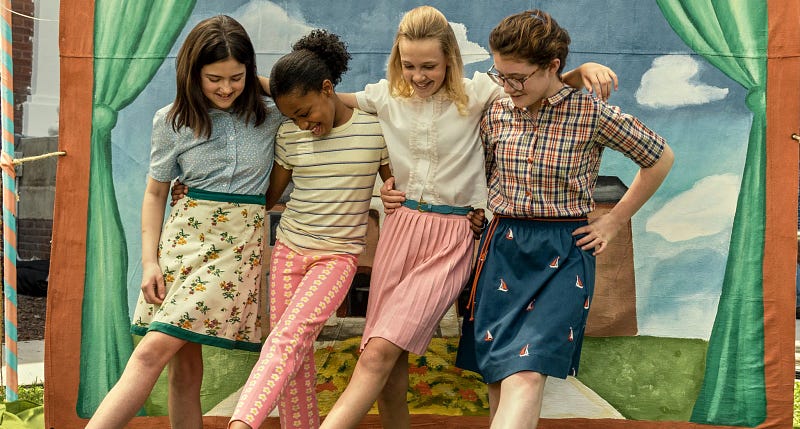
Rib-tickling performances from Kathy Bates as the grandmother of all Jewish grandmothers and Elle Graham as a bossy girl-next-door are among the highlights of this surprisingly delayed (53 years late) adaptation of Judy Blume’s novel.
Nearly all of the cast excels, though, including Abby Ryder Fortson as the eponymous Margaret, trying to fit into a new school and adolescence at the same time; her try-before-you-buy sampling of different religious faiths is amusing in itself and a nice way to represent a tween’s search for clarity without getting too angsty about it.
Rachel McAdams as her mother, Benny Safdie as her father and Echo Kellum as her teacher also stand out among the adults, while Amari Alexis Price and Katherine Kupferer are the other girls in a secret club where petty rules are taken immensely seriously in the way that only kids of a certain age do.
It’s not unsentimental, of course. It’s far closer to the gentle, affectionate, heartfelt comedy of (say) Sweetheart (2021) than to the raunchiness of No Hard Feelings (2023) or the ruthless mockery of a film like Bottoms (2023). But it’s not sickly either; Are You There God? It’s Me, Margaret. is clear-eyed about its young characters’ concerns, recognising both that they will eventuallly seem trivial and that they don’t to these people, at these points in their lives. It’s a sympathetic but grown-up take on preadolescence, and great fun.
17. Godland/Vanskabte Land/Volaða Land (Denmark/Iceland, dir. Hlynur Pálmason)
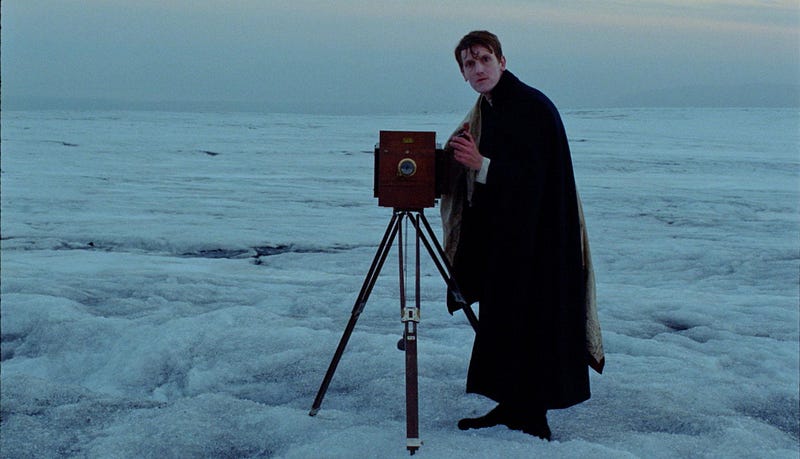
The director translates the Icelandic title as referring to a “wretched, unforgiving land” and perhaps that gives a better, less pious impression of this tale of place versus psyche. It’s not at all clear in Godland that God is anywhere — or a match for — the ravishing, fantasy-like landscapes over which Maria von Hausswolff’s camera roams, occasionally captured too in the camera of a Danish priest (Elliott Crosset Hove) sent to minister to the further reaches of Iceland in the late 19th century.
Comparisons with Herzog’s Fitzcarraldo (1982) are inevitable as the priest’s cross-country trek to his new parish becomes the kind of pilgrimage where the journey itself is the point, but Hlynur Pálmason is a less extravagant director. Many of the most effective moments here are the simplest, mirroring the uncomplicated storyline: a slow slow pan over grass, a repeated image of a dead horse rotting into the earth, a super-slow zoom to a face.
Meanwhile, the 4:3 ratio — evocative of early photography — encourages distance from the narrative, and perhaps reminds us that this all takes place in the same period as most westerns; if it was set in Colorado rather than Iceland, Godland would certainly fall into that genre.
Still, harsh reality has a way of intruding. A folksong has the refrain “the animals play in the forest”, and the implication is clear: the animals, like the landscape, are oblivious to the human story. Is God, too?
16. Past Lives (USA, dir. Celine Song)
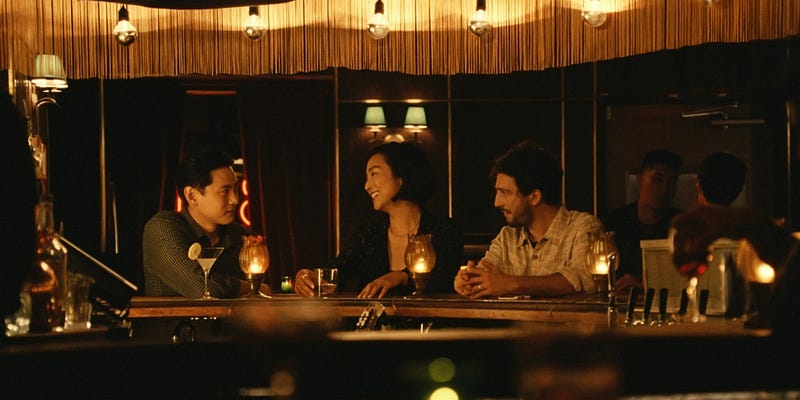
Celine Song’s Past Lives opens mesmerisingly with a scene in a New York bar, where offscreen voices speculate idly about the relationships of the three people we can see: Greta Lee, John Magaro and Teo Yoo, respectively a Korean immigrant to the US, her American husband, and her old flame from Seoul, over on a visit.
Before long, though, we get a “24 Years Earlier” title, and not long after that comes a “12 Years Pass” one; throughout these in-the-past sequences (more necessary ground-preparing than mere flashbacks, though later there are some of those too) writer-director Celine Song, here making her feature debut, is firmly setting up Lee’s character as the focus.
But for all the early attention given to her Korean life, and for all that she still dreams in Korean so many years later in America, that doesn’t mean it completely defines her: the title of Song’s film can be read in many ways.
Her trajectory is not inevitable — she has to make choices in life, but perhaps two mutually exclusive ones might both have worked equally well — and nor is the film’s. We might expect Magaro’s character to be subsidiary to the Korean pair, but Song gives him plenty of time to develop in his own right. The wonderful scene where he and Yoo meet for the first time is very much about both of them, as well as the caught-in-the-middle Lee.
In a lesser film-maker’s hands, Past Lives might have turned out excessively elegiac, perhaps even sunk into mawkishness. But not in Song’s. If anything it has such a light texture that you could almost forget it’s about heady stuff: change, memory, time, relationships and loneliness.
Shabier Kirchner’s lovely cinematography helps, and if Song’s script is very occasionally given to patness (“who you are is someone who leaves”), it can be epigrammatically perfect too: it almost sums up the entire movie to say that in Past Lives, there’s “no villain…except for 24 years and the Pacific Ocean”.
Oh, and in that opening bar scene: note that Song keeps Magaro in the frame longer than Yoo, but not as long as Lee. What to read into that?
15. Hunger (Thailand, dir. Sittisiri Mongkolsiri)
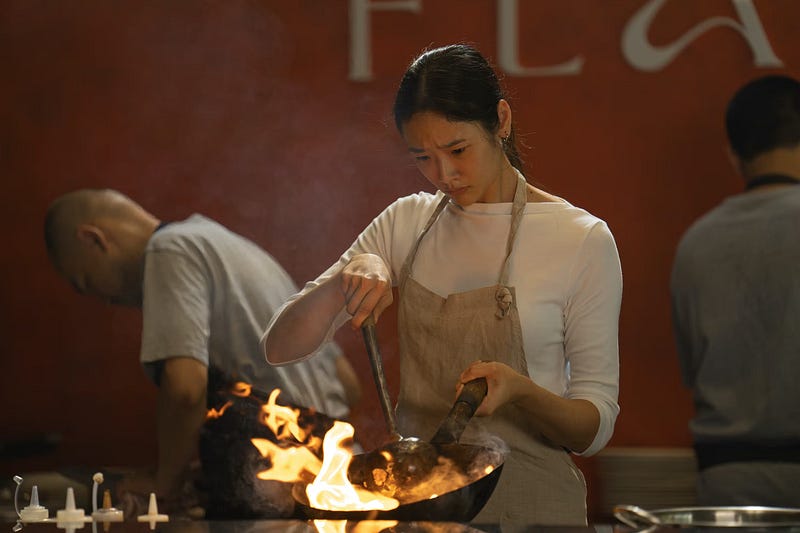
Modern foodieism has never become quite as pervasive on-screen as in real life, but there have been some fine examples in recent years of films where dining and cooking take centre stage: in 2021 there was Philip Barantini’s Boiling Point, in 2022 we had Mark Mylod’s cold-as-liquid-nitrogen, sharp-as-Sabatier The Menu, and last year Frederick Wiseman’s four-hour documentary Menus-Plaisirs — Les Troisgros received much acclaim.
Less prominent than any of these, but in its way the equal of any recent kitchen-fiction, is Sittisiri Mongkolsiri’s Hunger.
This Thailand-set, Netflix-distributed drama follows the ascent of a young cook in a small family restaurant (Chutimon Chuengcharoensukying) who wins a job with a famous and demanding chef (Nopachai Chaiyanam). And though it slips a little into sentiment and excess in the third act, the bulk of it is extraordinarily engrossing and powerful. Great cooking sequences, a fine supporting cast, and an effective score (uncredited) all help, and while there’s just a hint of horror, it’s much more strongly flavoured with a social lesson.
Like Emerald Fennell’s Saltburn more recently, Hunger has been seen as expressing scorn for the rich, in this case the customers of top-flight restaurants; but though that does come into it a little, the admonitory question posed here is really about ourselves (just as in Saltburn). How far will we go to obtain status, and what harm will we do ourselves in the process?
14. Pearl (USA, dir. Ti West)
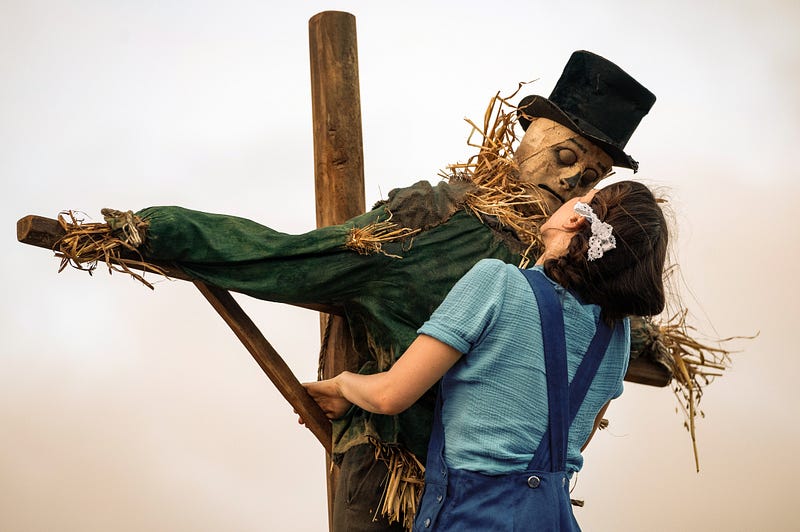
Several others venture within the genre’s borders, but Ti West’s Pearl is the only out-and-out horror movie to make this year’s list. It’s a prequel to 2022’s X (which should soon also be followed by a sequel, MaXXXine) and an even better film all round, with Mia Goth playing the much younger, early-20th-century version of the old lady she so strikingly gave us in X. David Corenswet intrigues too, as a worldly projectionist at the local cinema.
A dance-audition scene is spellbinding and savage, and of course there’s sex and (later) violence as well, in what seems to be a thoroughly corrupted version of Dorothy Gale’s world. But most of all it’s the character of Pearl herself, as well as West’s confident and occasional outrageous film-making (culminating in an ending of hilariously black chutzpah), that carries the movie from beginning to end. You probably don’t want to get too close to Pearl, but still, she’s a monster you warm to.
13. Reality (USA, dir. Tina Satter)
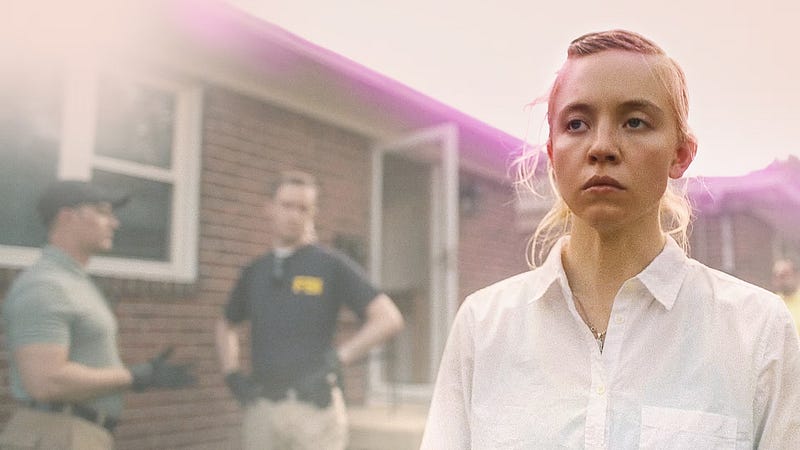
Tina Satter’s Reality, although based very closely on the true story of the US intelligence worker Reality Winner and her 2017 arrest for leaking Russian-related information to the media, is one of two films on this year’s list that could fairly be called experimental. For the other, you’ll have to read on; suffice to say, though, that if experimental cinema is very often concerned with either extreme reality or extreme unreality, Reality (!) falls firmly into the former camp.
All the dialogue in Satter’s film, essentially a three-hander depicting the conversations Winner (Sydney Sweeney) had with two federal agents on the day of her arrest, is transcribed from the official record (and Winner also collaborated with the film-makers).
Some elisions of sensitive material emphasise the verisimilitude; what (tellingly) seems far more surreal than Russian interference in American elections is the material that remains, and this surely says as much about our expectations of storytelling as it does about Winner’s story. The trivia she and the agents discuss, the matter-of-factness and politeness of everyone’s tone, the agents’ concern for Winner’s pets, her pink gun: nobody would dramatise it this way, yet this is what actually happened.
And if it is a little stagey — well, yes, it is indeed based on Satter’s own play, but more importantly it really was stagey. Nobody moved far from Winner’s very ordinary home, nobody had a bird’s-eye view, no orchestras swelled at turning-point moments.
There is a sense of claustrophobia, and of the disastrous intruding into the everyday, which never comes across as forced precisely because it arises so naturally from the premise. Similarly, though it may feel a tad slow at first, the authentic dialogue soon draws you into its rhythms.
Sweeney as Winner and Josh Hamilton as the apparently more senior of the two agents stand out in the small cast, and in a movie where so much else is so real, it’s something of a shock to remember that they’re actors.
12. Oppenheimer (USA, dir. Christopher Nolan)
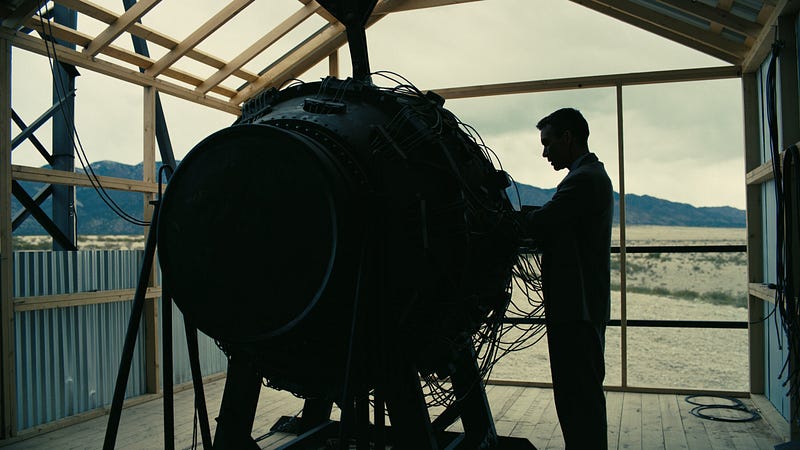
The most predictable thing about Christopher Nolan’s Oppenheimer, apart from the Bomb working, was that it would be hailed as profound. How could a film from a writer-director who loves to parade philosophical ideas, about the most existentially far-reaching event of the 20th century, not be?
And yet, it’s not profound. Oppenheimer has nothing original to say on the birth of the nuclear age itself, while it also fails as a portrait of the man himself by constantly digressing into details of the Manhattan Project that do nothing to illuminate him.
It wants to make him mythic, and even runs the risk of overstating its case with a Great Man approach to history, neglecting to consider the strong likelihood that if J. Robert Oppenheimer had not existed, events would still have progressed exactly as they did. Yet despite all this, it still leaves him as an unsatisfying question mark.
Why so high on the list, then?
Oppenheimer belongs here because the story of Los Alamos and the Manhattan Project in itself cannot fail to be compelling, and even if the later parts of Nolan’s multiple-timelined movie are not as instantly absorbing, they are so well-crafted.
Oppenheimer belongs here because the acting is so consistently terrific (the acting, not the casting; putting biggish stars like Kenneth Branagh and Rami Malek into such small roles does the movie no favours). Gary Oldman, Robert Downey Jr. and especially Matt Damon are the highlights but there are many more. (Cillian Murphy’s performance in the lead is less of a standout for me, though widely praised.)
Oppenheimer belongs here because it is a story that we need to be reminded of, told here by Nolan in a version that is certainly more stylish, impactful and thoughtful than any previous attempt (even if that’s not saying very much).
And Oppenheimer also belongs here because, beyond the sometimes shaky narrative and human elements, it’s an utterly immersive piece of cinema. Nolan’s direction, Hoyte van Hoytema’s cinematography and Ludwig Göransson’s insistent, propulsive, sometimes over-loud score come together to make it the kind of movie you can’t ignore for one second.
Even if Oppenheimer devotes too much energy to the fringes of its story — to the point that it sometimes feels like a frenzy of pointless historicist minutiae — and even if it falls far short of being the last word on its human subject, let alone its historical and moral ones, Nolan’s movie demonstrates far better than most superhero outings just how breathtaking film itself can be.
11. Maestro (USA, dir. Bradley Cooper)
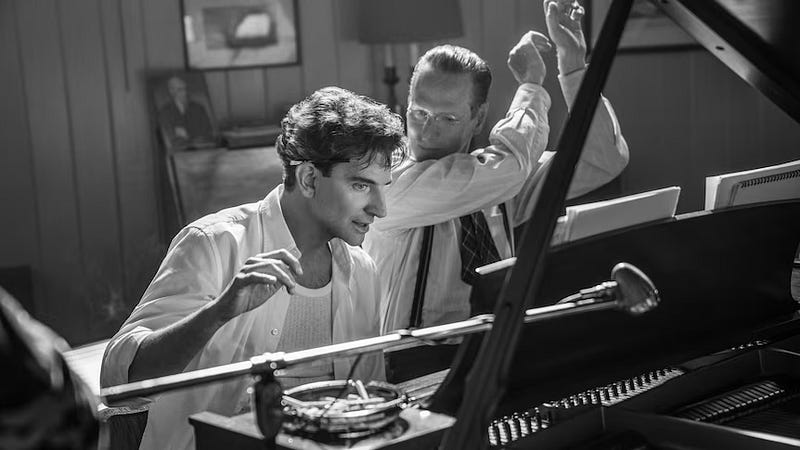
“Big, passionate, and just on the right side of melodrama”: that’s what I wrote of Bradley Cooper’s directorial debut A Star is Born (2018). And exactly the same words could equally apply to his Leonard Bernstein kind-of-biopic Maestro, even if it’s a little more elliptical and stylistically more adventurous (not to mention less sentimental than Spielberg, at one point a mooted director for the project, would have made it).
Maestro makes its mission clear by quoting Bernstein’s assertion that “a work of art does not answer questions, it provokes them; and its essential meaning lies in the tension between the contradictory answers”, and the tensions here are many: between the public and the private Bernstein, the composer and the conductor, the married man and the gay man.
Cooper — who stars as well as directing and co-writing — not only captures Bernstein’s appearance (just as Brian Klugman captures Aaron Copland) but manages convincingly to relate the old man to the young. His youthful portrayal brims with infectious, almost manic, performative energy; as age mellows him, a calmer boyishness emerges, yet his ecstatic absorption in his conducting of music remains absolute.
A tougher role in many ways, because a far less flamboyant one, goes to Carey Mulligan as Bernstein’s wife Felicia: but she is as important as him to Maestro, the embodiment (if by no means the sole object) of tragedy that is no less real for being unremarkable, her initial buoyancy turning to irritation and, eventually, to desperation.
The film is far more enamoured of its subject than the year’s other big movie on a seemingly similar topic, Todd Field’s Tár (where Bernstein also briefly appears). However, it’s no hagiography: Bernstein certainly doesn’t come across as flawless, though no moral judgement is passed, any more than any grand explanation is proffered. All that really mattered to and about Bernstein, Maestro suggests, was the music and the love.
10. A Thousand and One (USA, dir. A.V. Rockwell)
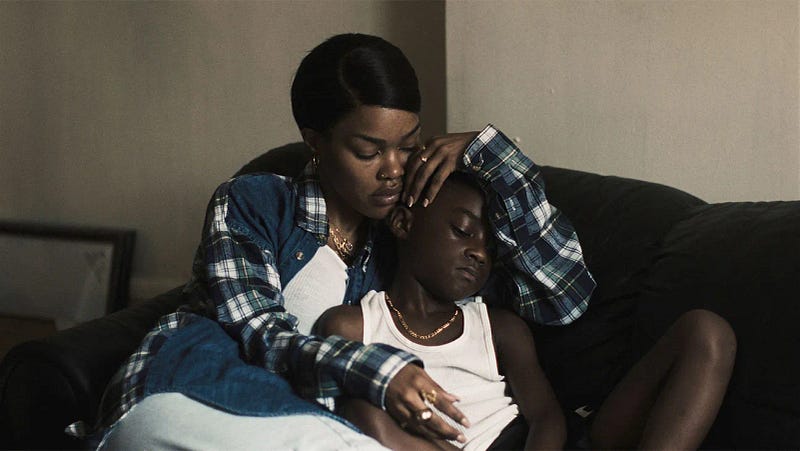
The “thousand and one” of A.V. Rockwell’s feature debut may refer to the number of obstacles that single mother Inez (Teyana Taylor) faces raising her young son in the Harlem of the later 1990s and early 2000s — the film covers almost the same period as BlackBerry, and couldn’t be more different.
“Thousand and one” also, cleverly, refers to their apartment number, underlining the thematic importance of home in Rockwell’s film — whether that’s the family home made by people, or the broader home of Harlem and New York itself.
And I’d like to think that it just may, as well, refer to the Thousand and One Nights. For A Thousand and One is, in its way, also about a woman who makes up story after story to preserve herself…stories that lead an apparently low-key, if passionate, film to an almost jaw-dropping twist.
Striking photography by Eric K. Yue frames the story of Inez and her son — the latter played well by three actors, especially Aaron Kingsley Adetola as the six-year-old version and Josiah Cross as the 17-year-old — while the gentrification of Harlem and New York in general goes on in the background: Rudy Giuliani and Michael Bloomberg are name-checked on the news. Of course the police figure, too, and not in a good way.
A Thousand and One is partly about a very specific New York Black experience and to that extent is very much a film of its time. (Savanah Leaf’s Earth Mother, for example, covered similar ground — albeit on the west coast — last year.)
But it also deals with much wider issues of family and relationships, giving it some commonality with other fine movies of 2023 like Past Lives and Anatomy of a Fall. Sure, it is more direct than those films — meaning in A Thousand and One is not generally something that has to be teased out, and indeed Inez herself is accused of being too assertive — but by the end it achieves an equal poignancy.
9. Society of the Snow/La Sociedad de la Nieve (Spain, dir. J.A. Bayona)
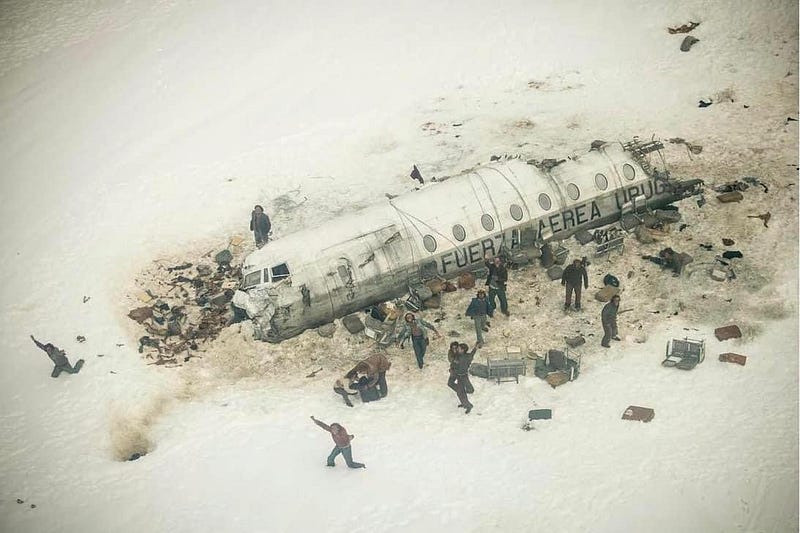
There’s a clue in the title to the perspective that J.A. Bayona will take in the third narrative-film version of the 1972 “Miracle of the Andes” (following 1993’s Alive and a now-forgotten Mexican movie).
Society of the Snow absolutely does deliver all the expected story elements — an exceptionally well-filmed air crash, the survivors’ reluctant resort to cannibalism, the heroic trek across the mountains that led to their eventual rescue — but it emphasises the people, both as individuals and as a group, above the what-happened-next.
The group even more, indeed (and hence the title, which derives from a phrase used by the survivors themselves). Stuck on the mountain, they have absolutely nothing but each other, and if individual characters in the ensemble cast are not always very strongly delineated, the dynamics of the group and its emotional state certainly are.
The mere facts of the story can’t fail to be compelling, but where Society of the Snow really stands out is in its reflective, even mystical treatment of them, enhanced by Pedro Luque’s photography (often favouring long, contemplative shots that find beauty even within the ugliest of contexts) and Michael Giacchino’s fine score (suspenseful, austere, yet not always gloomy).
“What happened to us? Who were we on the mountain?” asks the voiceover. And though you too might struggle to work out quite why, you’ll emerge from Society of the Snow with the distinct feeling that it has unlocked something profound, far beyond despair.
With The Orphanage/El Orfanato back in 2007, Bayona gave us arguably the best cinematic ghost story of the century, masterfully combining genre elements with a transcendent and unexpected emotional dimension; here he does the same in what can only be described as a meditative adventure.
8. Fallen Leaves/Kuolleet Lehdet (Finland, dir. Aki Kaurismäki)
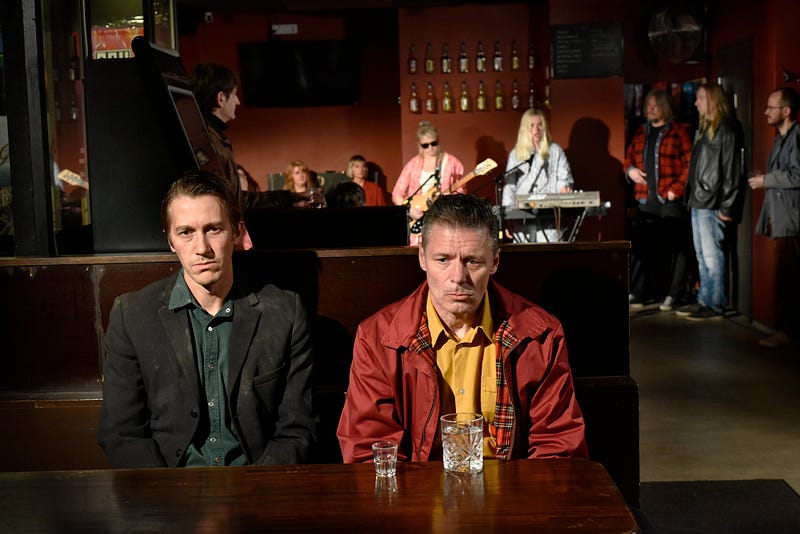
The lives of Ansa (Alma Pöysti) and Holappa (Jussi Vatanen) are quiet, and from the outside small, though of course like all “small” lives they appear very large to those inside them.
And the genius of Aki Kaurismäki’s Fallen Leaves, which follows up his “Proletariat Trilogy” with another tragicomic snapshot of the Finnish working classes, is that it draws the viewer in so that what seems uneventful, even trivial at first comes to feel dramatic and full of import by the end. We begin the film (at least if we’re not Finns) looking at the characters from outside; we end up seeing things their way.
Ansa and Holappa are both lonely; she works a supermarket McJob (where a clash with her supervisor leads to one of the movie’s few moments of high, or highish, drama); he mostly drinks. They meet, a cinema is gone to, karaoke is attended, a phone number is nearly lost, a minor accident is had, a dog is adopted; the stillness of both the premise and the film-making style heightens the impact of all these.
In the background, meanwhile, the radio provides regular updates on the war in Ukraine, perhaps making us realise that more obviously great turmoil elsewhere doesn’t reduce the subjective turmoil of these characters’ lives. Vatanen and Pöysti are completely believable and pitched just right as the central pair — we empathise with them, but we’re not instant best friends — and the supporting cast provide many well-observed performances too.
7. How to Blow Up a Pipeline (USA, dir. Daniel Goldhaber)
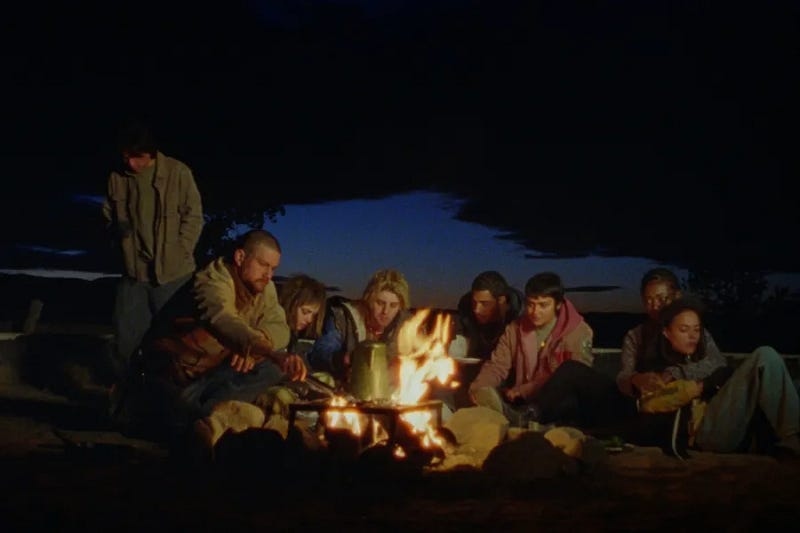
Subtlety is neither the target nor the modus operandi of How to Blow Up a Pipeline; the say-exactly-what-you-mean title itself should make that clear. All the same, beyond its considerable enjoyment value there is also something significant in the very existence of Daniel Goldhaber’s utterly gripping eco-terrorism thriller.
Here is a movie where blowing up a pipeline is not seen as something beyond the pale, the province of villains or weirdos, but is presented as at least potentially a rational response to a real problem: a stance few film-makers would have taken until very recently, and certainly not in a movie with clear commercial aspirations too.
A consistently interesting plot (sometimes surprising but not too much), judicious use of flashbacks, a decent score from Gavin Brivik, and writing that neither dwells didactically on the issues nor ignores them all help the narrative on its way. But so does the varied cast of disaffected young characters, who would be just as interesting in a movie on a less explosive topic; Forrest Goodluck’s red-hot performance could sustain a whole film on its own.
6. Barbie (USA, dir. Greta Gerwig)

Though Barbie has virtually nothing else in common with How to Blow Up a Pipeline, again subtlety is not the strong point of Greta Gerwig’s film, the better half of the Barbenheimer double act (too long to be a widely tolerable double bill, sadly) that brought big-screen cinema right back to everyone’s attention in the middle of the year.
Still, the difference between Barbie and Oppenheimer — apart from the minor detail of subject matter — is that Barbie coats its lessons in brightly-coloured fun while Oppenheimer at its most ponderous is a lecture from a teacher determined that you pass the exam.
Given the film’s feminist (though non-radical) perspective, it’s with reluctance that I point to a man as the best single thing in it, but Ryan Gosling’s Ken indubitably is: likeable, even affecting, and wonderfully dumb. Having said that, nobody in Barbie is really unlikeable, not even Will Ferrell’s Mattel boss (and for all that the movie’s digs at the toy company might — as has been widely observed — lack a little acid, the Mattel scenes nevertheless are as funny as the rest of it). Other standouts include Ariana Greenblatt as a teenage girl in the human world, and of course Margot Robbie herself.
The details of Barbie-world are wittily done, production design grabs the attention, the script is mostly as sharp as the pastels are soft, and there’s a sense of sheer enthusiasm and fun that’s rarely seen in big movies. Barbie may be sceptical about some aspects of human (and doll) behaviour, but it’s not cynical…and for everyone who’s seen it, the word “beach” will never fail to raise a smile again.
5. Enys Men (UK, dir. Mark Jenkin)
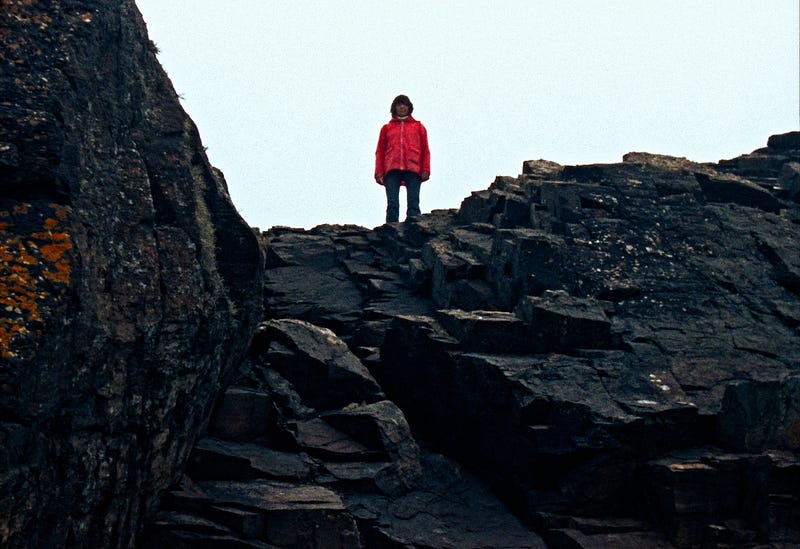
“No change,” the character known only as The Volunteer (Mary Woodvine) writes day after day in her journal throughout much of Mark Jenkin’s weird, haunting Enys Men.
She’s alone on an uninhabited Cornish island, seemingly assigned only to observe a rare plant that grows there, though there’s also a suspicion that her real task may be to monitor the deserted mines beneath the island’s surface, or the large stone monument standing on high ground near her cottage. Does it shapeshift, or is that a trick that Jenkin plays on the viewer’s eyes?
But toward the end of this film, which feels thoroughly 1970s not only in its period setting and visual texture but also in its evocation of the timeless unknown lurking beneath bucolic normality, Woodvine alters her journal-keeping habits. She starts to write “no change” repeatedly not in the column for comments, but in the column for dates…implying that there really is no change on this island, because there is no time, because present and past and even future coexist?
It’s almost certainly futile to look for a pat “explanation” of Enys Men; the mystery is the point, and if The Volunteer does not fully understand it herself, the viewer is perhaps allowed to understand even less. But what is deliberately missing in terms of logical satisfaction is more than compensated for by Jenkin’s own cinematography (he wrote, edited and composed too) and by the remarkable, highly original atmosphere of the film: threatening and somehow comforting at the same time.
Like The Volunteer, you start to feel that never leaving this island might not be such a bad thing.
4. Anatomy of a Fall/Anatomie d’une Chute (France, dir. Justine Triet)
As in quite a few of this year’s list, truth is an elusive thing in Justine Triet’s Anatomy of a Fall.
“I did not kill him,” says Sandra (Sandra Hüller) after being accused of the murder of her husband. “That’s not the point,” insists her lawyer (a terrific Swann Arlaud), and — just as in Alice Diop’s Saint Omer, although Anatomy of a Fall is much more of a conventional legal thriller too — one of the questions that pervades Triet’s film is whether we can ever really understand another person, their situation, their relationships.
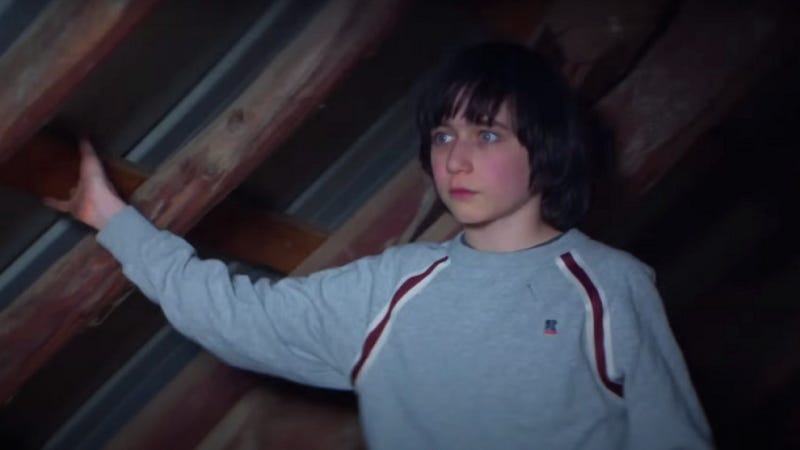
“Sometimes a couple is kind of a chaos,” says Sandra, and from the first, almost offhand introduction of her husband’s dead body in the snow to the final scenes, Anatomy of a Fall extracts one intriguing revelation after another from that chaos without ever completely making sense of it. Much of this is achieved through the testimony of Sandra’s son Daniel (an outstanding Milo Machado Graner, perhaps even better than the adult leads); the prosecutor (also very well played by Antoine Reinartz), meanwhile, offers alternative explanations every time we might be tempted to relax comfortably into trusting Sandra.
On the way, some of the investigative detail is fascinating in itself too; Anatomy of a Fall certainly has plenty to offer the crime aficionado. But it remains suffused by permanent uncertainty, in a way atypical of crime-related genres where doubts are generally introduced precisely so that they can be resolved.
Toward the end, does Sandra cuddle her son’s dog because she loves family and home so much…or because the dog unwittingly saved her in court? We can’t be sure, just as we can’t be entirely sure whether we like Sandra or not, and the realisation that our personal reactions to her are not dependent on our opinion of her guilt or innocence is typical of the way that Anatomy of a Fall conceals so many troubling questions within its fast-paced narrative.
3. Tár (USA, dir. Todd Field)
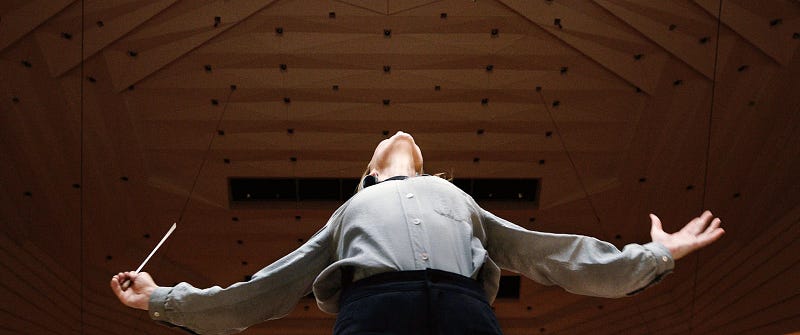
Not that the other films on this list all serve up conclusions on a plate, but in Todd Field’s Tár more than most, you can see what you want to see — or what you expect, which of course may not be the same thing.
Take, for example, the terrific early scene where the eponymous conductor Lydia Tár (Cate Blanchett) verbally dismembers a 20-something BIPOC, pangender student who’s said he won’t study Bach because of the composer’s misogyny.
Is she striking a blow for considered judgement over labels, or being reprehensibly conservative in defending the canon at all costs, or making a point about the separation between artist and work, or giving the young man useful career advice, or discomfited by his frankness about gender? Is Field comparing the soon-to-be-cancelled Tár to Bach, or suggesting that even Bachs should not enjoy blanket immunity? Or all of the above?
Beneath the ultra-designed, platinum-card aesthetic of Field’s film (and Lydia’s world), indeed, lies a great deal of uncertainty. This is a movie about a conductor losing control of her life and possibly of herself as well, and although it doesn’t fuzz reality nearly as blatantly as films like Charlie Kaufman’s I’m Thinking of Ending Things (2020), it’s legitimate to ask how much in Tár is real.
Putting the end credits at the beginning of the film should be a sign that not all is as it seems. Lydia’s string of achievements, enumerated in a long opening interview, seems implausible even for a superstar (how many great conductors are also ethnomusicologists and movie composers?). Could almost the whole thing be a fantasy of success and persecution, with only the scenes of Lydia in a much less glamorous life to be taken literally?
Seen in this light the exaggerations and near-absurdities in Tár start to make a bit more sense. And either way, while it certainly demands close attention, both Blanchett’s utterly convincing performance and the small-scale dramas of many individual scenes make it amply worthwhile.
2. Killers of the Flower Moon (USA, dir. Martin Scorsese)
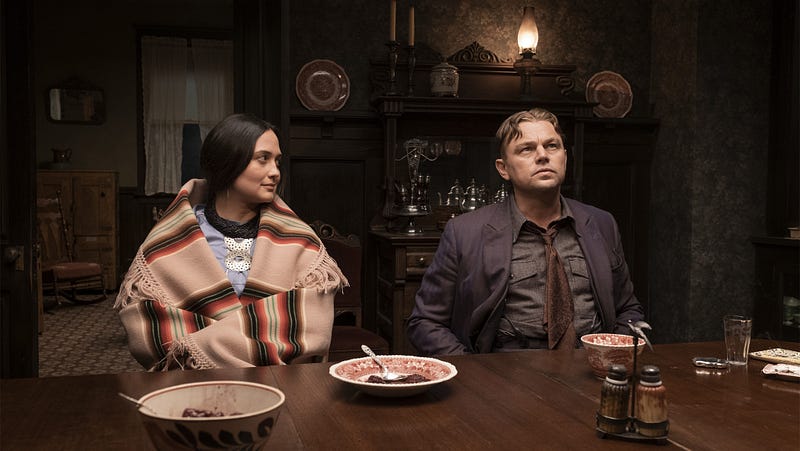
Killers of the Flower Moon deals with one of Scorsese’s favourite subjects (crime) and explores one of his favourite themes (guilt), but it is a late, reflective work; don’t expect Goodfellas (1990).
Like his last outing The Irishman (2019), this is the story of a man who becomes a gangster by accident, amid events much bigger than him; yet it is a chamber piece despite its sweeping scope. Nearly all the important action occurs in small rooms, where the subtleties of individual relationships and single acts unfold.
Much attention has naturally been paid to the movie’s depiction of white exploitation of Native Americans, but this is not its point: it offers no new or remarkable insights on that front. Systematic injustice is just a backdrop to the exploration of characters, and the greatest strengths of Killers of the Flower Moon lie in performances: not just from two of Scorsese’s most frequent collaborators, Robert De Niro and Leonardio DiCaprio (stealing the show), but also from Lily Gladstone, quieter but equally captivating.
The way that the performers outshine the storyline, script and direction (exacerbated by some niggling structural issues) means that Killers of the Flower Moon is unlikely to go down as one of Scorsese’s greatest, but it’s so well-written and well-acted that it deserves its place near the top of so many Best of the Year lists.
1…THE FILM OF THE YEAR: Saint Omer (France, dir. Alice Diop)
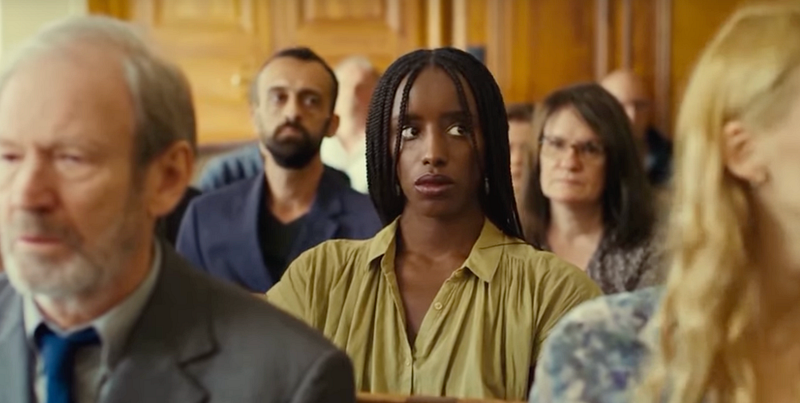
Precise, uncluttered, formal, but far from clinical or inhuman, Alice Diop’s debut fiction feature is a film far bigger than it seems at first sight.
Superficially Saint Omer tells the story (based on a real 2016 case in France and using some dialogue from court transcripts) of a woman accused of murdering her young child, and the writer who follows the trial, soon seeing unsettling parallels between herself and the woman in the dock.
But the simplicity of presentation in Diop’s film — evidence from witnesses, comments and questions from the judge, occasional scenes of the writer’s life outside the courtroom — is deceptive.
Saint Omer raises vast and unanswerable questions about parenthood, guilt, prejudice, even magic; what sticks with you for months is what’s left unsaid, especially by the superb Guslagie Malanda as the accused woman: calm and confident but also as floored as anyone in the courtroom by the way that, as one character puts it, we can be “terribly human monsters”.
Straightforward and slippery; factual and fictional; detached and dramatic; contradictory and cohesive; Saint Omer is a film whose whole is far more than the sum of its parts. See it.
Honourable mentions
- Godzilla Minus One/Gojira Mainasu Wan (Japan, dir. Takashi Yamazaki), for its human dimension and the score from Naoki Satō.
- Bottoms (USA, dir. Emma Seligman) for subverting the high-school genre to the point of absurdity, and getting away with it.
- The Caine Mutiny Court-Martial (USA, dir. William Friedkin) for Kiefer Sutherland as Captain Queeg.
- Spider-Man: Across the Spider-Verse (USA, dir. Joaquim Dos Santos, Kemp Powers and Justin K. Thompson) for the sheer non-stop inventiveness of its animation, not to mention the music.
- Rye Lane (UK, dir. Raine Allen-Miller) for remembering that great romcom needs real rom as well as com.
- The Orchard (Canada, dir. Mark Wolfe & Kerry McArthur) for showing how idea, writing and performances can create effective low-budget horror without a monster in sight.
Turkey of the Year
Beau is Afraid (USA, dir. Ari Aster), for starting so wittily before forgetting that the journey is only the reward if the journey actually is rewarding, or at least interesting.
Massively Overrated Non-Turkey of the Year
The Fabelmans (USA, dir. Steven Spielberg), for being not bad as such, but exactly what an AI would come up with if instructed to “generate a bittersweet-nostalgic semi-autobiographical movie about a young film-maker in the style of Spielberg”.
Previous years’ top 5 movies
2022 (see my roundup of the year)
1. The Banshees of Inisherin 2. The Innocents/De Uskyldige 3. The Stranger 4. She Said 5. The Worst Person in the World/Verdens Verste Menneske
2021 (see my roundup of the year)
1. West Side Story 2. Limbo 3. The Power of the Dog 4. One Night in Miami… 5. Nomadland
2020
1. I’m Thinking of Ending Things 2. Parasite/Gisaengchung 3. True History of the Kelly Gang 4. His House 5. Dark Waters
2019
1. Once Upon a Time in Hollywood 2. Marriage Story 3. Us 4. The Irishman 5. If Beale Street Could Talk
2018
1. Phantom Thread 2. A Star is Born 3. Leave No Trace 4. American Animals 5. The Ballad of Buster Scruggs
2017
1 =. Dunkirk, Silence 3. Blade Runner 2049 4 =. Patti Cake$, T2 Trainspotting
2016
1 =. Spotlight, The Witch 3. Zootropolis (Zootopia) 4. The Girl With All the Gifts 5. 10 Cloverfield Lane