
Film Review
Society of the Snow (2023) — disaster and unexpected beauty in a moving tale of survival
In the 1970s, a group of young men fight to survive after a plane crash leaves them stranded in the Andes.
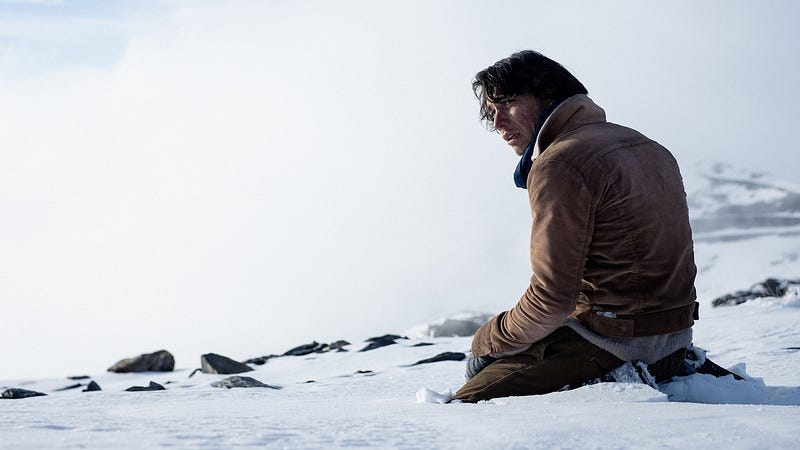


Nearly two decades after delivering arguably the best cinematic ghost story of the 21st-century with The Orphanage / El orfanato (2007), Spanish director J.A. Bayona returns with a similar achievement in Society of the Snow / La sociedad de la nieve. The Orphanage masterfully wielded classic Gothic elements while transcending the genre with an unexpected and highly poignant emotional dimension. In his first feature as both writer and director, Bayona now weaves a captivating film that pushes the conventions of the survival genre.
Naturally, the true story behind Society of the Snow lends itself to such dramatic treatment. The film opens with a voiceover referencing both a tragedy and a miracle, alluding to the real-life incident sometimes known as the Miracle of the Andes. While widely famous in the 1970s, the tale may be less familiar now, and likely unknown in detail, though Frank Marshall’s Alive (1993) offered an account of the basics. Still, given the broad awareness of the incident, this review won’t shy away from spoilers in the following paragraphs.
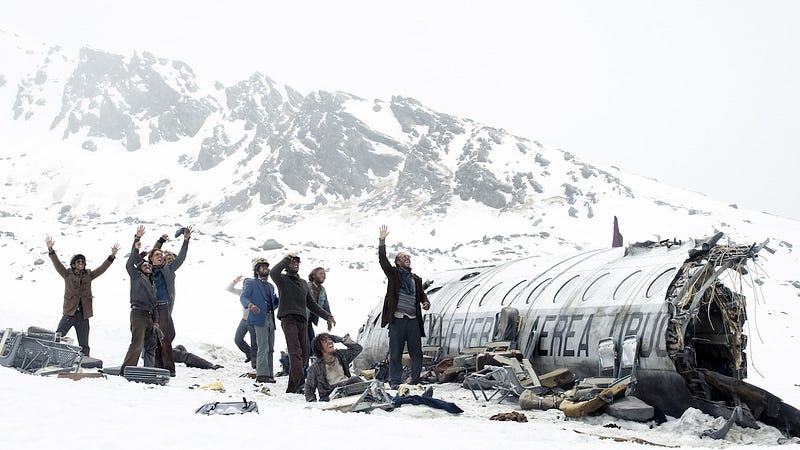
In October 1972, a Uruguayan plane carrying members of a rugby team, their friends, and family members to a match in Chile crashed in the Andes mountain range, at an elevation above 10,000 feet and far from any human settlement, due to a navigational error. 12 of the 45 passengers and crew perished in the crash, and many of the remaining survivors sustained injuries. Search and rescue flights proved unsuccessful in locating them, and they were ultimately presumed dead. After all, no one had survived any of the 34 previous crashes in the Andes, as noted in Society of the Snow.
The survivors — half of whom succumbed to injuries or the elements in the following weeks — faced a daunting reality: they were stranded in a harsh, frigid high-altitude environment with only limited supplies salvaged from the wreckage. A week passed, their provisions dwindling, until a grim realisation settled in: to survive, they would have to eat the bodies of the dead.
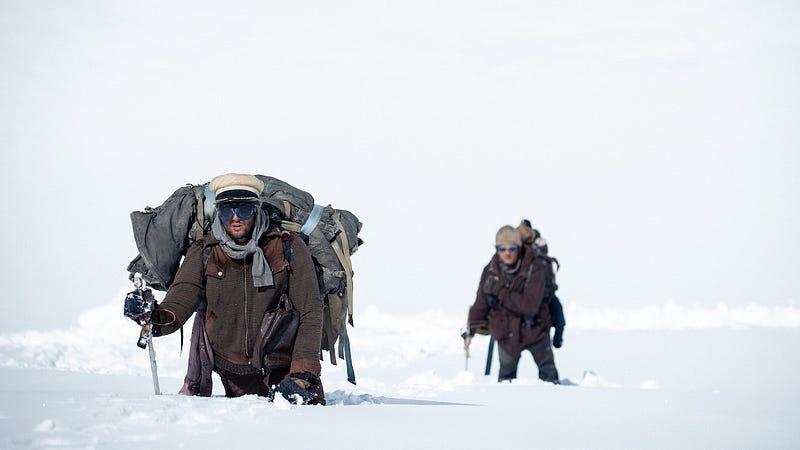
After the harsh months gave way to spring, two members of the stranded group managed to trek over the mountain barrier into Chile and summon help. Though uncertain of the precise crash location, they held onto the logical faith that the Andes would eventually come to an end. Swiftly rescued, the remaining survivors found themselves thrust into the spotlight of global attention, their ordeal granting them celebrity status.
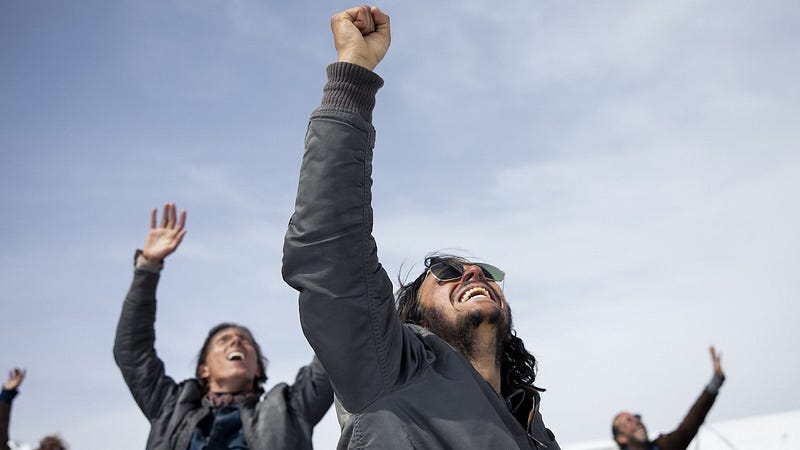
They had overcome extraordinary odds, and as expected, it was the issue of eating human flesh that gave notoriety to an already remarkable tale. But Bayona’s Society of the Snow — like the survivors themselves and the 1993 film — prioritises the will to live over the act of cannibalism. It’s not glossed over, yet it’s not the story’s centre or point.
Society of the Snow remains largely faithful to the accounts of the survivors, venturing only slightly from reality for cinematic effect. For instance, the helicopter evacuation from the plane’s wreckage was conducted in stages, rather than in a single operation transporting all survivors at once. Similarly, the first human contact Roberto Canessa (Matías Recalt) and Nando Parrado (Agustín Pardella) made upon reaching Chile after their arduous mountain trek wasn’t with a single individual, but with a group of three men.
In any case, Bayona and his co-writers are more interested in the psychological and spiritual aspects of the story than in the practicalities.
Certainly, Society of the Snow brings the physical realities home vividly: the sight of a small bag holding the few tins and packets of food that they could find, a stark reminder of the survivors’ plight, surpasses any words in its impact.
The air crash itself is also filmed exceptionally well. Glimpses of rock, just visible in the blowing snow outside a passenger compartment window but clearly very close to the aircraft, are as ominous as the red lights we see in the cockpit for a moment. Then, when the crash itself takes place, the tension that’s been building erupts into a scene of intense physicality as rows of seat slam into each other. The way the soundtrack volume dips, and the confusion of visual detail, provide a sense of something incomprehensible from which the survivors will emerge literally dazed.
Largely men in their teens and twenties, they’re stranded in a desolate landscape described by the intermittent voiceover (mostly belonging to Numa, played by Enzo Vogrincic Roldán) as “a place where life is impossible… out here, we are an anomaly”. The challenges of this anomalous existence are as much mental and emotional as they are physical. “The more we try to escape, the more the mountain resists,” Numa muses, their desperation exacerbated by the discovery of a radio in the luggage, announcing the abandonment of the search. Adding to the desolate irony, the same radio later picks up a station playing tango, its music echoing across the empty snowscape.
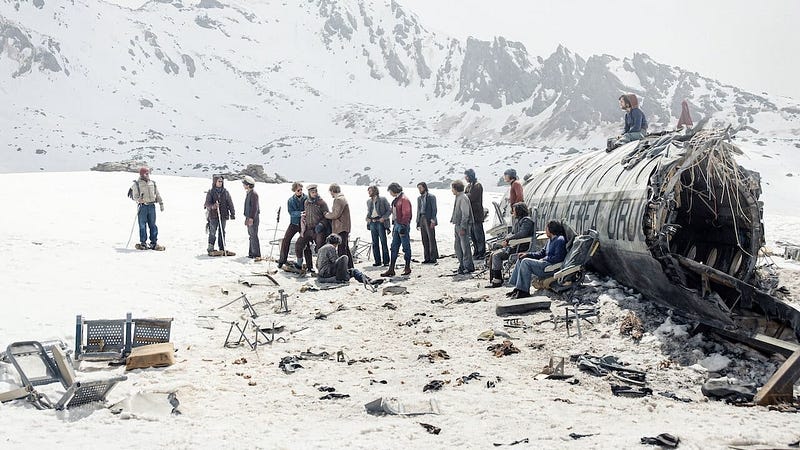
Repairing another radio, the plane’s two-way communication device, also becomes a source of drama, hope, and disappointment, and Bayona’s film repeatedly highlights the significance of seemingly trivial details. For instance, when several young men climb a short distance uphill, the plane vanishes from sight in the snow (meaning rescuers wouldn’t be able to see it). An electric light briefly made to work seems a miracle; so, later, will the first sight of grass. When Nando asks “They seen us?”, referring to the search-and-rescue plane, it’s the absence of an answer that’s striking.
Surprisingly, lighter moments punctuate the film too. We see the young men huddled together in the fuselage, crafting terrible but heartfelt rhymes, or imitating bird calls outside when the weather is better. One of Bayona’s major successes in Society of the Snow lies in suggesting how the plane crash, though devastating, doesn’t shatter the spirit of the group. The rugby and locker room scenes before the flight, emphasizing camaraderie and teamwork, foreshadow a resilience that persists throughout the film.
So strong is this that one of the most dramatic human sequences occurs when a risk of the group fracturing appears: the idea of eating the bodies, approached obliquely at first by the survivors, has finally come out into the open. While some initially are unsure, and Marcelo Pérez del Castillo (Diego Vegezzi) continues to hold out, one by one their resolve falters, each departing figure apologising to Marcelo as they venture outside.
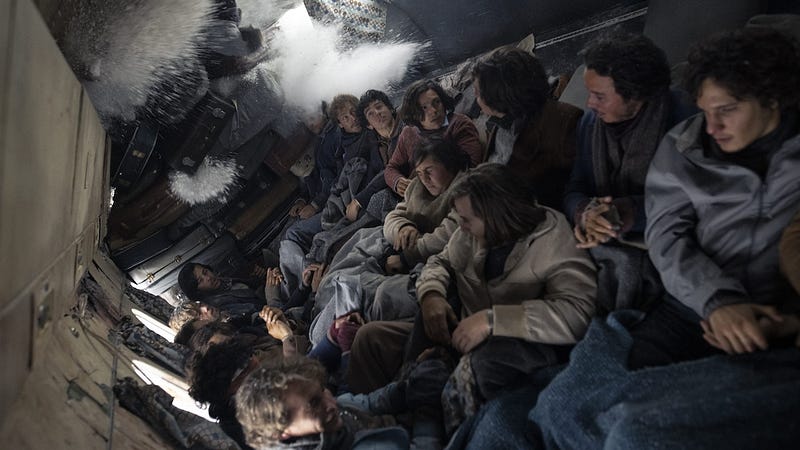
Bayona primarily treats cannibalism as just another facet of the broader narrative. It’s built up to carefully, with earlier shots depicting the survivors’ meagre rations followed by later shots where shoelaces and cigarettes are tried as food substitutes, and there’s no morbid fascination; the voiceover simply states that “what was once unthinkable became routine”. Even when rescue promises a return to normalcy, and the survivors find the idea of cannibalism repulsive again, Society of the Snow handles this shift in attitude with matter-of-factness.
Society of the Snow emphasises the group over the individual, and importantly includes the deceased in the group. This film is emphatically not just about the eventual survivors’ triumph.
As a result, few individual performances truly stand out. For much of the film, the characters are not very delineated, and the large ensemble cast allows little screen time for each person. Their relative obscurity as actors further discourages viewers from focusing on specific individuals, although their varying appearances make them distinguishable. While Numa and Nando have particular prominence, along with Canessa (who, with Nando, leaves for help), it would be inaccurate to consider them the sole protagonists.
Bayona’s direction and Pedro Luque’s cinematography strike a fine balance between focusing on individual characters and the broader situation. They achieve this through a diverse visual repertoire, ranging from intense close-ups to expansive panoramas of the desolate Andes, particularly impactful at the film’s outset as the camera ascends steadily amidst the snow and rocks. While released on Netflix, Society of the Snow is undoubtedly a film that would benefit from cinema viewing. The use of colour and lighting is masterful, contrasting the saturated palette of the pre-crash world with the shadowy, claustrophobic interior of the plane wreckage, both further emphasised by the dazzling whiteness of the mountains (largely filmed in Spain).
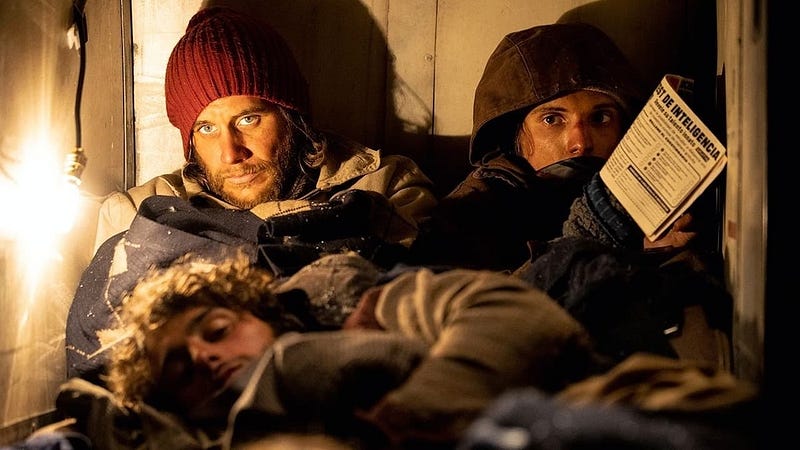
Although Bayona and Luque don’t shy away from high-energy action sequences, such as the dramatic plane crash or the later avalanche’s aftermath, they often favour long, contemplative shots that find beauty even within the ugliest of contexts. The abandoned, ruined plane, left after the survivors’ rescue, emerges not as a blight on the pristine landscape, but rather as a space where something unexpectedly good transpired. They had made this plane home, and we felt it.
All this is supported very effectively by a fine score from Michael Giacchino (an Academy Award-winner for 2009’s Up): suspenseful, austere, but not always gloomy. Dominated by piano and strings, it has its exultant moments too.
As well as Alive there have been several documentaries and a now-forgotten 1976 Mexican narrative film, Survive! / Supervivientes de los Andes, based on the incident. However, it’s Marshall’s 1993 movie that Bayona’s new film will inevitably be compared to. Both adhere closely to events as documented by the survivors, leading to significant similarities. However, structural differences exist. Bayona delves deeper into the survivors’ pre-crash lives, dedicating more time to them than Marshall. Additionally, a larger portion of his film focuses on the escape from the Andes and the survivors’ readjustment to civilization.
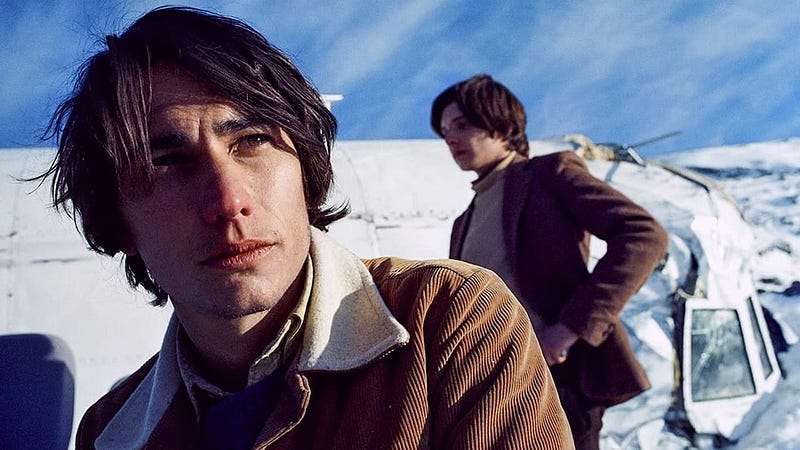
The bigger difference, however, lies in tone. Whereas the 1993 movie was essentially an adventure story, albeit a respectful and non-sensational one, Bayona’s film adopts a more meditative and slow-burning approach. Here, events serve not just as plot points, but as landmarks on the group’s emotional, psychological, and spiritual journey. The movie avoids offering concrete answers, opting instead to evoke the profound impact of their ordeal. This is encapsulated by the voiceover’s questions: “What happened to us? Who were we on the mountain?”
Like the individuals involved, Society of the Snow approaches its own story with deep reverence (some even drew parallels between the act of consuming the deceased and the Catholic Eucharist). And it’s remarkable that within the entire film, we witness no true dissent or acts of selfishness, making Arturo Nogueira’s (Fernando Contigiani García) comment about his god being the group itself all the more intriguing. Certainly, Bayona’s movie demonstrates that stuck on the mountain, they have absolutely nothing but each other.
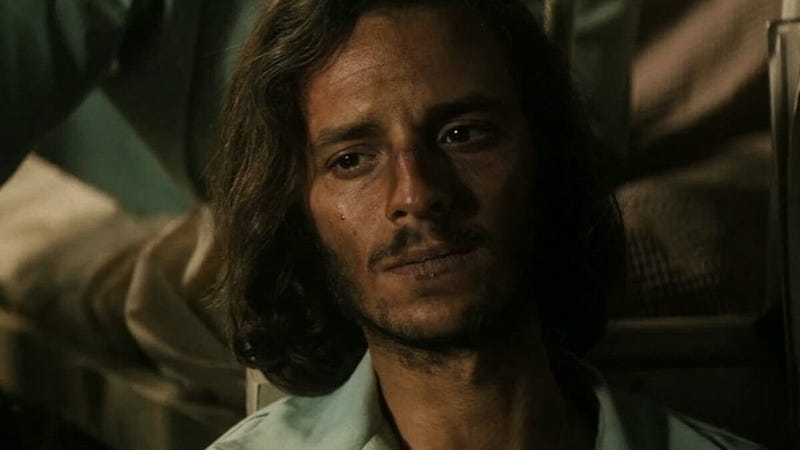
While the rescue itself may seem almost anticlimactic, the true point of Society of the Snow lies not in the survival of a few, but in the shared experience of all. This is captured in the film’s final lines, which contrast “you” and “we” — those who returned to the world and those who perished — and thus suggest that, regardless of the outcome, they were together during their ordeal in a way that surpassed normal life, and perhaps ended with the rescue.
Society of the Snow is not purely a philosophical essay. Those who are simply interested in the adventure aspects of the tale will find it a gripping (if unhurried) one too, and nobody could fail to be moved by it. Gripping and moving are inherent in the real-life story.
Bayona’s masterful direction, evocative photography, music, and a dedicated cast then imbue this tale with a reflective, even mystical dimension. This seamlessly blends with the historical story, culminating in a film that lingers long after the credits roll. Though you might struggle to work out why, you’ll emerge from Society of the Snow with the distinct feeling that it has unlocked something profound, far beyond despair.
SPAIN • CHILE • URUGUAY • USA | 2023 | 144 MINUTES | 2.55:1 | COLOUR | SPANISH

Cast & Crew
director: J.A. Bayona. writers: J.A. Bayona, Bernat Vilaplana, Jaime Marques-Olarreaga & Nicolás Casariego (based on the book ‘La Sociedad de la Nieve’ by Pablo Vierci). starring: Enzo Vogrincic, Agustín Pardella, Matías Recalt & Esteban Bigliardi.


Originally published at https://www.framerated.co.uk on January 12, 2024. All copyrighted images come under Fair Use doctrine in US & UK law.