A Diagnosis is More Than Just a Label
An accurate diagnosis can open the door to treatment, resources, and support.
A diagnosis can help people find their cohorts, which in turn helps them to feel less alone.
Social stigma vs. support system
Understandably, sometimes parents and caregivers are anxious about pursuing an assessment or diagnosis for their child because they are afraid of their child being labelled: Afraid of teachers or peers making assumptions about their child and not giving them a chance. There is, of course, this risk with any diagnosis.
Unfortunately, ADHD and other conditions do come with stigma, preconceived (usually ill-conceived) notions and assumptions. As I wrote in another article, stereotypes and misconceptions about ADHD abound and are harmful.
Neurodiversity refers to variations between human minds occurring naturally within a population, and includes conditions such as autism, attention deficit hyperactivity disorder (ADHD), dyspraxia, and dyslexia, among others.
That said, if a child is struggling enough in their life that parents are considering intervention, then I would posit that some teachers, adults, and peers may already be making judgements based on the child’s outward behaviour. Worse, that child may be making harsh judgements of themselves, and without an explanation, they and others may blame those struggles solely on the child.
Resources & supports
When a diagnosis of ADHD is made by a qualified professional, it can open up a world of information for families. Once we have an understanding of what we are dealing with, we can educate ourselves, and we can find out what resources are out there for us to access. We can develop skills and tools to manage the challenging parts of neurodivergence to make life easier for ourselves, and most importantly, for our children.
A diagnosis may also allow a student to receive appropriate supports at school. Where we live, we have something called an SSP (Student-Specific Plan), formerly called an IEP (Individualized Education Plan). In the U.S. they also have IEPs as well as a 504 plan.

Whatever the name of the document, the intent is for adults who care about and support the student (i.e. principal, teacher, guidance counsellor, school psychologist, parents) to meet and discuss ways in which the student is struggling, and then develop child-centred plans for meeting that student’s needs.
We can also seek treatment. Whether in the form of counselling, an ADHD coach, pharmacological intervention (a.k.a. meds), once we have a diagnosis we can see what often works for others with the same diagnosis and try them out for ourselves.
Self confidence
Many children with ADHD already struggle with low self-esteem. If they are not taught that their ADHD is a neurodivergence and instead are given the message (either intentionally or unintentionally) that their struggles are their own fault, this can truly wreak havoc on their self-image.
A diagnosis can help the child realize “oh, so that’s what is different about me, it’s not my fault!” We usually need to help children come to this viewpoint, as many will not get there on their own, especially if they’ve already begun to develop a negative self-concept.
We have to guide them to see that their brain is different and this will sometimes make certain things harder, and at times it can be a superpower.
Note: If you hate the toxic positivity vibes that come along with calling ADHD a superpower, that’s cool, use different lingo. You can explain that all brains have unique gifts, strengths, and weaknesses, and that with ADHD we know quite a bit about each.
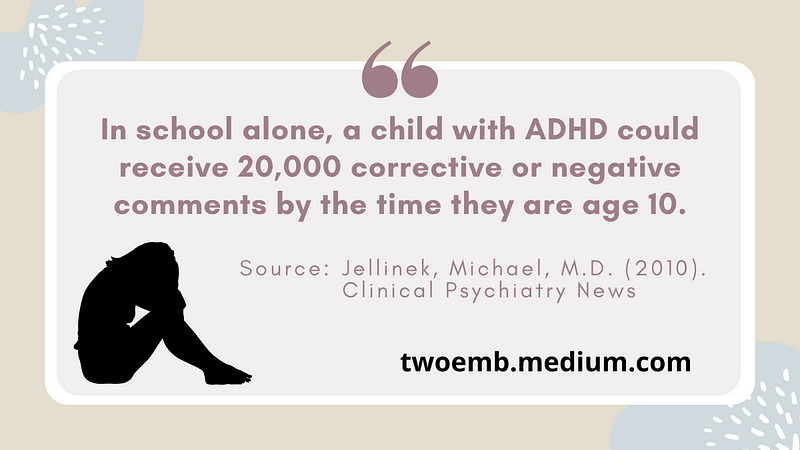
The more we provide support and help children develop skills and tools to manage their symptoms, the more success they will experience, and the better their self-image will become. This will also set students up for better success in the future because they will have the scaffolding beneath them that will allow them to internalize and then utilize these skills independently.
Understanding & empathy
Not only can a diagnosis help a person understand themselves better, but it can also help others understand and support them more effectively. As parents, there are times in our lives when we ask “why on earth would you do that?!” Sometimes (but not always, sorry!) a diagnosis helps answer that question.
Understanding and knowledge help us to be more compassionate toward children when their behaviours are challenging and test our patience. They can help us see things from the child’s perspective, which allows us to be more empathic. So many children with ADHD desperately need more understanding and compassion from the people in their lives, and this starts with adults being better educated about ADHD and neurodivergence.
Neurodiversity vs. pathology
The title of this article includes the word diagnosis because that’s often what we, as neurodivergent people, need from the medical community in order to access accommodations and supports.
With that said, neurodiversity and diagnosis are conflicting concepts in many ways.
Neurodiversity refers to variations between human minds occurring naturally within a population, and includes conditions such as autism, attention deficit hyperactivity disorder (ADHD), dyspraxia and dyslexia. This model recognizes strengths alongside challenges.
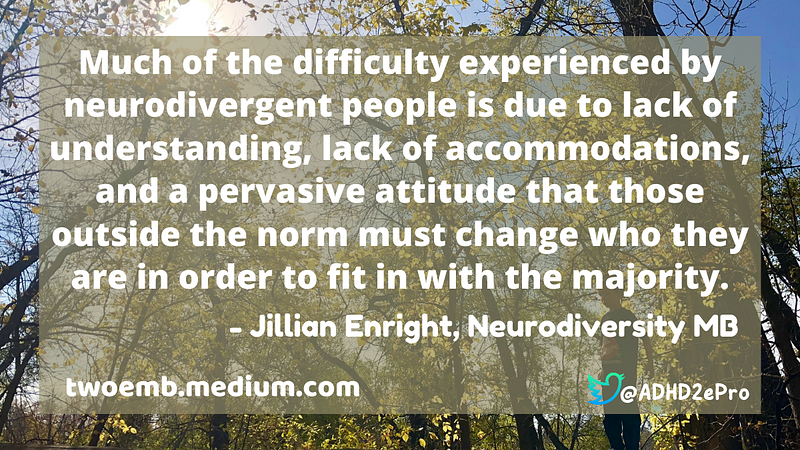
Neurodiversity is often positioned in contrast to the traditional medical model, in which diagnostic criteria are based on perceived deficits and presumption of pathology, meaning that a diagnosis assumes being outside the norm is a disorder rather than simply a difference.
The neurodiversity movement acknowledges that being different comes with challenges, and one’s neurodivergence can present symptoms that cause an individual distress, in which case those symptoms require treatment.
Community
“ You have ADHD? Me too!” A diagnosis can help people find their cohorts, which in turn helps them to feel less alone. Just search for ADHD hashtags on social media and you will find a community of people supporting and accepting each other and celebrating their neurodiversity.
#Neurodiversesquad (founded by Dani Donovan), #ADHDTwitter, and #NeuroTwitter to name but a few.
There are various online and in-person groups that families can join to find others who are on a similar journey. Knowing others are in the same boat can be very validating and even comforting.
One of the most important feelings in childhood is a sense of belonging, of being accepted and liked for who you are.
Let’s be honest, that’s one of the most important feelings in adult life too.
© Jillian Enright, Neurodiversity MB
Related Stories
The Five Stages of ADHD Diagnosis
My Diagnosis Helped me Rediscover My Passion
When you join medium, as a member you’ll have access to unlimited reads for only $5 per month. If you use my referral link, I’ll earn a small commission, and you’ll earn my undying gratitude.
References
Dunn, S. J. (2018). Pathology or Neurodiversity? Cognitive accessibility and the rhetorical construction of ADHD in higher education. (Doctoral dissertation). Available from ProQuest Dissertations & Theses Global database. (UMI №. 2111872353). https://www.proquest.com/docview/2111872353
Harpin, V., Mazzone, L., Raynaud, J. P., Kahle, J., & Hodgkins, P. (2016). Long-Term Outcomes of ADHD: A Systematic Review of Self-Esteem and Social Function. Journal of Attention Disorders, 20(4), 295–305. https://doi.org/10.1177/1087054713486516
Jellinek, Michael, S. (2010, May). Don’t Let ADHD Crush Children’s Self-Esteem. Clinical Psychiatry News, p. 12.
Leadbitter, K., Buckle, K. L., Ellis, C., Dekker, M. (2021). Autistic Self-Advocacy and the Neurodiversity Movement: Implications for Autism Early Intervention Research and Practice. Frontiers in Psychology 12, 782. https://doi.org/10.3389/fpsyg.2021.635690
Taylor, G. (2021, March 3). Embracing neurodiversity in medicine. The Royal Australian College of General Practitioners, 50(3). https://doi.org/10.31128/AJGP-03-21-1234e
October is ADHD Awareness Month
Each year, the Centre for ADHD Awareness, Canada (CADDAC — caddac.ca/adhd) hosts an ADHD conference. Due to Coronavirus restrictions, this year’s conference was held entirely online, but this makes it more accessible for those who cannot travel.
In 2019, the CADDAC created a series of videos called “ADHD and Me” aimed at children to help them understand ADHD better from a kid’s point of view. There are a series of “ADHD Speaks” videos from adolescents and adults with ADHD as well.
About the Author
Jillian is an ADHD 2e Coach and Child Advocate in Manitoba, Canada.
Jillian has a diploma in Child & Youth Work and a Degree in Psychology, as well as being the parent of an amazing 2e/ADHD child.
Visit ADHDMB.ca and facebook.com/ADHD2ePro to learn more.