
What Lesson Planning Done Right Looks Like
How I’ve learned to work smarter, not harder when it comes to lesson planning.

You want to see a teacher change moods and quickly?
Just say two words — lesson plan.
I’ll explain why these two words can change moods for the worst in a moment, but let’s just get one thing straight first.
And I think most teachers will agree with me on this:
Teachers do need lesson plans, but what they don’t need is the frustration of trying to meet ideal expectations in a realistic classroom.
I am not against lesson planning, never was, nor will ever be.
I’ve been a teacher long enough to understand the difference between how classes are run when I do make a lesson plan and when I don’t.
Yes, I’ll admit it.
After five years of teaching, I traded in my own lesson plans for sticky notes in the textbook, and relied on my belief as a teacher in order to get me through the lessons.
I soon discovered my energy levels were leaving me unsatisfied with what was happening in the classroom.
I needed to change something and in doing so I came to these two realizations.
You must always work smarter, not harder.
and
Lesson plans are to teachers what scripts are to actors.
I’d like to start by looking at classrooms in general.
Then I’d ask you to join me as I look more into the concept of working smarter, not harder.
And finally, we’ll dive into the mindset of lesson plans as scripts.
That’s our plan for today.
Let’s hope it goes well.
The Ideal vs. the Reality of Classrooms
In an ideal classroom, what we envision a lesson plan on paper is what comes to life in the classroom.
However, the reality of what happens in a classroom can make your lesson plan into an afterthought.
At my university there was a large statue inside the front of the education building of a large marble grain of salt. And whoever dared to ask what it meant was told — as a teacher, it meant to take everything that happens to you in the classroom with a grain of salt.
Translation: to expect the unexpected as you walk into a classroom.
More often than not, as a teacher, things will not go as you expected them to go in the classroom simply because we live in a realistic world where real problems can happen.
My ‘Expect the Unexpected’ Story
My expect the unexpected story I faced during my teaching practicum was in a grade two classroom. After a week of observing my teacher supervisor teach his class, I had to begin my week of teaching.
I prepared as I should with my lesson plans in hand ready to start the week with my 32 little students.
As I was saying good morning on my first day, one poor student was not his usual self that morning and ended up throwing up all over himself and his desk.
I was stunned and looked at my teacher supervisor, whose only message to me was: “This is your class now, what are you going to do next.”
Well, I didn’t run out of the classroom, like I imagined I should.
Instead, I took control of ‘my class’ and asked the 31 remaining students to go to the back of the classroom and sit on the carpet.
Thankfully, the child who was sick was tended to immediately by my teacher supervisor and was sent home.
Instead of having the students take the lesson at their desks, I was going to give them the lesson on the carpet with the classroom windows fully opened until the classroom could be cleaned up from the mess.
While I attempted to start the class again, the school janitor had to move desks around to clean the floor. Bless him, he tried to be as quiet as possible.
And with that, I’d like to pause for a moment and take this time to give a big thank you to school janitors worldwide!

Of course, my lesson plan had to be tweaked because, at that very moment, I had 31 pairs of eyes staring up at me, waiting to learn the lesson of the moment on the classroom carpet.
And as they say in the acting world — the show must go on!
I’m happy to say that it all worked out in the end, and now I can share this story with you as I reflect on it with a smile.
Let’s now talk about how teachers can work smarter, not harder when it comes to creating effective lesson plans.
Work Smarter, Not Harder
Working smarter means using the time you are given efficiently. Therefore, the general outline of a lesson plan should be based on time.
Time management is of the utmost importance in the classroom because when managed correctly, students will have no time to cause trouble since they are busy with enjoying the activities that need to get done.

Teacher Time vs. Student Time
A lesson plan should reference “teacher time” and “student time” as this helps change up the classroom energy levels since each group is given their own special time in the classroom.
In the beginning of the school year or semester, these two times should be made clear to the students as part of classroom management strategies.
Teacher time is when the teacher is the focus of the classroom with teacher-led activities such as opening the class with a discussion and getting all activities wrapped up before the end of class.
Student time is when the students are the focus of the classroom with student-led activities such as centers, group activities, and being allowed to move about to get things done inside or outside the classroom.
The activities students participate in should cover the main objectives of the lessons and give teachers the opportunities to conduct formative assessments.
Checklists Help Structure Time
In saving time (and energy) when designing a lesson plan, teachers should consider using a checklist as a way to establishing a routine in lesson planning.
I share with you my checklist for building a lesson plan, which you can download for free.
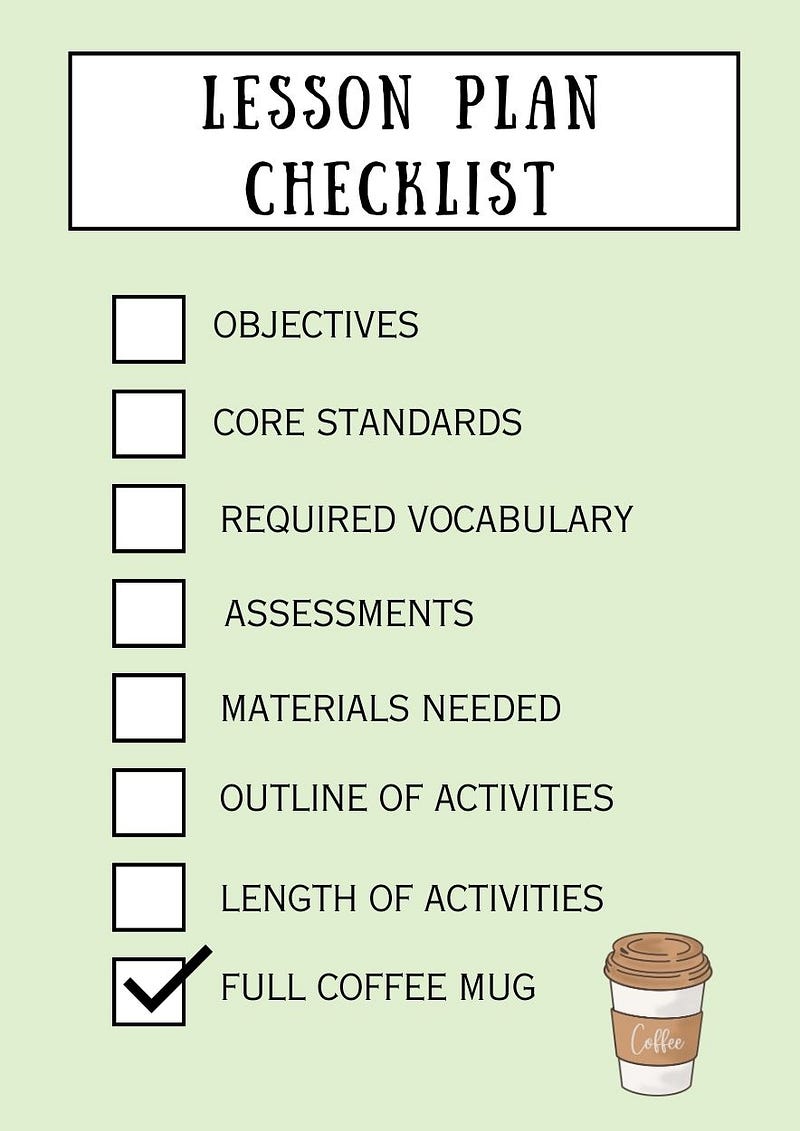
An efficient checklist will help motivate teachers to work smarter when it comes to further developing their lesson plans with the intention of bringing good energy and inspiring ideas into the classroom.
Thinking of the classroom as your stage where words come to life is one mindset that can help make lesson planning more enjoyable.
Lesson Plans As Scripts
When designing a lesson plan, imagine how your lesson would like to be played out on the classroom stage.
Imagine your students are the eager actors ready to take instructions on how to learn and perform to make words come to life in the real world.
What messages they will carry forth with them as they enter and exit stage left now and in future classrooms, and how they will get creative when not enough resources will be available to them.

Teachers, you are the directors. Students need you to help guide them along their character development while in your presence. Students will follow your lead.
Teach students how to become mini-directors in helping the other actors along when they can’t remember ‘to go down stage or up stage’ in their attempts at learning material in the classroom.
Share your lesson plan script with teacher colleagues by collaborating to help get inspired by what they are doing in their classrooms and how you may also inspire them as well.
Lesson plans as scripts allow for teachable moments. Moments that come to life at unexpected times, but with the goal of adding to life’s lessons.
If you imagine your lesson plan as your script in guiding you, it will surely guide your students as well.
Final Thoughts…
While the complexities of lesson planning will never go away, how we as teachers perceive these complexities and deal with them can make for better outcomes in the classroom for us as teachers and our students.
Despite the headaches it brings, we as teachers must admit that the ultimate goal in writing lesson plans remains to foster a love for learning and inspire students to reach their fullest potential.

It took a while to see lesson planning as writing a script, and this really helped me get back into writing them for better outcomes in the classroom.
As a teacher, I take on many roles, and so I can choose to be an actor like my students, the director who leads them, or the playwright who makes changes to the script since the show must always go on.
So, my teacher friends, the next time you have to craft a lesson plan, remember — it’s a chance to shine as a playwright aimed at creating a better and brighter future for your students.
If you enjoyed this article, consider connecting with my other teacher-related articles below.


