
Five Classroom Management Strategies That Work
A look at five effective classroom management strategies that work in any classroom.
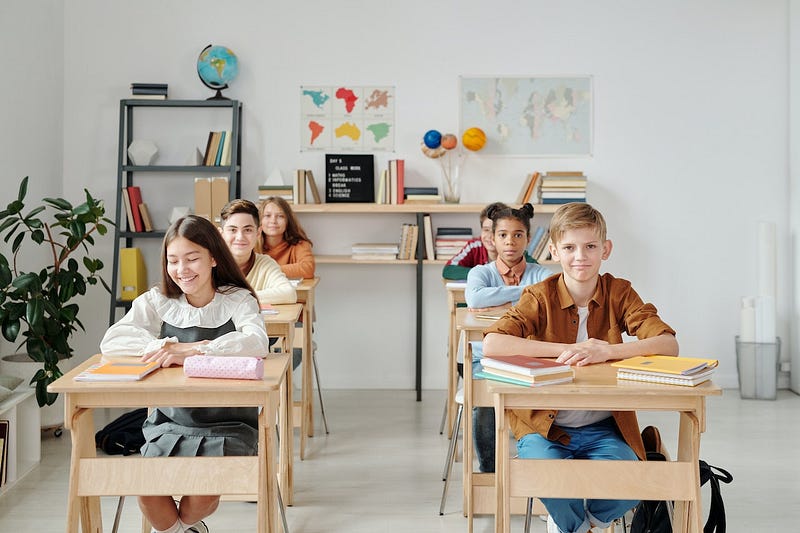
“What is the goal of classroom management — is it a quiet classroom, or something else?”
Teachers who spend the first week of school working on all aspects related to classroom management will find that their classrooms will effectively run themselves, whereby allowing for real teaching and learning to take place.
And ever little thing matters — from how students enter the classroom to how they leave their chairs.
In other words, you want any teacher who substitutes for your classroom to leave saying only positive things about your classroom.
That really is the end goal.
Classroom management when done correct can really enhance how much students learn in the classroom, whether it be in the traditional in-person classroom or the online classroom.
When classroom management is not done correctly students will not only lose the chance to learn what they need to, they will also lose their identity in the classroom as they begin to feel lost with what is happening in the classroom.
Getting your classroom ready with important spaces before school starts also helps with classroom management since it is the beginning of establishing a safe learning environment.
Establishing Classroom Management Strategies that Work
In the early days of a new school year, a teacher must focus on classroom strategies for their sake and the sake of the students themselves.
The consequences for overlooking this important aspect to teaching will have serious negative impacts to learning.
In looking at the different levels of education, the one common thread is that the teacher and students should work on the strategies together.
1. Establish Effective Classroom Rules
Proper classroom management strategies at any level in education works best when the teacher works with the students to establish certain classroom rules.
The ideas for the rules should come from the students. This means that students are in control of how the class starts and finishes, along with rewards and consequences to actions and behaviors in the class.
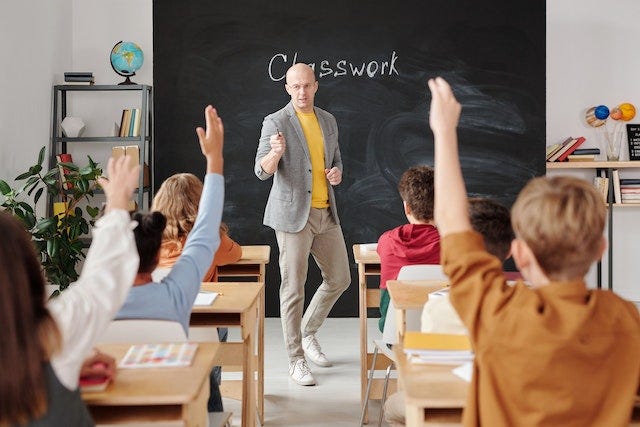
A simple example is to raise your hand when you want to speak.
This rule is intended to give credit where credit is due, or to help when a misunderstanding occurs. A student who volunteers to answer will be helping others either way.
When students shout out the answer, the answer is validated, but not the student.
2. Create A Safe Classroom Enviornment
Rewards and consequences play a key factor in establishing a safe classroom enviornment.
When it comes to rewards and consequences, teachers must include students in the discussion, and should not promise unattainable responses for either rewards or consequences.
Teachers should NOT break their personal bank accounts in handing out rewards, but instead offer up rewards that have significant meanings to students and are worth their effort.

Teachers must NEVER make promises of rewards, and then not follow through with such promises. For example teachers should not promise bonus points on a test question, and then not deliver.
Just as important, teachers should NEVER offer a consequence that is not feasible for the student or teacher to carry out. Teachers should be conscious of the fact that often times when punishing students they often end up punishing themselves. If for example the student has their free time taken away, the teacher may have to give up their free time to spend with that student in time-out.
3. Establish Meaningful Classroom Routines
Students tend to be much more positive in their response to the teacher and their environement when they know what is coming next.
When teachers establish classroom routines, this adds to the comfort students feel in the classroom since they know what is expected of them because of the routines set out in the first week of school.
For example, in entering and exiting the classroom, students will know what behavior is expected of them because of established routines.
Early finishers will know what follow-up tasks are expected so as to occupy their time in meaningful ways.
4. Use Silent Cues
Silent cues help to keep the noise level down and get students back on track if they seem to get distracted by those around them.
Silent cues such as the teacher standing near the desk of a student who seems distracted, can help to keep the focus on the teaching instead of the student.
Silent cues to go to the washroom for younger grades can also help to keep the focus on teaching rather than on who is coming or going during the lesson.
However, as a routine, students should know that when the teacher is teaching, students should not leave the classroom unless it is an emergency.
When students are doing work at their desks, then it is an appropriate time to leave the classroom for necessary reasons.
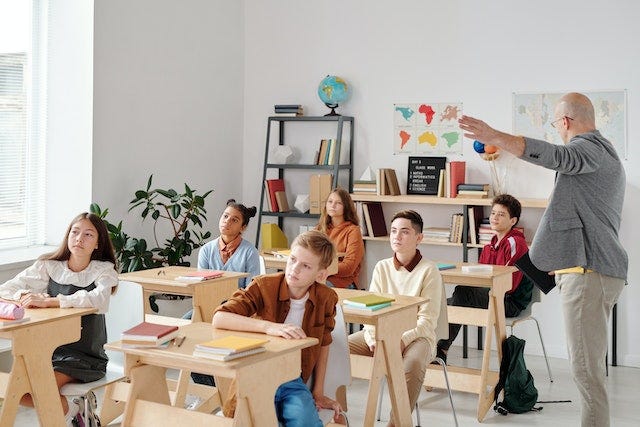
5. Establish Easy Transitions
Transitions in the classroom simply mean moving from one task to another. Students will often find that this is the time they can relax and get loud if they don’t know what is coming next.
However, if the students are aware of the transitions from one activity to the next, then they will often do so without causing issues with discipline in the classroom.
It is important in lesson planning to have a variety of tasks students can get done in the classroom that change the pace of activities in the classroom.
When students are sitting the entire time in the classroom, they may find that the time passes slowly.
However, when students find that the pace of the activities in the classroom changes, it gives them new found energy and time for them passes quickly.
Activities that have students talking to each other, moving around the classroom, can help to change the pace of the classroom, so it’s important to include these types of activities in teacher lesson plans.
Classroom Management Strategies in K-12 Education
The approaches to classroom management strategies will vary with how much attention students give towards their teacher.
Classroom Management & The Primary School Level
At this level, students are more focused on being pleasing to their teacher, and their friends are pretty much after-thoughts where they have no shame in calling out each other when they are not behaving as they should.
Students at this level can be tasked with simple classroom jobs as it makes them feel like they belong and a sense of responsibility.
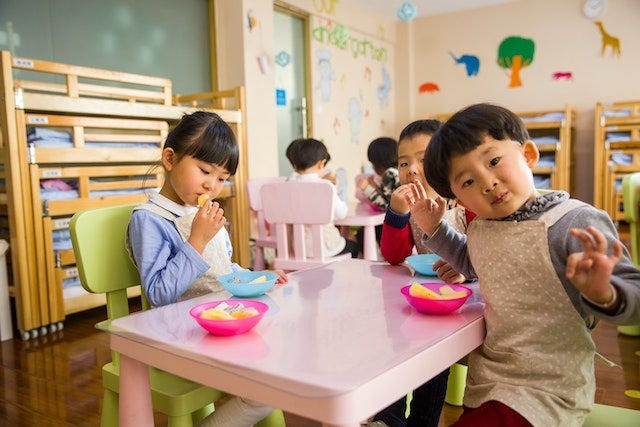
They are accepting of rules presented by the teacher, so there is no need to negotiate which rules make it to the list.
Consequences should revolve around showing what actions make students happy or sad, and that students want to be happy and not sad.
Classroom Management & The Middle School Level
The tides begin to turn at this stage of learning as students begin to focus on being pleasing to their fellow classmates and friends rather than the teacher.
This means that the teacher needs to become more of an expert in negotiations between two choices, making one choice (the recommended one) seeming to be much more appealing than the other.

Students at this stage assume much more responsibility in forming proper classroom rules and procedures as such that the teacher is seeing a class essentially run itself.
The students help to determine the rewards and consequences that the students function as a team and that any consequences may reflect badly on the class instead of one individual.
Students may take ownership of their consequences by writing why they are receiving the consequence and in understanding that this goes into their portfolios for the class.
Classroom Management & The High School Level
The teacher at this level is mainly the mediator as negotiations are much more decided among students and respect for the teacher develops, if the teacher is versed in communication and knowing when to step in to mediate the negotiations.
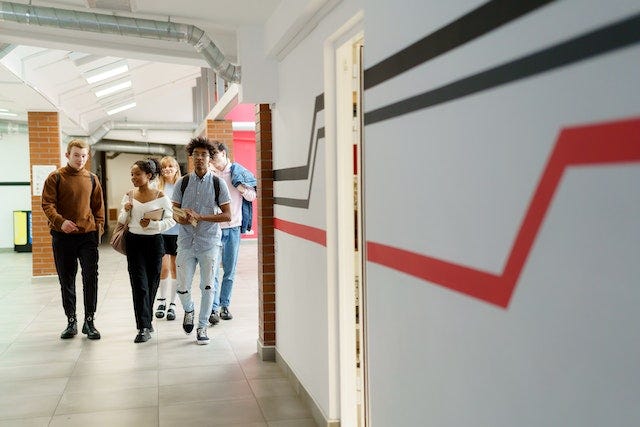
Since the students at this stage are fully aware of how consequences may impact on their reputation and/or grades, there is no real need to emphasize consequences other than the first day of school.
Students may understand that any official consequences may be recorded in their official records that could impact on their future educational careers.
Classroom Management Strategies In The Online Classroom
When it comes to place, that is the face-to-face classroom verses the online classroom, classroom management strategies should have the same impact, but naturally the approach will vary.

Sure the “mute” button could act as a good source of control for a noisy online classroom, but teachers should not depend on technology alone to help in discipling the students.
In the online class, students are to be made aware in the beginning of the class that if they fail to abide by the classroom rules or procedures, then they would need to fill out a report and it goes into their portfolio.
However, students should also be aware that any rewards they receive also goes into their portfolio.
Final Thoughts…
Classroom management is very important to both the teacher and the students in the classroom. It should not dismissed by the teacher because they expect students will stay well-behaved during the entire class.
Teachers who encourage students to become part of the classroom in setting up a positive learning environment find that it benefits both students and the teacher, because the time spent in the classroom can be used effectively when it comes to learning.
This also helps when building the teacher — student relationship in making learning easier.
When students are ready to learn the teachers can improve their teaching strategies effectively in the classroom.
In the end, the main goal for classroom management is for effective teaching and learning to take place.
The quiet classroom is just an added bonus!
If you enjoyed this article, consider reading my other articles on classroom management.


