
The Powerful Role Negative Emotions Play in Learning
A look at how negative emotions connect to student learning in the classroom.

Think back to the subject you hated most in school.
Now think about your grade in that subject and how easy getting that ‘good’ grade was when taking that subject.
Not easy at all!
If we think about any subject we are learning, how often do we take the time to realize the emotions we feel as we attempt to learn that subject?
For me, it was maths.
Yes, until my 10th grade in school, math was my enemy for we could never have a relationship because everything was so misunderstood.
But, in 10th grade, I learned to accept what I was feeling and changed my perception of math, and that’s when I began to fall in love with math.
We still have our issues, but I digress.
Back to the article….
Let me show you how emotions play a major role in learning.
In generations gone by, traditional classrooms placed the focus more on gaining knowledge, rather than cultivating relationships with the idea of learning itself.
In recent times, research has shown that balancing emotions with learning meant that greater emphasis must be placed on the connections between emotions and the idea of learning.
Regulating Emotions as Part of Student Learning
In highlighting the balance between emotions and learning, this article will focus on high school years and beyond, as students in primary and middle school are encouraged to focus on their emotions.
Why then do emotions play less of a role as students get older?
Students in these school years may overlook the connections emotions play when it comes to learning because of societal expectations.
As students approach their high school years, they generally become more aware of how others percieve them, and so they may worry that signs of negative emotions may signal weakness.
However, with being allowed to connect to their emotions, students may begin to see how their negative emotions stand in their way of learning.

When teachers explain and demonstrate to students how emotions in general may help or hinder their learning, students may begin to self-regulate their emotions as they learn.
When students begin to connect to their emotions, they may either find ways to overcome anxieties attached to learning, or may decide learning a particular subject is not for them.
Overcoming Emotions That Stand Against Learning
Once students recognize negative emotions that may be standing in their way, they can begin to work towards overcoming these emotions.
Often times students can begin to form negative emotions towards what they are learning for varying reasons.

For example they may find what they are learning to be:
- too hard
- useless
- boring
Whatever the reasons, teachers can help by explaining and demonstrating the beneficial skills attached to learning a subject. Skills students may benefit from include: problem solving, critical thinking, and time management.
Regualting Emotions in the Math Classroom
Math is perhaps the subject that is most closely tied to negative emotions students experience with their learning.
Often this is due to either the subject concepts being too hard, or deemed useless by the students.
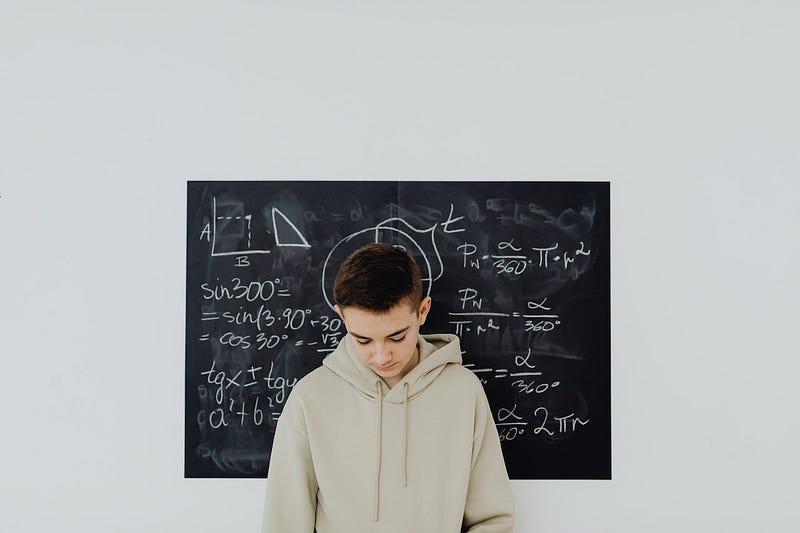
These negative emotions may also lead students to develop anxieties when it comes to learning math, or any subjects related to math.
In helping to overcome negative emotions tied to math learning, teachers can help to show how concepts in math are really meant to enhance their problem solving skills.

How students approach solving a problem could be all they really need to understand when it comes to math, if they can’t bring themselves to show positive emotions when it comes to learning math.

Regualting Emotions in the Online Classroom
Learning in the online classroom worked well for those who chose to learn this way.
But when the pandemic of 2020 caused classes around the world to learn online, anxieties and negative emotions were felt by both students and teachers.

Negative emotions tied to learning online were also caused by various factors including;
- too hard to focus
- too boring
- the fear of technology
- the unfamiliarity of technology
- socioeconomic status
These factors directly impacted on students which resulted in what can be considered as learning loss among many students.
Again, in working to overcome negative emotions, teachers can help by giving students encouragement through online activities so students can take back control of their learning and benefit their other skills such as organization, communication, and time management.

Accepting Emotions For What They Are
Not every student thrives in every traditional subject and this is something that should be accepted rather than forced to change.
In recognizing emotions for what they are, both teachers and students can move forward with personalized learning for students in dealing with a particular subject that they may never be comfortable with.
Often times, when it comes to the genders, boys tend to have a harder time regulating their emotions when it comes to learning in their high school years.
This may be in part due to societal expectations in defining identity and gender roles. Forcing boys to express their emotions when they are not ready or comfortable may only lead to further problems.

In recognizing the differences genders bring to the classroom, including how they deal with emotions, teachers can use these differences in ways that may benefit the different ways boys and girls learn.
Emotions and Personal Goals
In accepting emotions for what they are in the classroom, teachers can work with students to make personalized goals for their academic success. These goals may be to understand the basics or to learn in non-traditional or differentiated ways.

Final Thoughts…
If emotions in the classroom are overlooked, students may never come to realize why they never enjoyed their time learning a particular subject.
Students who may seem like they can’t learn a subject in the traditional classroom, may actually thrive in learning the same subject outside the classroom where they are encouraged to follow their goals and passions in their own way.
Working with positive emotions we feel when learning brings our success to new highs.
Not dealing with negative emotions we feel when learning brings our desire for success to new lows.

So hopefully, after reading this article you, as teachers, parents, or students, agree with me just how important emotions are when it comes to learning.
- Danya, xo


