
FROM ‘CATCH-22’ TO ‘GONE GIRL’
What Do Publishers Really Pay You For A Book?
Learn from these 63 mind-blowing (or heartbreaking) ‘advances’ paid to bestselling or barely selling authors
“Thrilled” doesn’t begin to describe how I felt when a major publisher bid $10,000 for my first novel. I was the book critic for an Ohio newspaper at the time, and I wanted the Cleveland Orchestra Chorus to stand up in Public Square and sing the “Hallelujah” chorus.
I was overjoyed because I’d written my novel on a whim and wasn’t sure I’d find a publisher at all. And I’d read a lot of literary history and knew of famous authors who had received a far lower “advance,” the publishing term for money paid after you sign a contract.
The truth about ‘six-figure advances’
You could easily get the idea from news reports that successful authors are all signing break-the-bank deals with publishers. But a closer look at the numbers tells a different story.
Let’s say that you get a $100,000 advance. Your literary agent will take a 15% commission. In the U.S., you’ll also owe federal and state income taxes on your advance, which could eat up another 30% or more. And publishers pay on an installment plan. You used to get half of your money when you signed the contract and half when you turned in an acceptable manuscript.
Advances today may be paid in thirds, fourths, or fifths. If your contract calls for you to get a quarter of your money on signing it, that $100,000 might net you only $25,000 up front. That’s before the agent’s commission and taxes, and it will have to cover your expenses until the next installment arrives. That impressive-sounding “six-figure advance” may leave you subsisting on freeze-dried ramen and struggling to pay the rent, especially if your book involves steep travel or research expenses.
Did authors have it better in the past?
When you see how little some authors are expected to live on, you might wonder if they used to earn more. But, in some ways, publishers have always played a game of, “How low can you go?” Agatha Christie’s first novel, The Mysterious Affair at Styles, sold for $31. Joseph Heller got $1,500 for Catch-22. Stephen Crane received no advance for The Red Badge of Courage.
It’s a sobering picture, but knowing what great authors earned can be oddly comforting. My advance for my first novel might sound feeble, given that it barely reached the low five figures. But I see it differently: My advance was nearly seven times as much as Joseph Heller’s for Catch-22. And my novel eventually earned about $40,000 overall, including royalties and other income from it.
On the list below, you’ll find 63 advances paid to well-known authors, which may help you look more kindly on your own earnings. I’ve converted British pounds into dollars but not yesterday’s dollars into today’s. For context, I’ve added comments that reflect my experiences as a book editor and a note on my sources at the end.
Martin Amis, ‘The Information’ — £500,000 ($615,655)
British advances historically have been lower than those in the U.S, and the English novelist Amis sparked an uproar when he demanded £500,000 for The Information after the success of earlier books like Money and London Fields. His publisher, Jonathan Cape, had offered £300,000. Amis left Cape and years later said he wished he had stayed.
“The person who wants a quiet life, which is 90% of me, should have taken the Cape offer, and that would have been the end of it,” Amis told the Guardian. “These things stay with you. For years it was the number one thing people asked about, and it was not my finest hour.”
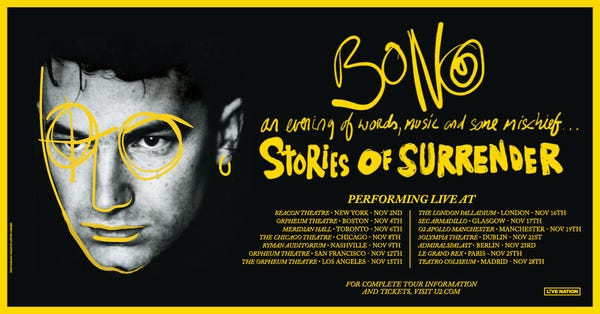
Bono, ‘Surrender’ — $7 million
You might expect the first memoir by the U2 frontman to get a soaring advance, and you’d be right: Surrender brought Bono $7 million, according to Irish media.
Agatha Christie, ‘The Mysterious Affair at Styles’ — £25 ($31)
Christie received £25 from the publisher John Lane for her first novel, The Mysterious Affair at Styles, which introduced Hercule Poirot. A biographer said she found the Lane contract exploitive, and no wonder. Before she died, Christie had become known as “the world’s bestselling novelist.” She earned about $20 million from her work, according to Time.
Mary Higgins Clark, ‘Where Are the Children?’ — $100,000 (paperback rights)
In her lifetime, Clark was bestselling female mystery novelist in America. Her big-ticket successes began with the sale of the paperback rights to her first mystery novel, Where Are the Children?, for $100,000 in 1975. She celebrated the 25th anniversary of its arrival with a $64 million deal for five new books for her longtime publisher, Simon & Schuster.
Clinton, Bill, ‘My Life’ — $15 million
The Knopf Publishing Group went for broke when it bid $15 million for Clinton’s 2004 autobiography, My Life, then among the highest book advances ever paid. The former president earned about $30 million overall from that book and its follow-up, Giving, tax returns showed.
Hillary Clinton, ‘Hard Choices’ — $11.5 million
Clinton’s literary stock may have slipped slightly. Her 2014 memoir Hard Choices sold for an eight-figure sum, $11.5 million. Her more recent account of her unsuccessful presidential campaign, What Happened, went for “the high seven figures,” the New York Times said.
Stephen Crane, The Red Badge of Courage — $0
Crane was in his mid-20s and too little known to rate an advance when, in his mid-20s, he signed a contract with D. Appleton and Co. for The Red Badge of Courage. He settled for a 10% royalty on all retail copies sold, according to the Crane scholar Richard Weatherford. Appleton published the novel in 1895, and within a year, it had become an international bestseller and made its author a celebrity. But — owing in part to unfavorable publishing contracts — money woes hounded Crane until he died at the age of 28.
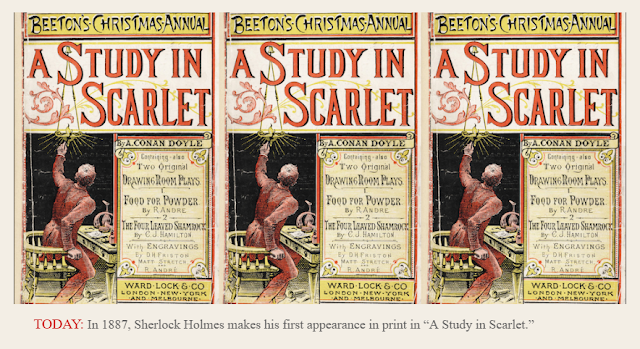
Arthur Conan Doyle, “A Study in Scarlet” — £25 ($31)
A Study in Scarlet, the first Sherlock Holmes novel, appeared in Beeton’s Christmas Annual in 1887. Its publisher paid £25 for “all rights,” which would have entitled the author to no more money when it appeared in book form a year later.
Dave Eggers, ‘A Heartbreaking Work of Staggering Genius’ — $100,000
Some authors talk about their advances in interviews or on social media. Eggers is among the few who’s done it up front in one of his books. The New York Times reported:
“In the preface to A Heartbreaking Work of Staggering Genius, Dave Eggers broke form by telling the reader he received $100,000 for the manuscript, which — after his detailed expenses — netted him $39,567.68.”
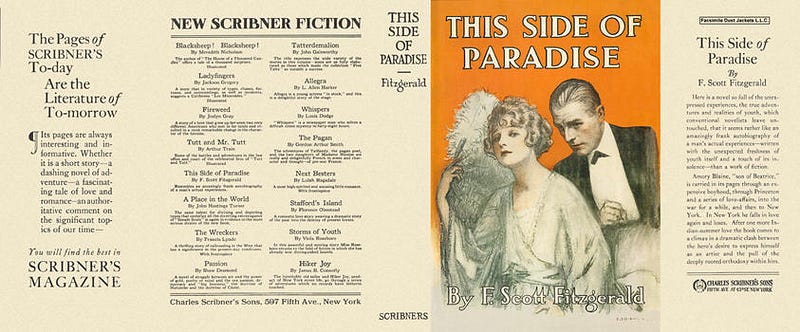
F. Scott Fitzgerald, ‘This Side of Paradise’ — $5,000
Fitzgerald was paid fitfully after Scribner’s signed his first novel, This Side of Paradise. It sold poorly at first. But Fitzgerald kept asking Scribner’s for more money — until he’d received about $5,000 — as an advance against sales he believed lay ahead. In a sense, he was right. His sales went up as he wrote other books, including The Great Gatsby. But they dwindled over time, and in the last year of his life, he earned an unlucky $13.13 in royalties.
Gillian Flynn, ‘Gone Girl’ — $400,000
Writers were shocked when, in 2020, the black young adult novelist L.L. McKinney urged black and white authors to reveal their book advances at the #PublishingPaidMe hashtag to expose racial disparities in the industry. Flynn, who is white, responded by tweeting that she had received $62,500 for Dark Places, $62,500 for Sharp Objects, and $400,000 for Gone Girl.
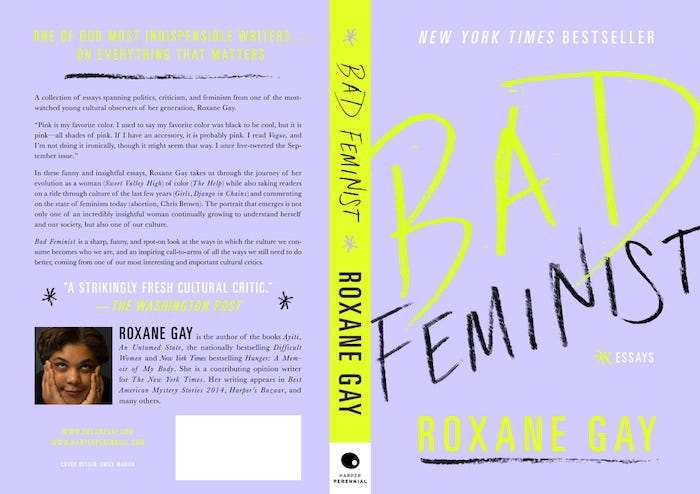
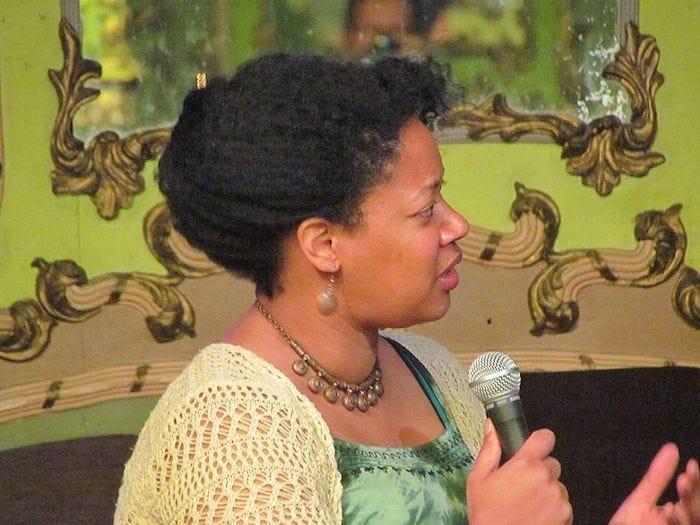
Roxane Gay, ‘Bad Feminist’ — $15,000
Gay received $15,000 for Bad Feminist, a solid advance for an essay collection. After it became a New York Times bestseller, she was paid $150,000 for her next book, The Year I Learned Everything.
Mandy Len Catron had a $400,000 advance How to Fall in Love With Anyone and tweeted: “I, a totally unknown white woman with one viral article, got an advance that was more than double what Roxane Gay got for her highest advance.”
John Grisham, ‘A Time to Kill’ — $15,000
A small publishing firm paid Grisham $15,000 for his first novel, A Time to Kill, which had a modest print run of 5,000 copies. Grisham told a Charlottesville, Virginia, editor:
“The Firm was a deliberate effort to be more commercial and more popular because A Time to Kill did not sell.”
His strategy paid off. Grisham has sold more than 300 million books and has appeared for years on lists of the world’s richest authors along with J.K. Rowling, Stephen King, and Danielle Steel.
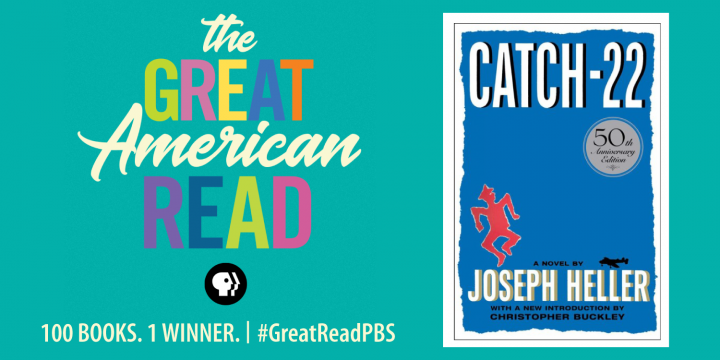
Joseph Heller, ‘Catch-22’ — $1,500
After many rejections elsewhere, Catch-22 found an influential champion in the editor Robert Gottlieb, then at Simon & Schuster. His firm paid $1,500 for the novel, apportioned under the standard terms of the day: $750 on signing the contract and $750 on acceptance of the book.
The hardcover edition of Catch-22 wasn’t a bestseller. But within a year, Columbia Pictures bought the movie rights for $100,000, helping to set the novel on its path to becoming a 20th-century classic. Gottlieb went on to edit Nora Ephron, Toni Morrison, Bill Clinton, and others, and he inspired the 2022 documentary, Turn Every Page.
In a commencement speech, the Vanguard Group founder John Bogle told a story that suggested how Heller saw his bounty:
“At a party given by a billionaire on Shelter Island, the late Kurt Vonnegut informs his pal, the author Joseph Heller, that their host, a hedge fund manager, had made more money in a single day than Heller had earned from his wildly popular novel Catch 22 over its whole history. Heller responds, ‘Yes, but I have something he will never have…Enough.’ ”
N.K. Jemisin, Broken Earth Trilogy — $25,000 per book
The much-honored science fiction novelist Jemisin is one of five authors who have won three Hugo Awards for Best Novel, a group that includes Isaac Asimov. But her Broken Earth Trilogy drew a modest $25,000 per book and her follow-up Great Cities Trilogy, $60,000 per book. In 2020 she won a MacArthur Fellowship, then worth $625,000.
Pope John Paul II, ‘Crossing the Threshold of Hope’ — $6 million
Eye-popping advances often go to entertainers or authors of earlier blockbusters. One that broke the mold arrived in 1994 when Random House bid $6 million for Pope John Paul II’s essay collection, Crossing the Threshold of Hope, correctly betting that the book could become a bestseller. Its Italian publisher, Mondadori, “paid no advance because all royalties on the pope’s book will go to charity,” the Washington Post said.
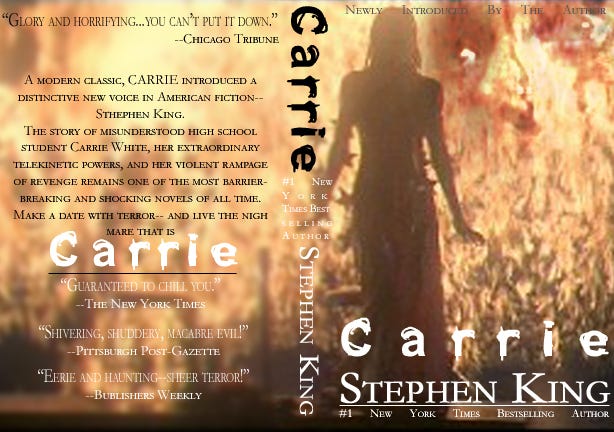
Stephen King, ‘Carrie’ — $400,000 (paperback rights)
King has said that the hardcover advance for Carrie, his first novel, was small: “But the paperback advance just bowled us over — it was, like, $400,000 in 1974.”
Michael Lewis, ‘Flash Boys’ — $0
Some bestselling authors avoid taking advances they don’t need. They collect only royalties after it’s published, which can simplify their finances. One is Lewis, the bestselling author of Liar’s Poker, Moneyball, and The Blind Side. He told New York magazine in 2014 that he hadn’t take advances for his previous two books, which included Flash Boys.
Herman Melville, ‘Moby-Dick’ — $0
In order to protect its copyright, Moby-Dick was published almost simultaneous in the U.S. and Britain. Its American publisher, Harper and Brothers, refused to advance him money for Moby-Dick because, it said, he hadn’t paid back what he’d received for the last book.
Audrey Niffenegger, ‘Her Fearful Symmetry’ — $5 million
Scribner’s bid $5 million for Niffenegger’s horror novel, Her Fearful Symmetry, a follow-up to her bestselling The Time Traveler’s Wife. A New York Times story that mentioned the bid said:
“News of that deal may have seemed odd coming shortly after the chief executive of Simon & Schuster, Scribner’s parent company, announced that because of declining revenue the house would be ‘watching every penny.’ ”
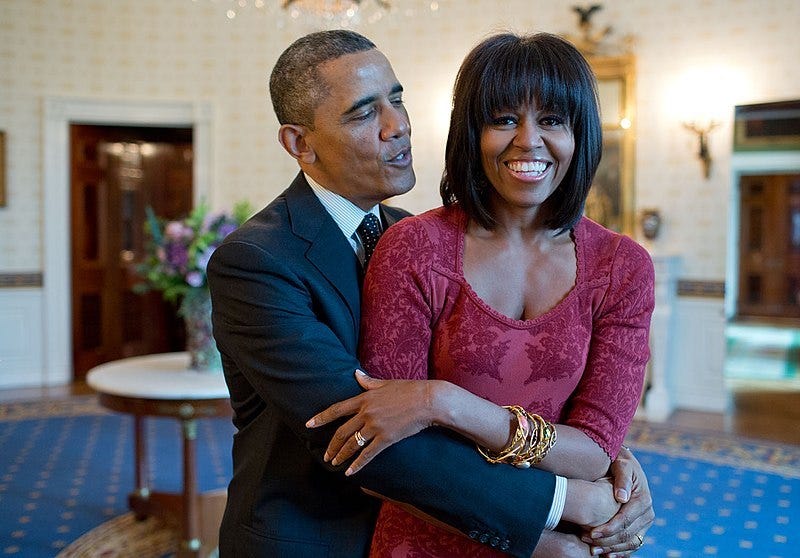
Barack Obama, ‘Dreams From My Father’ — $40,000
In 1995, a literary agent negotiated a $40,000 advance for a memoir by a little-known University of Chicago law professor named Barack Obama. In 2009, five days before he took office as president, Obama signed a $500,000 deal with the Crown Books division of Random House for an abridged version of the book for middle-schoolers.
Barack and Michelle Obama, unnamed books — $30–$65 million
In 2017 the usually reliable Financial Times reported that the Obamas had signed a $65 million deal for two books. That figure, if accurate, could have included her 2019 Becoming and 2022 The Light We Carry and his 2020 A Promised Land along with future titles. But the number seems never to have been confirmed, and some agents believe the couple might have received a paltry $30 million.
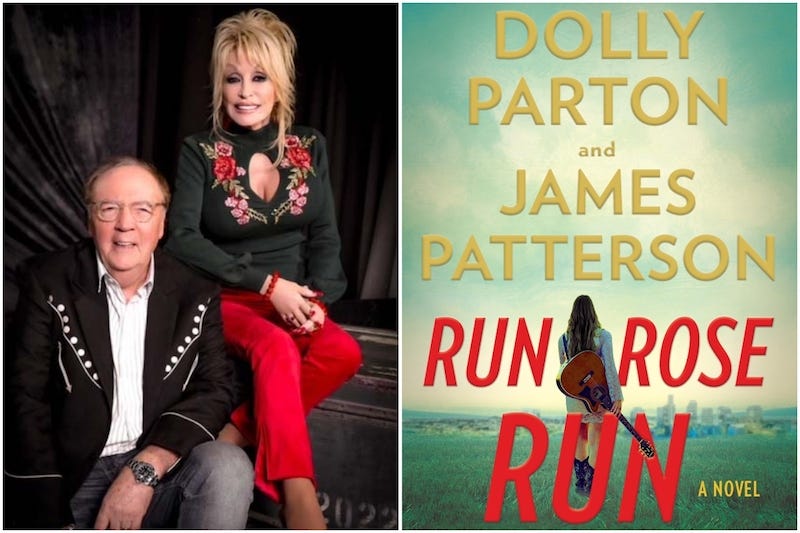
James Patterson, 17 future books — $100–$150 million
Any figure for the Patterson juggernaut is necessarily an estimate. Who can keep track of how fast his novels rake in the cash? But the Guardian suggested plausibly that his 2019 deal for 17 books for Hachette was probably worth $100–$150 million.
J.K. Rowling, ‘Harry Potter and the Philosopher’s Stone’ — £1,500 ($2,000)
Rowling wrote her first novel while on welfare, but she caught a break. In addition to her tiny £1,500 advance for her first Harry Potter novel, she had a grant of £8,000 ($10,800) from the Scottish Arts Council for her writing. After Harry Potter and the Philosopher’s Stone came out in 1997, the U.S. rights went to Scholastic for $105,000. Her current net worth, by some estimates, exceeds $1 billion.
John Scalzi, ‘Agent to the Stars’ — $4,000 in donations
Scalzi published his first science fiction novel, Agent to the Stars, on his website, Whatever. He let people read it for free and asked its fans for donations. That earned him about $4,000. Scalzi recalled during the #PublishingPaidMe social media campaign that he made about $6,500 for his first two novels, which included Old Man’s War. He agreed to a $3.4 million deal for 13 books in 2015.
Harriet Beecher Stowe, ‘Uncle Tom’s Cabin’ — $300
Uncle Tom’s Cabin was first published, in serial form, in the abolitionist weekly The National Era, beginning on June 5, 1851. According to the Library of Congress:
“Harriet Beecher Stowe’s anti-slavery story was published in forty installments over the next ten months. For her story Mrs. Stowe was paid $300….In March 1852, a Boston publisher decided to issue Uncle Tom’s Cabin as a book and it became an instant best seller. Three hundred thousand copies were sold the first year, and about two million copies were sold worldwide by 1857. For a three-month period Stowe reportedly received $10,000 in royalties.”
Donald Trump, ‘The Art of the Deal’ — $500,000
Nobody had to wait for Trump to release his tax returns to learn what Random House paid for The Art of the Deal. The figure surfaced in a 2016 New Yorker profile of Tony Schwartz, Trump’s ghostwriter for it. Schwartz got half of the $500,000 advance and of the millions earned in royalties.
Jesmyn Ward, ‘Sing, Unburied, Sing’ — $100,000
Ward wrote Salvage the Bones without an advance, aided financially by a writing fellowship. After that book won the first of her two National Book Awards, she tweeted during the #PublishingPaidMe campaign:
“Even after Salvage the Bones won the NBA, my publishing company did not want to give me 100k for my next novel. My agent and I fought and fought before we wrestled our way to that number.”
Chip Cheek, a white male novelist, responded that he had received an $800,000 advance for his first novel, Cape May, which changed his life: “But I’m more shocked to see the numbers from writers of color like the extraordinary Jesmyn Ward.”
A note on sources:
All figures come from credible sources such as definitive biographies, the Library of Congress, trade magazines like Publishers Weekly, or the authors’ own words in tweets, essays, or interviews in trustworthy newspapers. Many were publicly announced and have appeared in media worldwide, so I’ve linked selectively. To get the “63 books” in the headline, I counted every book for which I had a figure, whether or not the book had a title (many books are untitled when the deal is done).
Jan Harayda is a novelist, an award-winning journalist and critic, and a former vice president of the National Book Critics Circle. She has been the book columnist for Glamour and book editor of the Plain Dealer in Cleveland. Her work has appeared in major media that include the New York Times, the Wall Street Journal, the Washington Post, Newsweek, and Salon. On Medium she writes the Pop Culture Shorts column that appears every Monday, Wednesday, and Friday on FanFare with quick takes on books, TV, movies, and more.
If you’d like to read all of my articles without hitting the dreaded paywall, please join Medium with my referral link.
You might like some of my other stories on books and publishing:


.jpg)


