
KNOWING WHERE YOU FIT IN
Chick Lit. Dick Lit. Grit Lit. Brit Lit. Why Do We Need All These Genres?
Labeling your writing correctly can help you sell your books or stories, but the options can be confusing
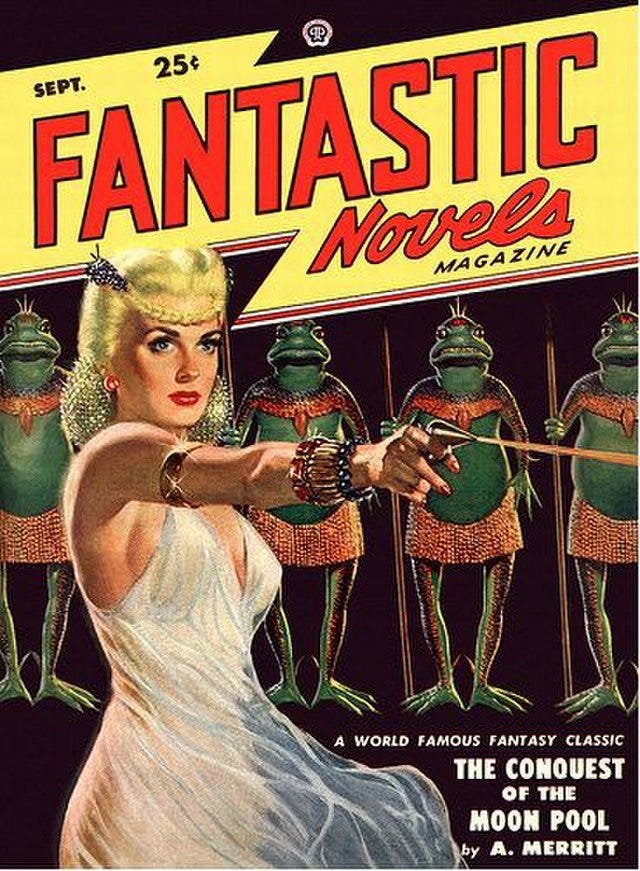
Literary genres are splintering into ever smaller categories.
Take science fiction. When I was the book editor of a large newspaper, I edited a monthly sci-fi column, and most of the novels it reviewed came from a few well-known subgenres: cyberpunk, space opera, and post-apocalyptic among them.
Today sci-fi and speculative fiction fall into scores of categories ranging from Afrofuturism to widescreen Baroque. Some white-hot subgenres barely existed a decade or two ago, such as cli-fi, or novels about the effects of climate change.
The trend goes beyond science fiction or other realms of what’s known as “genre fiction,” such as mysteries and romance novels.
Catchy labels for well-worn topics
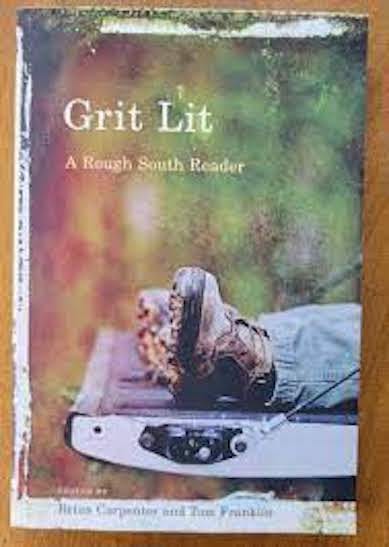
At the library the other day I stumbled on a book called Grit Lit, an anthology from a university press. I hadn’t heard much about “grit lit” lately, so I picked it up to see what’s been happening in the genre. The preface quoted a prominent librarian who said grit lit is “filled with angry, deranged, and generally desperate characters who are fueled by alcohol and sex.”
Well, doesn’t “angry, deranged, and generally desperate” describe a lot of lowlifes you see in fiction these days? Did we need to invent a catchy label for them? When you think about it — wasn’t Captain Ahab pretty “angry, deranged, and desperate” in Moby-Dick, which came out in 1851?
Journalists jump on the bandwagon
Something similar is happening in nonfiction, including journalism. Once it had a handful of specialities codified by the Pulitzer and other prizes, such as breaking news, international reporting, and editorial writing. You didn’t need have worked in a newsroom like mine to figure out what any of those terms meant.
Like other types of nonfiction, journalism has expanded in recent years to include categories that can be confusing.
The popular audio app Justori offers a list of 30 genres that distinguishes between “biography” and “inspiration” (which, in bookstores, often refers to titles with a spiritual focus). The trouble is: Every year, a few of the most inspiring nonfiction books I read are biographies, and some labeled “inspirational” are treacle. Category labels are often no help at all.
Some newer categories for books make little sense even to longtime critics like Kathryn Schulz, who won a Pulitzer for her work for The New Yorker.
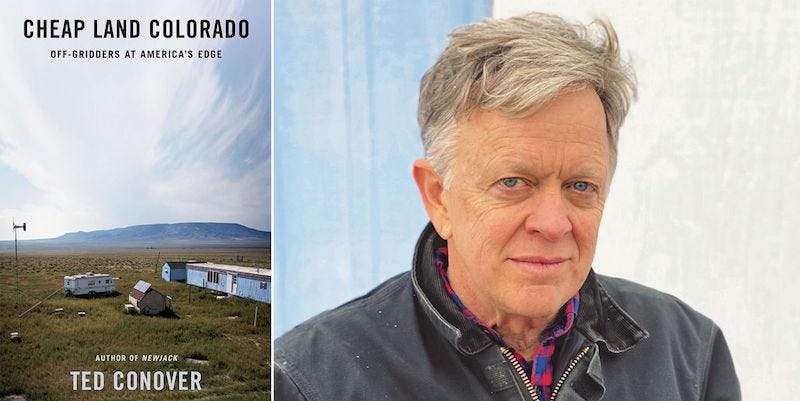
Schulz reviewed Ted Conover’s Cheap Land Colorado (Knopf, 2022) not long ago, and noted that the author saw it as an example of “immersion journalism,” which he’d once defined as “work that grows out of a writer’s efforts to learn about somebody else’s world by placing himself in it for a while.”
Hoping to understand why Donald Trump won the 2016 election, Conover moved from New York City to an off-the-grid valley in Colorado. He lived in a trailer, volunteered for a local social service group, and drove around in a pickup truck.
Conover’s working method, Schulz noted, was “basically indistinguishable” from what was once called participatory journalism and exemplified by Paper Lion, George Plimpton’s 1966 account of taking part in a Detroit Lions training camp. His approach was also indistinguishable from the New Journalism of Tom Wolfe, Hunter S. Thompson, and others who steeped themselves in unfamiliar pursuits.
About “immersion journalism,” Schulz wrote in The New Yorker:
“Why, then, the new term? Blame journalism schools, which like nineteen-seventies real-estate developers, are in the business of creating subdivisions and selling them to the public. Immersion journalism, long-form journalism, literary journalism, investigative journalism, narrative nonfiction: all this was once the open rangeland known simply as ‘reporting.’ No matter what other name you gin up for the work, it has always been the case that the best way to tell a story is to get as close to it as possible and learn as much about it as you can. Whether the result is short or long, shallow or deep, bare-bones or brimming with scenes has nothing to do with how you characterize the process of writing it, and everything to do with familiar constraints: the outlet, the editor, the budget, the nature of the story, the proclivities and abilities of the author.”
Was there any point to adding a new genre to the journalistic mix?
Schulz acknowledged that Conover’s reporting, by whatever name, could produce memorable results:
“Conover has a good eye for the particularity of life on the flats: a kid out riding her bike crashes into an antelope; a family dresses its pet Chihuahua in a leopard-skin sweater to keep it from getting eaten by hawks; a man uses crushed beer cans to landscape the area outside his trailer, as a suburbanite might use mulch.”
Yet the “immersion journalism” had an unsettling aspect. In a wonderful line in her New Yorker review, Schulz said that at times Conover made his stay in Colorado “seem like rural cosplay.” Some of his details, vibrant as they are, were no different from what any good journalism teacher would ask students to gather.
Which brings us back to Schulz’s question: Why do we need the new term “immersion journalism”? The answer is: We don’t.
The term joins an explosion of genres that may have begun with the rise of big-box bookstores that needed a lot of labels to help customers navigate their vast floor space. It went into overdrive with the proliferation of online booksellers and review sites that let you tag books in an infinite number of ways. Journalism and creative writing programs went along.
Now there are so many fiction and nonfiction genres, it can be hard to tell them apart, and you don’t always need to split the literary hairs. Critics may argue about whether Franz Kafka’s “Metamorphosis” and Katherine Anne Porter’s “Pale Horse, Pale Rider” are novellas, long short stories, or short novels, but they’re wonderful books, regardless.
But genres matter a lot in some publishing precincts. Each category has its conventions, and if you want to publish a Western or romance novel, it helps to learn their unwritten rules. Many editors and agents — and publishing firms — specialize in books in a genre, and you can avoid wasting time by knowing their interests before you submit a manuscript.
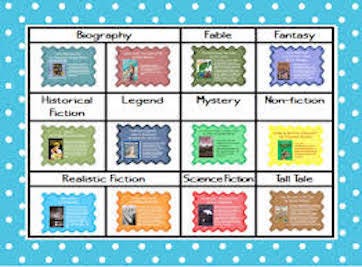
If no genre seems to fit your manuscript, it may be a sign that you aren’t clear about what you want to do. As Schulz’s comments on “immersion journalism” suggest, it’s risky to invent a hopped-up term for what writers have always tried to do: Tell a good story.
Apart from helping you focus your aims, a genre tag or label can send a signal to editors, reviewers, and booksellers about what you’ve tried to do, if not what you’ve succeeded in doing.
In the past decade or two, there’s been an epidemic of genre inflation, or trying to pass off books as something more elevated than they are. The posturing typically happens when pop fiction gets labeled “literary fiction,” often because an author or publisher overrates the quality of a book.
Like most critics for reputable publications, I’ve generally ignored the genre inflation and made my own calls. But if a book has arrived amid a cascade of other forms of hype — on a website, back cover, or press release — I might note that, say, its publisher was billing it as literary fiction when it wouldn’t leave Salman Rushie or Joyce Carol Oates quaking with fear of being upstaged at the next book awards ceremony.
Either way, inflated genre tags or labels may come across as pretentious, especially if you try to impose what you see as a cool new name on an old form. Those cool new names can date fast.
Even in its heyday, the term “chick lit” sparked furious debates. Some authors hated having their novels tagged with a label that seemed to imply that they were only for young-ish women like Bridget Jones in Bridget Jones’ Diary. Feminists saw in the term “chick lit” the evidence of a double standard: Books by men were far less likely to be called “dick lit.” Editors eventually grew tired of seeing novels with a tag that had grown stale.
Cli-fi could be the chick lit of the future if doomsday scenarios about melting ice caps and strangely acting butterflies go out of fashion.
There’s only one rule for writers that hasn’t changed: Think first about what you most want to write — and then what genre it falls into — and not about a genre and whether you could conform to it. Avoid labeling your book or story in your head before you’ve finished (or maybe even before you’ve started) writing it. Focus on telling the best story you can and not where it might fit in on Amazon or elsewhere.
You can drag a book sideways if you try too hard fit into — or avoid — a label. A classic example involves romance novels. Some writers resist using the term for their books — and bristle when others do — believing that it’s not “literary” enough for their work.
But Gabriel García Márquez won a Nobel Prize in part for Love in the Time of Cholera, a romance novel about two people whose love endures for a half century. A book can be a romance novel and other things as well.
Editors have their own ideas, in any case, and if you’re lucky enough to sell your book, they may overrule you if they disagree with your positioning of it in the marketplace. There will always be genre-bending books that defy easy categorization.
The truth is: You can dress your book in fancy hiking gear — such as a clever label for its genre — for its trek to the market. But if editors and readers don’t like the terrain, their response will still be: Who cares?
Janice Harayda is an award-winning journalist and critic who has taught writing at two large U.S. universities. Her work has appeared in major media that include the New York Times, the Wall Street Journal, the Washington Post, Newsweek, and Salon.
Would you like to read all my stories about books, publishing, and the media? If so, please join Medium with my referral link:
You might like some of my other stories about books and publishing:


