
MYTHS AND REALITIES
How Social Media Can — And Can’t — Help You Sell Books
It works for big-name authors with large followings, but what if you’re a small-name or no-name author?
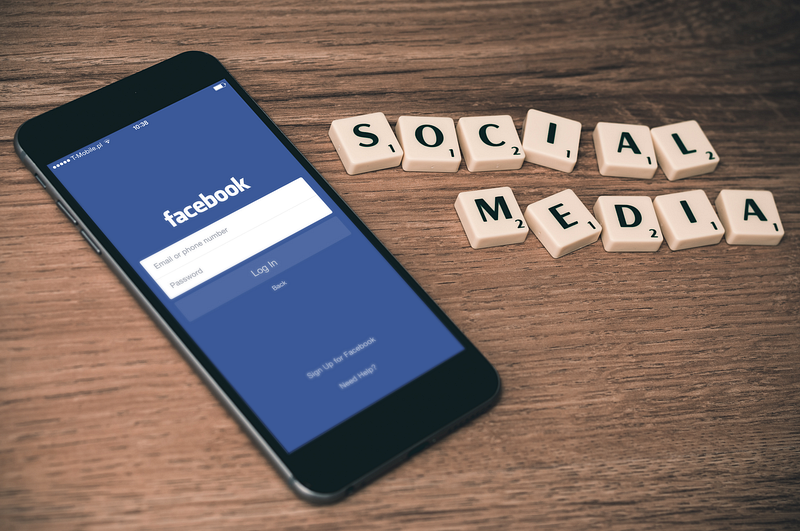
“You have to be on social media.”
If you’ve written a book — or plan to do one — you’ve probably heard this more than once.
Editors, agents, and publicists hail social media as the potential savior of authors ignored by mainstream reviewers and news outlets. As evidence, they point to pop-fiction superstars like Colleen Hoover, whose Himalayan number of TikTok followers recently helped her land an astonishing 15 books on the USA Today bestseller lists at once.
The standard publishing advice boils down to: Books by big names like James Patterson may sell themselves, but if you’re a small-name or no-name author, you must promote yourself relentlessly on social media in order to succeed.
There’s a problem with this advice, as commonsensical as it sounds: No solid research supports it.
As a journalist who writes about books and publishing, I’ve looked for years for hard data that proves that plugging your work on social media sells books. All the evidence I’ve seen is so anecdotal and sketchy, I’ve wondered: Are authors being gaslit by all the “promote, promote, promote” messages they hear?
Two recent, gold-plated articles suggest that social media is, to put it mildly, oversold to writers as a tool for selling books.
The headline on a New York Times story summed up the dispiriting reality: “Millions of Followers? For Book Sales, ‘It’s Unreliable.’ ”
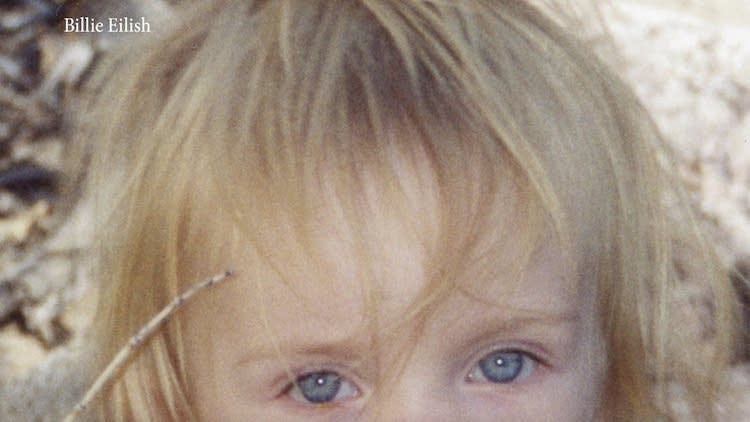
The story cited the case of the pop star Billie Eilish, who had 97 million followers on Instagram and another 6 million on Twitter when a publisher bought her memoir Billie Eilish (Grand Central, 2021).
“If just a fraction of them bought her book, it would be a hit,” the Times publishing reporter Elizabeth A. Harris wrote.
But Billie Eilish sold about 64,000 hardcover copies in 2021, a number that might thrill a newbie but was below expectations for a book for which its publisher paid over $1 million. Colleen Hoover’s novels have sold more than 20 million.
Harris went on to quote industry experts who said that even having a vast social media following doesn’t guarantee success at online or brick-and-mortar bookstores.
“The only reliable part about it is that it’s unreliable,” said Shannon DeVito, director of books at Barnes & Noble.
The consensus seems to be that an ocean of followers — the kind Eilish has — can help you get a book contract. But once your book comes out, the effects of social media are no more predictable for little-known writers than for superstars.
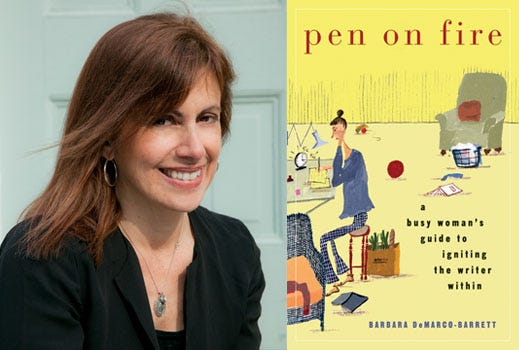
The stark truth emerged in a recent article by Barbara DeMarco-Barrett in the Authors Guild Bulletin, “Social Media: Does It Really Sell Books?” The blunt answer: No one knows for sure.
Jane Friedman, co-founder of Open Road Integrated Media and former editor-in-chief of HarperCollins, pushed back against the Times’ argument that social media is iffy for authors.
“Is it really unreliable?” she asked. “Or is it publishers falling asleep at the wheel? Or is it the case of not-so-great books being published and no one wanting them?”
Friedman’s point about lesser-quality books is apt. Yes, social media is one of the few free options for authors now that newspaper book sections and other local news outlets have shrunk or died.
But it alone won’t sell books. Even the best marketers couldn’t sell string bikinis or Heather Has Two Mommies to the Taliban.
When it comes to sales, many things about a book matter besides social media. They include its quality, its timing, its title, its cover, and the size of its potential market and whether or not it’s saturated.
The social media platform you choose matters, too.
Each platform attracts users who differ at least slightly by age and interests from others. A few of the differences:
· Facebook skews older than TikTok.
· Instagram attracts the visually oriented.
· Tumblr has fallen off the radar.
· Twitter is losing followers so fast, you don’t know who will be around tomorrow to see your posts.
Apart from all of that, many schools, businesses, and government agencies have banned the use of the Chinese-owned TikTok on their devices, raising uncertainties about its future as vehicle for promotion.
Each platform may favor a different type of books. The top #BookTok genres on TikTok are romance, fantasy, and young adult fiction. Those categories are also popular at #Bookstagram on Instagram, a good place for art books, graphic novels, and other work with a strong design element.
Then there’s the delicate matter of how often to plug your book on social media.
Everyone agrees that you shouldn’t wait until just before your book comes out and then saturation-bomb your followers. It’s best to start early: when you sign a book deal or have a firm publication date or season.
After that, how often should you post?
Post too often or too aggressively and you’ll tax the patience of friends who planned to buy your book, anyway. Or you may come across to others as a narcissistic pest too self-absorbed to see that people are dying in Ukraine. In any social context, it’s not smart marketing to keep browbeating people with your achievements long after you’ve made your point — it’s a turn-off.
Many of my Facebook and Twitter friends are authors, and they commonly post or tweet mainly when they have genuine news to report. They do it when they sign a publishing deal, when they have a title or cover they can share (if they didn’t at first), when the advance reader’s copies (ARCs) are available, and when they’re doing a bookstore or media appearance.
Nobody wants to hear about every one-star review you get from a boneheaded Amazon reviewer or kind word you hear from a great-aunt who thinks you’re the next Joan Didion or Philip Roth.
Some publishing experts argue that if you avoid pitfalls like those — and aren’t taking time away from more important tasks — you lose nothing by promoting your book on social media.
But you might wonder even about that after reading a comment by Melissa Stephenson, author of the memoir Driven: A White-Knuckled Ride to Heartbreak and Back (Mariner, 2018), in the Authors Guild Bulletin’s “Social Media: Does It Really Sell Books?”
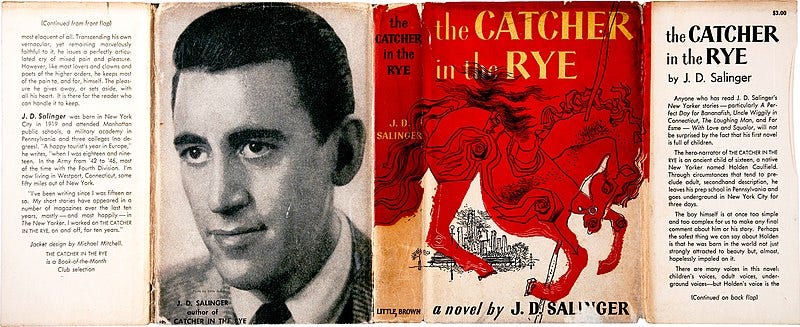
Stephenson has noticed that the expectations for male and female authors can be different: “it seems like women are expected to market themselves — as a persona — in a way I rarely see male writers self-market. The idea is that you sell the persona, not a work of literature, and that you need to do so by writing clickbait essays (where the most intimate parts of yourself are the bait) in hopes of going viral, so that you might eventually write the book you really want to write. Men more often get to play the Cormac McCarthy/Salinger recluse act — selling books by withholding their genius selves from the world, while for women the road to success equals self-exploitation.”
Some male authors also face such pressures. But in my experience, Stephenson is right: There’s a double standard on social media. Women have more of the pressures, just as interviewers ask them questions like “How do you combine work and motherhood?” when they seldom ask men, “How do you combine work and fatherhood?” You may play into that double standard if you give too little thought what you post about a book.
What’s the solution?
DeMarco-Barrett wisely suggested in the Authors Guild Bulletin that you do social media if you enjoy it. I’d add: Or if you think you may gain peace of mind from knowing you did all you could to help your book.
“If you don’t, find some other way to stay connected with your fans and potential readers,” DeMarco-Barrett said. Popular ways to do that include starting your own blog, newsletter, or series of podcasts.
Above all, don’t be guilt-tripped by writing coaches or others who imply that you’ll fail as an author if you don’t promote your books nonstop. That idea can be a subtle way of blaming the victim of an industry that’s badly broken even if books have defied predictions of their death.
In the past two or three decades, publishing has become a winner-take-all business, or winner-take-a-disproportionate-share. Not long ago, 15 authors might have had the 15 spots Colleen Hoover had on the bestseller lists last summer. If your book doesn’t sell, it may have more to do with industry realities than with anything you did or didn’t do.
That doesn’t mean you shouldn’t aim for bestsellerdom. It just means that not everyone needs to be on social media to sell books. Not everyone benefits — emotionally or financially — from its focus on fleeting words.
One of my most successful author friends writes popular books for preteen and younger readers that appear regularly on school reading lists around the U.S. She’s never been on social media: Platforms like Facebook and Twitter aren’t her style, and many of her fans are too young to be allowed on them by their elders.
It may also help to keep in mind the many variables that come into play when you’re trying to sell books on social media.
Marc Resnick, executive editor at St. Martin’s Press, described the situation well to the Times’ Harris.
“We learned some hard lessons along the way,” he said, “which is that a tweet or a post is not necessarily going to sell any books, if it’s not the right person with the right book and the right followers at the right time.”
@janiceharayda is an award-winning critic and journalist who has been the book columnist for Glamour, the book editor Ohio’s largest newspaper, and a vice president of the National Book Critics Circle. She has written for many major print and online media, including the New York Times, the Wall Street Journal, the Washington Post, and Salon. On Medium she writes the Pop Culture Shorts column on FanFare, which has 150-word quick takes on books, movies, TV, and more on Mondays, Wednesdays, and Fridays.
If you’d like to read all of my posts about books, publishing, and the media, please join Medium with my referral link:


.jpg)
.jpg)