
‘SOMETIMES THEY LIE’
She’s Written Cover Copy For 5,000 Books. What Did She Learn?
You should never say two things — and other trade secrets of a copywriter for a publishing giant
What’s the first thing most potential buyers of your book do if they like your title and cover?
No, they don’t turn to Chapter 1 and start reading. They flip the book over and read the copy on the back cover or, if it has a dust jacket with flaps, the jacket or flap copy.
Then you have about 30 seconds to win over a buyer, a publishing rule of thumb says. In that half minute, your sale can go south fast.
You’ll usually have fewer than 200 words to describe your book in the U.S. and 100 in Britain. Your words will compete with anything else on your cover: advance readers’ praise, your author photo, and your credentials as a writer. And your text may do double duty as the promotional copy for your book on online bookselling sites.
In a bookstore, you face more hurdles. Potential buyers may read your cover copy standing up, in a rush to get back work, or while worrying that they need to add money to the parking meter.
Wherever they see your book, savvy readers know that cover copy is a form of puffery — a marketing tool — and may distrust it. You have to win them over line by line.
How can you avoid flubbing the task?
You’ll find tips scattered throughout Blurb Your Enthusiasm: An A–Z of Literary Persuasion by Louise Willder, a copywriter for Penguin Books UK. Willder estimates that over 25 years, she’s written cover copy for 5,000 books, ranging from Jane Austen reprints to recent bestsellers. Some of her advice suits the British market better than the American.
Here are 10 of her tips that might help anywhere — in some cases, slightly adapted or interpreted for U.S. readers.
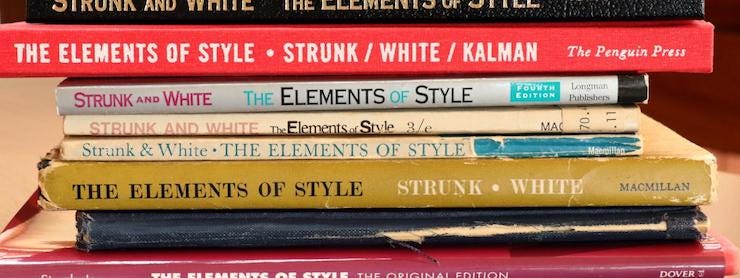
1 Dust off your copy of ‘The Elements of Style’
Exhume that copy of Will Strunk Jr.’s classic guide to good writing that your prof assigned in Freshman Comp. Genuflect before its famous precept: “Omit needless words.”
Dredge up George Orwell’s essay “Politics and the English Language,” too. Pay your respects to its six rules for writing well, especially: “Never use a long word where a short one will do.”
Strunk and Orwell have their critics, but they’ve endured for a reason: They’ve written two of the best brief guides to writing concisely and well. And you can’t waste a syllable when a potential buyer is giving your book 30 seconds.
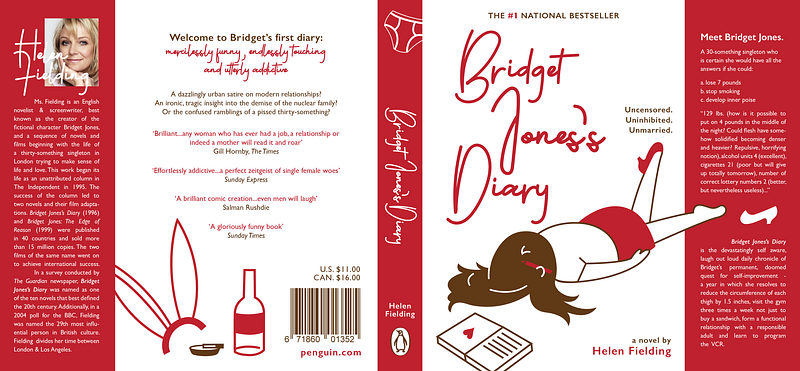
The back cover of the Picador edition of one of the bestselling novels of the late 20th century, Bridget Jones’s Diary, has just three lines, Willder notes (and 27 words):
“A dazzling urban satire of modern human relations?
“An ironic, tragic insight into the demise of the nuclear family?
“Or the confused ramblings of a pissed thirty-something?”
Bridget Jones’s Diary has additional text on its flaps. But the three-line back-cover copy remains a stellar example of how to telegraph the tone, genre, theme, and other aspects of a book to potential buyers.
2 ‘Work out what you really want to say before you say it’
By the time you’re writing your cover copy, you should know what your book is “about.” You can’t introduce themes make statements your book doesn’t support. That’s false advertising and confusing to readers.
If you have trouble getting started, think of your cover copy as “a letter to just one person,” Willder suggests.
Assume that the recipient knows nothing of the book and your words must introduce it. You are writing neither a book review nor a Wikipedia-style synopsis but something closer to a meet-and-greet intended to make people want to hear more from you.
You’ll turn off potential buyers if you come across as bombastic (“a powerful, important debut from a writer destined to become the voice of his generation”).
But you do want to suggest why readers will find your book memorable. Is it the tone? The style? The gripping plot? Or is it that much of the story emerges through email exchanges between the hero and heroine?
3 Tell a story that has an emotional impact
Good cover copy has a tight narrative structure with a clear beginning, middle, and end. It tells a mini-story that makes an emotional impact.
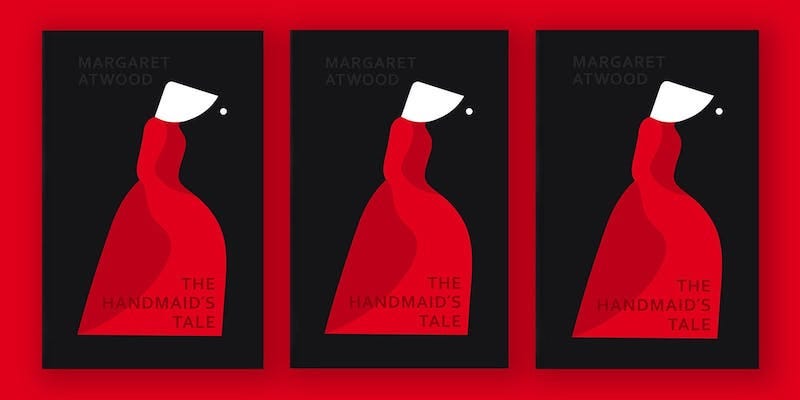
That storytelling begins with an opening hook that makes people want to read more. A good example is the first line of the cover copy for the Virago edition of Margaret Atwood’s novel, The Handmaid’s Tale, Willder says: “The Republic of Gilead allows Offred only one function: to breed.”
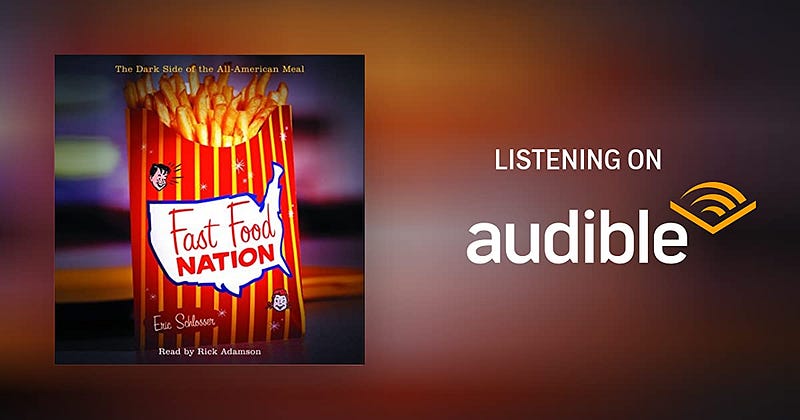
A strong nonfiction opener appeared on the cover a U.K. edition of Eric Schlosser’s Fast Food Nation:
“You are what you eat. But do you really know what you’re eating?”
For a novel, Willder argues, the cover copy must do four things. It must set up the lead character; give you a sense of time and place; reflect the language of the book in an enticing way; and have dramatic tension.
Your copy shouldn’t spoil the pleasure of reading the book by giving away the ending. Its last line might instead suggest the most important problem or issue that needs to be resolved, sometimes by asking a question.
4 Know the cover-copy rules for your genre
Every genre of fiction or nonfiction has its own unofficial rules for cover copy.
Knowing these will give you a sense of what readers, agents, and editors may expect. It will also help you decide whether you want to play by the rules or have a reason for breaking them.
A few examples from Blurb Your Enthusiasm!:
- Fantasy and science or dystopian fiction All of these genres create a fictional universe with its own internal logic and coherence. “So, good copy for science fiction, fantasy or dystopian fiction should build a world, too — only it has fewer words to convey new, unfamiliar or potentially confusing information to a reader,” Willder says.
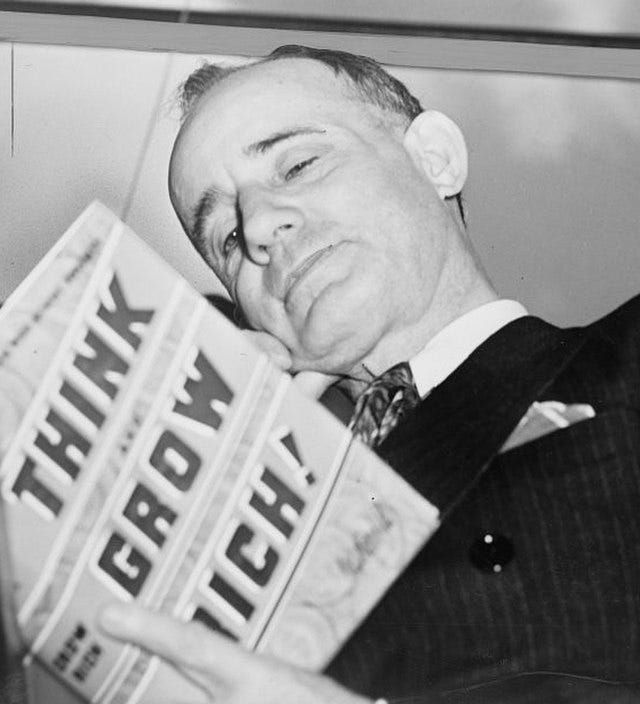
- Self-help How-to books tend to follow a three-part pattern set early in the 20th century by bestsellers like Napoleon Hill’s Think and Grow Rich!. Willder describes it as: “set up a problem, offer a solution and, above all, make a promise.” The cover copy for self-help books like these usually offers further clues to their authors’ “secrets.”
- Young adult novels YA novels have high emotional stakes, and their cover copy — like all good cover copy — needs to reflect their contents. “Jeopardy is the key,” Willder writes. “When you’re a teenager, everything matters, so there has to be something big at stake in the copy.”
Keep in mind that book-cover traditions vary among countries, and if you have foreign editions, you may need to alter your text. Cover-copy terms vary, too. In the U.S., a “blurb” is advance praise from an author; in Britain, it’s a brief, promotional description of the book.
5 Treat the ‘show, don’t tell,’ principle as sacred.
The exhausted writing-program cliché has its limits. Authors can show and tell at the same time, and the great writers often work both sides of that fence throughout a book.
But Willder makes a good case that cover writers should treat the “show, don’t tell” principle as sacrosanct. You have so few words to work with that you have to make potential buyers “see” what you mean right away.
How do you do that? Willder writes:
“If you want readers to think a book is fascinating and ground-breaking, show them arresting examples of its ideas or arguments. If you want them to be scared, use language and pacing to create an atmosphere of tension and fear. Most importantly of all, if you want them to think a book is funny, for pity’s sake put some jokes in your copy and make the reader titter, rather than wasting your words by saying it’s ‘hilarious.’ ”
6 Pick out a great detail that brings your book to life
Vague or gauzy descriptions won’t show what’s unique about your book, but one detail can bring it to life.
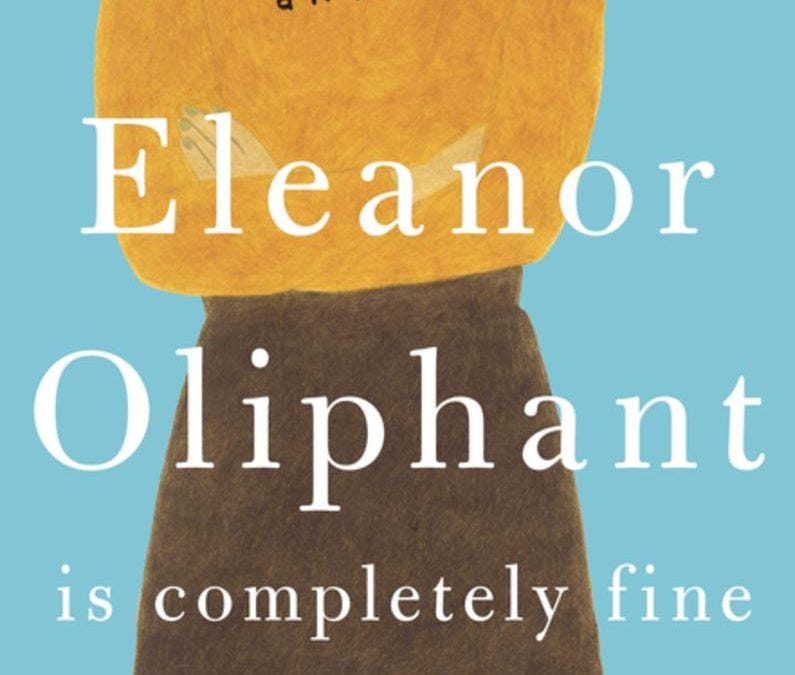
Willder cites as an example the copy that introduces the heroine of Eleanor Oliphant Is Completely Fine:
“Eleanor Oliphant leads a simple life. She wears the same clothes every day, eats the same meal for lunch every day and buys the same to bottles of vodka to drink every weekend. Eleanor Oliphant is happy. Nothing is missing from her carefully timetabled life. Except, sometimes, everything.”
What stands out there, Willder says, is the two bottles of vodka and “everything”:
“The copy is clear and simple, yet it contains surprising details; key signifiers that lodge in the brain. It uses short sentences and, most importantly, minimal adjectives. How much less effective it would have been if Eleanor had been described as ‘eccentric,’ ‘quirky’ or ‘troubled.’ Specificity is the key.”
7 Put away your undiluted truth serum
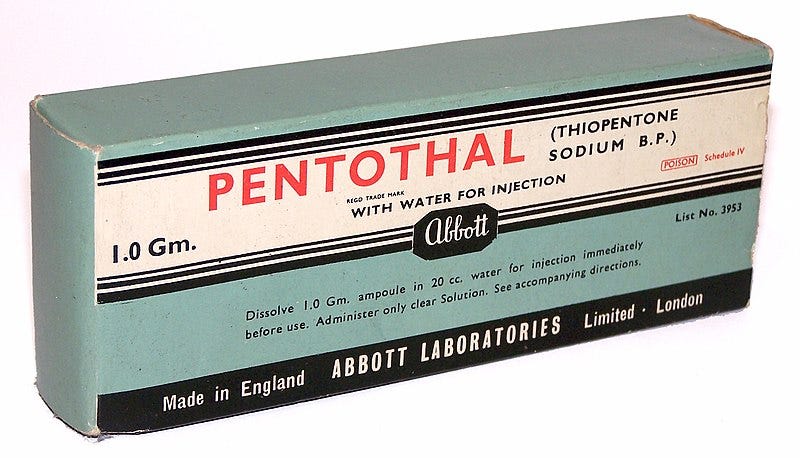
Books are products. Their cover lines are the literary equivalent of the labels on Cocoa Puffs, and “sometimes they lie,” as the headline on a British interview with Willder said.
Does this shock you?
It shouldn’t. In order to turn a profit, book publishers need to separate you from your cash as much as Disney and Big Pharma. Their cover copywriters negotiate “the uneasy tension between packaging and contents” of what they sell, Willder writes in Blurb Your Enthusiasm!
“There is, naturally, an element of deceit in what copywriters do,” she says. “Writing…the copy that appears on the back of a book, involves distorting the truth in some way.”
If that idea makes you queasy, you might try thinking of your cover copy as your online dating profile pitched to the reader you hope to hook up with. You don’t want to lie, but neither do you want to reveal everything that might put off people.
You need to strike a balance between full disclosure and no disclosure. If you aren’t sure how to sell your book honestly, you can err on the side of caution and omit anything that might make even your mother cringe if she read it on your cover.
8 Watch out for words others see as sexist
Book-cover copywriters seldom use certain words to describe men. Willder lists some:
“Bubbly. Feisty. Bossy. Shrill. Strident. Wittering. Weeping. Nag. Hag. Witch. Shrew. Hysterical. Ditzy. Fragile. Childlike. Kooky. Whip-smart.”
These words can come back to bite you not just with ordinary readers but with editors, agents, and reviewers (who see them far more often than you may realize).
Some, such as “whip-smart,” are also clichés. Do you want to introduce your work to the world with trite and formulaic copy, or with something fresher and more interesting?
“There is, naturally, an element of deceit in what copywriters do.”
9 Swear off profanity
You may limit your ability to advertise a book on Amazon or elsewhere if your cover has words others consider profane or vulgar. Off-color language may also keep your book from getting into bookstores, particularly in conservative parts of the U.S., which may not want to show it on their display tables or in windows.
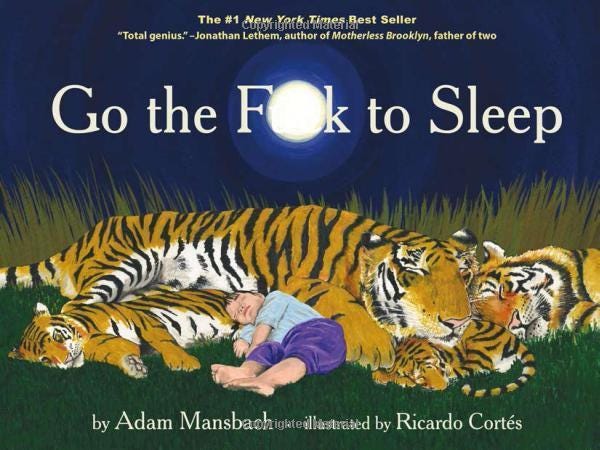
Realities like those explain why you see asterisks or asterisk equivalents in titles of books like and the bestselling Go the F*ck to Sleep. Willder suspects an asterisk won’t hurt you in the long run:
“Does a swear word lose its impact when it’s fig-leafed like this? I think probably not; it’s like a little wink-wink, an acknowledgment that this is all a bit naughty.”

10. Never say these two things in your cover copy
If you’re of a certain age, you may remember four words that used to appear often on front-flap copy for books: “Continued on back flap.” Among the novels that had them: the first edition of J.D. Salinger’s The Catcher in the Rye.
You still see those words from time to time, but they are “so cursed in publishing that they must, in my view, never be committed to paper,” Willder says. She believes they say that your flap copy “has got so ridiculously long it spills over like a word avalanche.”
The second thing not to say is that a character in a novel dies. A cardinal rule for book-cover copy may be “never give away the ending.” But no spoiler enrages readers — and some agents and editors — more than reading that a character dies.
Lesser sins include starting cover copy with, “In this book”: “It’s already clear that this is a book, and there are things in it.”
Among the other misdemeanors: Using self-important phrases like, “In this sensational debut” or “In this ground-breaking study.”
Willder also dislikes copy that starts with “When,” a clichéd device that‘s grown threadbare. The device isn’t just “a lazy way of trying to plunge readers into the action,” she writes. “It also means that a very long sentence with lots of clauses is on the way.”
Jan Harayda is an award-winning critic and journalist who has been the book columnist for Glamour, the book editor of Ohio’s largest newspaper, and a vice president of the National Book Critics Circle. She has written for many major print and online media, including the New York Times, the Wall Street Journal, the Washington Post, and Salon. On Medium she writes the Pop Culture Shorts column on FanFare on Mondays, Wednesdays, and Fridays, which covers books, movies, TV, gaming, and more.
If you’d like to read all my stories about books and publishing, please consider joining Medium with my referral link.
You might another of my posts about books and publishing:


.jpg)