
Does A Book Pass The ‘Page 69 Test’?
It’s a quick way to tell whether you want to read a book — and critics may use it to judge your writing, too
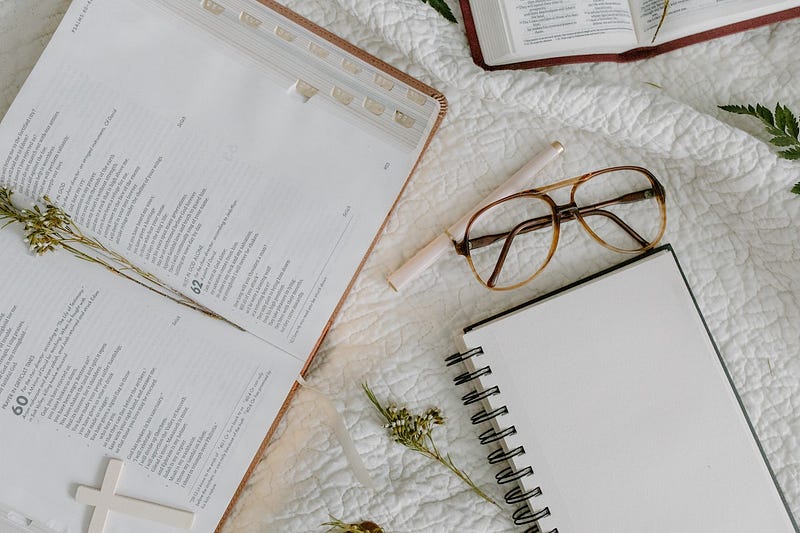
Some book critics are a little like members of those religious groups that try to foretell the future by opening the Bible to a random verse. In deciding whether to review a book, the critics begin by reading not the first pages but a later section.
A lot of authors need a few chapters to hit their stride or find their voice. In cases like theirs, it may be fairest to a book to start by dipping into a middle section and going back to the first pages if it shows promise.
That’s an approach I used often when I was the book editor of Ohio’s largest newspaper. In that job, I received more than 400 books a week from publishers seeking reviews for their titles. My counterparts at papers with a national reach, like the Washington Post, might get 600 or more.
Neither I nor my colleagues had time to pore over the first few chapters of all those books and still write our weekly columns, edit freelance reviews, and keep up with publishing news. We had to read strategically.
Sometimes I’d read the first chapter or two. You may need to do that with a novel to get a sense of the author’s style or where the plot is going. Other times — especially with nonfiction, where vital new facts or theories can matter than a writer’s ability to turn an exquisite phrase — I’d read the last pages to see whether an author drew newsworthy conclusions.
Then there were times when I’d start anywhere and look for clues in what I saw, like a member of one of those sects that open the Bible at random.
Some people use the ‘page 99’ test instead
I didn’t know it, but I was using a variation on a practice recommended by two well-known authors: the Canadian media theorist Marshall McLuhan and the English novelist Ford Madox Ford.
In Blurb Your Enthusiasm (Oneworld, 2022), the Penguin Books copywriter Louise Willder credits McLuhan with inventing something called the “Page 69 Test.” As she describes it:
“Forget covers, blurbs, reviews or introductions. Forget the book’s first line. If you want to know if you’re going to enjoy a book, open it at page 69. If you like what you read, buy the book. By then the author has settled into their story and has stopped showing off.”
Other writers have suggested that McLuhan’s idea wasn’t new. He may have adapted Ford Madox Ford’s page 99 challenge. Robert McCrum, the eminent former editorial director of Faber & Faber books and literary critic for the Observer, wrote in the Guardian:
“Currently FMF is back in the news for his dictum that you can judge any book by any one of its pages. What he actually said was: ‘Open the book to page 99 and read, and the quality of the whole will be revealed to you.’ ”
McCrum has found that the page 99 test has its uses:
“Why not look at a book once it has cleared it throat, and is under way?”
McCrum also believes good writers display their gifts in every sentence they write: “The truth is that every line of a good book should ring with clarity and authenticity, and have (this is the crucial part) a distinctive voice you want to go on listening to. It’s called storytelling.”
I’d add that just as good writers display their talents in every line of a book, they also show them in every line of an essay, story, or blog post. They never let themselves write below a certain level, or show less than their best work to editors, critics, and readers.
Maintaining a standard of excellence fosters literary discipline. And you never know when your readers might include an editor who could offer you a contract, as long as you write as well on page 69 or 99 as on page 1.
Jan Harayda is an award-winning critic and journalist and who has been a vice president of the National Book Critics Circle. Her work has appeared in many print and online media, including the New York Times, the Wall Street Journal, the Washington Post, Glamour, and Salon. She has taught writing at two major universities and currently teaches and coaches writing privately on the Gulf Coast.
You might like some of my other stories about books:


