
WHY WRITERS DIE BROKE
What Do Authors Really Earn A Year?
Hint: It’s a far cry from James Patterson’s $80+ million

In the last year of his life, F. Scott Fitzgerald earned an unlucky $13.13 in royalties for his books.
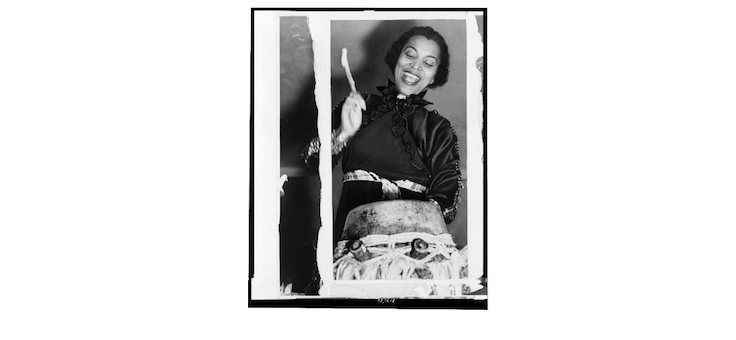
He wasn’t the only great author who died broke. Herman Melville couldn’t get an advance for Moby-Dick because, his publisher said, he hadn’t earned back the money he’d received for his last book, and he took a job as a customs inspector to stay afloat. Zora Neale Hurston died penniless in a nursing home, and her friends chipped in for her funeral.
Authors hear continually that they’re better off financially now that the self-publishing boom given them ways to make money unimagined in the days of Melville, Fitzgerald, or Hurston. But surveys by leading writers’ organizations tell a different story.
As a journalist who writes about books and publishing, I’ve looked for convincing evidence that authors’ fortunes have improved. As an author, I’d love to find it. Instead I keep hearing facts like these:
- You can self-publish for as little as $100–$200, less than the cost of the professional author photo a mainstream publishing firm might want.
- Self-published authors keep 50–80% of the cover price — or more — compared with 10–15% for the traditionally published.
- New book-distribution and promotion channels such as Gumroad and the Kindle Vella make it easier to get the word out about your book.
These and similar facts don’t give the full picture of the financial realities faced by anyone who hopes to make serious — or even decent — money from a self- or traditionally published book.
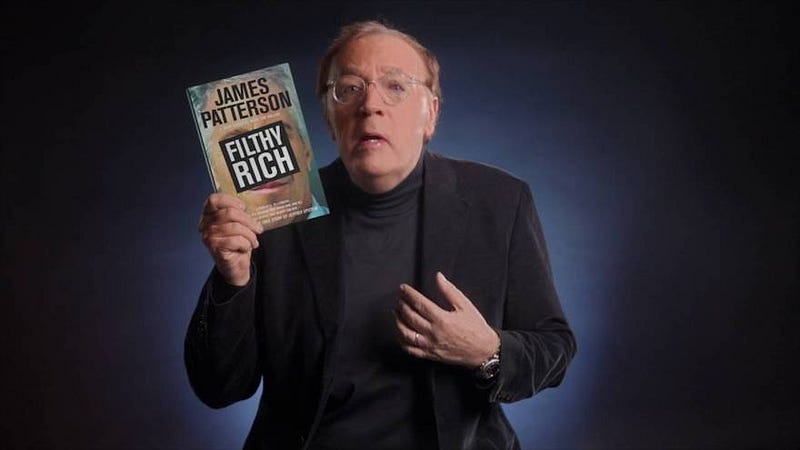
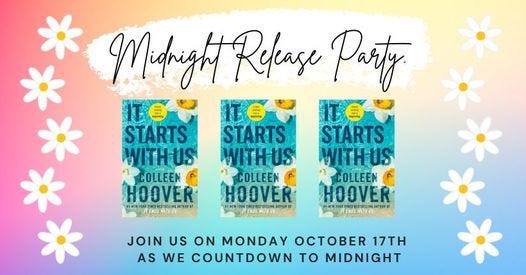
Yes, you can self-publish a book for next to nothing and hope someday to become a supernova, as pop-fiction queen Colleen Hoover did. And, yes, some mainstream authors are killing it, including James Patterson, whom Forbes found to make more than $80 million a year.
But the overall financial realities of publishing a book are scarcely more encouraging than when Melville went to sea on the whaling ship that helped to inspire Moby-Dick.
Most self-published authors sell fewer than 500 copies of their latest book, the Authors Guild has found. That’s seldom enough to earn back what a writer spent to produce it, even if you ignore the opportunity cost of not doing other work.
As the industry has become ever more driven by blockbusters, advances for traditionally published books have soared for the superstar authors. They have stagnated for others, running to as low as $1,000 for a book from a good small press. Most books of any kind sell so few copies, their authors earn no royalties from them.
Just before the pandemic hit, the largest income survey of professional writers ever undertaken in the U.S. found that authors’ incomes had fallen to “historic lows,” down about 42% from 2009.
Fourteen major writers’ groups took part, led by the Authors Guild, the oldest and largest organization for U.S. authors. The participants included prominent organizations such as the Romance Writers of America, PEN American Center, Society of Children’s Book Writers, Independent Book Publishers Association, and others of similar stature.
Among the conclusions of their survey:
- The median annual income of full-time authors was $20,300.
- The median income of all authors — full or part time and traditionally or self-published — was $6,080.
- The median income for all published authors, solely from their book- related activities, was $3,900.
- Self-published authors earned 58% less than the traditionally published.
- Professional writers paid to create blog posts and other online content generally earn amounts that translate to well below the minimum hourly wage required by law.
What do those numbers mean?
Authors are facing “a crisis of epic proportions,” the Authors Guild found. They must deal increasingly with an “inability to earn an adequate living,” no matter how talented or hard-working they are:
“More book authors, even those who consider themselves full-time writers, are forced to hold down multiple jobs to earn enough money to survive. This includes authors who have written books for decades and have survived on their writing in the past.”
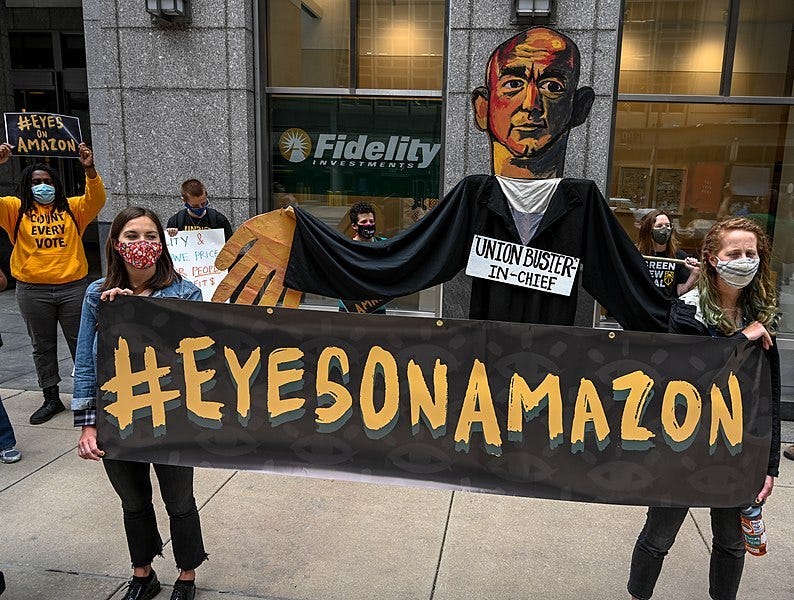
The explanation for this dismal picture lies partly — and some argue, largely — with Amazon’s hegemony in online bookselling. Independent booksellers have made a welcome comeback.
But Amazon still controls about 85% of the market for self-published books in the U.S. and forces authors to accept its terms.
As for books from mainstream firms: The dominance of Amazon in the secondary market has hurt even their writers. Authors may see their books for sale online for a fraction of the cover price — within days of publication — in a sale that earns no royalties for them.
Amazon has also forced publishers to accept lower margins on sales. Some of them argue they must pass that reduced income on to authors in the form of lower advances and royalty rates, little as that seems to have affected behemoths like Colleen Hoover and James Patterson.
No survey comparable to that of the Authors Guild has appeared in the U.S. since the start of the pandemic, which may have affected the realities it describes.
But some effects of Covid-19 emerged in a survey by the Society of Authors, the U.K.’s largest trade union for writers, illustrators, and literary translators.
Among the findings:
- More than half of all respondents said their income was lower in 2021 than in 2019.
- Sixty percent of those whose income dropped saw it fall by at least 25%.
- More than a third saw a drop of at least 50%.
Chat GPT and other AI technologies pose further risks to authors’ earnings. Before the U.S. and U.K. authors’ groups did their studies, McKinsey & Co. had predicted that by 2035 AI tech could replace up to 42% of workers in the arts and entertainment, including book authors.
You can try to put a positive spin on some of these numbers. The self-publishing boom has created money-making options for writers that didn’t exist a generation or two ago. AI may take away many writers’ jobs while making others’ easier. And authors who have a longstanding relationship with an influential editor or cash-rich publisher may suffer no financial reverses and remain able to earn an enviable living from their books.
What you can’t do is cling to the romantic fiction that financially that there’s never been a better time to be an author, or suspend your skepticism of overzealous marketing firms that promise that with their help you can beat the bleakest odds.
Even in my small town in the Deep South — a thousand miles from the literary epicenter of New York—you can find marketers who will charge you thousands of dollars to promote a book that might be lucky to make a few hundred. You regularly see national TV commercials for vanity presses that ask for similar amounts to publish and promote your book.
Not long ago, I taught a class for residents of my town who hoped to publish, which included snacks and handouts every week and all the email coaching they wanted during the course. I charged $150 for six weeks of two-hour classes around a dining table a beautiful private home. That was all I could ask, in good conscience, given today’s publishing realities.
There were better times to be an author: times when book advances weren’t so unevenly distributed, when writers’ overall incomes weren’t declining, and when more full-time authors could earn a living wage and didn’t have to hold down multiple jobs to support themselves.
Anyone who tells you otherwise is ignoring literary history or trying to sell you something. Hard work and surpassing talent didn’t keep Fitzgerald and Melville and Hurston from dying broke.
To paraphrase John Steinbeck, writing makes horse-racing look like a sure thing. It isn’t pretty to think so, but your mother may have been right when she told you to go to law school.
Jan Harayda is an award-winning critic and journalist who has been the book editor of Ohio’s largest newspaper and a vice president of the National Book Critics’ Circle. She has taught writing at two major U.S. universities and has written for many major print and online media, including the New York Times, the Wall Street Journal, the Washington Post, Newsweek, and Salon. If you’d like to read all of my articles without hitting the dreaded paywall, please join Medium with my referral link.
You might like some of my other stories about books and popular culture:


