
When Your Writing Career Capsizes
Five lessons from survivors of shipwrecks, plane crashes, and other disasters worse than rejection and boneheaded reviews
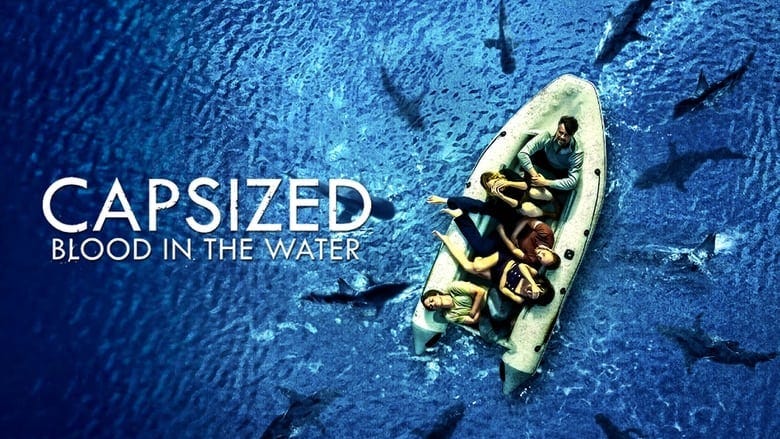
Does your writing career seem to have capsized?
Maybe you can’t sell a book or find a literary agent. Or you’ve lost your bread-and-butter client. Or you’ve had so little overall luck with writing, your friends are wondering ominously if you ought to get a “real job.”
Stories of disaster survivors can be oddly comforting when such setbacks occur. They remind you that worse things can happen than a cascade of rejections or boneheaded reviews on Amazon or Goodreads.
That’s especially true of tales of miraculous escapes, or how people survived catastrophes like shipwrecks, avalanches, and plane crashes. These stories do more than put your setbacks in context. They hold insights into what it takes to keep going when all the odds seem against you.
The best 2023 books I read in that category were David Grann’s The Wager, the story of an 18th-century shipwreck, and Daniel Finkelstein’s Two Roads Home, a memoir of his parents, who survived Holocaust and Stalin’s prison camps. Both books have deservedly appeared on lists of the year’s best.
I found other insights in Laurence Gonzales’ older Deep Survival, an exploration of who lives and dies — and why — in disasters. Without discounting the role of luck, Gonzales analyzes the near-miraculous survival of people like a mountaineer given up for dead after breaking his leg in the Peruvian Andes and a sailor who saw her crew mates eaten by sharks after their boat sank on the way to Florida.
If your usual ways of dealing with writing setbacks aren’t working, you might try these five strategies from Deep Survival and other books.
1. ‘Believe anything is possible’
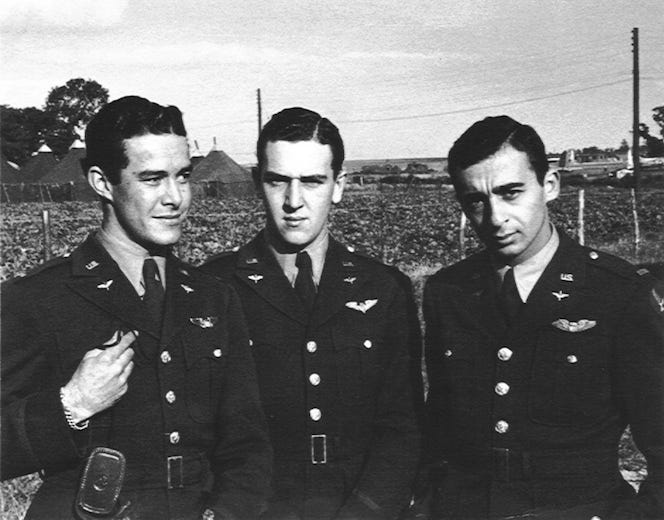
The survivor: Lt. Federico Gonzales, Laurence Gonzales’ father
The disaster: At the age of 23, Gonzales fell five miles without a parachute after enemy fire struck the F-17 he was piloting over Germany in World War II. He broke most of his bones, was captured, and spent the rest of the war in a Nazi prison camp.
What helped him survive: He stayed cool. After his plane was hit, he said calmly, “Well, I guess this is it.” Then, with an officer dead beside him, he followed a checklist and gave the prescribed evacuation order to his crew: “Bailout, bailout, bailout.” Laurence Gonzales says his father was following the pilots’ “unspoken Stoic code of conduct”:
“Plan the flight and fly the plan. But don’t fall in love with the plan. Be open to a changing world and let go of the plan when necessary so that you can make a new plan.” Then “you will always be ready to do the next right thing.”
Laurence Gonzales says his father’s survival taught him to “believe anything is possible.” After the war, still hobbled by his injuries, Federico Gonzales became an anatomy professor, received the Distinguished Flying Cross, and was honored during Hispanic Heritage Month.
The lesson for writers: Stay cool if your parachute doesn’t open — if your book doesn’t sell or your best client fires you. Just “do the next right thing.”
2. ‘Forge a team’ if you can
The survivor: Deborah Scaling Kiley, first American woman to complete the Whitbread Round the World ocean sailing race
The disaster: Kiley spent five days on a raft after her boat sank in a storm while she and four others were sailing from Maine to Florida, a calamity that inspired the Discovery movie Capsized. After drinking seawater, two men unraveled mentally, swam off, and were eaten by sharks as the remaining crew drifted without food, water, or signaling devices in an 11-foot Zodiac. The only other woman died of blood poisoning from badly infected wounds before a Russian freighter rescued Kiley and a male survivor.
What helped her survive: As the situation on the raft deteriorated, the 24-year-old Kiley decided to “forge a team” with a crew member who had stayed mentally and physically intact: They made a pact that one of them would sleep while the other stood guard. This act helped them maintain a measure of control:
“It gave them a simple task, a short-term goal, a purpose, and a commitment to someone outside themselves.”
Kiley also tried to savor “the beauty of the world,” including the sky, and to see her plight in a spiritual context, an effort she recalls in her memoir, Albatross.
The lesson for writers: Work with someone who understands your goals. If you can’t find an agent or sell a book, join a writers’ organization that has people who want to help.
3. ‘Set attainable goals and develop short-term plans to reach them’
The survivor: Nick Williams, a high-level corporate executive
The disaster: Williams was skiing at Squaw Valley he got lost in a whiteout during a blizzard. He wandered away from the resort and was stranded in a wilderness with no water, food, matches, or suitable clothes when the temperature fell to 50 below zero at night. On the third day, the sun came out, snowmobilers found him, and a helicopter rescued him.
What helped him survive: At night, Williams propped himself up against trees. “Whenever I’d fall asleep, I’d fall away from the tree,” he told Laurence Gonzales, which kept him awake:
“He knew if he fell asleep, he’d die. He melted snow in his mouth for water. Periodically, he’d get up and do calisthenics to stay warm. It was bad. But he was doing something about it.”
Williams, then 51 years old, was a Naval Academy graduate and former Marine fighter pilot who had stayed fit by jogging and roller-blading up the San Francisco hills. A representative of the hospital that treated him said: “His mental toughness was unreal.” Gonzales thinks that what saved the executive was wanting to see his son, Nick Jr., again.
The lesson for writers: Set short-term goals for reaching a long-term aim. Don’t resolve “to finish my memoir.” Aim “to write for 15 minutes a day before work” or “while the baby naps.”

4. Stay ‘tough and clearheaded’
The survivor: Juliane Koepcke, the sole survivor of the 1971 LANSA Flight 508 plane crash after the worst lightning strike in aviation history
The disaster: Seventeen-year-old Koepcke was flying with 91 others when lightning struck her plane and she fell into the Peruvian jungle, where rescue helicopters couldn’t see her.
What helped her survive: After losing her shoes, Koepcke walked for 11 days through the jungle. Her father had told her that rivers usually lead to civilization, Laurence Gonzales writes, and while they can also lead to swamps, “she had a plan she believed in”: “She had a task.”
Koepcke eventually came to a hut on the banks the river she’d been following and took shelter there. The next day local fisherman found and rescued her.
What saved Koepcke was her mindset, Gonzales believes:
“She didn’t spend time bemoaning her fate. She looked to herself, took responsibility, made a plan.”
Surviving a disaster involves luck, and Koepcke had some when helpful fishermen found her. That fact, Gonzales suggests, supports Louis Pasteur’s words: “Chance favors the prepared mind.”
The lesson for writers: Make a plan for your writing career. Any plan is better than none. You can adjust it as you go along.

5. Avoid self-pity
The survivor: Mountaineer Joe Simpson, the author of Touching the Void, which became an acclaimed documentary
The disaster: In his mid-20s, Simpson broke his leg and had other serious injuries while climbing on a snow-covered mountain the Peruvian Andes. After falling into a crevasse, he was presumed dead by his climbing companion, Simon Yates. He survived and — exhausted and with frostbite and hypothermia — crawled back to the base camp.
What helped him survive: Despite excruciating pain and the belief that he was likely to die, Simpson didn’t yield to self-pity. According to Gonzales, he never said, “I can’t take it anymore” or “Why me, Lord?”
The lesson for writers: Resist feeling sorry for yourself. If a rejection stings, do what many successful writers do: Allow yourself a day to grieve. Then move on. Or do what I did when I was starting out as a freelancer: Always have five queries out to editors at once, so you have something to hope for if one rejects you.
@JaniceHarayda is an award-winning critic and journalist who has been a writer and editor for Glamour, the book editor of a large newspaper, and a vice president of the National Book Critics Circle. She has taught writing at two major universities and now teaches private students.