
Virtual Schooling Is A Right
When schools can’t accommodate students properly in person, we must at least provide a suitable alternative
Playing political games
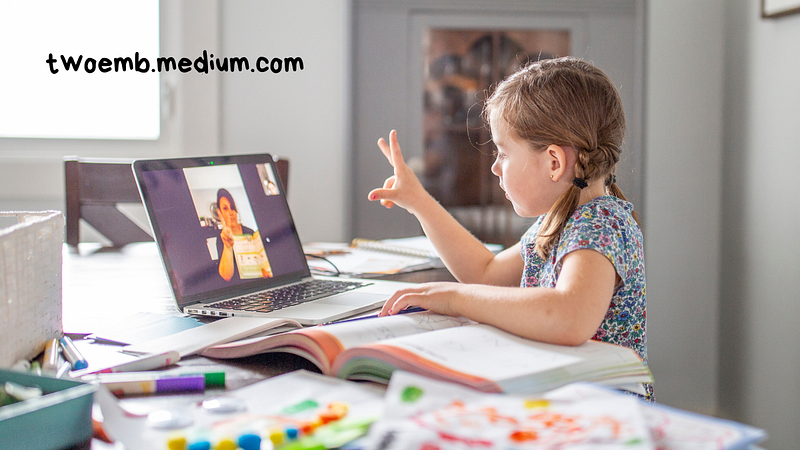
Here in Manitoba, our provincial government opened up a virtual school to support online learning during the pandemic. Although in-person classes resumed last year, the virtual school was kept open for students who found it preferable (or at least the lesser of two less-than-ideal choices).
I recently learned this school is scheduled to close at the end of the 2022–2023 school year.
I work specifically with students who are neurodivergent, disabled, and otherwise not well served by our one-size-fits-all approach to public education.
Many of these students have benefited from the availability of virtual school since it was made available during the pandemic, whether due to health concerns, anxiety, disabilities, or a myriad other reasons.
In justifying the closure, our provincial government recently claimed there was a significant drop in enrolment for online learning, despite the fact there is a waitlist for elementary-age students.
Mental health
The provincial government also claims that in-person schooling is better for student mental health. This is not always the case, especially for disabled and neurodivergent students. Many are psychologically harmed, even traumatized, by their negative school experiences.
These traumas can result from inaccessibility, lack of accommodation, lack of knowledge and training for school staff, bullying, exclusion, seclusion, and restraint. Neurodivergent and disabled students are significantly more likely to experience any and all of the above compared to their neurotypical peers.
It doesn’t add up
In an interview with the Winnipeg Free Press, our Minister of Education assured Manitoba families that adaptive education plans, including health-care plans, and other resources will be available when students transition to in-person instruction in the fall.
I have a hard time understanding how that would be possible, given students attending virtual school have not had access to Student-Specific Plans (SSPs), Individual Education Plans (IEPs), nor Adaptive Learning Plans (ALPs).
I have even more difficulty believing this considering students who have been attending in-person classes since schools re-opened already do not have access to adequate assessment, planning, or support. Many students who have documented disabilities and diagnoses are not receiving the accommodations they need.
I fail to see how adding even more students to the case loads of clinicians, whose wait lists have already increased from 6 months to 2 years due to repeated budget cuts, will allow for these students to receive the support they need.
They don’t listen
I have been trying for years to get our various Ministers of Education to listen to my concerns, and to the concerns of many other Manitoba parents, and we have largely been ignored.
Since our provincial government refuses to take meaningful action to improve teacher training, resources, support, accessibility, and inclusion in Manitoba public schools, the very least the Ministry of Education can do is keep the virtual school open.
If Manitoba Education cannot and will not meet the needs of these students when they attend in-person classes, they must at the very least provide an alternative format. It is their legal right, and the legal obligation of our public school system, to offer appropriate education programming.
Don’t get me wrong
Please don’t misunderstand me. If a student wishes to attend school in person, that is absolutely their right, and their school must do everything to accommodate and support that student.
In an ideal world, our schools would have the resources and funding to fully accommodate and support all students. Unfortunately we do not live in an ideal world, and conditions seem to be trending in the wrong direction, especially for neurodivergent and disabled students.
Dealing with the current reality: if the options are between an in-person experience where student’s needs are not met — they are excluded, secluded, and traumatized — or online learning, it would appear virtual school is a much-needed alternative option.
© Jillian Enright, Neurodiversity MB
Related Articles
When you join medium, as a member you’ll have access to unlimited reads for only $5 per month. If you use my referral link, I’ll earn a small commission, and you’ll earn my undying gratitude.
If you’d prefer give a one-time tip, you can support my writing on Ko-Fi — also, it’s free to follow me on Facebook and LinkedIn!


