
Poverty & Education Are Inseparable
Our province has the highest child poverty rates in Canada

Yet we wonder why
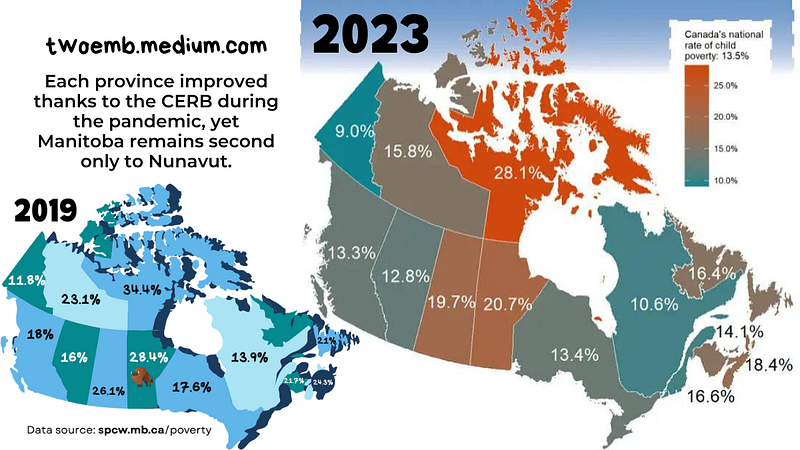
Once again, Manitoba has earned the dubious distinction of having the highest child poverty rates of all provinces in the entire country. We are second only to the territory of Nunavut.
For years, experts have issued warnings to our political leaders and policy makers. Research clearly demonstrates we cannot improve academic performance in our public schools until we first address the serious child poverty issues.
Money can’t buy everything
But it should buy more than we’re getting for our tax dollars
People point out that Manitoba has relatively high rates of funding going toward its public education relative to other Canadian Provinces. This may be true, but we’re investing our citizen’s money in all the wrong places.
Data has demonstrated this for years, yet our provincial government continues to ignore the research unless it’s politically convenient. They want to be seen as effective, rather than actually being effective.
Optics are more important than outcomes, especially during an election year. We won’t see the results of their mistakes for a few years, so they just need to look like they’re doing something useful and important for long enough to get the votes.
Optics are more important than outcomes, especially during an election year.
In 2020, an extremely comprehensive public discussion paper was published. At nearly two hundred pages long, this document outlines in great detail the successes and failures of our public education system.
The discussion paper explains why Manitoba’s academic achievement remains low while spending is considered high, pointing to the fact that policy is not consistently guided by research, leading to misuse of public funds.
Some reasons Manitoba’s academic achievement ratings are low while spending is considered high:
- We have a lot of small, rural schools which are expensive to operate.
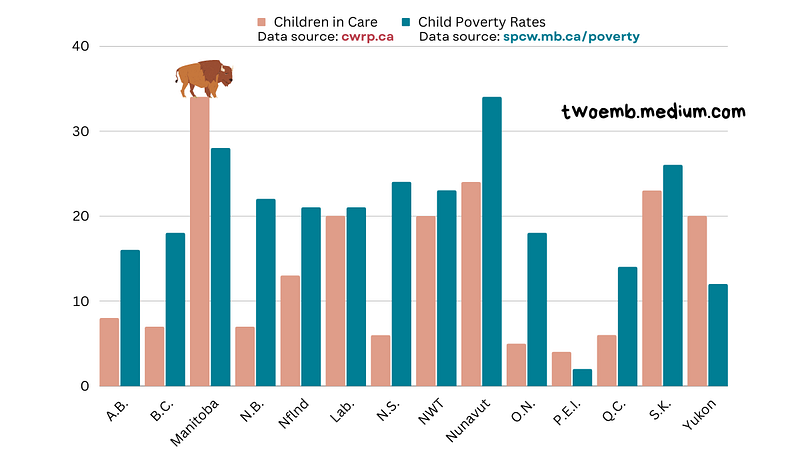
- High child poverty rates.
- High number of children in care.
Additionally, inadequate investment in:
- Professional learning for teachers and improvements in student assessment practices.
- Engagement of parents and caregivers.
“Educational disadvantage cannot be cured by relying on education within the school.” — Ivan Illich
This is not new
This is information our government has had for many years. Most recently, the paper cited above was published three years ago, in 2020. The recurring theme present throughout was that we need to address child poverty rates in order to improve education outcomes.
“Education must not be addressed in isolation, but must continuously be viewed through a broader lens of intersecting factors: poverty, unemployment, lack of basic infrastructure, insecure housing, insecure access to food, chronic and acute stressors, and mental health issues.” — Public discussion paper, p. 75.
As demonstrated by decades of research, children living in poverty have increased risk of:
- Emotional and social challenges
- Chronic and acute stressors (such as domestic violence and addictions)
- Neurodevelopmental disorders (trauma, stress, and malnutrition cause delays in brain maturation)
- Health and safety issues, including access to regular healthcare
We know all of this.
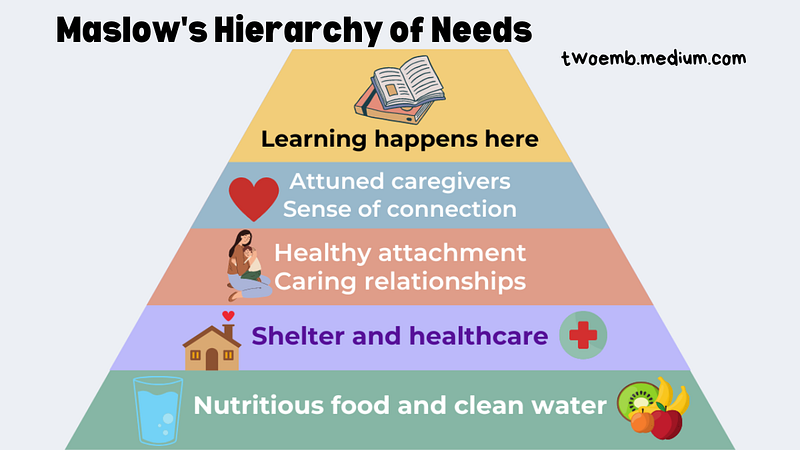
If you don’t feel well, you’re hungry, you’re stressed, and your brain is stuck in survival mode, you sure as hell aren’t learning your ABCs or multiplication tables. Your body’s resources will be dedicated to taking care of your immediate needs, and little else will matter until those needs are met.
We know this
We know this, yet we continue to ignore it in so many ways. Our public education approach involves efforts to shove as many facts into children’s heads as possible, despite the fact they’ll forget most of them before the following year.
Instead of building connections and relationships, creating school communities on a foundation of mutual caring and respect, we have compliance-based programming. We use behaviourism — punishments and rewards — to manipulate children for our convenience.
When children ‘misbehave’ we dole out consequences, blaming the child and their parents for their failures. We don’t look critically at the environment to determine whether the child feels safe and welcome in their classroom. Instead we write elaborate “behaviour plans” which are often ineffective for all the aforementioned reasons.
If we’re not going to address child poverty, and we’re not going to overhaul our education system so it meets the children’s needs rather than the needs of the adults, then we are wasting our tax dollars and traumatizing our children in the process.
In fact, we could just close down all the schools and use the $3.4 billion to eradicate poverty in our province. It would cost an estimated $516 million per year to bring every person in Manitoba above the poverty line, so we could sustain that amount for more than six and a half years.
Seems like money well spent, unlike our current state of affairs.
© Jillian Enright, Neurodiversity MB

Ways to support my work
You can leave a “tip” on Ko-Fi at https://Ko-Fi.com/NeurodiversityMB
Become a paid subscriber to my Substack publication
Check out my online store at https://NeurodiversityMB.ca/shop
Read and share my articles from twoemb.medium.com
Related Articles
References
Illich, Ivan. (1970). Deschooling Society. Marion Boyars Publishing Ltd.
Manitoba Commission on Kindergarten to Grade 12 Education. (2020). Our Children’s Success: Manitoba’s future. https://edu.gov.mb.ca/educationreview/docs/public-discussion-paper.pdf
Saint-Girons, M., Trocmé, N., Esposito, T., Fallon, B. (2020). Children in Out-of-Home Care in Canada in 2019. Canadian Child Welfare Research Portal.
Wiliam, D. (2018). Creating the schools our children need: Why what we’re doing now won’t help much (And what we can do instead). Learning Sciences International.


