
Tortured bleeder Matthew Polly distills the essence of Bruce Lee
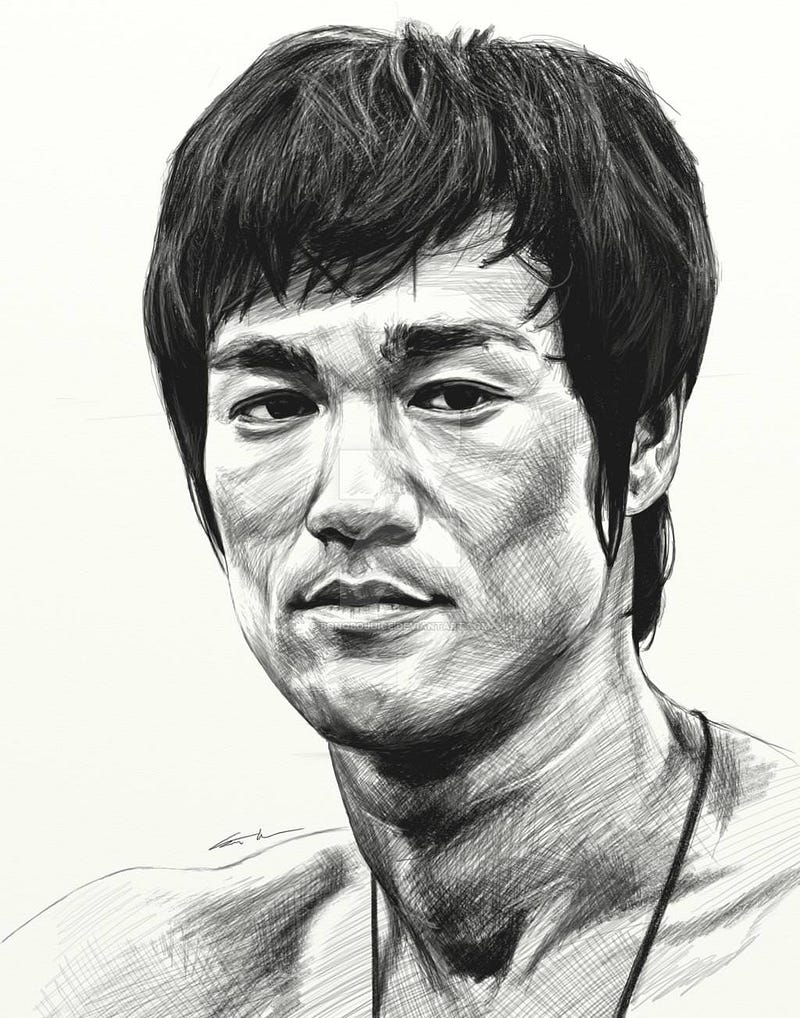
Despite all the obstacles he faced, Bruce Lee never gave up in his quest to become the most iconic Asian American movie star. The 5-foot-8-inch “Little Dragon” endured a litany of Hollywood yellowface casting and refused roles where producers insisted he affix a pigtail. Being the token Chinese actor at glamorous parties where networking could lead to a big break held no allure. Warner Bros. TV division chief Tom Kuhn felt Lee’s English accent would be indecipherable to moms and pops in Indiana and instead awarded David Carradine the part of Grasshopper in Kung Fu. Charisma and confidence oozed out of Lee whenever he broke into a sudden display of martial arts, but when he shared a scene, he was caught acting rather than naturally listening and reacting. Fame didn’t come easy, and the former Green Hornet companion repeatedly worked overdrive to send his inadequacies packing.
On deck is the final chapter of an exclusive dialogue with foremost Lee researcher Matthew Polly, whose Bruce Lee: A Life was optioned by ESPN for a feature-length documentary directed by Bao Nguyen. Polly has ventured on camera for Bruce Lee: His Greatest Hits, Criterion’s painstakingly restored Blu-ray collection of Lee’s legend-making ’70s movies. Lee drawing a knife on director Lo Wei, the heat stroke death theory, Ah Sahm aka Warrior, teen singing sensation and youngest brother Robert Lee, post-publication revelations, and advice for an anxiety-crippled hopeless romantic are all probed by the real life Walter Mitty whose previous tome found him incredulously locking horns with MMA fighters. If you were absent for the penultimate part four entitled “The Humanity of Bruce Lee Versus a Whitewashed Hagiography,” it is simply a tap away.
The Matthew Polly Interview, Part Five [conclusion]
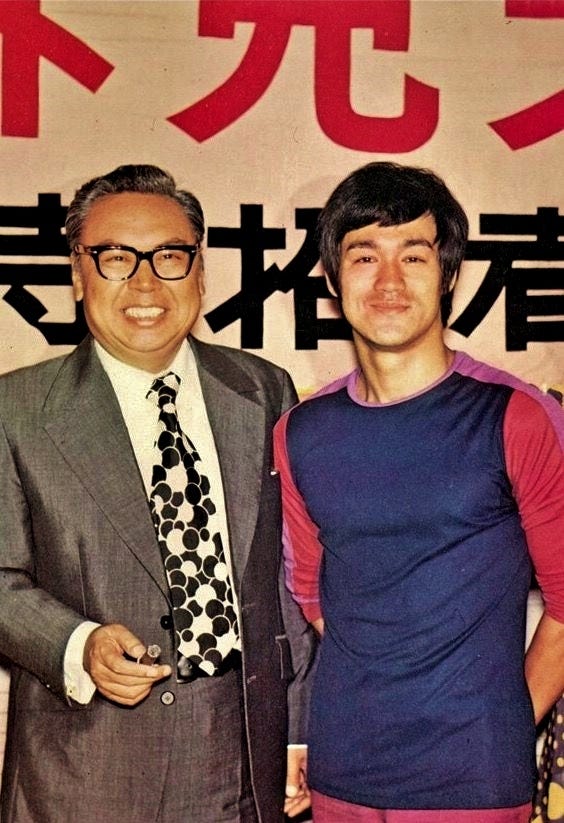
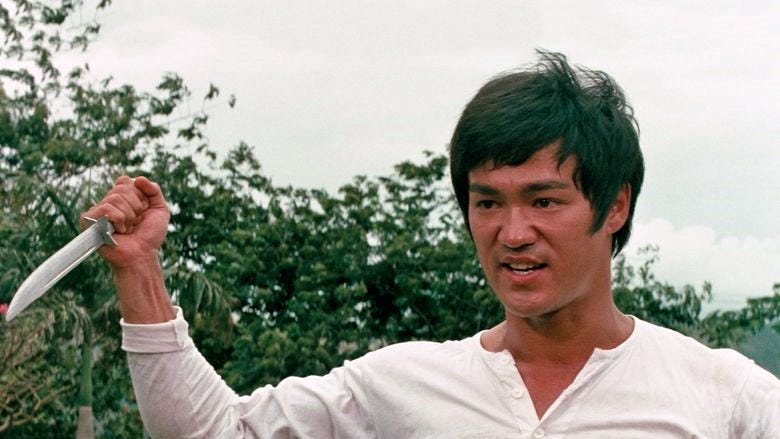
Is there any scenario where Bruce and director Lo “Orson Welles” Wei would have collaborated a third time after The Big Boss [1971] and Fist of Fury [1972] became smash hits? Or had the bridge been totally severed after Bruce pulled the knife?
It is highly unlikely that Bruce would have ever worked with Lo Wei again. I think Bruce was embarrassed by his overreaction to Lo Wei’s taunts and as a result would have continued to avoid him.
Did Lo Wei develop empathy towards Bruce and what he contributed to his directorial canon, or did the insults continue unabated?
Lo Wei never forgave Bruce. The bitterness ran deep. When Bruce found out Lo Wei was telling people Lo Wei was responsible for Bruce’s martial arts talent on film, Bruce threatened to kick his butt. When Bruce found out Lo Wei was telling the press that Bruce was an arrogant jerk, Bruce threatened to stab him with a knife. Basically, it was an ego pissing match. Lo Wei wanted sole credit for the success of Bruce’s first two Golden Harvest films. But as soon as Bruce and Lo Wei split, Bruce’s films continued to be huge [i.e. The Way of the Dragon and Enter the Dragon], while Lo Wei’s movies, without Bruce, were not [although a box office failure, Lo Wei’s 1976 sequel New Fist of Fury marketed 21-year-old former stuntman Jackie Chan as the new Bruce Lee].
Is Bruce’s final video interview conducted on July 11, 1973, for Ivan Ho’s Enjoy Yourself Tonight, basically the Hong Kong version of The Tonight Show Starring Johnny Carson, lost forever?
I don’t believe the footage of the Ivan Ho interview still exists. I’ve never seen it. I’m pretty sure Bruce did talk to the press afterwards to try and clean up the mess. I’ve only seen summaries of those articles and would love to track them down as well.
[From page 436 — During the live interview, Bruce denied using a knife, said it was ridiculous to suppose he would need one against an old man like Lo Wei, and asked Ivan Ho to stand up so he could show why. As they had practiced, Bruce snapped a blindingly fast punch at Ivan Ho’s shoulder and Ivan went flying onto the sofa. Their skit worked as planned but the effect on the audience was not what Bruce anticipated. The punch was so fast it looked like Bruce had hit the host in the face…Bruce took another round of criticism in the morning newspapers for “bullying” a popular TV personality. For someone who was so good at charming people, Bruce was off his game].
The 10 weeks between Bruce losing consciousness and then suddenly dying remain shrouded in secrecy. He wasn’t filming a movie and made few appearances so there was considerable down time with limited documentation of his daily whereabouts. Barring his death, are there any moments from Bruce’s final two months that you’d still like to unravel?
I’d like to know how often Bruce saw Betty Ting Pei. Was it only occasionally — a low-commitment flight — or was it frequently — a torrid affair?
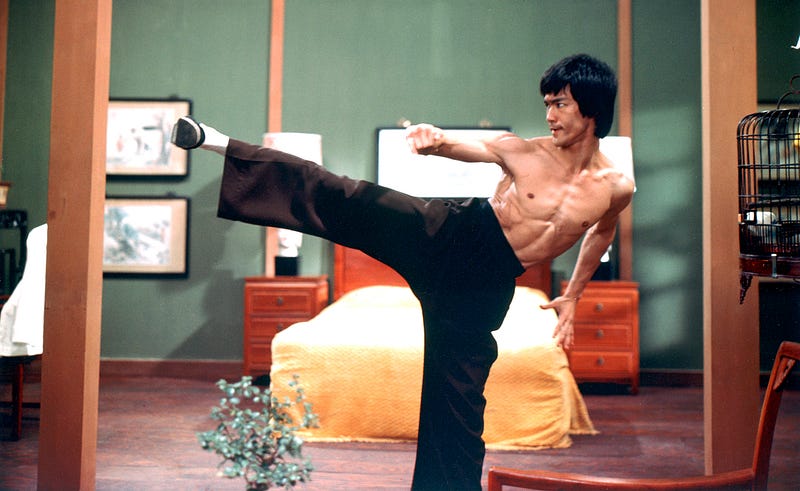
When did you seize upon the plausible heat stroke theory supporting Bruce’s demise? And did the book’s interview participants concur with your research?
On May 10, 1973, Bruce collapsed and nearly died of cerebral edema — swelling of the brain. He was rushed to the hospital, and the doctors treated him in the nick of time. Ten weeks later, he didn’t get rushed to the hospital in time — dying of cerebral edema. So by deductive reasoning, I was looking for a single cause that would explain both cases of cerebral edema.
I discovered a self-published book by Duncan McKenzie, The Death of Bruce Lee: A Clinical Investigation [2012], that made a convincing argument that his first collapse was the result of heat stroke. However, McKenzie concluded that the second case, which resulted in Lee’s death, was caused by an allergic reaction to aspirin [McKenzie exclusively defends his theory here]. So two separate causes for the same condition separated by a couple of months. That didn’t make sense to me. As I looked into the evidence surrounding the day Lee died it became more obvious that heat stroke was the single cause for both cases of cerebral edema.
Some people who read my conclusion were convinced. Others were not. People who knew Bruce tend to have very strong opinions as to the cause of his death — many of them not rooted in reason, science, or evidence.
What revelations have emerged since the tome’s publication?
Good question. After my book came out, Marcos Ocana, Spain’s top Bruce Lee expert, released a book about a short work vacation Bruce took to the Dominican Republic in February 1970 at the suggestion of “Father of American Taekwondo” Jhoon Rhee [Bruce Lee: Memories from Dominican Republic]. I mentioned this all-paid martial arts demonstration tour in my book but didn’t say much about it for lack of information. I wish his book had come out before mine!
Have you landed any post-publication insider interviews?
Bruce’s brother Robert, born eight years after Bruce, turned down all my requests for an interview. It didn’t worry me too much because he had written an entire, limited edition book in Chinese about his relationship with his brother, so I just translated it and used that for my bio. But interestingly enough, he is planning to do a documentary about his brother and has asked me to participate in it. So the shoe is on the other foot now!
Did Robert Lee divulge why he said no? And will you engage with his documentary?
Robert said he was working on his own biography of his brother and so didn’t want to assist a rival project. I refrained from pointing out that biographies by family members aren’t really biographies — they are memoirs. Apparently he’s dropped the biography idea. Everybody got to hustle.
Sure, I’ll participate. I can’t hold a grudge against Bruce’s little brother.
Have you received feedback from Bruce’s family members?
Bruce’s family have not commented on the book. I’m sure there are elements of the book they disagree with or simply wish I had left out. That’s inevitable when doing something as long as a 500-page biography. It’s impossible to make those people who love the person you are covering completely happy unless you write a white-washed hagiography.
If you were in a position of authority within Bruce’s estate, what projects would you spearhead to promote his legacy? Or is the estate doing a commendable job?
I don’t know enough about the estate’s business to comment on it. I will say that I really enjoyed their new show on Cinemax, Warrior. It’s a very smart update to the Eastern Western.
[From pages 326–327 — Based on a seven-page, typed TV proposal that Lee submitted to Warner Bros. chairman Ted Ashley in October 1971, the original title of the series was Ah Sahm, which was also the name of the lead character. The story was set in the Old American West. Ah Sahm was a Chinese kung fu master who traveled to America to liberate Chinese workers being exploited by the tongs. In each episode Ah Sahm helped the weak and oppressed as he journeyed across the Old West. In spite of striking similarities between The Warrior and Kung Fu, they are distinct properties. Ah Sahm is full Chinese, not half-American and half-Chinese like Carradine’s Kwai Chang Caine. Ah Sahm is not a Shaolin monk — he is a warrior. Lee did not date his proposal, so the Kung Fu script could have materialized earlier].
What Bruce-related events are on your 2020 calendar?
I’m participating in Criterion’s Bruce Lee: His Greatest Hits Blu-ray collection as an onscreen commentator for his five legacy-ensuring films — The Big Boss, Fist of Fury, Way of the Dragon, Enter the Dragon, and the posthumous Game of Death.
Be Water premiered at Sundance in January 2020. Directed by Bao Nguyen, who chronicled Saturday Night Live in Live from New York! [2015], the documentary is based on my book and had its television debut as part of ESPN’s 30 for 30 series on June 7. Bao’s producer Julia Nottingham approached my agent about securing the option rights to the book. I’m not interviewed in Be Water since Bao only wanted to include people who actually knew Bruce, but I am executive producer [wife Linda Lee Cadwell, daughter Shannon Lee, and Robert Lee provide voice-overs].
I provided them with all my research material, specifically the audio recordings of all my interviews. I met with Bao and Julia and said, “I’ve already written my book. This is your project. I will help as much or as little as you want.” They asked for my help with contact information and introductions to several key interview subjects. And that was about it. I was not involved in any of the creative decisions or fact-checking. When you’re part of a project, you feel obligated to be a good team player, even if the final product isn’t exactly what you had hoped it would be. Overall, Be Water is still the most skillfully crafted Bruce Lee documentary ever made.
Are you researching a new project?
Yes, I’m working on another celebrity biography. I haven’t signed a contract yet, so I’m keeping it under wraps. I don’t have a timetable yet. It took me six years to finish Bruce Lee. I’m hoping now that I’ve done one I can finish the next slightly faster. I’ll revisit Bruce from time to time, albeit on a smaller scale. Bruce is a vortex. Once you fall in, you never fully escape.
Steve McQueen: Portrait of an American Rebel author Marshall Terrill remembered a conversation that you guys had about the original deadline for Bruce Lee. Marshall told you, “You’re never gonna make it. You will need a few more years.” What happened?
No book author ever makes his original deadline. I think mine was like 18 months. In the six years I ultimately spent on Bruce Lee, my publisher retired, my imprint [Gotham Books at Penguin] was closed down, my editor was fired, and my book was shifted to another imprint at Penguin with a new editor who had no interest in Bruce Lee. So my agent and I pulled the book, repaid the advance, and resold it to a different company [Simon & Schuster]. It was a long journey during which there were many moments when I didn’t think the book would ever get published.
Say you’ve found the girl you wish to build the future with, but a perfect storm of anxiety, awkwardness, self-confidence, depression, and flashbacks to past missteps are preventing you from making a move. Ten billion thoughts cascade through your brain, and you pace back and forth waiting for the right time. What advice might Bruce give to this non-athletic, 30-something guy?
Both Bruce and I would say the study of martial arts has proven an excellent way for young men to gain confidence, focus, and self-esteem. You step into a ring, get punched in the face, and survive — well, talking to a girl doesn’t seem so scary after that. In general, identifying a fear, then forcing yourself to do the activity despite the fear is how courage is built — one fear at a time.
What lesson[s] from Bruce’s much-too-short existence have you taken to heart?
Despite all the barriers he faced, Bruce never gave up. That’s why we remember him today.
DON’T GO ANYWHERE YET! To catch up with the previous four installments of the Matthew Polly / Bruce Lee interview, just scroll below.
© Jeremy Roberts, 2020. All rights reserved. To touch base, email [email protected] and mention which story led you my way. I appreciate it sincerely.


