
Steve McQueen and Bruce Lee: Complicated Tinseltown frenemies
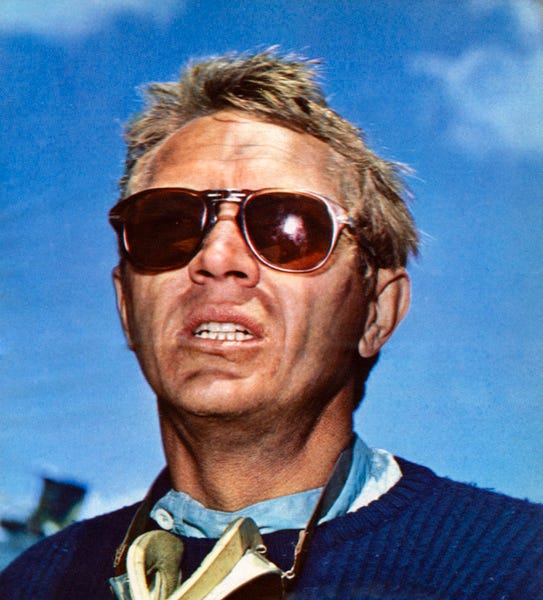
“Steve McQueen doesn’t know the meaning of quitting. He just keeps pushing himself — punching and kicking for hours without a break — until he is completely exhausted.” Bruce Lee started private kung fu lessons with the Oscar-nominated Sand Pebbles antihero in August 1967, an uncertain period of self-discovery following the cancellation of ABC’s sole season The Green Hornet, Lee’s big break in North America, albeit in a stereotypical role as the comic book protagonist’s dependable manservant Kato. McQueen determinedly clawed his way out of embarrassing B-movies like The Blob to the small screen horse opera Wanted: Dead or Alive. Now he was a top ten box-office attraction with a Brentwood mansion dubbed “The Castle,” a fleet of vintage autos and motorcycles, and respect from Hollywood’s power players. Lee was envious. Who wouldn’t be?
Lee had to earn the trust of the typically reticent, suspicious McQueen. “You couldn’t want a friendship with McQueen because he was too paranoid,” asserts expert Marshall Terrill. “He had to want something from you — in this case Lee’s fighting technique.” Separated by 10 years, the younger Lee eventually realized they shared similar backgrounds — intelligent but mediocre grade-wise students who questioned authority.
The King of Cool’s 90th birthday, if mesothelioma had not prematurely silenced him in 1980, prompted Matthew Polly to delve into the cultural juggernauts’ complex relationship. The exclusive interview is culled from an upcoming, far-reaching profile with the author of Bruce Lee: A Life, by far the best biography on the first global Asian star who encouraged students to “be like water” and adapt to any circumstance.
The Matthew Polly Interview, Part One
How did you become pals with Steve McQueen’s biographer Marshall Terrill?
I was beginning my research on Bruce when I read Marshall’s excellent Steve McQueen: The Life and Legend of a Hollywood Icon [2010]. I’d never written a bio before so I reached out to him for advice. He was extremely helpful and kind, and I’m forever grateful.
Marshall gave me some background on Bruce’s widow, Linda Lee Cadwell. The best thing he did for me was put me in contact with actress Sharon Farrell, who’d been involved with both McQueen and Bruce during The Reivers. I never would have found her on my own [Lee scored two martial arts scenes in James Garner’s gumshoe-derived Marlowe, filmed in August 1968 with Farrell among the cast. While sharing no celluloid time together, an intense affair nevertheless blossomed. Their relationship was in its last stages by October when Lee spent a week as the King of Cool’s kung fu trainer in Carrollton, Mississippi, on the set of The Reivers, a comedy-drama based on William Faulkner’s Pulitzer Prize-winning novel. McQueen wanted to be dressed to kill for the premiere of Bullitt].
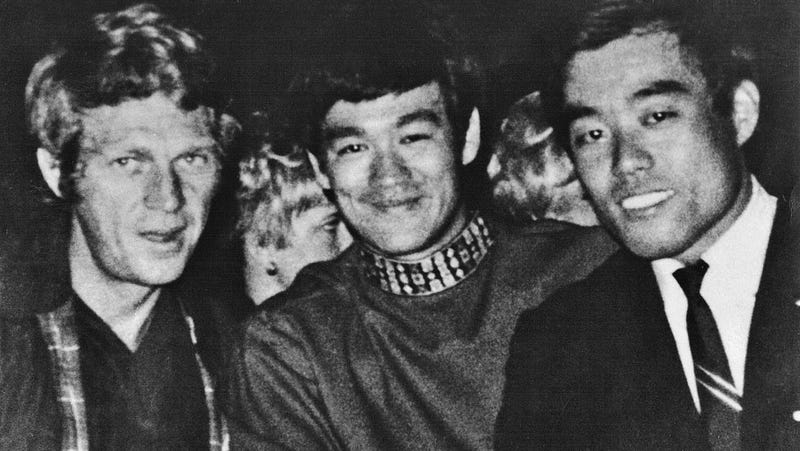
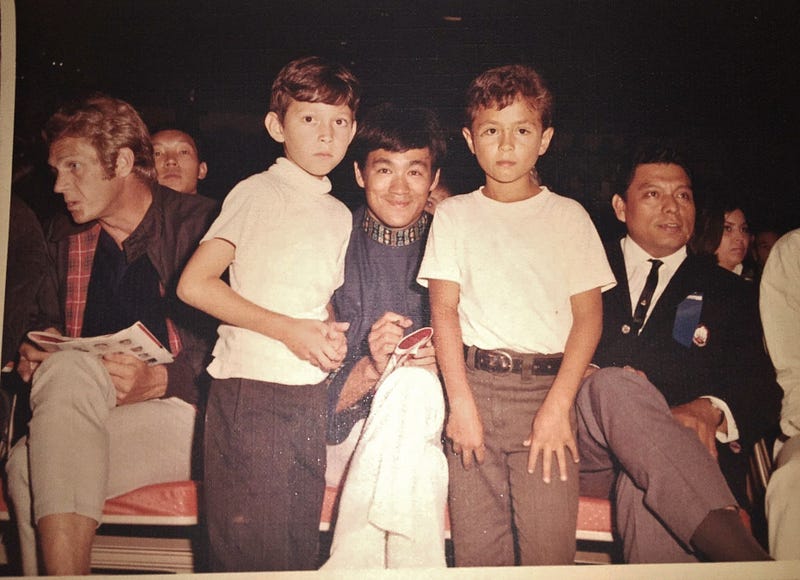
What did Steve McQueen teach Bruce career-wise?
McQueen taught Bruce how to be cool. Bruce was already pretty cool — cool for Hong Kong or Seattle — but McQueen took him to Hollywood-level cool. It is one of the reasons why when Bruce went back to Hong Kong, he blew people away, because he had a strut they had never seen before. McQueen also taught Bruce that in America the lead actor or star is in charge of a movie, not the director or producer. It was exactly the opposite in Hong Kong, so when Bruce returned home he clashed with his directors and producers.
Were there any beneficial effects to McQueen introducing Bruce to hashish?
The drug helped Bruce to chill out a bit. He was hyperactive since boyhood — and a driven perfectionist as an adult — so I think it was only when he was getting high that he could actually chill and relax.
When did Bruce and McQueen last have contact?
I believe they spoke on the phone in the first week of November 1972 after Bruce had become quite famous in Hong Kong but before he had begun filming Enter the Dragon [which commenced on January 22, 1973, in Hong Kong]. Bruce wanted to brag to McQueen, with whom he had a professional sibling rivalry, about his success. McQueen instead had delivered an 8 x 10 publicity photo with the autographed inscription, “To Bruce Lee, my biggest fan, Steve McQueen” — as a practical joke.
For days, McQueen dodged Bruce’s irate calls. When they finally talked, Bruce yelled at him, “Steve, you dirty rat, I am a star now, too. I am a movie star! Don’t you send me this stuff!” McQueen howled with laughter. He followed up with a sincere, congratulatory letter that read, “Dear Bruce, “I want to let you know two important things I’ve been thinking about you. Now you’re a big star, but I hope you never let it change you. Second, I wish you and your family every happiness. I’m doing great right now myself — mentally and physically. Your brother, Steve McQueen.”
DON’T GO ANYWHERE YET! In PART TWO of the Matthew Polly / Bruce Lee interview, the Shaolin temple alumnus relives his sole trip to a late night couch courtesy of CBS’s “The Late Late Show with Craig Ferguson.”
© Jeremy Roberts, 2020. All rights reserved. To touch base, email [email protected] and mention which story led you my way. I appreciate it sincerely.


