
BUSINESS
This Is the Year of the Massacre of Traditional Retail
DTC accelerated during the lockdown but traditional retailers are self-sabotaging their future survival
Can you repeat that?
“Yeah, they just returned their stock. Some even sent it to my home.”
Wait. Your business clients sent a courier to your home address?
“Yup. Pallets of stock sat in my driveway.”
Why?
“Because of the lockdown, they couldn’t sell my product.”
But you’re selling it now, right?
“Yes, all that stock was sold already, our online sales are through the roof.”
Did your customers reach out to discuss any solutions beforehand?
“Nope. Our invoice was due, so they returned our stock instead.”
Wow!
“I understood at the time. They were forced to close their doors. But in that moment our cashflow simply vanished.”
We were stuck with a months worth of stock. And no money.
Haha — I can laugh now, but our backs were against the wall … we were fighing for survival.”
But you’ve since sold it all. Why couldn't your clients not do what you did?
“Good question. I wasn't thinking about that at the time. My focus was survival. I had bills and salaries to pay.”
Are you thinking about your B2B business relationships now?
“Absolutely. We’re re-evaluating everything.”
Interview summary
What you just read was an actual conversation I had with a business owner, Chris Byrne, last week.
Chris owns and runs a micro-brewery, selling craft beer to high-street retailers, pubs and restaurants.
His business clients forced him to sell his product online, direct to consumer, to survive.
What you’re about to read describes what’s happening in retail right now.
The Power Shift
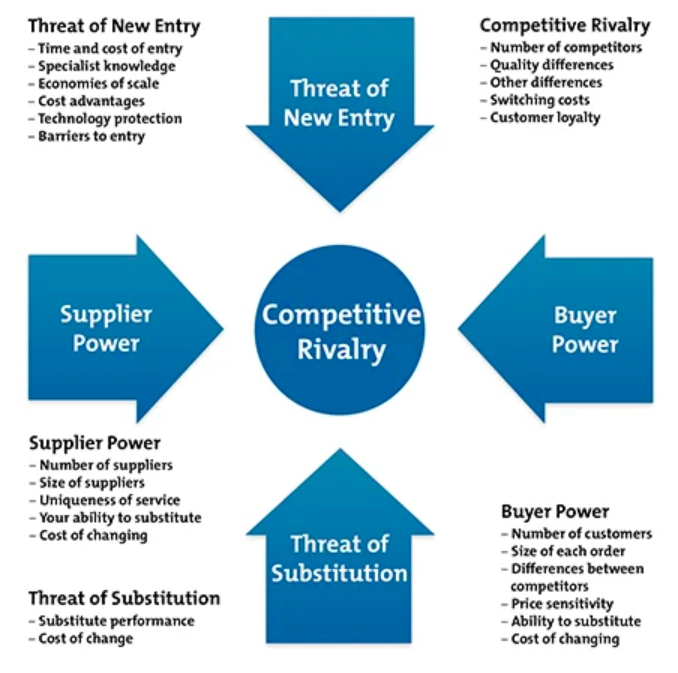
Around 40 years ago Michael Porter presented his 5-forces model to the business world, although some discount its relevancy today, I disagree, due to its simplicity.
Two elements in Porters’ model are quite relevant now:
- The power of suppliers, and
- The power of buyers
When Porter unveiled his model, large retailers were becoming very powerful. During the 80s and 90s, the imbalance of power was widening in favor of B2B buyers — retailers. They squeezed small-players, suppliers.
The internet is changing this.
A number of factors have played a significant role in turning the tide of power in the last decade:
- The web
- Ecommerce platforms, and
- Social media
The convergence of these technological advances created a perfect storm.
An upsurge of disruption. A retail-squall, that’s now subsiding, leaving the less-nimble corporate retail liners in its wake and clearing blue-oceans of opportunity for agile startups.
These rapid developments have significantly leveled the playing field. Obliterating competitive advantages that corporations enjoyed for years.
Competitive advantages that large retailers once held are fading. Individuals or groups of individuals are creating more value from their bedrooms than many large corporations do today.
The B2C to DTC Transition
For some online retailers, the global pandemic accelerated business model transformation. In a single swoop, their B2B channel vanished.
“One week we we shipping pallets of stock to our B2B clients, the week after it stopped. Purchase orders dried up. In fact, some clients were returning goods or looking to renegotiate payment terms.”
— Claire McLoughlin, Online retail business owner
With too much stock “half our Sales disappeared overnight. It was a worrying time. Plus our B2B clients, who bought 60–70 percent of our stock in a given month, stopped placing orders.”
The impact meant that many online retailers were left with more stock than they anticipated. This left them with one option — Direct to consumer (DTC).
DTC is gaining pace
Claire explained: “We had to act otherwise thousands of Euros would be tied up in stock.” So I asked a few more questions:
Question №1 — So what did you do Claire?
- Response— We turned to our marketing partner, a digital agency.

Question №2 — What steps did your marketing partner take?
- Response — Their approach was simple, a twofold strategy:
- Email — They reinvigorated our email frequency and increased DTC discounts, along with twice-weekly promotions to drive conversion.
- Social — We ramped up all our social channels. With more people working from home our engagement exploded.
Question №3 — So what was the impact of this marketing reaction?
- Response— Prior to lockdown our B2C sales were 50–100 orders a day.
- When marketing ramped up our social and email activities our B2C channel suddenly increased by 500 percent, from 100 to 500 orders a day.
Question №4— What were the implications for your business?
- Response — Lockdown has been a game-changer:
- Cashflow — Unlike B2B clients, who operate on 30 to 60-day credit terms, our cashflow was instant online, via B2C web-sales.
- Margin — Our B2B clients get between 40–50 percent off our retail price, which is a trade-off — margin for volume. During the lockdown, we sold more through our website, our B2C channel, at 20 to 30 percent off. So our sales were more profitable, we increased our margin by 20% on average.
- Stock — Our DTC marketing focus converted into sales resulting in our B2B stock being sold DTC at a higher margin, unlocking cash for production.
- Database — Our marketing campaigns increased our email database by 100 percent. Before lockdown, we had 100k email sign-ups, today we have over 200k, plus our channel conversion rate increased by 2 percent.
- Brand — Our brand exposure grew tenfold based on the number of social impressions, web traffic, email opens, sign-ups, and click-throughs.

The fact is that direct to consumer (DTC) sales were on the roadmap for many online retailers for the very reasons that Claire outlined above. The global pandemic has simply brought DTC to the fore.
Final Thoughts
What’s happening on the ground here in Ireland and the UK indicates that a shift in buyer behavior is underway. Whether or not this will remain once lockdown restrictions a fully lifted is unknown.
To recap, below is a summary of what online retailers are now considering:
- Cash — DTC sales generate instant cash for online retailers, which is highly attractive. Power has shifted from traditional retailers and distributors to small online business owners.
- Marketing — Digital marketing, social engagement, and web presence is now the top priority for businesses across the globe. Online retailers are well placed in this space to react and are doing so.
- Profitability — Cutting out inter-mediators means that online retailers can significantly increase their margin, making their brand more valuable should an acquisition present in the future.

The third point, profitability, is crucial from a founders' perspective. For example, if the value of an eCommerce company equates to 5 or 10-times profit, a 20 percent increase in their margin is huge, here's why:
Old B2C and D2B business model
- Revenue — €10 million per annum
- Net margin — 20 percent, or €2 million
- Value — 10 times profit = €2m * 10 = €20 million
New DTC business model
- Revenue — €10 million per annum
- Net margin — 40 percent, or €4 million
- Value — 10 times profit = €4m * 10 = €40 million
With €20 million value on the table, why would own brand eCommerce founders not want to focus on DTC going forward?
For traditional retailers and distributors, who returned stock to their suppliers, the impact of your actions could be severe. The burden of the pandemic-panic was pushed back down the supply chain.
In doing so retailers and distributors forced their suppliers to reinvent their business model, their route to market to survive,
Small business founders’ were forced to pivot. They did. Their entrepreneurial spirit kicked in to unlock greener pastures.
This raises the question — what function do traditional retailers and distributors have in a socially distant world?
Only time will tell.


