Good, Bad And The Ugly Side Of Multinational Corporations
Corporate Sustainability Lessons For Startups

Corporate social responsibility has been around for centuries, “seen in the far more ancient Babylonian Code of Hammurabi. Hammurabi was the king of Babylon from 1795 to 1750 BC” (Killian 2012).
The Code of Hammurabi was a form of primitive laws. It set out what was socially acceptable in commercial terms, for instance a builder could be sentenced to death if a dwelling he constructed collapsed killing its occupants.
“In philosophical terms, the notion of corporate responsibility probably originated in the form of business philanthropy in the late 1920s” (Savitz 2006, pg. 44) but in a formal sense it was in the infant stages in terms of its evolution today.
This article will tends trends, reveal a dark history and explore opportunities and challenges facing corporate leaders today.
“We have a responsibility to look after our planet. It is our only home.” — The Dalai Lama
Trends — The Good, The Bad And The Ugly
Today the interdependent relationship between people, the planet and profit has never been more at the forefront within Multinational Corporations (MNC’s) and indications are that this trend will continue to grow.
While the modern business environment has made vast improvements in aligning business strategy with respect to society and the environment, history reveals a rocky road that led us to this point.
Will History repeat?
Let’s take a look.
The Ugly
Some of the worst atrocities inflicted on the environment and humankind were not always the result of conflict or wars. In many instances the perpetrators operated under the guise of growth and development … Multinational Organisations.
If the rules of war applied some the activities corporate entities were responsible for, they would be in breach of the Geneva Convention.
After the fall of the Berlin wall the truth behind certain industries was exposed. Following the Thalidomide scandal in the 1960s it was discovered that Western pharmaceutical companies turned to the cash-strapped Eastern Bloc economies in their search for human guinea pigs when regulation obliged them to carry out rigorous product testing before they could be sold on the open market.
“By 1988, East Germany was said to have signed a total of 165 contracts with Western companies for drug testing” — The Independent
Publicised Stasi files exposed an array of dark secrets as to what extent corporate greed was prepared to reach for financial gain.
Another case during this era saw Ikea use forced labour within their supply-chain to keep costs down. Ernst & Young produced a report in 2011 by which concluded that “Ikea, a Swedish company, knowingly benefited from forced labour in the former East Germany to manufacture some of its products in the 1980s” (The New York Times, 2013).

Ikea was not alone, MNCs from the former West Germany, like Klöckner & Company and Mannesmann, exploited their neighbours in similar fashion.
It’s too easy to look at former communist states or emerging economies through western eyes and point the finger of wrong doing when evidence supports that western greed played a big part in fuelling many environmental and human rights disasters.
The fact is we don’t have to look beyond our own shores to see similarities in avaricious human behaviour, past or present.
The Magdalene laundries established institutions in Ireland with subhuman conditions. Forcing workers, including children, to toil for the benefit of its two shareholders, the Catholic Church and the Irish state.
Indeed financial institutions in Ireland were rewarded a few years back when they privatised profit and then socialised debt with the approval of the same sovereign party, now shareholder — the Government.
The Bad
The recent past is peppered with examples of corporate leadership failings — Toxic Leadership. This century alone has seen Nike, Walmart and Apple bear the brunt of criticism from ethics groups.
In 2012, Apple’s supply-chain partner, Foxconn, was exposed globally for its treatment of workers when 150 members of staff protested and threatened mass suicide at their plant in Wuhan, China. This was on the back of “a suicide cluster in 2010 that saw 18 workers throw themselves from the tops of the company’s buildings, with 14 deaths” (The Telegraph, 2013). Foxconn took the precaution of installing safety nets around employee dorms to address the problem, well to arrest the problem rather.
“Several reports from inside Foxconn factories have suggested that while the company is more advanced than many of its competitors, it is run in a “military” fashion that many workers cannot cope with. At Foxconn’s flagship plant in Longhua, five per cent of its workers, or 24,000 people, quit every month.” — The Telegraph

It’s unfair to associate Foxconn with only Apple when Sony, Acer, Hewlett Packard and many more organisations employ this production giant for its low cost labour as a direct result of competitive market forces to feed global consumerism. With a labour force of over 1 million employees it’s easy to understand the magnitude of Foxconn’s ever increasing power within the value-chain of technology, this of course coupled with our insatiable consumer appetite.
From a financial point of view we only need to look at what happened at Enron to appreciate how greed can become endemic within certain companies and industry sectors. Enron’s leadership and accountancy practices were anything but transparent and Arthur Anderson, once a top five accountancy firm, disappeared as a result soon thereafter.
“Arrogance was Enron’s great failing” — The Economist, 1 June 2000
Arrogance plus a healthy dose of ego.
“Ego-based decisions are grounded in fear and self-preservation” — George J. Ziogas
Bernie Madoff was revealed as the modern day Charles Ponzi in 2008 when his scheme collapsed mirroring that of Mr. Ponzi himself some eight decades earlier. In Ireland Breifne O’Brien operated an identical scheme, drawing the same profile of unsuspecting investors.
This raises the question, is the entire global financial market an elaborate Ponzi scheme fed by multiple stakeholders like investors, MNC’s and consumers?
The crash in 2008 offered some insight into this question and the protracted recovery since indicates that many questions have yet to be answered.
“Greed, for lack of a better word, is good. Greed is right. Greed works. Greed clarifies, cuts through, and captures, the essence of the evolutionary spirit. Greed, in all of its forms; greed for life, for money, for love, knowledge, has marked the upward surge of mankind and greed, you mark my words, will not only save Teldar Paper, but that other malfunctioning corporation called the U.S.A” — Gordon Gekko, (Michael Douglas) 1987 Movie ‘Wall Street’
Similarly, competition has been manipulated in the recent past to preserve high margins and reward employees. In 2005 it was discovered that between 1995 and 2004 a cartel was thriving in the Elevator industry in Europe. Otis, Schindler, Kone and ThyssenKrupp were exposed to have rigged bids and allocated projects in four EU countries during this time. The EU imposed a record fine of almost one billion Euro.
Let’s not forget recent investigations by the EU into Google and Facebook. In 2019 the EU fined Google $1.7 Billion for unfair advertising.
“European authorities on Wednesday fined Google 1.5 billion euros for antitrust violations in the online advertising market, continuing its efforts to rein in the world’s biggest technology companies.” — Nytimes.com
The Good
Imaging heavyweight Olympus’ financial irregularities were exposed by a former Leader and CEO, now whistle-blower, Michael Woodford.
Woodford lost his job soon after he discovered a black hole in company accounts driven to prop up the share price to attract investors. When the dust settled however his Ethical Leadership approach did little for him personally (not counting compensation).

Similar punishment was dished out to whistle-blowers within the Irish financial systems who became outcasts or viewed as trouble by colleagues and employers alike. Ex-AIB internal auditor, Eugene McErlean, was one victim of this fallout. On a positive note “proposed whistleblowing legislation is expected to be strengthened to offer better protection to individuals coming forward with information about possible wrongdoing” (Irish Times 2012).
The impact of such protection will provide a protective platform for ethical leaders and followers to weed out malpractice on a wider scale.
Bad news may travel faster than good however there is growing evidence that social responsibility and sustainability is becoming stronger and more common. In a report carried out by KPMG in 2011 it stated that:
“It is a powerful undercurrent running through the pages of the business media, an almost compulsory topic of discussion at meetings of business leaders, and among the most thoroughly researched business issues of the past decade” — KPMG Corporate Sustainability
So, with this in mind who are early the shakers and movers in this arena?
One such company is Unilever, who launched a detailed sustainable plan identifying Key Performance Indicator (KPI’s) targets by 2020. In a transparent document released into the public domain Unilever identified milestones that they have set out to achieve, namely:
- By 2020, we will help more than a billion people to improve their hygiene habits and we will bring safe drinking water to 500 million people.
- Halve the greenhouse gas impact of our products across the lifecycle by 2020
- Halve the water associated with the consumer use of our products by 2020
- Halve the waste associated with the disposal of our products by 2020
- By 2020 we will source 100% of our agricultural raw materials sustainably
- By 2020 we will link more than 500,000 smallholder farmers and small-scale distributors into our supply chain
This ambitious programme has been mirrored within other sectors in an array MNC’s, such as FedEx, Intel, IBM, Siemens, Proctor and Gamble, UPS, Statoil, BASF, Renault and Motorola.
The organisations listed above are included on www.global100.org, a prestigious ranking of the “Most sustainable organisations in the world.” (Global 100, 2013)
“What you take from the earth, you must give back. That’s nature’s way.” — Chris d’Lacey, The Fire Within
Emerging Trends
As with most emerging business practices, more affluent trends appear based on added value characteristics. The rate of change is occurring at lightning speed and best practice sustainability must keep up with market dynamics.
“What got you here won’t get you there.”— Marshall Goldsmith, World authority on leadership
So, what are the emerging trends noteworthy today?
Declaration of Intent
MNC’s are using sustainability as a platform to promote their intent and plans for future development with a deliberate focus on people and the planet, otherwise known as the “Triple-Bottom-Line” (Savitz et al. 2006). A clear alignment between all three metrics is the common theme from leaders today.
“What got you here won’t even keep you here — you need to be a game changer.”— Linda Hill: Harvard professor of business administration
Declaring sustainability plans is a new marketing tool that MNCs employ for brand promotion. The motivation however is unimportant if targets are successfully met with a mutually beneficial outcome.

Supply Chain, Product Promotion and Advertising
This trend is particularly obvious within the FMCG sector. Savvy generation X and generation Y consumers demand more information. Information such as where a product was sourced? Who made the product? What were the working conditions for employees? What environmental impact was there in the life cycle?
Take the horse-meat scandal in Ireland for example as a contrast. On a more positive note and a powerful demonstration in answering these questions is portrayed by Aldi whereby the name, location and even a picture of every farmer from which their product is sourced, displayed, promoted and advertised.
Supply chain and local product source transparency has been credited for Aldi’s impressive 30% growth here in Ireland in the past year alone.
Stakeholder Involvement
Leveraging both internal and external stakeholders has been pivotal in the progress made to date in Corporate sustainability.
“A trend has begun to make sustainability a part of performance evaluations in an attempt to drive sustainability throughout an organization. Companies like Intel and Shell link sustainability as a part of their review process. How a company integrates performance management and sustainability will help drive large-scale change, by working with key groups such as human resources.” — 3BL Media
This concept extends to both supply-chain partners and consumers. A dynamic stakeholder relationship is core to the success of sustainability and only effective when all parties fully buy into it and participate with integrity.
Technology and Innovation
Across all industries technology is being utilized to improve efficiencies and drive sustainability in purchasing, marketing, R&D and sales practices.
“All issues of sustainability will be solved by innovation.” — Len Sauers, Vice President for global sustainability at Procter & Gamble

Technological advancements enable companies to look at real-time data on a host of issues and make immediate decisions and recommendations to improve processes.
A Broader Approach
Corporate sustainability not only benefits the planet, but other stakeholder — people, employees, consumers, suppliers and communities.
Innovative partnerships and multi-stakeholder involvement is viewed as an opportunity to spark real change. By evolving the way we view sustainability and breaking away from a narrow perspective on just the environment and green-washing, will move us closer to a broader understanding, respect and appreciation around corporate responsibility.
Trends indicate that sustainability awareness is on the rise, but the tools and methods are still developing. In 2011 Ernst and Young reported six most influencing trends, namely:
- Reporting is on the rise
- The CFO’s role in sustainability is on the rise
- Employees emerge as a key stakeholder group for sustainability programs and reporting
- Despite regulatory uncertainty, greenhouse gas reporting remains strong, along with growing interest in water
- Awareness is on the rise regarding the scarcity of business resources
- Rankings and ratings matter to company executives
Challenges
Any change or transformation will be met with some resistance, be it in the form of barriers, opinions, regulation or contradictions.
The emergence of Corporate Sustainability and Social Responsibility is no different as such obstacles have been ever present since its inception.
“Our problems are man-made, therefore they may be solved by man. And man can be as big as he wants. No problem of human destiny is beyond human beings.” — J.F. Kennedy — Former US President
The immediate and long-term challenges for sustainability are primarily entangled with fundamentals of business and market forces. American economist, Milton Friedman, was quoted in an essay in the New York Times stating that “the social responsibility of business is to increase its profits” (Killian 2012), period. An interesting viewpoint but in reality the challenge to even realise this narrow objective forces leaders to consider people and the plant to maintain profit.
No Place to Hide
Multinational retailers such as Primark and H&M felt the backlash from what is being slammed as malpractice by activists following two disasters in quick succession in Bangladesh, India.
Sustainability does not work post-disaster and criticism will always ensue if that’s the case. The impact of ignoring or lacking effective policing within supply chain partners will have brand damaging repercussions in the future due to transparent disclosure from independent internet sources.
PR manoeuvring is now a difficult sell to the social-savvy consumer, more so than affordable apparel. Throwing cash at a preventable disaster contravenes the concept of social responsibility and is viewed as an insult or a band-aid by activists and human rights groups. The death of more than 1,000 workers in India is too high a price to pay for cheap clothing with today’s consumer.
Another challenge presents in the form of multi-cultural values and beliefs. MNC’s must navigate the complexities associated with operating on a global scale and “although it is very difficult to implement a generalised code of morality and ethics in individual countries, such guidelines do provide a basis of judgement regarding specific situations” (Derskey 2011, pg.51).
A moral universalism model with an ethnocentric approach is a logical position for MNCs operating across a diverse range of host countries.
Energy
Energy represents probably the biggest challenge this generation will face for various reasons.

Firstly, BP was in hot water in 2010 following the catastrophic oil leak in the gulf of Mexico “in which a blowout on its drilling rig killed 11 and sent about 4.9 million barrels of oil into the Gulf” (The Guardian 2013). A subsequent fine of US$1.4 billion was attributed to BP’s subcontracted rig operator, Transocean Deepwater.
Al Jazeera’s John Terret reported this year that a post disaster cover up ensued during the clean-up. A former worker, Malcolm Coco, publicised video proof when BP instructed him to set fires on the ocean surface to burn off crude oil as this was more cost effective but illegal and damaging to the environment.
It’s clear that leadership credibility of entrenched commodity MNCs is in question due to blatant disregard for the environment. The Piper Alpha disaster in 1988 is another example of one such incident which cost 167 lives. If this trend continues it will have huge implications on future generations who will inherit a damaged planet from this generation.
Secondly, these energy companies that are frequently associated with environmental issues given their invasive probing of the planet appeared in a new report, ‘Uburnable Carbon 2013’. This report estimated that the global stock market value for coal, oil and energy reserves of fossil fuels is based on the assumption that it will all be burned.
The fact is “only 40% could ever be used if the world is to cap the increase in global temperatures by 2C this century” — The Guardian
The top 200 fossil fuel companies are today valued at a staggering $4trn carrying $1.5trn of debt. This valuation is based on the assumption that they will burn all their reserves. If this was to happen it would increase “global temperatures by at least 6C, with untold consequences for life on Earth” (The Guardian, 2013).
What’s absurd is that the same top 200 energy companies spent $674bn searching the globe for new reserves in 2013–2014. Most of this money could have been wisely channelled into sustainable and renewable energy research considering that existing fuel reserves can never be burned so locating more is self-defeating.

The implication here is that a rude awakening is looming for the world stock markets when the realisation dawns about irrational valuations and behaviour.
The financial impact when this carbon bubble bursts will see $2trn wiped off the combined share price, literally overnight.
This awakening could occur anytime. Supporting evidence suggests that financial and competitive anomalies now exist, “BP, Statoil and Shell are being investigated for suspected oil-price fixing after the European Commission confirmed it carried out unannounced inspections on several companies active in and providing services to the crude oil, refined oil products and biofuels sectors.” (The Journal 2013).
“Western civilization is a loaded gun pointed at the head of this planet.”― Terence McKenna
Stakeholder vs. Shareholder Objectives
On the surface an obstacle that modern business leaders must overcome are the objectives of two critical benefactors, namely stakeholders and shareholders.
Traditionally shareholders seek short term return on investment, typically ranging from six to nine months; whereas stakeholders, such as employees and suppliers, operate on a medium to long term timeframe. This contrast could not be more diametrically opposed. Nonetheless this is the norm or at least it has been for the last century.
This raises a question: How can MNCs maximize shareholder return and marry that with stakeholders?
“Surely firms seeking to maximize shareholder value will pay scant regard to the natural and social environment in which they operate.” — Hooley et al 2012
The implication in not finding a mutually-beneficial solution for this relationship could impede or certainly impact negatively on future sustainability of MNCs.
Peter Doyle argues that “the essence of shareholder value approach is the long-term sustainability of the organisation through the creation of lasting value” (Doyle 2008). This argument holds true considering that short-term profitability may erode long-term competitiveness.
“Maximising shareholder value on the other hand requires long-term thinking, the identification of changing opportunities and investment in the building of competitive advantage.” — Hooley et al 2012.
Transparent Reporting And Metrics
When we measure something we manage it so anything that is not measured is just wishful thinking. The implications of measuring and reporting KPIs can be far reaching:
Key metric disclosure builds confidence for both internal and external stakeholders. This in turn influences share price, generates cash-flow for future investment in product or service development. Supply-chain auditing is one type of metric that lends itself to ensure Corporate Compliance.
Consistency
Declaring intent and making efforts to adhere consistently to KPIs ia a challenge for MNC leaders this century. Contradictions dilute credibility when deviations from a declared intent become exposed, after the event. This diminishes effective sustainability plans in the eyes of stakeholders.
The solution in the event of any deviation is transparency and corrective remedies or contingency planning.
Given that sustainability models are relatively new, trial and error remains somewhat acceptable but the wider community will not accept non-disclosure of the facts, to put it bluntly: being lied to.
Leadership
Authentic leadership style fits well with respect to Corporate Sustainability. Future leaders will exhibit more traits associated with this style than any other. These types of leaders are courageous, honest team-builders, collaborators and possess a rich moral fibre.
The challenge for Company boards is to seek out and find a type of individual who can lead in an ethical fashion with strength of character and moral-compass.
A recent example of this occurred in the sporting world when Manchester United appointed Jose Mourhino. The charismatic style of Mourhino however is more suited in a short-term transformational environment.
His tenure ended early.
Ole Gunnar Solskjaer replaced Mourinho last year. Solskjaer is someone who understands the culture of the football club. After a number of ill-fitting appointments since Sir Alex Ferguson retired, the atmosphere at club seems to be more determined to capture this culture through a team leader like Ole.
That said, results will determine Solskjaer’s long-term future.
“A leader is someone who motivates others to act toward achieving a common goal. A leader is able to rally people around a cause and move them to take action toward achieving a particular objective” — George J. Ziogas
MNC’s can learn from the sporting world by appointing leaders who mirror their own culture. Leaders in turn have the power to influence followers and stakeholders in driving this ethos across the value-chain.
Taxation
This topic is becoming more controversial each year, particularly in Ireland.
“The focus on Ireland intensified after a UK tax expert claimed we are a “doormat state” for large companies” — The Herald
Apple and Google were under the spotlight amid intense scrutiny following tax avoidance claims by host countries, such as the UK and the US. “Apple chief executive Tim Cook and other company executives, along with US treasury officials, will appear before the Senate subcommittee at a hearing on Capitol Hill” (The Irish Times 2013) to explain their tax policies.
Google faced another challenge following Whistleblower disclosures. A former employee, Barney Jones said “he was the primary source of allegations that led to the company being described as “evil” by Margaret Hodge, the chair of the public accounts committee, and to being accused of misleading the committee” (The Guardian 2013).
MNC leadership is at a crossroads here as regards taxation sustainability and what is considered socially responsible.
Friedman claimed that “charitable donations are a form of theft from shareholders” (Killian 2012), host countries could argue on this principle that strategic-tax havens are a form of theft, although both are legal.
The question MNC leaders should ask is: What is the right thing to do?
From an economic perspective this is in many ways the most basic aspect of business practice. “The moral case for a responsible approach to taxation is clear: businesses consume government resource, and so have a moral obligation to pay their fair share of taxes” (Killian 2012) in each host country.
In the case of Google, zero tax payment to the UK exchequer is morally irresponsible given the vast revenues were generated from its operation in that economy.
Natural Resource Conservation Awareness
Water is a critical resource to the broader economy with people, products, services and jobs all depending on it.
“Forty-Seven percent of the world’s population could be living under severe water stress by 2050.” — 3BL Media 2013

The planet is interconnected from an ecosystems perspective so global population growth will consume resources at an ever increasing rate. With businesses competing for fresh water in addition to other resources, designing out, substituting or resource conservation is now crucial for long term survival.
Conservation oversights can be misleading, albeit unintentional. An example of this is evident in the replacement of old heating systems with bio-technology such as biomass heating. If a wider study is evaluated we would discover that the net carbon emission (reduction) may not be as it seems. For example, biomass heating requires regular deliveries. On a commercial scale this may require two truck-loads of wood pellets per month; resulting in a diversion of emissions and not elimination or reduction as intended.
Opportunities
There are opportunities for MNC leaders to solidify a sustainable trajectory for the business they oversee.
Reduction In Costs
Embracing the multi-dimensional relationship with all stakeholders and working concurrently across the value chain presents a real opportunity to reduce cost.
Reducing energy, eliminating natural resources or designing out materials inefficient processes can realise savings.
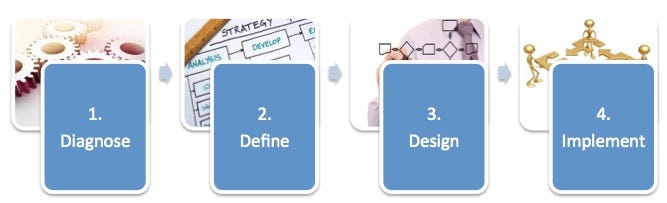
Continuous improvement and lean methodologies advances are achieved using a 4-step model, illustrated above, and can have immediate impact on the bottom line in any industry. This in turn can be compounded by sharing best practice with partners, promoting further cost reduction.
Collaboration For Innovation
Sharing intellectual property and collaborating with suppliers, competitors or industry players is a sustainable strategy that can accelerate innovation.
A by-product of strategic collaboration enables partnerships to outpace their competitors. In doing so collaborators immediately expand their workforce, add technology, amplify imagination, leverage cooperation and share industry expertise.
In fact, “according to a 2008 report from IBM, approximately 75% of CEOs cited collaboration as important to their innovation efforts, but a little more than half said they practice collaboration to a large extent” (Business week 2013).
So there is significant opportunity in this area for MNCs. An example of this is Google’s encouragement of staff to spend 20% of their time working on their own projects, also Microsoft have in recent years teamed up with Nokia to compete against device giants like Apple and Samsung in the telecoms sector.
Innovative advancements can spawn from outside an industry like when Apple redefined the music and telecoms industries. The herculean success of Apple is overwhelming evidence for MNCs to ramp up collaboration and ensure sustainability to meet future consumer needs.
The impact of collaborative practices can be immense in terms of its benefit for creativity and imagination — key ingredients for innovation.
A New Energy
Renewable energy is vital for the survival of MNCs. The behaviour of energy companies to date has ironically been influenced by industrial output. A partnership objective between governments and MNCs has the potential to force Energy companies to develop renewable resources, at a faster rate, if leveraged effectively.
Corporate governance in allegiance with regulation can have an impact to ensure that demand for renewables far out-weight that of finite resource demand.
A Government supported initiative promoting an attractive renewable investment vehicle for MNCs presents an opportunity to make inroads on carbon reduction targets outlined in the Kyoto protocol.
This “1997 treaty has been sapped by the withdrawal of Russia, Japan and Canada and its remaining backers, led by the European Union and Australia, now account for just 15 percent of world greenhouse gas emissions” (The Irish Times 2012).
There is overwhelming evidence for a new protocol given that “the world’s 100 largest economic entities in 2009, 44 are corporations. If you look at the top 150 economic entities, the proportion of corporations rises to 59%” (Global Trends 2013).
Walmart Stores alone had revenues exceeding the respective GDPs of 174 countries. Corporate clout actually holds the key for real change with respect to renewable energy sources.
MNC leaders today have unprecedented influence on the future of this planet. The impact of this opportunity, under the umbrella of corporate sustainability, has the potential to ignite ‘game-changing’ resonance initiated in Koyoto.
Fair Trade And Marketing
Two companies immediately spring to mind on this topic — Ben & Jerrys and Starbucks. Both organisations have successfully merged fair trade and marketing. Starbucks claim that they “have always believed Starbucks can — and should — have a positive impact on the communities it serves.
“One person, one cup and one neighborhood at a time” — Starbucks
Both brands are associated with the global reporting initiative (GRI), which measures and targets specific KPIs. Starbucks even publicise their annual reports and have done so since 2001.
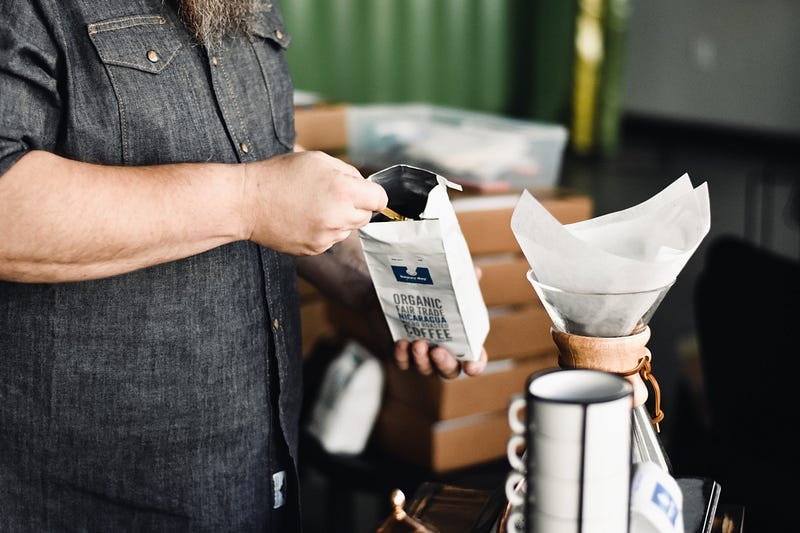
Howard Schultz, Starbucks CEO, said that “we’ve been building a company with a conscience for more than four decades, intent on the fair and humane treatment of our people as well as the communities where we do business, and the global environment we all share”.
This commitment was solidified in 2012 with the appointment of Blair Taylor as his dedicated Chief Community Officer, a newly created post. Taylor is a visionary leader and with 30 years of public and private-sector experience.
“I have always admired the vital role Starbucks plays in the community and its socially responsible approach to doing business” — Blair Taylor.
Final Thought — Future Vision
The things we can’t see are more powerful than what we can.
Futurists, visionaries, think-tanks and those who reject the status quo are being acknowledged as the creators of tomorrow.
“Plan for the future because that’s where you’re going to spend the rest of your life.”— Mark Twain

The impact of investing in the wrong area or facing in the wrong direction for short term return is not viable or sustainable.
As discussed energy companies direct vast sums of money in sourcing new fossil fuel reserves. Nevertheless, the fact remains that we cannot afford to burn it all so it’s therefore a fruitless exercise.
The window of opportunity is closing fast and the world can ill-afford wreckless corporate behaviour exhibited by previous generations.
References
Freerepublic.com. (2012). East Germany’s STASI Sold Citizens to Western Pharmaceutical Companies as Human Guinea Pigs. [online] Available here.
Paterson, T. (2012). Drug firms bought East German patients to use as human guinea pigs. The Independent. [online] 5 Dec. Available here.
Ikea Admits Use of Forced Labor in the 1980s. (2012). The New York Times. [online] 16 Nov. Available here:
Moore, M. (2012). “Mass suicide” protest at Apple manufacturer Foxconn factory. [online] Telegraph.co.uk. Available here.
Harvard Business Review. (2012). Corporate Sustainability Efforts: Feast or Famine? [online] Available here.
Global 1000 (2019). Global 1000. [online] Global 1000. Available here.
Hutton, W. (2013). Burn our planet or face financial meltdown. Not much of a choice | Will Hutton. [online] the Guardian. Available here.
3blmedia.com. (2019). Latest News & Content. [online] Available here.