
Data Driven Art
The value of AI art will be zero?
the value of digital art
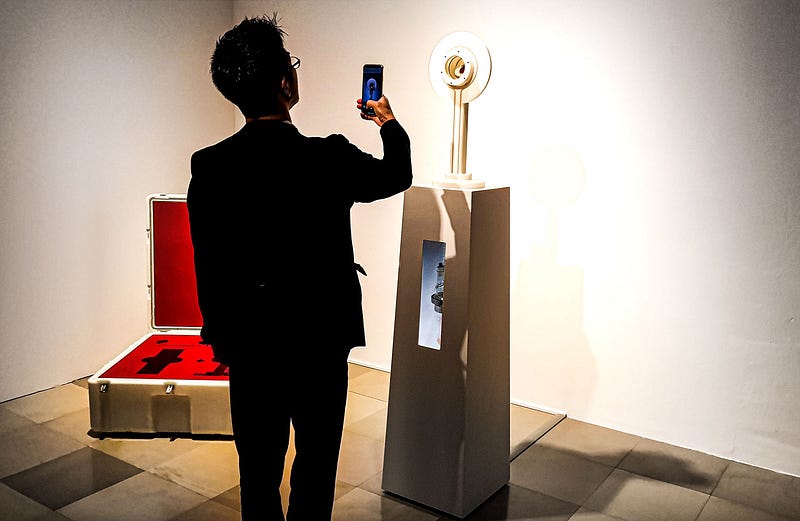
This year, the AI art curator — a separate entity that can curate contextually by learning similar artists— was commissioned by MLearning.ai to look at their respective collections of 2 million 3D objects and 7 million photographs, respectively. In what seemed like an instant after it was tasked with the job, the AI art curator had decided on about 1/4th of these artworks for inclusion into its publicly viewable collection. Unfortunately, this decision resulted in a sudden decline in the value of the remaining 20 million NFT available on the platform.
The AI art curator’s process is currently public and visible to anyone who wishes to see it. Here are some links if you want more insight: https://hicetnunc.art/Evartology https://evartology.com/ https://www.getrevue.co/profile/evartology
The story above is about the near future.
The NFT market is less than four years old and has boomed in 2021. This paper presented the first overview of some critical aspects by examining the market history of 6.1 million NFT trades across six main NFT categories, including art, games, and collectibles. [1]
The AI art value is “$0,00”?
AI art is a type of algorithmic art. The term differs from computer art and algorithmic music in that the process may use natural language processing, machine learning, and artificial neural networks to “learn” and improve itself.
The value of AI art will be zero if human creativity is zero. This can be interpreted as a dystopian, lifeless future or a utopian future where technology has helped us eliminate the pain points that we have always known exist in all human society.
The NFT market is the leading global art market.
Most artists spend years creating their own works. This process inevitably means that many of their artworks reach high prices due to their unique value. Which has increased with time since their creation. Is this the case with the NFT? Most of the time, most or all of the work by NFT artists will be rejected, causing market volatility to be significant. Furthermore, most NFTs will go away with aging IT hardware. How many original digital artworks remained on floppy disks? The value of recreating them exceeds the value of the works themselves. In a world where microseconds and distance from the server determine whether or not to be an AI art, the time has become paradoxical. The following decades will decide whether the records on SSDs will survive and whether the only trace will be the scars burned in the AI vision sensors of AI art curators.
AI art is just beginning and will have much to offer in the future. Perhaps, machine learning will not supplant human creativity shortly but rather evolve along with it. However, in the following decades, many developments could see an overhaul of what we know as art. For example, what would you do if you saw a piece of your own work on an AI gallery? Would you repurchase it?
The NFT market is growing fast and has lots of development potential for artists to follow and its trade volatility. As more people spend their money on digital artwork from machines, there will be a debate about whether or not that artwork is worth anything at all or if its worth has been extinguished by technology. This debate could split the art community, but that is a debate for another story.
AI art is an unpredictable phenomenon that creates a blurred perception of the value of artworks in the masses.
Awareness of the NFT market is the foundation of art collecting in the 20s of the 21st century. It’s even more important than budget.
ART is everywhere 🟣 But the question is, how much do you love it?
I am an Art Curator, founder at EvArtology, and ML consultant at MLearning.ai. I advise companies and institutions in the creative industries on using AI tools in their daily work. Human collaboration with ML models can be very creative and bring huge benefits. The new era begins now.


