
The Power of Merz
The collages and architectural assemblages of Kurt Schwitters left a lasting legacy that remains relevant in art, graphic design, and pop culture.
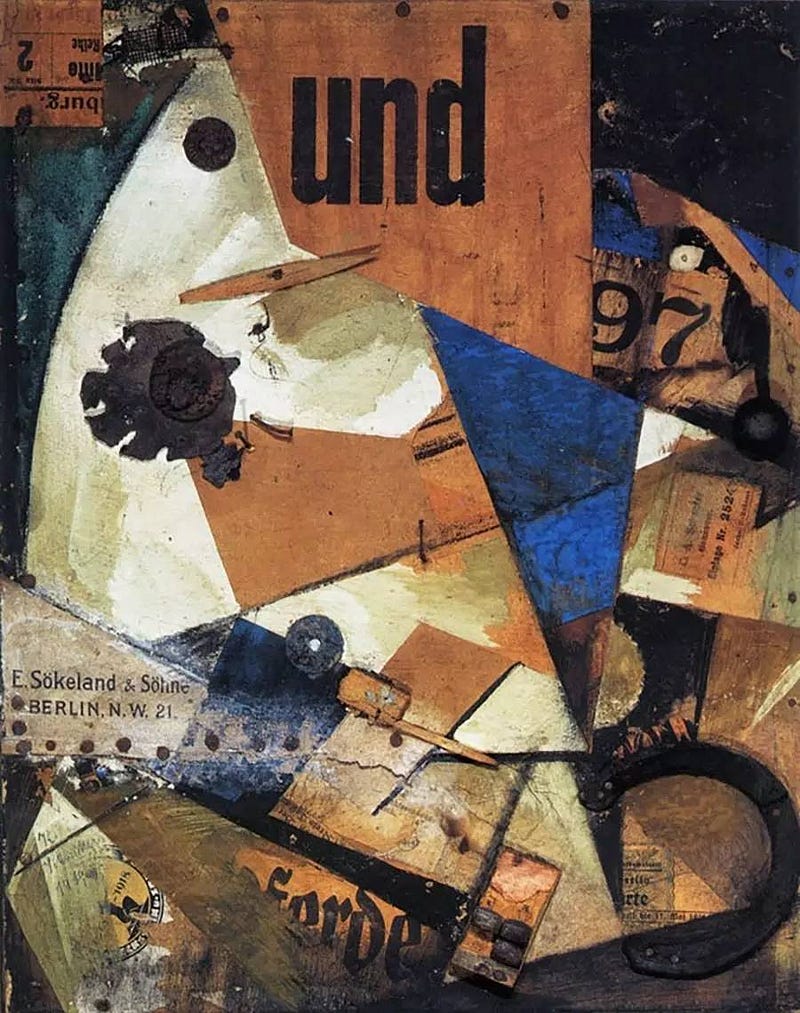
Merz was a random word taken from a cut up newspaper, the second half of the German word kommerz, meaning ‘commerce’. Artist, Kurt Schwitters used the word to reference a series of collages he made during the 1920s, and later launched a periodical with the same name, featuring the work of his colleagues, as well as creating a series of architectural projects he termed Merzbau.

.PNG)

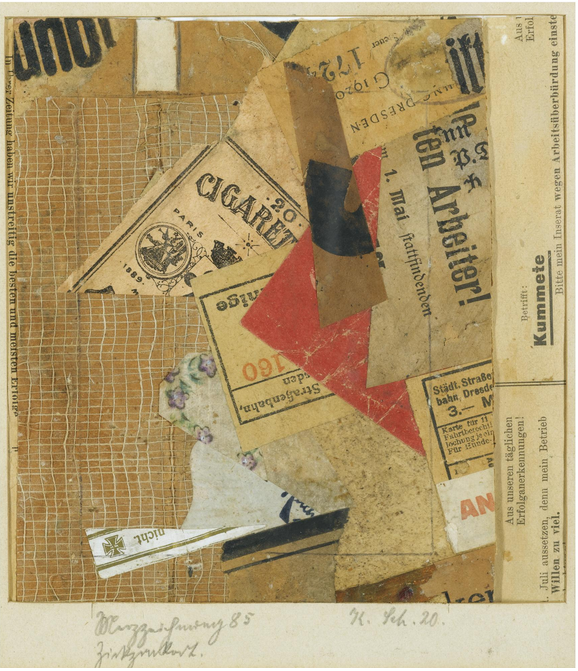
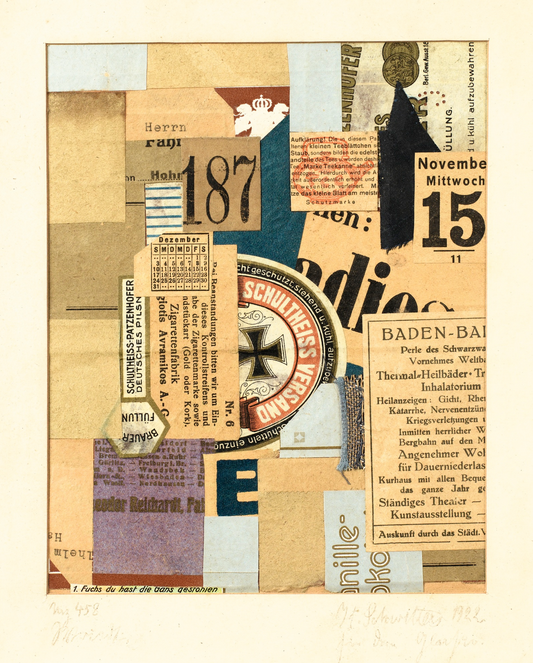
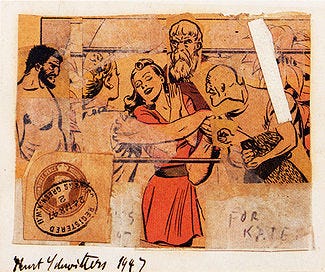
In 1918, he began collecting ephemera, such as sweet wrappers, fragments of cloth, tickets, matchbooks, clippings from newspapers, labels, price tags, and other printed material. This became an extensive collection which he sorted by colour, tone, visual density, and texture. He then used these ‘worthless’ fragments from everyday life to produce hundreds of visually dynamic, abstract collages — similar to the way a mosaic maker may upcycle broken tiles.
These collages were put together intuitively and often contained exciting visual collisions of words, typographic elements, and illustrative material that sometimes suggested strange narratives. Generally, the Merz pictures remained fairly abstract, though he worked hard to create cohesive compositions. He was more interested in strong visual rhythms and a sense of depth, rather than any deliberate literal meaning.
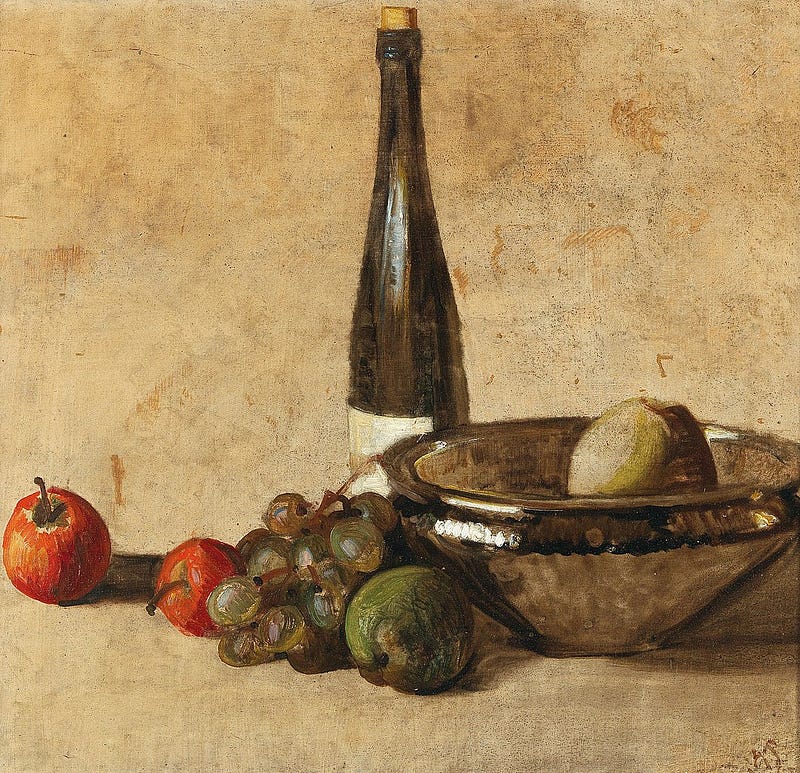
Schwitters had studied art at the Academy in Dresden where he proved to be a talented realist painter, but preferred to experiment within the post-impressionist and neo-expressionist styles. It seems his more abstract, indeed mechanical, approach was inspired by working in a factory during the First World War where he was fascinated by machine parts and how they were put together in order to then make other things.
He began to think of machines as an extension of the human soul. He saw that their components work together to make real what we imagine, by assembling materials into new combinations. From this idea, he realised that art was also a type of mechanism that could be used to build new meanings — a concept that aligns him with the Suprematists and Constructivists.
Schwitters was also associated with some of the other formative movements in Modernism, including Abstract Expressionism, Cubism, De Stijl, Bauhaus, and Dada. His Merz technique grew from an ideology he shared with his Dada associates — the idea that gathering together random stuff from your own immediate environment would create an accurate portrait of the self, the surroundings, and the culture of the time.
On hearing the sound poems of fellow Dadaist Raoul Hausmann, which were tonal arrangements of phonemes instead of complete words, Schwitters extended his Merz approach to poetry. He developed an expressive reading technique that explored the tonalities of the human voice and phonetic patterns of language without grammar, whilst sometimes avoiding the use of words entirely. This cut-up approach was later appropriated into literature by the surrealist poet, Brion Gysin who would then influence the writings of William Burroughs, Allen Ginsberg, and the lyrics of David Bowie.
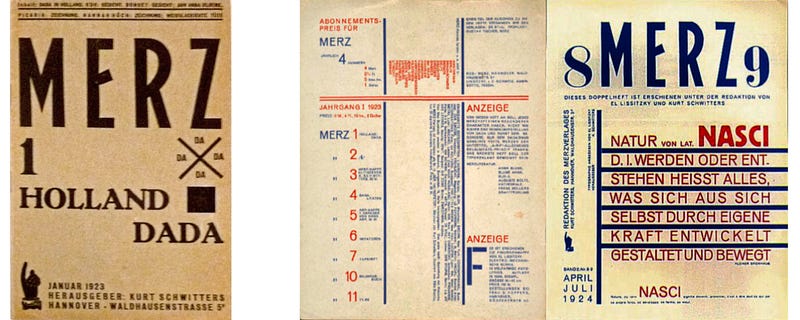


His Merz pictures and publications were directly influenced by Bauhaus graphics and, in turn, would be a significant influence on Modern graphics and many Post-Modern practitioners, Robert Rauschenberg being a prominent proponent among them. In the mid-1920s, he set-up his graphic design and advertising agency called Merzwerbe based in Hanover and became the official typographer for the town council until the mid-1930s.
During the same period Schwitters lifted flat collage into three-dimensional works that went beyond sculpture into the built environment. With his Merzbau, he constructed ambitious assemblages on a grander scale, interiors that were a fusion of décor, sculpture and architecture. He began his first Merzbau project in his family home in Hanover and, by 1937, he’d converted at least six whole rooms into art environments to be inhabited and interacted with.
The rooms looked how the inside of a Cubist cathedral might, with angular planes thrusting up and spreading, diverging columns, and cuboid volumes. Graphic details were added sparingly, with accents of bold colour, textual motifs, and appropriated images here and there. One assumes that there were practical concessions, such as concealed cupboards and storage shelves, but the result was dynamic, not at all feng shui, and dusting must’ve been difficult.
The political and creative landscape of Germany had rapidly deteriorated with the rise of the Nazi regime who viewed artistic freedom as an ideological threat. Kurt Schwitters was one of the many artists to be listed as ‘degenerate’ and un-German. His works were selected for display and ridicule in the touring Entartete Kunst exhibitions, and his friends and associates were beginning to disappear. So, when he was called for ‘interview’ by the Gestapo he instead fled to Norway.
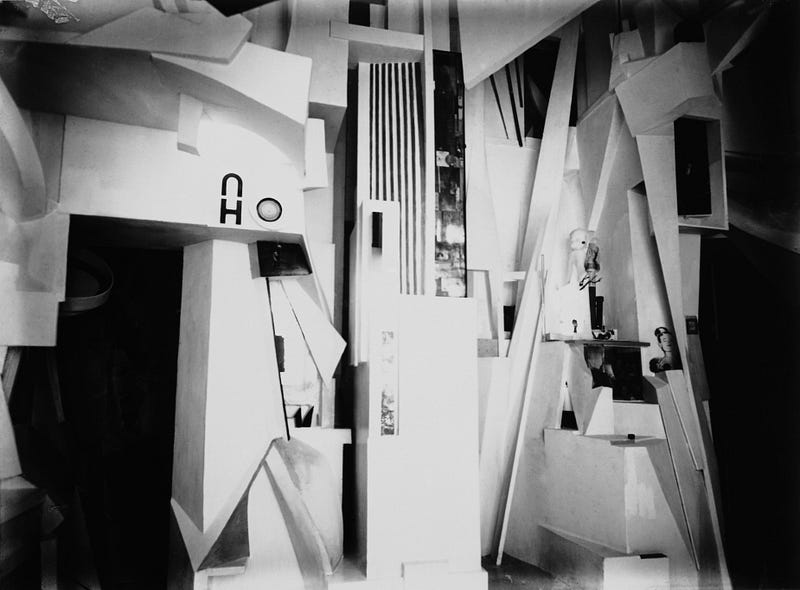
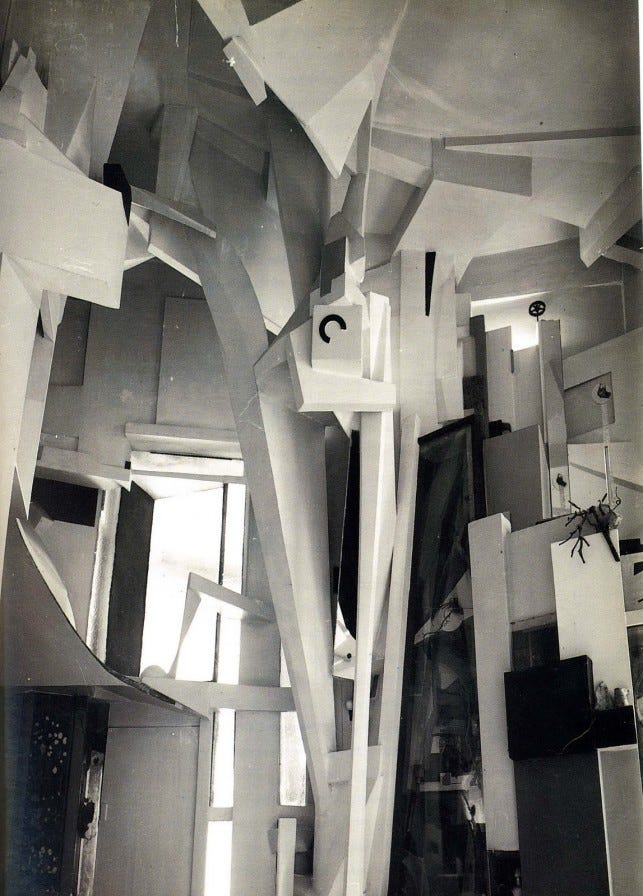

He began his second Merzbau in Lysaker, but had to leave that unfinished when Norway was invaded by the Nazi Germans in 1940. However, there was no stopping his creative drive. He went into hiding on the island of Hjertøya where he began converting his hut into a third expression of Merzbau. Not long after, though, he was arrested by the Nazi-controlled Norwegian government and after a brief imprisonment escaped to Scotland… where, as a German citizen, he was detained as a ‘hostile alien’. Subsequently, he was interred on the Isle of Man along with more than 1,000 prisoners from Germany and Austria. So many of them were fellow artists and writers that the area became known as ‘the artists camp’.
Schwitters set-up a studio space and began teaching art classes. Although they had little or no traditional art materials, they were known to collect natural clay for modelling and pulled up floor coverings to make linocuts, using laundry mangles for printing presses. Due to the lack of materials, Schwitters enthusiastically explored porridge as a sculptural medium. He also ground stone and brick dust with the waste oil from sardine tins into makeshift oil paints. Apparently, the whole area soon smelled really bad! But he and his students, along with other resident artists, were able to stage several exciting group exhibitions.
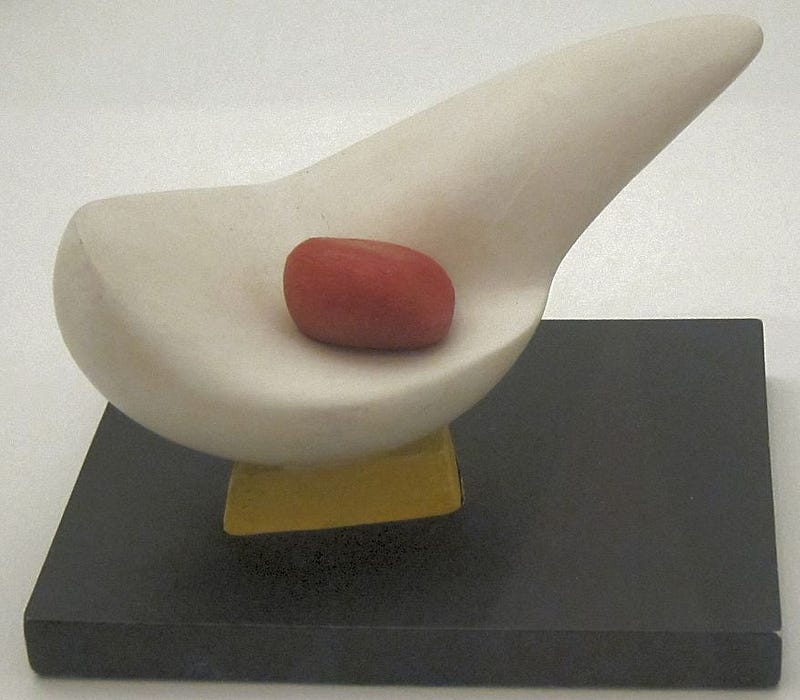
By Yuletide 1941, he’d been released from his Isle of Man captivity and spent the remainder of the Second World War in London, where he met influential artists including Constructivist sculptor, Naum Gabo; ex-Bauhaus teacher, László Moholy-Nagy; and British sculptor, Barbara Hepworth with her then partner, Ben Nicholson.
Schwitter’s wife, Helma had returned to Germany before the invasion of Norway and had died there during the War, so when it ended, Kurt decided to settle in Elterwater, a small village in the Lake District of Cumbria. There, he continued to develop his Merz methods, alongside a return to more saleable landscapes and still-lifes.
In 1947 he received a fellowship grant from the Museum of Modern Art in New York to recreate the Merzbau works destroyed in the War. He was working on his Cylinders Farm Merzbau, now known as ‘The Merzbarn’, when he died in 1948.
The Merzbau projects influenced Modernist architecture that followed. Zaha Hadid, one of the most startlingly original and innovative architects of the twenty-first century, cited Schwitters as a significant inspiration. A century since its inception, the power of Merz remains clearly evident in the visual culture of today.

.jpg)
