
The Power of Calling People Out
How calling bullsh*t can make things worse.
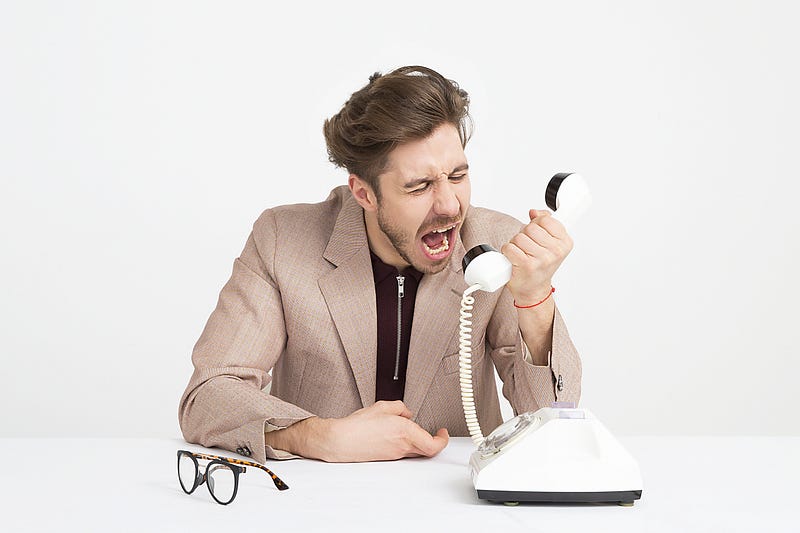
There is a perverse pleasure in knowing when someone is trying to have you on and letting them know about it. We feel superior. We think we have outsmarted them. It’s satisfying.
Recently, I wrote about fake friendships because I felt the need to express my pain — without calling anyone out specifically. This is because when you accuse someone of doing something bad, whether it was intentional or not — no one likes to be criticised, and no one reacts well to criticism.
“Any fool can criticize, complain, and condemn — and most fools do. But it takes character and self-control to be understanding and forgiving.” ― Dale Carnegie
When you call someone out, you’re satisfying your own ego. It doesn’t always improve the situation, and it can more likely damage a relationship.
But when you know someone has done something wrong and it’s hurting you or others, how do we approach them without making matters worse?
Is It Your Business?
There are many things that require zero tolerance. They need to be dealt with at work and in our personal lives. But there are ways to deal with different scenarios.
In extreme cases, you can’t just walk up to a perpetrator of a crime and cuff him yourself — you’d need to call the police. It is your duty to report the crime, but it is not your business to solve it.
Likewise, it may not be your business to accuse a manager directly of bullying your colleague. Reacting on impulse and acting righteously by standing up for your colleague could backfire. Talking to HR privately or discussing with your colleague his or her options to seek help and emphasizing that you’re supporting them are more docile and potentially effective ways to deal with a bully. Directly confronting the bully, although seemingly dutiful, could make matters worse for everyone involved, even if it wasn’t your intention.
Ask yourself, how is your involvement going to help? Is there a way you could report an issue without getting involved yourself? Is it necessary for something to be done? What can you do, if anything at all, that would help a situation?
It might be that you’re in a situation where you cannot get away from someone displaying unpleasant or toxic behaviour, and you need that behaviour to change, for example, with bullying at work or at school.
For example, Verywellmind states that it’s generally a bad idea to call a child’s parents if their child is bullying yours. Even if it is absolutely your business to solve the bullying, the right approach would not be to confront the parents directly other than to seek a sense of relief, unless you knew them very well and could more or less predict their reaction.
But in the same way that no one likes to be criticised, no parent wants to hear anything negative about their children:
“Be prepared for some pushback when you address the issue. The best thing to do is to go into the conversation without any preconceived ideas on how the other parents should discipline their child for bullying.”
A better idea might be to get the school involved. Going through formal channels shows professionalism, tact, and maturity — and it’ll be more likely to be met similarly. Alternatively, teaching your child to tackle a situation with a bully and showing him correct ways to defend himself enable him to grow in resilience and feel empowered.
What Do You Want Out of Criticism?
What is your goal? Do you want to end a friendship because it’s toxic? Would it be helpful to lash out and accuse your so-called friend of hurting you with the purpose of having the last word? How useful would it be to you to tell them what they’ve done?
I’ve had the pleasure of bringing closure by writing a message to an old friend who hurt me — but I knew that would be the last contact with her. I was OK with telling her exactly how I felt betrayed. I chose to let her know how I felt to heighten my own sense of morals but also to move on. My message to her represented closing the door on her forever.
But when you want to maintain a relationship and you need them to change, confronting them with guns blaring might not help.
The Harvard Business Review, in their article, Stop Calling People Out compares two statements that are similar in content but vastly different in tone and thus, the reaction can be different too. It describes one statement calling someone out on their bad behaviour, and the other calling someone forth. It means that, in the first instance, someone’s intentions, although unknown, focus more on acting morally superior:
“It often, not always, comes from a place of ego or reaction. The intent, conscious or not, is to make the other person wrong.”
In the second statement, an observation in private is being made rather than an accusation in public, and it is asking the other party what help they may need to change their behaviour and move forward. The aim is to bring awareness of unacceptable behaviour but also to proactively guide them to solve an issue they may have.
“Calling forth is a mindset, a way of showing up as a leader who fights for the greatness within others. It starts with intention.”
The goal should not be to make the other person feel worse for their bad behaviour. The goal is to change it, and the “calling forth” method is seen to be more impactful and efficient.
For example, if I start snapping at my husband because I’m stressed, I am much more likely to become aware of it and change if my husband came to me with concern and said something like,
“Hey, is everything OK? I’ve noticed you’re more short-tempered lately, is there anything I can do to help?”
than,
“Stop nagging at me, you’re being so unreasonable!”
Lashing back out at me might be his impulse reaction if he felt attacked. But reacting with compassion is more likely to make me more receptive and aware of my behaviour, and result in a much more positive conversation.
Calling People Out Online
In 2019, Former President Obama spoke about the overestimation people make of effecting change by calling someone out online. He said it might make him feel “woke” to correct someone’s spelling mistake or use of the wrong verb, but that it isn’t activism.
The Guardian published an article describing how a frequently cited problem with call-outs is,
“That it’s all too easy to get carried away and overpunish people, turning alleged perpetrators of upsetting acts into victims themselves.”
Calling someone out online can easily escalate into shaming, bullying, and abuse — for anyone involved.
I personally don’t call anyone out online anymore. I learned very quickly that it often makes a situation worse, even if that wasn’t my intention. I once responded to someone’s racist meme because it was extremely offensive. It backfired and he became even more aggressive.
In the end, I reported him on Facebook and blocked him, and I felt regret for trying to call him out. Arguably, I could have just reported him in the first place rather than taking matters into my own hands.
If anything, the lesson was not to call him out on racism — but to do a spring clear out on my social media. Guess what I’ll be doing next?!
Think twice before becoming a keyboard warrior.
Calling People Out Efficiently
If someone has really pushed your buttons, whether because they were acting unacceptably towards you or someone near you, it’s only normal to want it to be addressed.
It is generally advised that sympathy and compassion are the best ingredients to disarm anyone.
Getting angry and acting on impulse simply lowers you to the level of the other party. Your mirroring reaction makes you look bad too. It won’t matter who started it, even if that’s your defence — you followed!
There are certain situations when you can’t confront bad behaviour alone and you need help — and that’s OK. Tackling things with a team behind you is often more encouraging, such as seeking help from family, or in more extreme cases, the police.
Takeaway

Calling people out plays on our egos. But when the goal is to make a change, we need to carefully consider the consequences of bringing our concerns to others’ attention. Confronting someone accusingly more often than not makes a situation worse, and sometimes it is best to simply tone down our reaction or not react at all.
Some things are absolutely unacceptable but calling someone out is not the answer and we should contact the appropriate authority in order to protect ourselves and others.
Some things require action on our part, but sometimes reacting with kindness and understanding is more positive and impactful.
What are your thoughts? Have you ever been confronted with a situation you felt was unacceptable? How did you react?
Sylvia Emokpae, thinker and philosopher, is passionate about self-love and motherhood. See more work like this.
Follow her on Twitter.


