
Getting More Out of Change
How learning to adapt positively will help you shape your future.
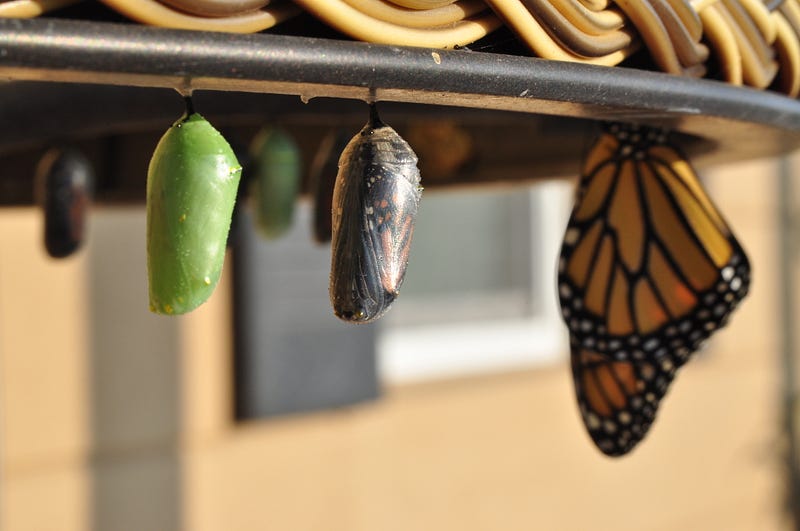
Change is undeniably unsettling. Sometimes we thrive with change, sometimes we panic. But it doesn’t go unnoticed — because change can potentially threaten our emotional safety.
However, change is ironically the only constant in life.
Down to the cells in our body which are forever growing, multiplying, and dying off. There is change in the weather, change in us as individuals as we grow older, change in our circumstances, change in politics, change in society, change in the law. We change our minds, our priorities, our jobs, our roles, even our habits.
Change is one thing that we all at some point both dread and crave.
One tiny change can affect your entire life. It can shake up a whole load of unpredictable emotions within you in areas of your life you did not imagine would be connected.
But how can we ensure that change is good for us, even when the change itself might have been unplanned or negative? Even when the change is planned, it can lead to unexpected results, so we still need to be able to cope with the uncontrollable.
The Link Between Safety and the Comfort Zone
We have a primal need for safety. For as long as humankind has existed, we have always sought it. It is still a very present and natural need today. For example, if a baby falls asleep on his mother but wakes up somewhere else, like a cot — the change in his environment will send an alarm of threat to his safety and cause him to cry and seek the comfort of his mother once more.
Sleep training is actually about learning to meet your baby’s need for safety. It is about teaching your baby to feel safe and comfortable in a different environment — like a cot — and learn how to fall asleep there independently.
The same applies to us as adults — have you ever woken up in the night and gone straight back to sleep? Many times — our bodies do this on purpose. We wake up just enough for our bodies to take in the atmosphere of the room. When we realise it is the same as when we first went to sleep, we roll over and fall asleep again. We don’t even do this consciously, so you won’t necessarily remember doing this in the morning.
But if something feels different, we spring up. When my husband left home the other night to see a friend and I spent the night alone (for the first time in months!), my body woke me up every couple of hours because I’m no longer used to sleeping alone. I was in a higher state of alert than usual and although I wasn’t necessarily feeling worried or scared, it is within my DNA to actually ensure my own safety. When I found my cats lying at the end of the bed almost every time, my body relaxed again and I went back to sleep.
The sameness of a situation or environment is a symbol of safety. When there is a change, that safety is threatened and needs to be re-established for us to be able to move on. It is about making our new situation comfortable.
For example, you may start a new job but you will buy that same latte you have been getting for years on your first day, seemingly to keep you awake but possibly to help you feel settled, too.
You may have a favourite sweater that you take with you everywhere you go on vacation or to visit a loved one for a few days, and if you forgot it, you’d feel more than a little disappointed and not necessarily know why.
We all seek ways to feel comfortable no matter what because it represents our need for safety.
Once we know of this link, we can begin to find ways to help us cope with the more drastic, uncontrollable changes in our lives.
Gaining Control of Change
My son is 2, and if I need him to stop playing with a toy so that we can get dressed and ready to go out — he needs to know about it in advance. At this young age, he feels the need to control a situation, just like we do as grownups.
If I don’t communicate our plan to change the activity, he might tantrum because he’ll feel disturbed. Andriel might fight it and refuse to put down his toy. This might make others think that he’s being naughty, but actually, his reaction would be completely natural and understandable.
When you practice a fire drill at work, you are preparing yourself for a drastic and uncontrollable change. By learning how to evacuate the building safely in anticipation of a fire, you are gaining control of a situation that is otherwise out of your hands. You are training yourself to react as well as possible to a bad or dangerous event.
You are ensuring your own safety and reestablishing comfort.
By letting my son know that we are going out in advance, he has a chance to mentally prepare for the change and conclude for himself that he can help himself feel safe after a change. For example, going to the park is safe, getting into the car is safe, and seeing a friend is safe — he has done all of those before.
He uses deductive reasoning to help him establish his safety when the activity changes. For as long as his reactions remain positive, he will use these events to help him apply the same feelings to bigger changes such as going to daycare, being taken care of by a friend’s parent whom he knows well, or travelling.
Preparing for the worst-case scenarios as well as hoping for the best can help you cope better with all change. When you visualise events and feel like you have lived them before, even if only in your imagination, you can be more in control of your reaction.
“The progress of tomorrow is the preparation today.”― Lailah Gifty Akita

Coping With Undesired Change
“Change the way you look at things and the things you look at change.”― Wayne W. Dyer
When something undesired or unexpected happens, it is normal to feel disoriented and shocked for a period of time. Sometimes, a huge change, such as learning about a loss of a loved one, can send your body into physical shock.
Making sense of a situation can be hard, but it is the first step towards adapting and moving forward.
My sister, my then 9-year-old niece, and I were on holiday in Portugal when our purse got stolen. We didn’t have that much cash in there but we had our credit cards. We were due to fly home the next day and we needed to pay for our hotel stay, food for the journey, and our transport home from the airport.
We had a moment where we yelled “goddammit!”, but that’s not what we needed to do in order to get home safely.
We evaluated our level of control — the fact that I had left my spare credit card in the hotel room meant we could get cash out for my sister and me to get home, and for us to pay for everything outstanding. We had a bit of change in our pockets — coincidentally, just enough to pay for the metro back to the hotel — down to the cent.
We prioritised — we knew we had to contact our banks, but we decided to get back to the hotel first and check if I had left a spare card in the room — which I had. When we were back at the hotel, we informed the hotel staff who helped us by calling the police. We also contacted people at home to let them know in case we needed their help getting home.
We made a plan — we knew we were safe and could get home. That’s when we called our banks and cancelled the cards that were stolen. Luckily, there were no contactless payments back then and the cards had not been used.
We adapted — we still had a good rest of our day walking around and spending time by the pool in our hotel. We were thankful that we didn’t lose all that much because everything except the cash, which was no more than 20€, was replaceable. Overall, we did not let that one bad event ruin our perspective of the vacation there. Lisbon is a beautiful city with lots of life and vibrancy to it night and day.
We learned a lesson — always keep emergency cash stashed in a safe and another backup place, such as a jeans pocket or a separate bag. When we got home I ordered little tube keyrings where we could keep folded notes attached to our keys.
We could have reacted badly and our perspective on the entire vacation could have been negative. Our anger could have caused us to lash out at the hotel staff who might have chosen not to be so helpful. Our niece could have got upset and worried about the situation. But our calmness meant she remained calm too.
When you control your reaction, you maximise your output.
These can be applied to all changes, big and small. When we feel that the world is falling and that we have no control, rather than burying our heads in the sand and feeling fearful and anxious, it is good to take ourselves out of the situation and think as if we were helping our best friend out.
Detaching yourself from a drastic change helps you take the negative out of your thinking.
Help reestablish your own safety by taking the steps above. Be proactive and move on fast without dwelling about the what-ifs of any scenario — what’s done is done. You can take control of the future by controlling the present moment — and that includes your own state of mind.
“Organize, don’t agonize.”― Nancy Pelosi
Takeaway
Change can be both exciting and nerve-wracking. It can induce happiness and fear. But change is inevitable — like taxes and death.
So we might as well do whatever it takes to make sure our reaction to change produces the best results. We can practice the art of visualisation to help us formulate a plan should a change go one way or another. We can prepare for the worst and hope for the best.
When something happens we had not anticipated, we will be shocked and feel unsettled. The threat to our safety will be there, but our reaction is ultimately what will shape our long-term future, not the change itself.
When something unpredictable happens, we can help ourselves gain control and feel safe again by:
- Assessing the control we have.
- Prioritising our needs and restoring ourselves emotionally.
- Accepting the change and making a plan to act proactively.
- Adapting and establishing our safety and comfort.
- Reflect and learn from the past.
“As dealing with change becomes a regular activity, leading it becomes a skill to hone, an internal capacity to master.” — Arnaud Henneville
Sylvia Emokpae is passionate about self-love and motherhood. See more work like this.