
Sleep-Training Does Not Scar Your Baby
But bad sleeping habits might.
When my baby was 4.5 months old, I was desperate for some sleep. Coming to the realisation that I couldn’t carry on as we were was guilt-inducing and the feeling of failure was overwhelming. Why couldn’t my baby fall asleep and stay asleep for a few hours at a time? Why was he so adamant about sleeping on me?
There was a perverse pleasure in knowing my baby took comfort in me though. One that deep down I didn’t want to end and that I took comfort in myself. The baby snuggles, while they sleep, are enamouring.
Until the consequences too great to ignore.
We All Sleep-Train Our Kids — Whether We Know It Or Not
The first lesson that I learned when I started to consider sleep-training was that there is no such thing as a bad sleeper.
Harshly, if your baby struggles to sleep, it is because of the bad habits you have taught him to practice. If your baby is a really good sleeper, it’s because of the habits you cultivated in him.
Simple.
Your reaction to this need not be offensive like it was to me at the time.
The thing is — everyone, trains their baby. Everything that we as parents do for them, all the habit setting, bedtime routines, food choices, etc, is all training.
Disciplining your toddler is training. Teaching them about manners is training. Setting a nighttime routine is training. Eating at the table is training. Potty “training”. The word might seem militant, but it’s not. It’s clear and basic.
That means that whether we know it or not, we all sleep-train our kids — well, or badly.
So, if your baby wakes up every 20 minutes and expects you to help him fall asleep again, that’s because you have trained him to.
Likewise, if your baby sleeps through the night from the age of 4 months, then you have trained her to. Whether you paid an expert or read a book, or tried out different tactics — or you don’t think you did much — you did. You trained your baby.
I tried many things but failed to help my baby sleep without me. I trained him to need me, in fact.
In the end, I paid for a sleep expert’s help, after I angrily shoved the pacifier in my baby’s mouth for the umpteenth time one evening, shocking him into tears.
My Battle With Anger As a Parent
Ensuring our son feels loved regardless of our feelings.
medium.com
The daunting feeling that I was taking my frustrations out on him was too much. That put an end to our suffering. Yes, I mean “our” — because the damage was not only being done to me, but to our son — I’ll come to that later.
And I’ll never look back. I claimed back my sleep by helping my baby fall asleep on his own. I don’t care how selfish this may seem. The benefits have paid off since — my son has not suffered any long term effects from it. He’s a loving, affectionate, well-rounded little human and I thank partly the sleep training, for many reasons.
There is no shame in paying a sleep expert to help you teach your baby how to sleep. Women for centuries have suffered because they were sleep-deprived and I decided not to carry on that reckless and self-sabotaging tradition which many in the past would’ve probably paid top dollar for, had it been available.
Why Your Baby Needs Uninterrupted Sleep
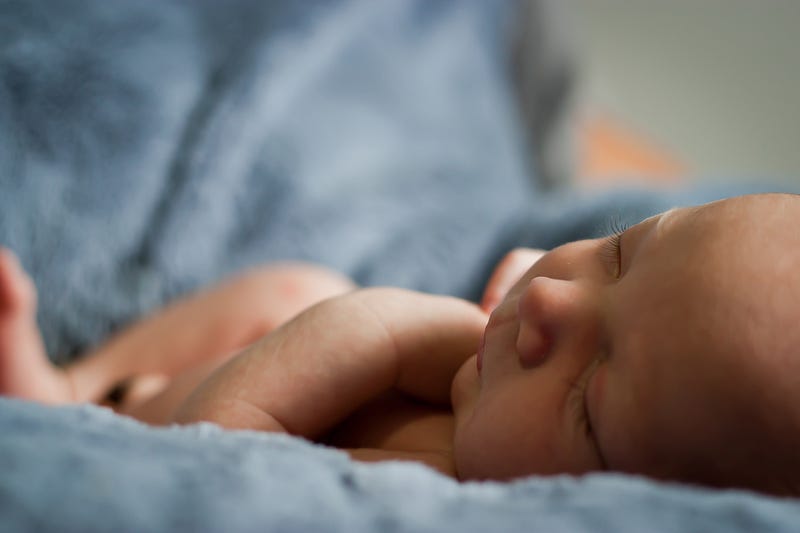
Your baby grows mostly when he sleeps. You know when you wake up to greet your baby who shockingly looks like he grew overnight? That’s not your eyes fooling you — babies go through growth spurts, and they do this while sleeping.
If their sleep isn’t regular or is quite often interrupted, his growth might slow.
Italian researchers, studying children with deficient levels of growth hormone, have found that they sleep less deeply than average children do. — Parents.com
In addition, there is growing evidence that not sleeping well is tied to obesity and other health conditions, often starting in infancy and getting considerably worse during adulthood.
Food choices differ between those who are well-rested and those who are tired as adults — and as children. If babies are not getting enough deep sleep and this issue carries on as they get older, their tired state can cause them to crave higher-fat or higher-carb foods.
If this isn’t enough to convince you to teach your baby to sleep through the night when young, maybe this will:
During sleep, children (and adults) also produce proteins known as cytokines, which the body relies on to fight infection, illness, and stress. — Parent.com
The effects of bad sleep could well lead to health issues later in life due to protein deficiency. The benefits of sleep training trumped the consequences of not for me.
Sleep-Training Scars Babies
Myth.
No sleep-trainer will recommend the famously misinterpreted crying-it-out method that all parents gasp so shockingly about.
No, I did not just let my baby cry until he was so exhausted he fell asleep.
I followed an entire programme that involved comforting and supporting my baby the whole way. It might sound like boot camp, but it really wasn’t — and Andriel nailed it in days.
I shushed him, hummed, caressed his face, sung, picked him up and cuddled him, kissed him — all the things I could to comfort him, except let him fall asleep on me.
He had been used to breastfeeding or sucking on the pacifier to sleep while lying on me or in my arms, and he was shocked when I stopped this habit.
Babies only know how to communicate with crying. That’s how they tell you something is up. Yes, he missed me the first time I didn’t meet all the conditions he had previously relied on to fall asleep, and he sure communicated this to me by crying — but only because up until then I had trained him to only fall asleep this way.
When this habit changed, he needed time to read through the memo. That’s all it is — getting used to change, which we all know we struggle with sometimes, some more than others.
I had to remove myself from the equation, and I decided to throw away all the pacifiers too because they were causing more damage than good.
I promise you, Andriel is a happy child. He is not scarred. He goes to bed at night smiling, kissing me and hugging me goodnight, and he sings Twinkle Twinkle with me. When I leave the room, I turn on the monitor and watch him roll over and go to sleep. Sometimes, he takes a few minutes to get comfortable and in that time he might mumble and sing to himself (or his soft toys) until he is asleep. He does not cry, he loves his cot, and he feels safe.
Yes — his personality may have been affected by the sleep-training — but not detrimentally. Quite the opposite. Because the interactions he has during all his awake times are positive.
This leads me to the next point.
Training to Self-Love

It’s because I chose to love myself by fixing our sleep that my love for him was able to radiate at top volume.
When my sleep returned, most of the symptoms I had of postnatal-depression vanished within a week. My mind was no longer foggy. Decision-making wasn’t so difficult. My humour returned. I just wasn’t so angry and moody all the time. I didn’t just want to go out and do things with my son, but I actually enjoyed doing them all — with energy!
The bounce to my step came back. I was me again.
So how would a mother’s good mood help her baby?
Well — something else I have learned as a parent is that no matter how many rules we set for our kids, they will learn mostly from our actions.
So, if your behaviour around your child is negative, i.e. if you’re acting tired, irritable, grumpy, or sad around him, he will learn to act this way too.
Andriel definitely felt my energy, whether he understood it or not. He definitely felt my stress. And had that not been quickly resolved, that energy would have journeyed with us and taught him to also act negatively.
Obviously, all parents feel negativity. We are all human. The trick is to actively work on minimising it. Practising self-care is not only important for you as an individual but for your kids.
When I corrected my sleep, I was able to work on improving my mental wellbeing. With that, I gained perspective and awareness of my feelings.
I was able to begin a long fight with my demons without passing them down to my son.
His seeing me triumphing in life will encourage him to also triumph.

Takeaways
The saying that you have to be cruel to be kind may resonate with some in this article — making those drastic changes might seem daunting because change can be scary, but the benefits far outweigh the potential damage that bad sleep can cause for both the parent and the baby.
When your sleep is good, you can tackle the rest of your self and thrive. That will teach your baby to thrive too. It may be seen as selfish — but there is a fine line between selfishness and self-care. You will be taking care of your kids by taking care of yourself.
You can’t predict the future, but you can help shape it by nurturing your kids with as much positivity as possible — starting with good sleep.
Hopefully, this can help normalise sleep training and get rid of the negative connotations around it. No, you aren’t scarring your baby by teaching her how to sleep on her own. No, you aren’t failing as parents when you admit you need some help.
But, yes, you will feel better, and so will your baby.
Sylvia Emokpae, thinker and philosopher, is passionate about self-love and motherhood. See more work like this.