
Wake Up to The Importance of Sleep
Especially when you’re a new parent

Most of us understand the power of sleep, but we don’t fully exercise it. It is one of those things that we take for granted or don’t look at fixing first when there are other issues.
If we are fighting stress at work, we might not think that a good night’s sleep could help solve it. If we are having difficulties with a loved one, we would never blame bad sleep for it or depend on it to fix the relationship.
I was not affected by a lack of sleep in my teens or my early 20s, and if I was, I didn’t notice. I was young, full of energy, and my motto was “I will sleep when I’m dead.”
But in my late 20s, we had a baby, and I lost it.
Lost what, you ask?
My mind.
Through a lack of sleep.
Early Parenthood
At first, I felt groggy and hungover. I laughed it off with my husband. I was a bit tired, but nothing I couldn’t cope with. I had a tonne of good hormones running through my body that helped me fall in love with my son. Life was just delightful.
My husband went back to work and I was left to deal with the baby 24/7, with a couple of broken hours of sleep each night. After a few weeks of playing out this routine, I started getting irritable, anxious, confused, forgetful, and grumpy.
I was so groggy, I could not concentrate for long periods of time and needed regular breaks.
Eventually, I was so tired I was too scared to drive. WebMD says that,
Driving while sleepy is like driving with a blood alcohol content of .08% — over the legal limit in many states.
It is one thing to be so tired that you can’t really function at work and lose concentration. But it is a whole other thing when your reaction time slows. This is walking into dangerous territory.
I also started to talk in my sleep. In fact, my husband tells me of a time that I sat up in bed and cradled the air in my arms, claiming I was breastfeeding my son while he was in fact Devonte’s arms, waiting to be transferred to his mother to feed.
I threw diapers in the laundry basket and clothes in the trash. I added sugar instead of salt to the food on my plate. While this has a comedic effect to it and I have joked about suffering from “mummy brain” it certainly did not feel like a joke at the time.
Coffee couldn’t save me — no caffeine is allowed when you’re breastfeeding.
I was a mess — I wore the dishevelled new mother look like a boss.
I wrote about my experience very light-heartedly to encourage parents to seek help if they need it to teach their baby to sleep when they’re past the newborn stage. But I don’t think I managed to capture just how bad it was and how much of an effect it had on the rest of my identity.
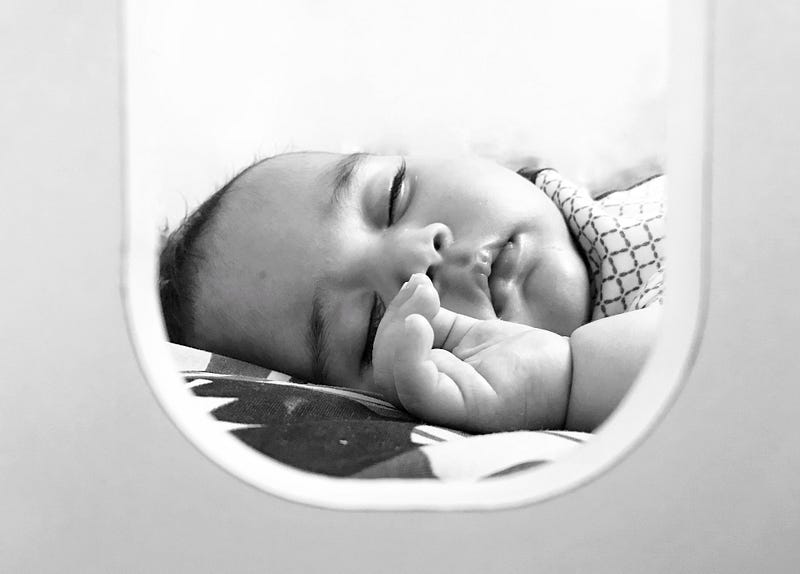
The Consequences of Bad Sleep
The problem is that for as long as we aren’t suffering from extreme insomnia and don’t need medical intervention, we often brush the issue under the carpet and don’t look into ways of overcoming the problem of sleep deprivation — or its causes. We are just about surviving and we don’t realise how much of a slippery slope it is to just keep sleeping badly, so we do nothing.
It is so common for a new mother to lose her sleep, it is often left undealt with and accepted. I know I was told how normal it is not to sleep a lot at the beginning of motherhood. I was reassured that things would get better. I was told that everyone gets through it and children randomly start sleeping well “in their own time”.
But if we were getting regular bad sleep in any other circumstance, how likely would we be to check for solutions?
Why should parenthood be an exception?
Webmd explains how much we undervalue sleep and how much it could help us not just to maintain it, but to enhance our physical and emotional health:
“Many people think of sleep simply as a luxury — a little downtime. They know they feel better when they get a good night’s sleep and worse when they don’t. But sleep actually improves learning, memory, and insight.”
In addition, according to livescience.com, we lose the ability to read emotions on people’s faces when we are sleep deprived and thus, reading overall non-verbal communication becomes difficult.
The sleep-deprived brain may not be as capable of detecting positive emotions as a more rested brain. And sleep-deprived people also don’t tolerate disappointment very well.
It comes as no surprise that I misunderstood and became confused by my husband’s intentions to help or reassure me. I failed to see it because I was so tired, all the time. It just didn’t seem like anything he did or said was enough, because, in the end, it wasn’t.
Andriel could only be comforted by me for much of the time and if his dad tried to take over, I could not sleep for fear that Andriel was hungry or upset. What I needed, Devonte couldn’t help to provide — good sleep for about a week.
The NHS also emphasizes that a lack of sleep puts the rest of your health at risk:
Regular poor sleep puts you at risk of serious medical conditions, including obesity, heart disease and diabetes — and it shortens your life expectancy.
I repeat — it is no joke.
But because I was still sleeping every night, albeit very badly, I don’t think I understood just how bad it was.
The most common problem in early motherhood is sleep deprivation, and thus, it is kind of just expected and we are less likely to think about doing anything to solve it.
I easily could have done nothing and let my personality change completely. I could’ve gone down a slippery slope that led to post-natal depression (if I wasn’t already there). And then I would’ve had a whole new battle to deal with.
This brings me to the list below of the symptoms of postnatal depression according to the NHS website, and in bold, the symptoms I suffered from:
“- a persistent feeling of sadness and low mood - loss of interest in the world around you and no longer enjoying things that used to give you pleasure - lack of energy and feeling tired all the time - trouble sleeping at night and feeling sleepy during the day - feeling that you’re unable to look after your baby - problems concentrating and making decisions - loss of appetite or an increased appetite (comfort eating) - feeling agitated, irritable or very apathetic (you “can’t be bothered”) - feelings of guilt, hopelessness and self-blame - difficulty bonding with your baby with a feeling of indifference and no sense of enjoyment in their company - frightening thoughts — for example, about hurting your baby; these can be scary, but they’re very rarely acted upon -thinking about suicide and self-harm
These symptoms can affect your day-to-day life and your relationships with your baby, your family and friends.”
The second I corrected our sleep — that is, my baby’s and my own, most of the symptoms above left me. I regained my ability to concentrate, my reaction time was restored, and I felt more in control of myself.
I was no longer mad at my husband and was able to objectify my issues and break them down so I could work on solving them. After I got some sleep, I had goals again. I took control of my life and felt like a person again.
Addressing Sleep

Sleep acts as the balancer of the rest of you. No human is immune to the effects of sleep deprivation on a scientific level, it is just that some people’s symptoms are more obvious than others.
I was fully aware of my exhausted state but I didn’t know how much it altered my entire personality until my sleep returned and I felt great.
Never will I tell another mother that there is such a thing as a bad sleeper.
I am all for sleep-training your baby even if the reason for doing it is for the mother to catch up on sleep. It is one of the best decisions I have made since becoming a parent. Our son has slept through the night since. And so have I.
Now, whenever I go through a bad sleep phase, I am much more proactive to find out why so I can work on solving it.
Never will I accept a bad night’s sleep again, and neither should you.
Ways to help improve sleep taken from healthline.com (if you are not a new parent and you have ruled out a sleep disorder) are:
- Having a set evening (and morning) routine to wind down and wake up feeling refreshed.
- Going to sleep and waking up at the same times every day.
- Reading before bed but not from a screen.
- No caffeine from mid-afternoon.
- Stop day-time naps (a joke if you’re a new mother, however.)
- Reduce alcohol intake.
- No eating right before bed.
- Optimizing your bedroom environment.
If you are a new parent struggling to help your baby sleep, and all underlying medical conditions like colic or tongue-tie have been ruled out — please, seek help from a trained sleep expert, and don’t worry. Your baby will thank you.
Takeaways
Sleep not only helps to tone down your problems, but it also helps solve them. Fix your sleep first so that you can work on being more proactive about solving the rest of your issues.
Sometimes, we have to fix the issue that is causing our lack of sleep first. But we cannot put it off for it will lead to other problems with others and within ourselves. For me, I had to help my baby sleep so that I could also catch up and restore my emotional health. Now, every time I go through a bad case of sleep, I deeply explore the reasons why so that I can work on solutions to improve it again.
Don’t underestimate the power of sleep — if you nail this, you can nail everything else.
My Battle With Anger As a Parent
Ensuring our son feels loved regardless of our feelings.
medium.com
Sylvia Emokpae is passionate about self-love and motherhood. See more work like this.