
The great Evangelical love story was really a hate story
Let’s look at the ‘romance’ of Jim and Elisabeth Elliot
The religion of Evangelical Christianity doesn’t have too many love stories. But there is that one about Jim and Elisabeth Elliot. Or they tell you it’s a love story.
The relationship is legendary in Evangelicalism, as taught in Elisabeth Elliot’s Passion and Purity. Most any Evangelical teenager could be handed this book or its many derivatives to be taught that couples can date (or ‘court’) and be in love without getting sexual.
To follow the details, you might wonder.
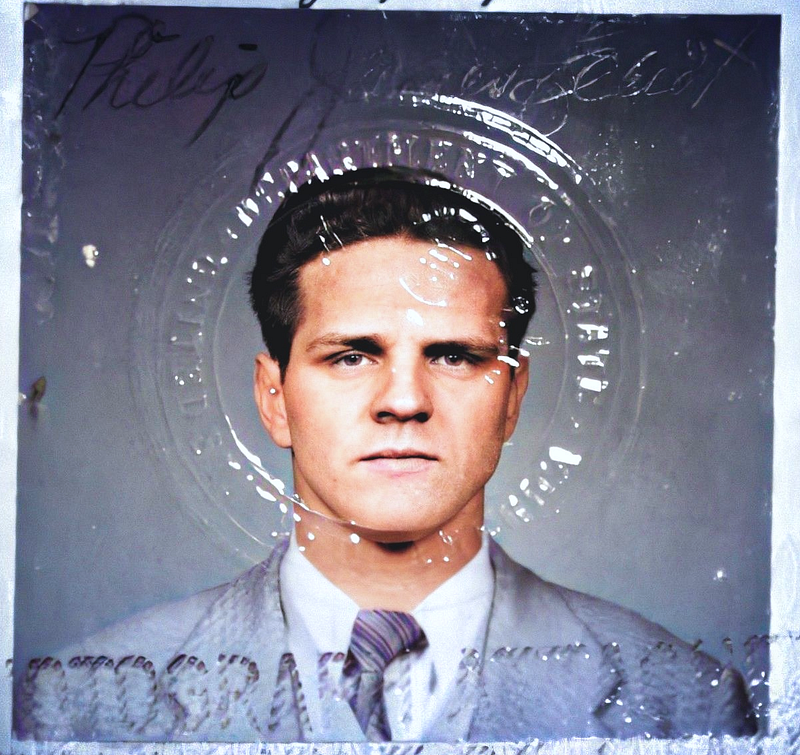
Let’s watch as Jim and Betty get to know each other.
In October 1947, they’re students at Wheaton College in Illinois. He’s a sophomore, she a junior.
He’s a friend of her brother, and asks her on a date.
She accepts, then cancels.

That scene isn’t found in “Passion and Purity.”
There she told a story about watching Jim from a distance, with growing fascination. What a fine Christian man! So handsome, so devout. When he confessed his love for her, she was shocked!
But Elisabeth Elliot wrote about Jim in books for decades, first as a heroic missionary, willing to do anything for God, then later as an idealized Christian boyfriend. And between books, her stories were oddly shifting.
She’d mentioned the rejected date in a 1959 book, where she is clear she had no initial interest in Jim. She didn’t explain why she’d cancelled, only adding that “friends” told her it had been a rare opportunity.
“Didn’t I know that Jim Elliot was a woman-hater?”
Jim wasn’t too interested in girls.
This was very startling. Evangelicalism is often little more than getting married and having children, and yet Jim said he wouldn’t. Dave Howard, Betty’s brother, recalls years later:
“One of his firm convictions (at least he thought it was firm!) was that celibacy was God’s highest calling in life. It was better to be unfettered with a wife and family and therefore to be free to serve the Lord with total abandonment. He made the rest of us feel like second class Christians if we were ‘wasting our time’ with girls.”
But the portrait that Elisabeth Elliot will paint is of a man with a curious aversion to women. She’d quote a boyhood friend recalling:
“Jim was extremely wary of women, fearing that they only intended to lure a man from his goals. ‘Domesticated males aren’t much use for adventure,’ he warned me.”
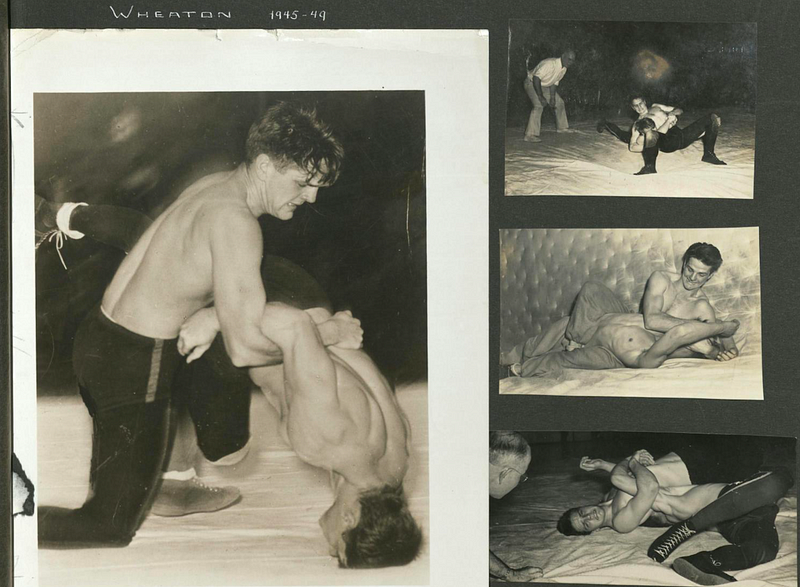
But then Betty wasn’t too interested in men.
She was viewed as unusual on the Wheaton campus in denouncing any kind of male-female touching. She was sure that God felt just as she did, which is all that mattered.
As she’d write to her mother:
“No one I know, so far, feels exactly the same thing as I do toward such things as holding hands, necking, etc. I am considered quite unique and, to put it plainly, a ‘sad case’! But it doesn’t worry me, and I’m thankful for the things the Lord has taught me.”
Another Wheaton student had been interested in her, and she’d limped along as his girlfriend. “I just can’t stand him but I don’t know how to ditch him gracefully,” she’d write in her diary.
She broke up with him and the guy started crying. She wrote her mother: “I did all I could to end things on a pleasant note, and if he doesn’t want to take it that way there’s not much I can do.”
She’d call herself a “wallflower.”
Other students called her “Big Betty” or an “icebox.” She was unpopular—which is exactly how she wanted it. She felt she’d been chosen by God for a special relationship with him.
She writes in her diary: “He would have me for Himself alone, that I might ‘care for the things of the Lord’ (1 Cor. 7:34).”
But she did make a new friend in Eleanor Vandevort, a sophomore who was called ‘Van’. A tall, awkward girl, boyish and queerish, they’d spend long hours in Betty’s dorm room talking about Jesus.
“She sure is one radiant Christian,” Betty writes her mother.
Betty expected to coast to graduation, then go work as a missionary in Africa.
And Jim Elliot kept approaching her. In November 1947, he managed to sit next to her on a trip. She writes in her diary:
“On the way home, Jim Elliott told me some of the reasons why I have such a bad reputation among the fellows. I am terribly sarcastic, for one.”
When writing to her mother, Betty typically adjusts facts to make the report a little more Christian.
“Jim is a wonderful fellow — knows the Lord in an unusual way, so I really enjoyed talking to him on the way home.” (EE collection 278–03–06)

Jim was a “woman hater” and Betty was “sarcastic.”
They were each outsiders to Evangelical marriage culture, and yet expected to marry by the time they graduated.
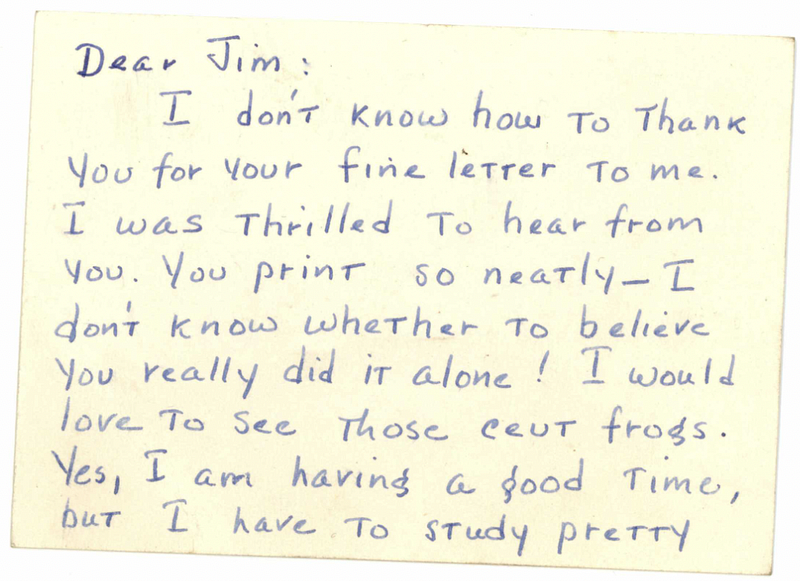
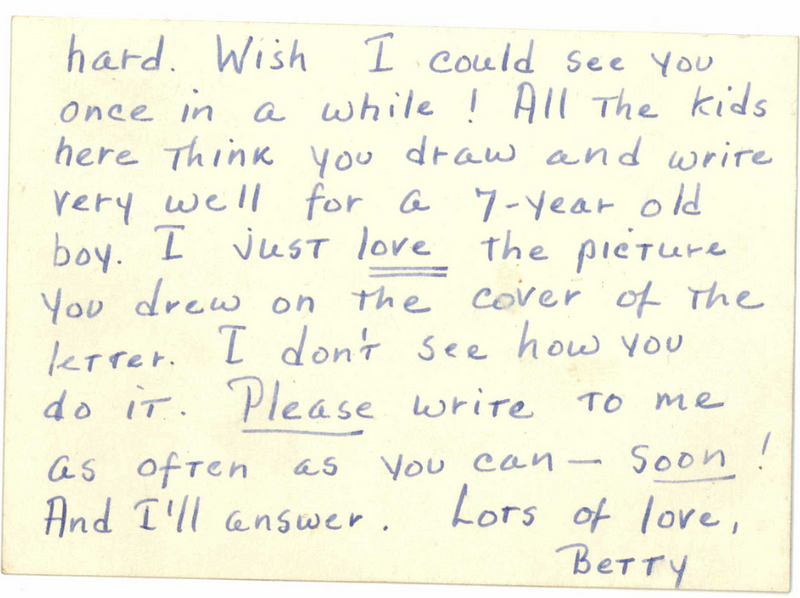
It seems that Jim had selected Betty for this purpose. Days later, he wrote her a letter. Betty threw this letter away, but he kept her reply. I found it in their archive at Wheaton College. It has never otherwise been reported, and deeply stresses the Passion and Purity narrative.
Jim appears to have asked Betty for a second date. He was polite this time. He drew pictures on the letter, likely with a style of floral handwriting of which the archive has other examples.
She wrote back, not in her typical cursive, but in block lettering.
The tone is snide—as if Betty is using this occasion to show Jim just how ‘sarcastic’ she can be.
“Wish I could see you once in a while! All the kids here think you draw and write very well for a 7-year old boy.”
She didn’t view him as a suitor. She didn’t view him as a man at all.
Jim got an invitation to the Howard home over Christmas 1947.
He went, he’d tell Betty, to get to know her better, and likely to advance himself in her eyes. It didn’t work. She’d write in 1959: “I don’t recall his doing very much for me except keeping me awake talking…”
But then, in Passion and Purity, it goes differently.
“The more Jim talked, the more I saw that he fitted the picture of what I hoped for in a husband.”
A 1993 speech that Elisabeth Elliot gave on her romance narrative has an even different version of the scene:
“Well I had found myself falling madly in love with him when my brother Dave brought him home for Christmas, the previous Christmas. But I had no reason to think that Jim was in love with me, or had even looked at me twice.”
When they returned to school for the spring semester, Jim began a journal.
It’s nearly a sacred text in Evangelicalism, as I remarked at the Wheaton archives when they set it in front of me.
I’d wanted to examine its physical state, like the ‘edits’ that had reportedly been made by Elisabeth Elliot—with scissors.
There was something about Jim that she didn’t want anyone to know.
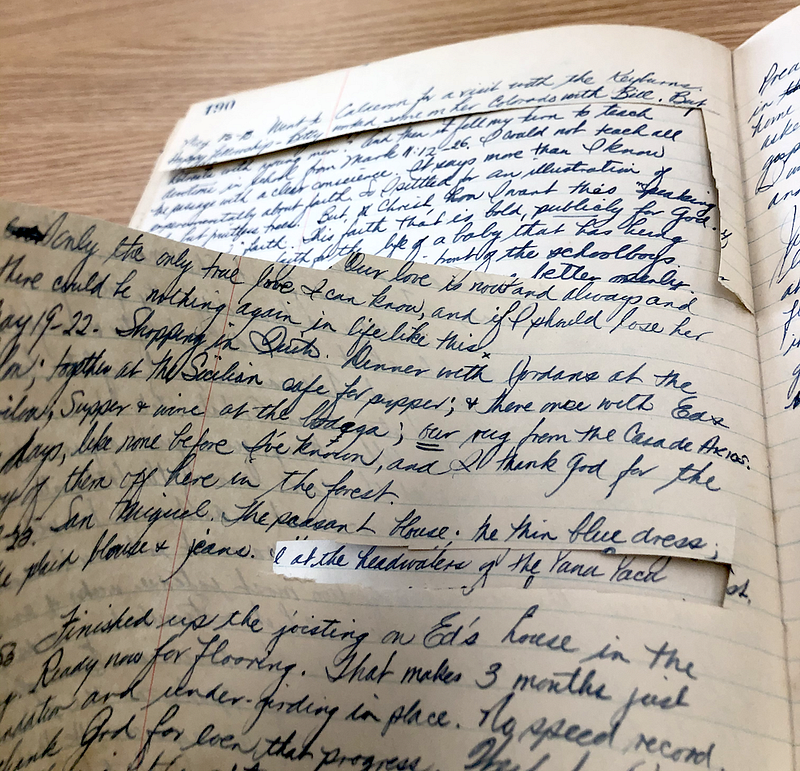
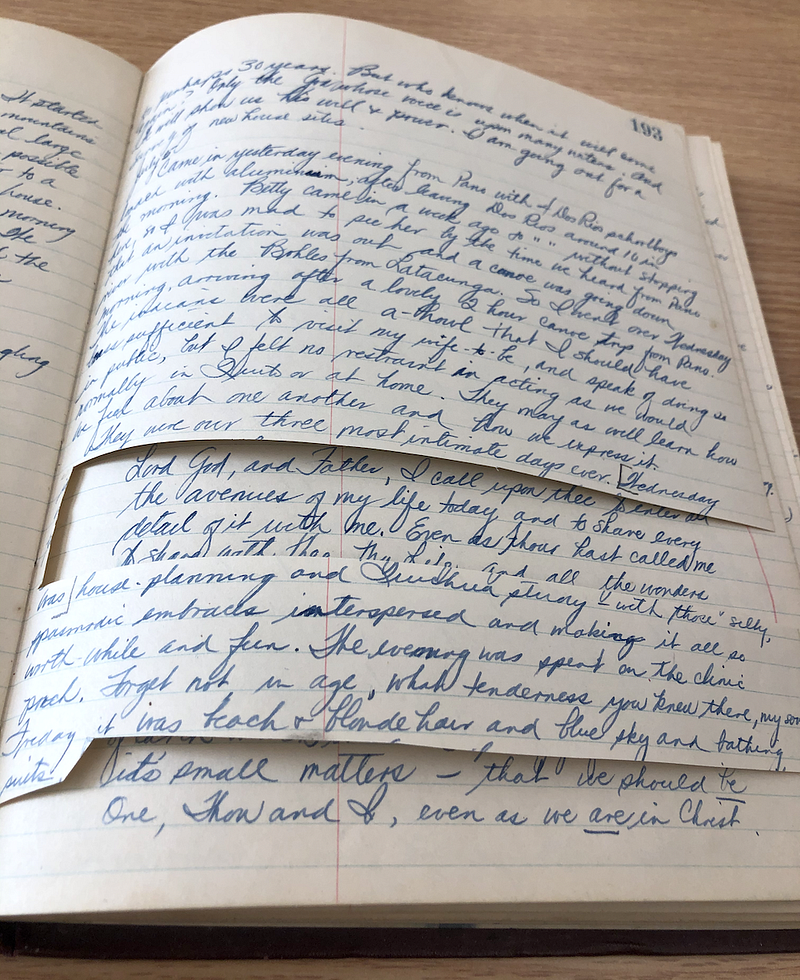
Jim’s journal is mostly known for one line.
He was not even the first to say it. He was paraphrasing an old Puritan preacher. But Evangelicals for some reason loved the words.
“He is no fool who gives away what he cannot keep, to gain what he cannot lose.”
Evangelicals wouldn’t really bother with the journal otherwise. It has never been much analyzed as a whole. As I discovered when examining it, there is more to the story. It seems Jim had actually begun writing days earlier than the first entry of January 17, 1948.
Several pages are torn out of the front, and a note is written in the front inside cover, as if to explain. This is the first entry of Jim’s journal, published here for the first time.
“Jan 5. He stirred others — himself he could not stir. I feel over-full yet cannot — or maybe dare not — overflow”
The journal is an effort to say what he cannot say.

There are no odes to Betty or her charms.
At the very time he was supposedly romancing the only girl he’d ever approached, he writes nothing about her, or not overtly.
The journal is a Bible study, starting in Genesis and moving forward. It might be that he had started by writing about Adam and Eve, then tore out those pages. The journal then begins at Genesis 23 with the story of Abraham burying Sarah.
Just as Abraham does, Jim wants to find a place, as he writes, “where corpses (dead things in my life) can be put away.”
The first reference to Betty might be veiled, on January 18th.
Now at Genesis 24, he’s reading about Isaac getting engaged to Rebekah, sight unseen. Jim writes a prayer asking God to give him a woman who, “like Rebekah, unattracted as yet by Isaac’s physical characteristics, unhesitatingly said, ‘I will go.’”
If the Bible story is meant to map to his life, then Jim is acknowledging that Betty is not attracted to him, just as he is not attracted to her.
But he hopes she agrees to marry as a religious obligation.
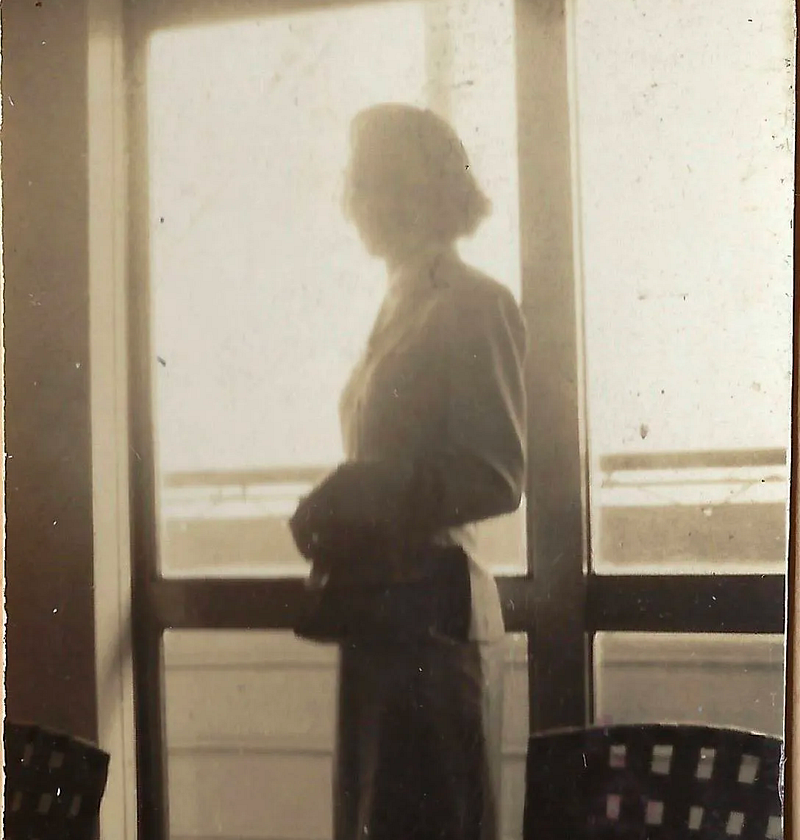
Jim again asked Betty for another date.
She writes of it in Passion and Purity, saying she wasn’t sure what he wanted. In a letter to her mother, however, she knows that Jim plans to again chide her over being so unsocial and unfriendly. As each were planning to be missionaries, these would be liabilities.
“I guess I’m in for another period of remonstrance and exhortation from Brother Jim (Elliot, of course),” she writes.
She writes of the meeting: “Jim rebuked me as a ‘sister’ in Christ,’ urged me to be more open, more friendly. Christ could make me freer, if I’d let him.”
The subtext here might be that Jim was eyeing Betty for a wife, but she was so aggressively rude to people that he needed her to brush up her act.
In next weeks, Betty updates her mother that she is trying to be more sociable to strangers.
She visits the local train station, and comments: “There’s joy in obedience! I talked with four girls.”
She surely must have surmised that Jim had ‘intentions’ toward her. But she was equally clear that she had no interest in marrying.
He kept approaching her. He’d sit next to her in Greek class, she’d note, and then come find her in her study spot at the library.
She writes in 1959: “I was totally unaware of motives other than the purely utilitarian on his part.” Surely even she was not that oblivious.
In her diary, Betty seemed to be trying to convince herself that she would not marry.
On March 7th, she’s reassuring: “Translation work is a full-time job. I cannot see how it would be possible from a purely human standpoint to do that and raise a family.”
She’d peered into the mists of 1 Corinthians 7:34 and realized she was not supposed to marry.
She writes assuring herself: “I look ahead with joy at the possibility of a life wholly set apart unto God and the winning of His bride.”
She does seem to be attracted to someone.
She writes in her diary in some kind of panicked state:
“O God, purge me, take away all desire! I have been severely tried on two accounts, and have not rung true. Forgive me, Lord!”
It wouldn’t seem to be Jim. But Betty mostly refers to hanging out at the time with her friend Van.
The Elliot archive has Betty and Van’s correspondence of 1950, when Van was a missionary in Africa, thinking back on their time at Wheaton. Van seems truly in a state of longing for Betty.
“Your picture thrills me every time I look at it and I just wish for one more time to see you and talk with you. What will it be to be together forever?”

Jim kept writing in his journal, also intent on purging some “impurity.”
By his April 16th entry, he’s reached the purity laws in Leviticus, and he’s really working on himself:
“Lord, Thou must put an end to my fleshly issue. Stop it, Lord. Staunch the flow of this defilement which springs from rotten flesh. Instead, flow Thou through me, today, yea, for seven days, until Thou dost see me to be clean.”
Day after day, he launches into Bible stories, as if the narratives will flow through him, remaking and restoring him to some ‘pure’ state. But even his Bible commentary is typically strange, like in so often projecting himself into female characters.
“How like Orpah I am — prone to kiss, to display full devotion and turn away; how unlike Ruth, cleaving and refusing to part except at death (1:14–17).”
He again approached Betty for a ‘date’.
She will later put “date” in quotation marks. He asked her to accompany him to a missionary conference in Chicago.
He felt he’d behaved badly in some way, though this took her by surprise. He wrote her a letter the next day apologizing. As I read Betty’s reaction, she first surmises here that he is serious about marrying her.
Then, days later, he’d decided against it. Jim stopped her in the hallway to hand her a hymnal, with one marked. The hymn he’d marked was “Have I an Object, Lord, Below”—which was a prayer to be “undistracted.”
She was confused.
Their next scene had Betty approaching her graduation and going up to Jim to have him sign her yearbook. Elisabeth Elliot often recalled this scene, but it isn’t in Passion and Purity. It didn’t service the book’s narrative of Jim’s growing fascination with Betty.
As she’d tell the story, Jim took her yearbook and wrote “2 Timothy 2:4.” She looked it up to find a tribute to the “soldier” who refuses engagement with the “affairs of this life.” So it seems Jim had decided to be God’s soldier only.
And yet there came the Memorial Day, May 31, 1948, when he asked her to take a walk with him and declared his love. Or that’s what she says in Passion and Purity, where Jim says to her: “Come on, Bett. Don’t tell me you didn’t know I was in love with you?”
In a 1983 speech that was the first public appearance of her romance narrative, all that Elisabeth Elliot quotes Jim as saying was:
“We’ve got to get squared away on how we feel about each other.”
They go for a walk around a nearby lagoon.
Betty has some feeling they are in love with each other, even as she processes the confusion of what Jim says his plan is. After his own senior year of college, he will go be a missionary, and will not marry.
In a memoir, Betty’s mother would write that upon arriving to attend their daughter’s graduation, Betty told her “that she and Jim had found out they loved each other but that they would not ever see each other after graduation, as he felt he must serve God as a single man!”
Betty’s father was most displeased.
“God is not the author of confusion,” Mr. Howard said.
It is clear in Jim’s journal that he had no intention of ever seeing Betty again.
He writes on June 15th of her leaving: “Wept myself to sleep last night after seeing Betty off to the depot.”
Then he adds that he viewed their ‘romance’ as a test from God, who, he explains, “gave me this affair with B.H. to try me, to see if I were really in earnest about the life of loneliness He taught me of in Matthew 19. A eunuch for the Kingdom’s sake.”
Jim then explains the way sex works in Evangelical theology: “When a man finds himself unable to completely make a eunuch of himself (Matt. 19:12), then he should marry.”
He believes he’s passed the test, and so will be a ‘eunuch’.
But Betty had other plans.
After graduating, she appears to have rapidly re-conceived of her life’s trajectory. The prospect of being an “old maid missionary” seemed less appealing. All she writes of this in Passion and Purity is that God had “pointed me away from Africa and the South Seas toward Ecuador.”
What she means is that she began to think about marrying Jim—whether he wanted to or not.
She changed plans to take a year more of schooling in Canada. The train routes would bring her by Wheaton College, and so she’d drop in on Jim…uninvited.
Learning she was to arrive, Jim panicked.
His journal entry of September 20th finds him anticipating a visit from the girl to whom he’s declared his love.
“Cannot bring myself to study or to pray for any length of time. Oh, what a jumble of crosscurrented passions I am — a heart so deceitful it deceives itself.”
He appeals to Jesus to be his only ‘lover’.
“How I hate myself for such weakness! Is not Christ enough, Jim?”
The visit went all right, but he was ambivalent about Betty. “Oh, that I could understand my heart toward her,” he writes in his journal.
But Jim quickly realized the advantage.
Betty was very agreeable to any terms. He did not have to meet often, agree to marry her, or intend to marry her. They would correspond, and so be classed by the people around them as “courting.”
He wrote to his parents that he kind of had a girlfriend, not because of her ”fine-featured face” or “shapely form” or “rare conversational powers.” In these areas, he says, “she possesses little of appeal.”
This letter is quoted in Elisabeth Elliot’s later book Through Gates of Splendor, but the original is not in the Elliot archive—one of many suspiciously missing documents. There are also no research files on her biographical research on Jim.
However, some letters from Jim’s mother to Jim are archived, and she had circled back to the subject of Betty.
“Jim in re reading your description of Betts last spring you say she is critical and bossy — after naming several virtues — I suppose the virtues outnumber — but bossy women aren’t easy to live with.”
Jim and Betty began writing—occasionally.
His first letter of October 2, 1948 is quoted in Passion and Purity in a redacted version. Even as reproduced it is a bizarre document.
Jim is telling her that he is in some kind of fight with a “monster” within him. He does not name it, but tries “Want” or “Desire,” also labeling it a “Sex Urge” that makes him think of Sigmund Freud.
He adds that he and Betty can correspond but will not be touching physically—even holding hands, as they had briefly. This is presented in Passion and Purity as Christian morals. Other readings seem possible.
They can have a relationship, Jim says, as she should follow the example of his friend Billy, or Bill Cathers. She will be his friend.
Jim would write more about his “monster.”
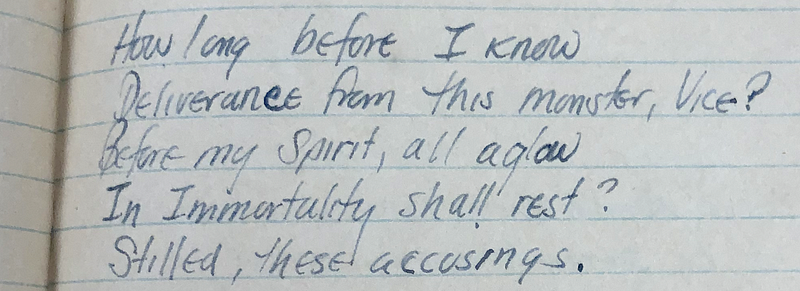
He write poems in his poem notebook—few of them published, though often autobiographical and dated to key events in his life. An entry dated December 10, 1949 is a long attack on himself:
“How long before I know Deliverance from this monster, Vice? Before my Spirit, all aglow In Immortality shall rest? Stilled, these accusings.”
The only name he would give to his monster is ‘Vice’. There is a sexual context. But he experiences it primarily as an ongoing accusation made against him, and for relief he can only imagine his death.
Van and Jim were seniors together, and she was watching him.
In Passion and Purity, Betty mentions being sent news about Jim from an unnamed source. The informant was surely Van, who later writes to Betty about having kept up with Jim. The clear subtext is that jealously she was trying to determine his feelings for Betty. This is a love triangle.
In a letter to Betty, Van describes a scene in which she had gotten Jim alone and tried to get him to open up about the relationship.
Except Jim seemed stricken, and began to weep. Van writes: “The content of his heart overwhelmed him and he was helpless.”

Jim had no such difficulties with his male friends.
He writes of them with great enthusiasm. First there’s Bill Cathers, often seen in Jim’s journal, as in the August 6, 1948 entry:
“The love of David and Jonathan (1:23–26) — felt again today for Bill C. upon receipt of a letter from him en route to China. How great shall be our fellowship in heaven! Oh, to spend eternity with such whose spirit quickens my own — makes me throb just to hear his soul’s surgings.”
When Bill got a girlfriend and faded out of his life, Jim prays for a replacement: “Lord, give me a David, I pray — one whom I can know as David knew Jonathan — ‘sweet, swifter, stronger…’”
He was otherwise depressive.
His journal often lingers on his low spirits. He writes: “Heavy and sorrowful because of my coldness, insincerity, and fruitlessness. Oh, how needy — what emptiness I feel. I am not ready to see the King in his beauty.”
The next day: “My love is faint; my warmth practically nil . . . I don’t love; I don’t feel; I don’t understand; I can only believe.”
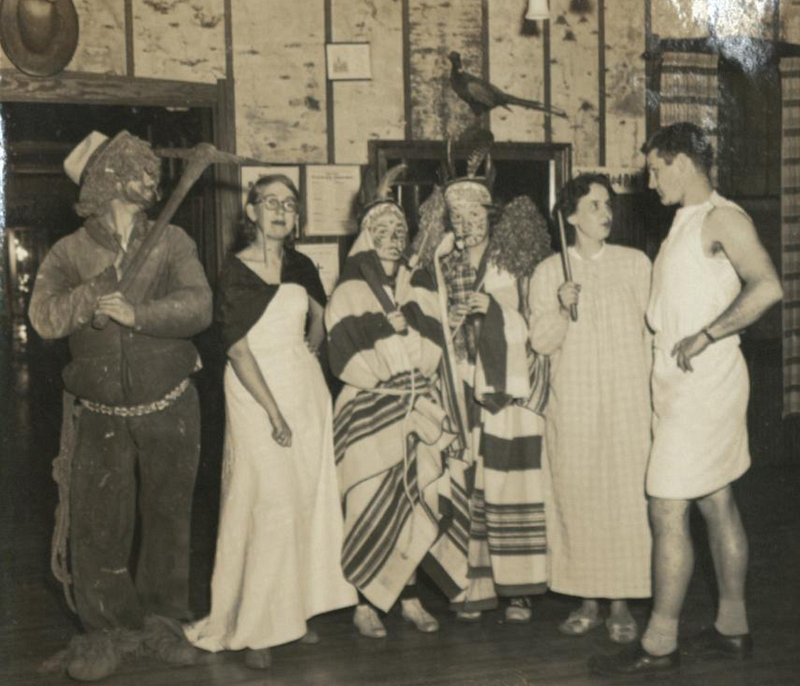
Jim and Betty kept writing letters that were typically cold—and sometimes hostile.
He writes in one: “If Betty Howard is a block of ice, Jim Elliot is a hunk of marble.” He calls them “brother and sister” as he returns to talk of an “aching void.”
He reminds her, over and over, of his divine duty not to marry.
As he puts it once: “I feel quite confident that God wants me to begin jungle work, single.”
She visited his parents’ home in Oregon.
It was a disaster. His parents hated her, as Jim told her in a later letter, with details on why they hated her.
His mother, he reports, “thinks you uncommunicative, possessed of a ‘meek and quiet spirit,’ but a very poor maker of friends, and hence a poor prospective missionary.”
He quotes his father sizing her up: “no face, no form, a spindly dreamer who has cleverly set her cap on you, and you have bitten.”
But Jim agrees with them?
“I don’t write now as if they were all wrong and that you must be excused from all these charges.”
Betty replies: “I could hardly believe what I read, and I was utterly crushed by it.”
It looks in retrospect like another effort by Jim to induce her to break up with him. But Betty kept hanging on.

She wanted to get married…and didn’t?
She had her own doubts about the relationship, writing in her journal: “My conscience (I guess it is my conscience) condemns me constantly.”
She went back into a habit of waiting on Jim. His letters would have given her little hope. They were infrequent, breezy, detached.
He writes love letters, instead, to Jesus.
“ . . . if only I may see Him, smell His garments, and smile into my Lover’s eyes, ah, then, not stars, nor children, shall matter — only Himself.”
He went to Ecuador in search of a mysterious tribe in the rainforest.
He’d hatched the idea to convert a famous “Stone Age” people who were typically violent toward intruders. The tribe’s language wasn’t even known. It would be a challenge—but with rewards. The Christian who converted them would surely be famous.
Betty would join Jim in Ecuador, was the plan. I read this was his valuing her skills as a missionary translator. He kept explaining, over and over, that God had not given “permission” for them to marry.
He had a clear reason for doing this. In Evangelical theology, sexual desire is seen to flow from God. If he did not experience desire, Jim would reason, then God was not giving permission for the match.
Or that’s the story he was telling himself.
Jim writes many odd scenes in his journal with confusing sexual information. He stares at women, as if he’s trying to understand what he was supposed to feel, or trying to feel something he doesn’t.
Here he is on September 28, 1952, writing about women’s breasts:
“The female breast has been so long and so intensely interesting to me that I cannot now explain my ‘calloused’ thoughts about it as I could not formerly explain my fascination. Twice this past week I have, in medical work, fingered the breasts of young Indians. I confess, with a great deal of surprise, that it does not now raise the slightest suggestion of lust for me. It is not that I have sort of depreciated the breast for having seen it suckled and noted it in all its shapes (U.S. women are brassiered into disgusting uniformity), or that I will not be aroused by her breast when the time comes for it.”
Betty’s figure, he’ll also note, is barely feminine—a “charming crowbar,” as she’ll call herself. He expected God to give him the desire.
But he kept vacillating about marriage.
He writes of one scene in his journal: “Spoke of engagement. She thinks I’m inconsistent, Lord, seeming to be self-contradictory so often in speaking plainly of marriage and then seeming to be so unsure about it all. ”
He was experiencing some other mode of desire—something he doesn’t specify. It’s cloaked and coded. On July 11, 1952, he writes a prayer: “Give me not to be hungering for the ‘strange, rare, and peculiar’…”
The phrase “strange, rare, and peculiar” is from homeopathy, and refers to “abnormalities of the sexual functions.”
Jim has passages of affection for Betty.
As he contemplates her, however, he is oddly feminized. He writes in his journal on July 30, 1952:
“I don’t understand what there is about loving her that makes me such a damned woman. I can hardly begin to describe it; I only know that I feel it strong and that I can’t talk of it without twists coming to my mouth. Lips get dry and tears seem to brim at my eyes, and there is a crushing sense in my chest.”
Fellow missionary Pete Fleming recalled Betty: “She is moody and quiet and obviously under a strain.”
Betty has been seen, Pete notes, alone at night crying. He adds: “Jim said late last night he and Betty spent more time crying than talking and it was really a heart-rending time.”
Betty remained determined to marry Jim.
She kept the pressure on, even as she refers to a lot of gossip going on about the bizarre arrangement.
Finally, in 1953, a much-needed job came available, but for a married couple. “How soon can you marry me?” Jim asked her.

There was something going on with Jim and someone else during this time.
Photographs periodically released by the Elliot family have Jim in very unusual settings. Someone was photographing him in ways that seem very personal.
It wasn’t Betty, as she was often said to not know how to use a camera until learning years later. Who are these bedroom eyes looking at?

And then two photos in the Elliot archive had never been published before I posted them. Jim seems to be someone’s glamour boy.


Jim was thinking about a sexual problem.
A theme often lurking in his journal comes to full flower in the final entry, where the problem of his marriage is pressing on him.
The terms are cryptic, coded, but a discourse that was inherently irreligious. The boldfaced words were removed from the journal’s publication:
“A month of temptation. Satan & the flesh have been on me hard on the dreadful old level of breasts & bodies. How God holds my soul in life and permits one with such wretchedness to continue in His service I cannot tell. Oh, it has been hard. Betty thinks I have been angry with her, when really I have simply had to steel myself to sex life so as not to explode. How can I ever make her understand this kind of thing — she apparently feels no passion ever except for me? And my unworthiness of her love beats me down. I have been very low inside me struggling & casting myself hourly on Christ for help. Marriage is divorce from the privacy a man loves, but there is some privacy nothing can share. It is the knowledge of a sinful heart. These are the days of the New Year’s believers’ conference on the Sermon on the Mount. Yesterday I preached and was helped on ‘whoever looks on a woman . . .’! ‘Let spirit conquer though the flesh conspire.’”
When Betty read this after his death, she was wondering if he’d ever been attracted to her.
At his words “sinful heart,” there’s her penciled note: ‘p.123’. A reference to page 123 of the journal, where we find Jim’s entry of May 8, 1952:
“All I know is that it doesn’t matter if her breasts are small, or her shoulders are slight, or her nose not finely shaped, or her front teeth set apart.”
He likes her, he says, but “psychologically” — as the impression is left that he’s not drawn to her as a sexual being.
If he’d ever felt anything for her, it seems to have faded quickly.
In the final entry, the word ‘divorce’ haunts his thoughts—though to get one would put him in serious religious violation.
And disclosing any kind of queer sexuality would undo him completely.
All he had was a passage into the jungle.




Then he was gone.
Betty continued Jim’s work. She helped ‘contact’ the tribe. She learned their language and helped translate the Bible.
A few years later, she returned to America in dismay over missionary work in general. She’d begun to re-think everything, including the very idea of going into native populations and dropping Bible stories on them.
“We could have told them the moon was made of cheese and they’d believe it,” she’d remark years later.
She’d re-united with Van, and the two women lived together for years, each trying to make their way as writers. Living in Massachusetts, they must surely have been read as a lesbian couple.
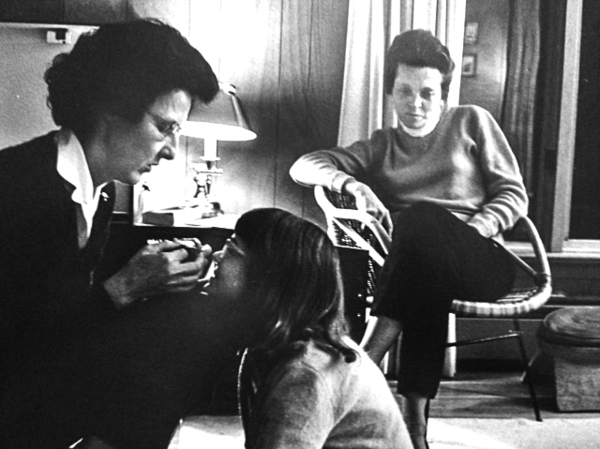

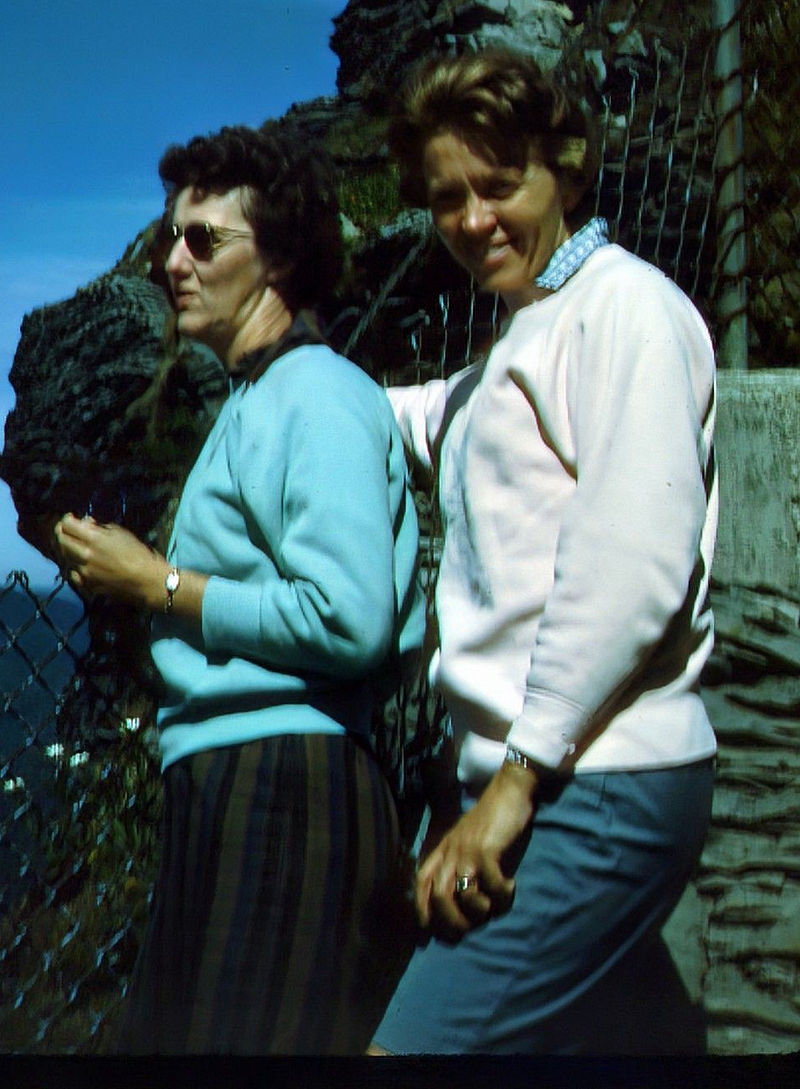

After his “martyrdom,” Jim had become ultra-famous to Evangelicals, like a figure out of the Bible.
And Elisabeth Elliot, throughout her many changes, remained constant only in presiding over the “Jim Elliot” industry. The religious obsession with its handsome hero created a factory of products.
All the while, she disliked Evangelicals and longed to exit their world. What stopped her, in her framing of the mid-1960s, was that she needed to be a guide to them. She wrote in her diary: “Leave them? Without a voice or a vision?”
Her personal presentation in the period was so butch that she must surely have self-identified as somehow queer.


The reality was that she was an Evangelical star and that’s it.
Other than pushing Evangelical missionary narratives and theology, Elisabeth Elliot really had no marketable skills—or none that would keep her in prominence.
She doubled down on being an Evangelical star. She left Van and married a womanizing Christian theologian. They made each other more famous, so that felt divine?
Betty wondered if Jim would mind her re-marrying. She wrote in her diary: “Jim, I decided, could hardly care less.”
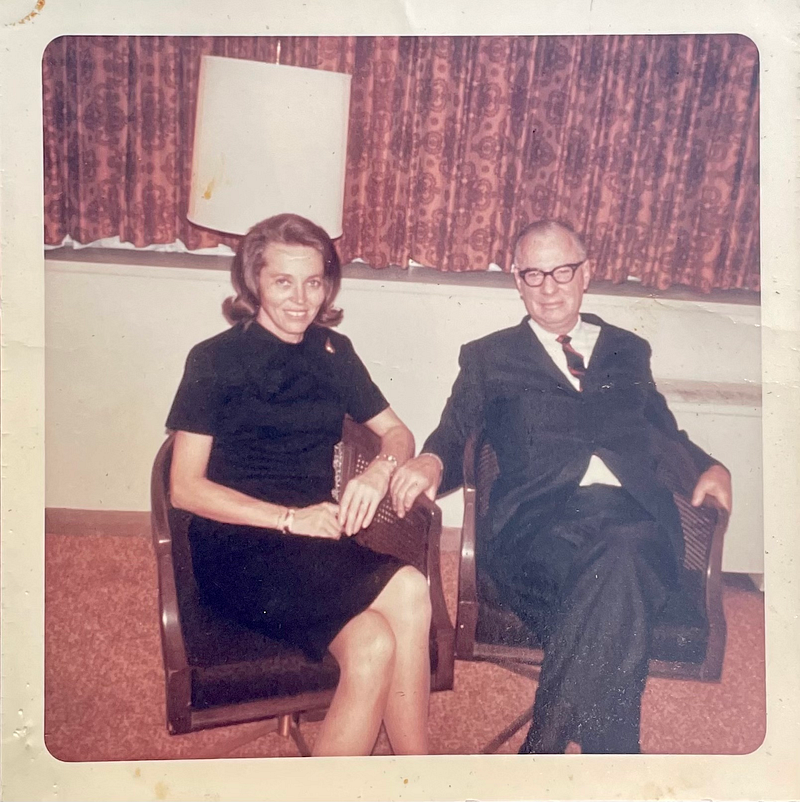
Husband #2 died of cancer, and she was alone again.
As an Evangelical star, it must be said, that was bad for business. Two husbands had dropped dead? In a religious community where apparent advantage and “success” were seen as divine signs, these were lethal.
By the 1970s, Elisabeth Elliot was actually a Catholic, another fact she concealed from her Evangelical fans, and which is downplayed or omitted from her biographies.
Her famous “Jim” books were really a typically Catholic hagiography. He’d become an Evangelical saint. And she was his prophet.
She’d milk the act for as long as she could.
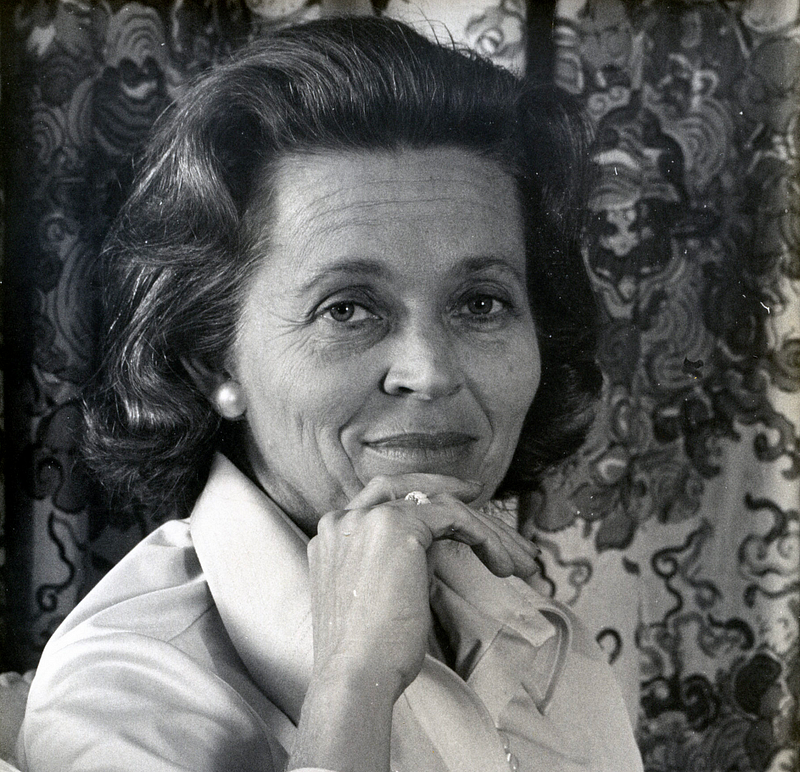
A man who was a former women’s clothes salesman began to focus on her.
Lars Gren would be her most puzzling husband of all. He seemed a warm, protective presence. That’s how it was presented. He seemed like her kindly business manager for the last decades of her life.
In two recent biographies of Elisabeth Elliot, the marriage is revealed to be something quite different. The Evangelical world is currently struggling over the portrait of a man exercising cold control over her—scripting her life, punishing her when she disobeyed.

The imperious Christian superstar Elisabeth Elliot, it turns out, was a show put on by her third husband.
Lars Gren knew what the religion wanted from her, more than she did herself. She’d be the strict Evangelical woman, requiring ‘purity’—and it would be a very commercial product.
On examination, Passion and Purity was not really about Jim. It was about a fiercely conservative man named Lars, who was making his wife plumb her history in order to service Evangelical ideology.
And Lars, he would disclose later, was not even a Christian.
To the end, Elisabeth Elliot would often seem, as her biographer Ellen Vaughn notes, “brusque or inexplicably rude.” In the context of Evangelical culture of the 1980s and 1990s, it wasn’t much noticed.
Was Jim and Betty a love story?
It was a hate story, I’d say. These are people who hated themselves, and their views of each other—and everyone else—weren’t much different. 🔶