
For decades, Evangelicalism was led by a Catholic woman
The strange story of Elisabeth Elliot
In Evangelical America, strong men are in charge—or so Evangelical men like to think. But from the 1980s to the early 2000s, a female teacher was oddly prominent.
In the religion, you’d know that great men like Billy Graham were out there, but Elisabeth Elliot was right at home with you. From her radio show to her books, she spoke of love and sex, marriage and children.
She’s called one of the greatest Evangelicals of the 20th century. But for me, she set the tone for the religion—and was actually its leader.
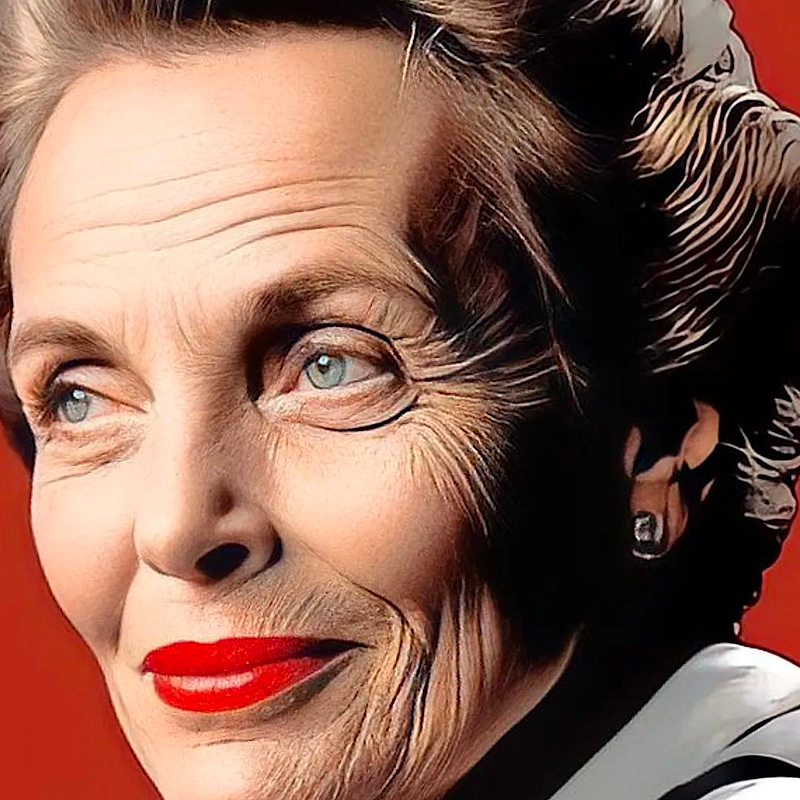
She died in 2015 after years with dementia.
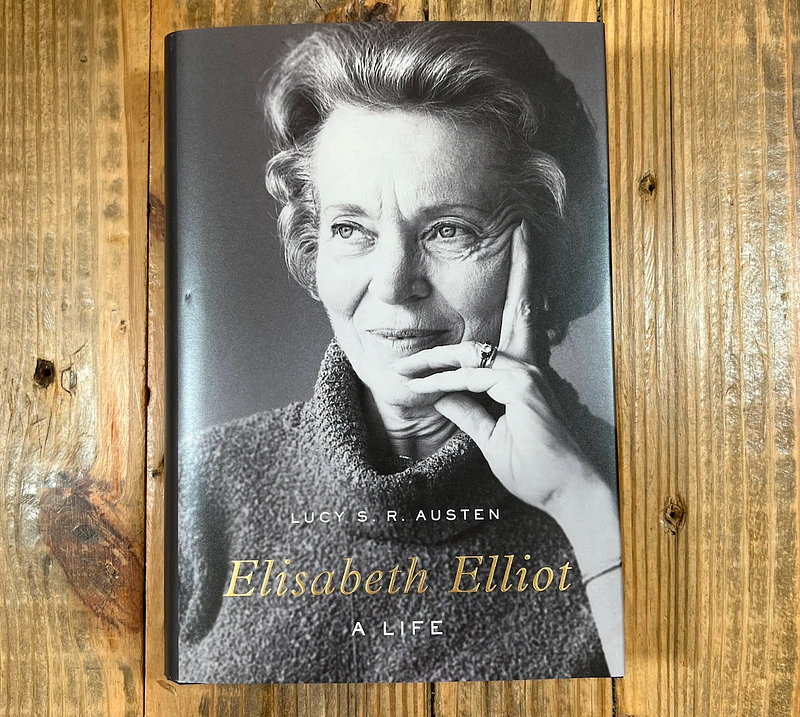
A series of biographies have been coming out. I’m reading the latest, which takes on the puzzling issue of her religious identification.
Publicly, she was Episcopal—not really an Evangelical at all. But there’s startling suggestions that Elisabeth Elliot was actually Catholic.
She grew up between Protestant denominations.
Lucy S.R. Austen’s new biography, Elisabeth Elliot: A Life, tells the story of a girl named ‘Betty’. She went to Wheaton College, a non-denominational Evangelical school. She seemed little interested in denominational issues.
She set her sights on marrying a fellow student named Jim Elliot. He wasn’t Evangelical at all. He was Plymouth Brethren. This separatist sect taught total reclusion from ‘the world’.
Plymouth Brethren had deep aversion for Evangelicals, who were seen as worldly Christians and likely not even ‘saved’. Jim went to Ecuador with some other Plymouth Brethren people to set up a new religious colony in the jungle.
There seemed no religious problems between Jim and Betty, and they got married. In 1956, he was cut down in a massacre, and she started to write books about him for the Evangelical market.
A typical reader of her books wouldn’t realize that Jim was not Evangelical.
Page by page, Jim actually attacks Evangelicals repeatedly, but this seems never to register with readers. In Through Gates of Splendor, he writes: “Their condemnation is written on their bank books and in the dust on their Bible covers.”
Evangelicals were making Jim Elliot a hero of the faith—not even realizing that he’d hated them!
After Jim died, Elisabeth Elliot seems to have left the Plymouth Brethren without a thought, as if she was never really a part of that world at all. Back in America, she attended an Evangelical church briefly.
Her brother Thomas, himself a noted Evangelical commentator and the one man she seemed to truly respect, became Anglican. She converted to the American version, an Episcopal.
She found she liked liturgy—and the higher the mass the better.
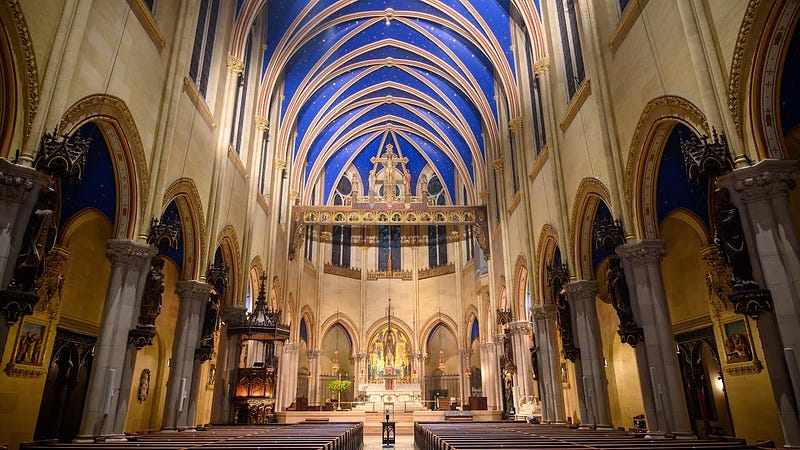
In 1967, she attended a high mass conducted by Michael Ramsey, then Archbishop of Canterbury, in the Church of Saint Mary the Virgin in New York City. He was on a speaking tour of the United States, much criticized for calling for ‘reunion’ of Anglicanism with Roman Catholicism.
Elliot had never experienced such a ceremonial event. It was a life-changing experience she’d often reflect back on.
Thomas Howard was on the way to being Catholic.
That was shocking to the Evangelical world, and his sister did her best to cover for him. For a nervous report filed by Christianity Today in 1985, Elisabeth Elliot was on hand to assure that Thomas was a “very honest, humble, and godly man” who was “fully aware of what this move might cost him and was prepared to pay the price.”
She didn’t plan to “pay the price” herself.
The reality seems to be that Elisabeth Elliot had nursed a private conception of being Catholic—stopping short of public conversion only in consideration of how it would affect her career as an Evangelical star.
That subject came up in 1996 when she had breakfast with a woman who’d been Evangelical and then converted to Catholicism. In a later blog post Heidi Hess Saxton recalled they’d discussed Thomas Howard becoming Catholic, as Elliot added: “I only wish I had his courage.”
Saxton writes:
“I nearly choked… Not only was this august personage not going to scold me, she admired the decision I had made to enter the Church, as her dear brother had! After she had sung the praises of the Catholic Church for several minutes, I worked up the nerve to ask Elisabeth why she did not follow in her brother’s footsteps.
Elisabeth Elliot replied: “Cowardice, I suppose. My listeners and readers simply would not understand.”
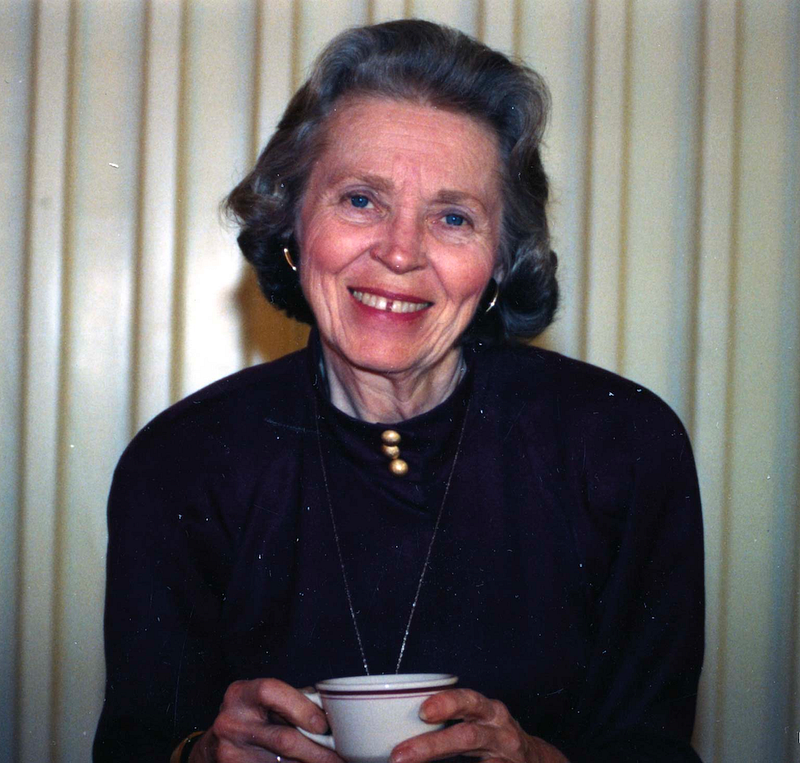
She was almost Catholic in public.
That’s the surprise of looking back at Elisabeth Elliot’s books and other public statements. In the most Evangelical of forums, she can easily be read as Catholic. She often quotes Catholic saints and Catholic writers.
She once responded to a survey asking about her favorite books. She included no Evangelical texts and mostly Catholic texts.
She had a very non-Evangelical interest in Mary the mother of Jesus as a sacred figure. In 1976, she writes in her anti-feminist screed, Let Me Be a Woman, that her ultimate example of womanhood is “Mary the virgin.”
Her sex commentary starts to read as Catholic.
When Elisabeth Elliot offers her famous ideas about sexual “purity” in the early 1980s, she had a core idea of female virginity being a sacred state. That’s not so Evangelical.
She’d be more explicit in interviews. “I think Protestants really have no idea of the glory of virginity,” she’d say.
I now read Elliot’s “purity” writings, including her 1984 book Passion and Purity, as an expression of her Mariology, i.e. her veneration of the Virgin Mary. It was received into Evangelicalism but what became known as the “Purity Culture” was Catholic in its conception.
Some Evangelicals did notice odd suggestions.
As the religion was highly wary of Catholic influence, efforts were made to determine Elisabeth Elliot’s views about this critical subject.
In a footnote, Lucy S.R. Austen reports on “one organization” who wrote Elisabeth Elliot with very barbed questions and “to threaten her with a massive loss in sales should her answers differ from their statement of belief.”
Elliot replied that ‘she had no plans to enter the Catholic church’.
Austen does not report on other scenes along the same lines. In 1997, Elisabeth Elliot was at a public event, and was questioned about the Catholic issue by a very suspicious Evangelical:
“Question: ‘Can a person be Catholic and Christian in union?’ Mrs. Elliot: ‘Yes, we can have unity in diversity; my brother is a Catholic and a Christian.’ Question: ‘Then is it acceptable to celebrate the Eucharist?’ Mrs. Elliot: ‘Yes.’ Question: ‘Of Mary, ‘queen of heaven’?’ Mrs. Elliot: ‘Excuse me, time will not allow me to expound on these questions.’”
This can only be described as evasive.
The new biography tries not to be critical!
Austen mounts a defense of Elisabeth Elliot being publicly an Evangelical teacher while keeping her Catholicism or strong Catholic leanings a secret. She writes that Elliot:
“…had always been a private person and had no desire to air every corner of her heart and mind in public. The things she did share were carefully chosen in hopes of encouraging others to follow Jesus. The things she omitted were not hidden to create a false impression but because of what Tom would later call her ‘pastoral sense of what would be fruitful and helpful’ for readers.”
It was evidently very helpful to Elisabeth Elliot’s fans to not know she was from another religion. That is the absurd line the biography takes, even as Austen adds a quote from Thomas Howard saying his sister hadn’t become Catholic publicly out of “desire not to cause scandal.”
That underplays the point so severely I have to laugh. It would have been a nuclear bomb blast of scandal in the Evangelical world if it’d been clear, in the 1980s or 1990s, that Elisabeth Elliot had become Catholic.
The religion would’ve dumped her immediately.
She acted only in self-interest.
Elisabeth Elliot was a kind of religious double-agent.
Her story seems to be that she was assumed to be Evangelical because of her early missionary writings, then in the mid-1970s, realized the religion had no ability to talk about sex.
It was a job opportunity, and she was hired. She evaded questioning as needed, while injecting Catholic theology into Evangelicalism.
Assessing the reality, she’d known she’d be able to pull it off. Even her biographers would cover for her. 🔶