
The Future Is Now: 5 New Jobs Created by Artificial Intelligence
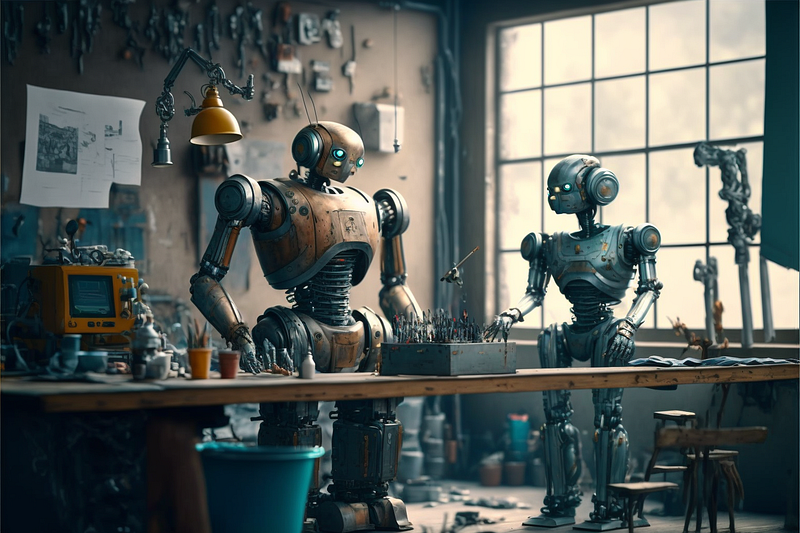
While a few years ago we thought that AI would primarily take over repetitive and more mechanical tasks, we now see that a far-reaching disruption is imminent, especially in the IT and creative industries.
But as has been the case with all groundbreaking technologies, it will not only make some traditional jobs in these industries obsolete, it will also create entirely new ones. When I think about how AI will reshape our job world, I would expect the following five jobs to emerge in the very near future:
1) Full Stack Creative Storytelling and 2) AI Creative Directors
The better AI image and text generators become, the less likely it is that writers, illustrators, actors, game designers, and other narrative experts will continue to work on only one aspect of their product. I would expect that storytellers of all backgrounds will use AI tools to create works incorporating image, sound, and text. Projects that used to require large teams of people with different specializations could be run by individuals: writers, for example, will be able to illustrate their work using AI image generators, while illustrators will be assisted in developing stories by AI story creation tools.
In addition to this, the new breed of AI-powered creators will organize itself in small teams that may become serious competitors for large entertainment corporations. Those teams will likely include AI Creative Directors that are responsible for selecting the right AI tools for a project and ensuring that these tools can be combined/merged to meet the goals of a project. AI Creative Directors are experienced in the creative side of AI image/text/video tools as well as in the production side of creative endeavors such as calculations, team-building, and management.
How to prepare to work as an Full Stack Creative Storyteller or AI Creative Director:
- Learn how to generate high-quality images with AI image generators like Midjourney, DALL-E or Stable Difussion (you can start here or here, or learn about AI & Storyboarding/Visual Storytelling here)
- Learn how to use text generation tools like GPT-3
- Whenever you get hired as a writer, illustrator or designer offer your clients full-stack storytelling as a service
- Whenever you get hired to lead a creative project, include full-stack storytellers as team members.
Prompt Engineering
At the intersection of programming, UI design, and machine learning, prompt engineers work on new AI systems and the continuous improvement of existing ones. Specific thematic focuses make them indispensable experts in their respective industries. Additionally, they are in demand as AI safety & moderation consultants that are responsible for reviewing AI-driven systems for safety, regulatory compliance, and ethical concerns, and developing strategies to address them.
Physical Features Lending
AI-powered speech, facial, and motion recognition technologies will reshape the entertainment industry in ways we probably can’t even imagine yet. One thing is for sure: AI systems will be able to mimic any human performance and blur the line between what is real and what is algorithmically generated. This could in turn allow actors and other artists to make their voice, face, or other physical features available to specific AI archives, where they serve as models for a variety of AI-based applications. People with particular physical, vocal, or acting skills could become sought-after templates in an AI-based entertainment world.
Human-Machine Communication Specialist
From a combination of prompt engineering and UI/UX design the “human-machine communication specialist” could emerge: people who are responsible for the smooth interaction between AI systems and humans. These specialists will be well experienced in communication design as well as prompt engineering. Their ability to design and improve any AI-powered interface, from classical screen-based interaction to voice- & thought-led systems, make them an integral part of any product developing team.
AI Disclosure: This article was written by a human. Images were created with an AI image generator (Midjourney).



