
A New Paradigm Shift: How The Rise Of ChatGPT Is Revolutionizing The Way We Ask Machines For Help
Luckily there is an Arthur Clarke quote for situations like the one we’re facing right now:
“Any sufficiently advanced technology is indistinguishable from magic”
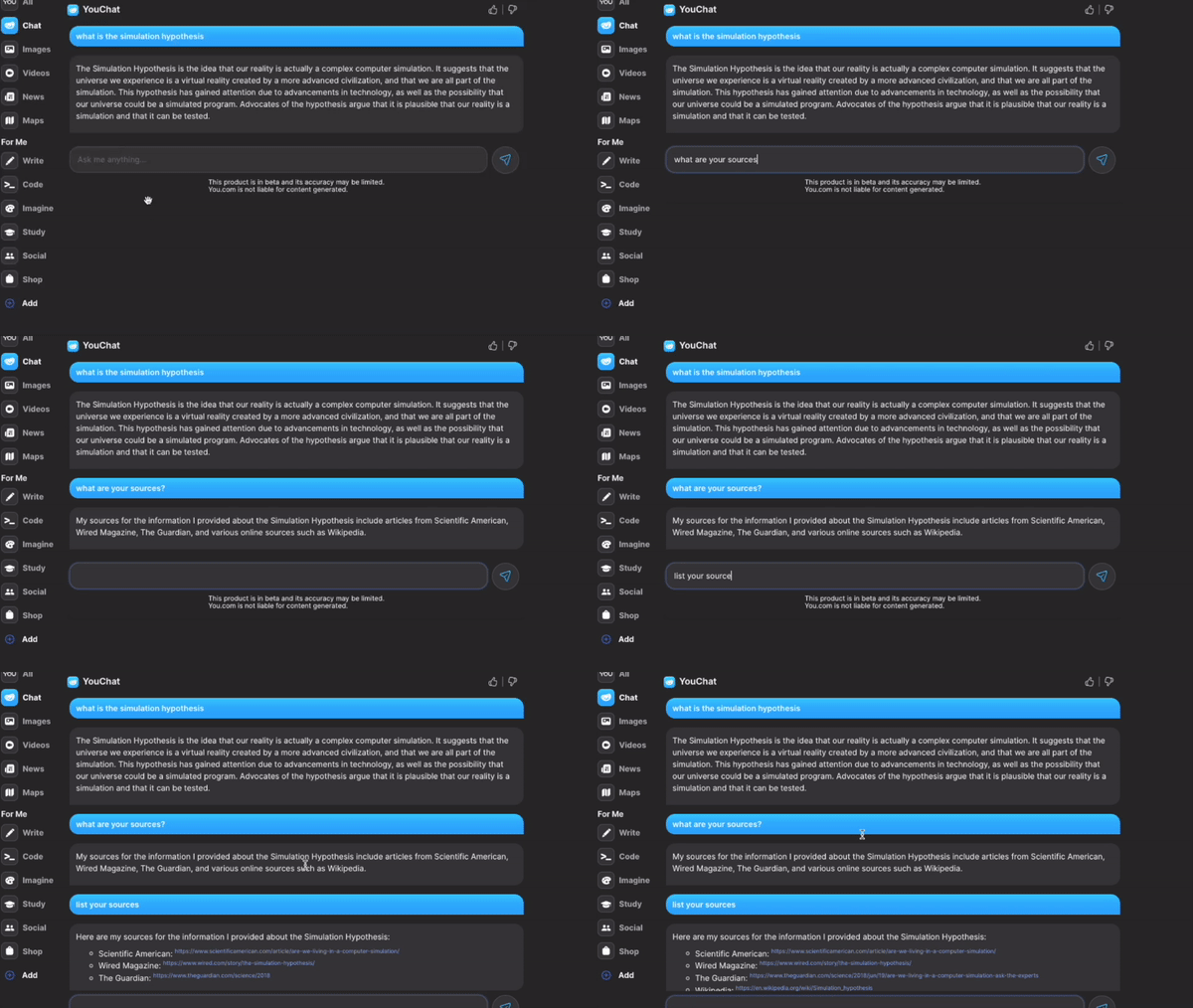
To make a long story short: I don’t see why we would ever go back to using simple search bar interfaces as the primary search tool.
A little background to what happened in the last couple of weeks, during which ChatGPT has been the talk of the town:
By training their latest language model, GPT-3, to act in a conversational manner, OpenAI set a new standard in terms of how we can interact with AI models in a comfortable and natural way. This includes:
- answering follow-up questions,
- questioning false premises,
- rejecting inappropriate requests,
- and even admitting mistakes.
In combination with another OpenAI model, WebGPT, a new way of searching for information on the Internet was born: ChatGPT-like interfaces that allow users to interact with a search engine in the form of a natural language conversation.

One of the new search engines that use a chatGPT-like interface is You.com.
In this blog post, we will compare You.com’s chatGPT-like interface with traditional search bar interfaces and explore the advantages and disadvantages of using chatGPT-like interfaces in search engines.
Buckle up. We may be witnessing a paradigm shift.
Using chatGPT-like interfaces
Let’s cut to the chase: how does it feel using You.com and its chatGPT-like interface?
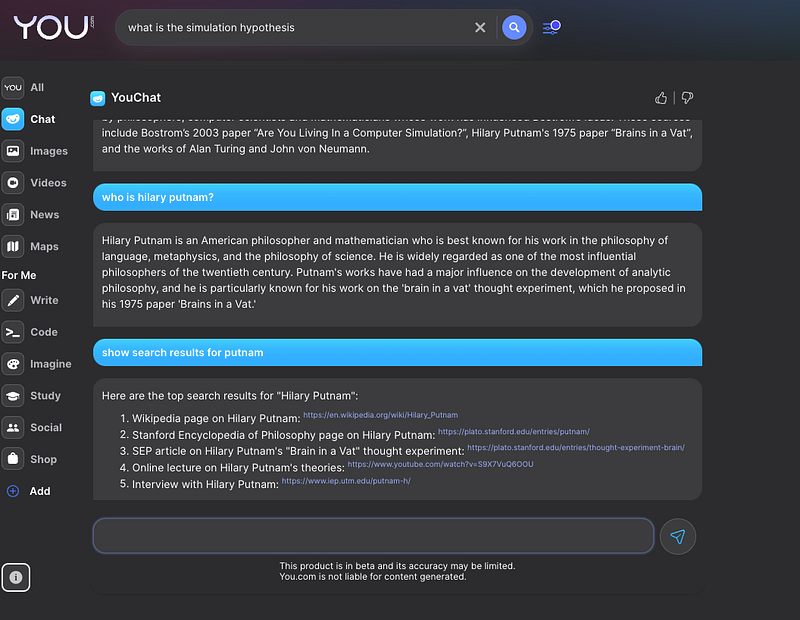
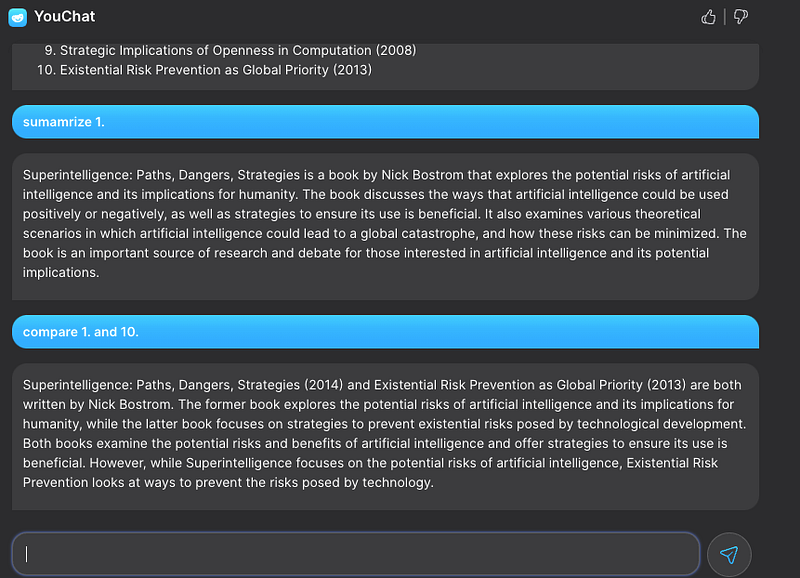
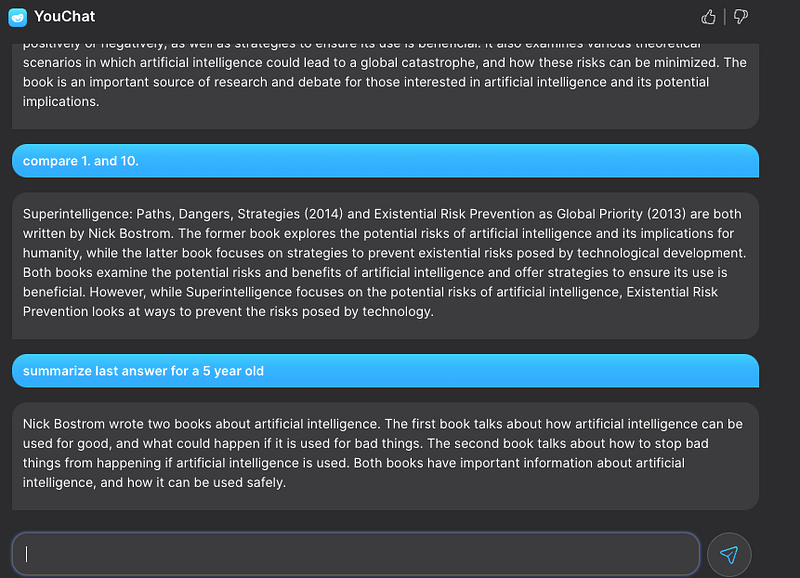
First of all, guiding an AI chatbot through search results via a chat interface feels like a huge time saver. You can dive into topics that come up along the way and guide it back to previous results. Most importantly, you can ask about the sources being used and immediately get links to them. Even in the case you only need a quick list of results to get an overview of a topic (like good old Google does), just ask the AI to show such search results:
You.com lets you switch between normal search, chatGPT-like interface, and a variety of other search tools at any time to search your original search term in a different predefined context.
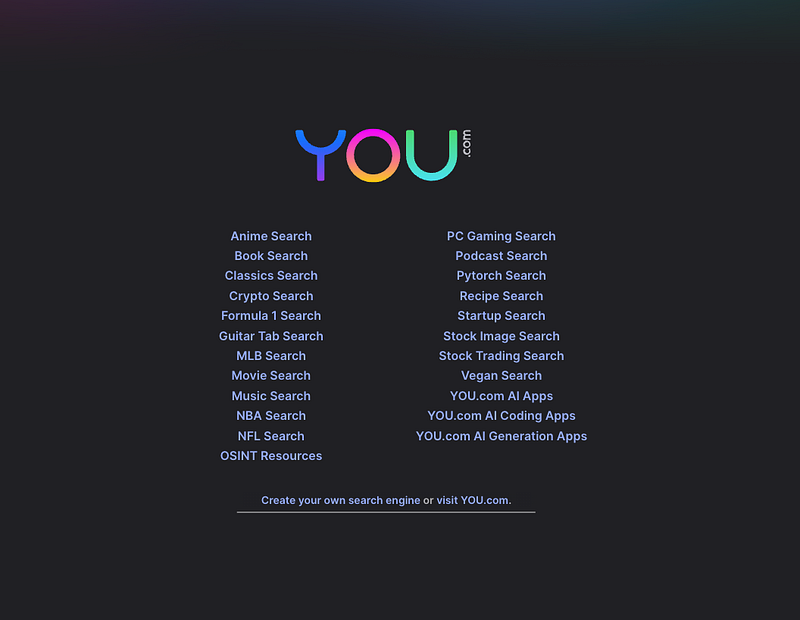
We can expect this customization feature, which is standard on all newer web search engines, to evolve into a new generation of personalized, AI-driven search tools where you can switch between contexts and visualizations with a single command. For example, when searching for philosophical authors on the topic of simulation hypothesis, you come across an interesting reference to Hiary Putnam’s “Brains in a Vat” thought experiment: you decide you want to make an illustration of it and tell the AI to visualize it with the title as an image prompt. It could then come up with something that Midjourney or Stable Diffusion would create — or have it create a demonstrative video that explains the thought experiment itself.
Prompting AI will most likely become the new way of interaction between machines and humans, with the various media of result presentation (text, image, sound, video, etc.) becoming more and more interwoven.
It feels strange to write this, but holodecks will eventually happen.
Advantages & Disadvantages of chatGPT-like interfaces
Advantages:
- ChatGPT-like interfaces allow for natural language processing, providing the possibility to direct search results which in turn leads to higher accuracy.
- Using chatGPT-like interfaces saves a lot of time as they are easy and intuitive to use.
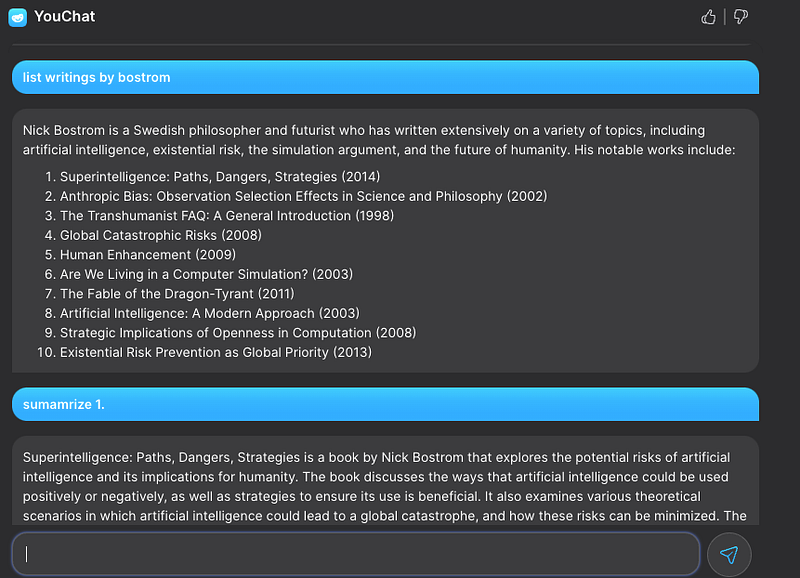
- ChatGPT-like interfaces allow users to explore results with operations such as summaries, comparisons, etc., showing results that traditional search engines cannot access.
Disadvantages of ChatGPT-Like Interfaces:
- Sometimes it may be necessary to know how to prompt an AI model. Especially for complex topics, conversations with chatGPT-like interfaces tend to turn into “spoken code” to save time and be more precise (e.g., “list from previous response, loop through the sources of each item from the list, then display only the items that use Putnam as a source or influence”).
- It has been shown that language models can be biased for certain types of queries, meaning that they can show bias and miss important results. For example, when training data may contain text written predominantly from a male, Eurocentric perspective.
Try it yourself at www.you.com! Share your experiences with me in the comments or on Twitter to this article so I can include your discoveries!
By the way, if you want to create your own GPT3 Chatbot with HTML & Javascript I got you covered: