
The Dopamine Diet — Live Healthier, Happier, And Get More Done
You are what you do — not what you eat

For as long as I can remember, I’ve resisted New Year’s Resolutions.
Instead of waiting for mindset and motivation to collide, I prefer to create my own growth — by setting them on a crash course.
That said, at the beginning of this year, a handful of healthy habits have, by happenstance, intersected. Creating the perfect happiness diet, allowing me to get more done, stress less, and enjoy the process.
Here’s how you can maximize your levels of dopamine to create a healthier and more balanced life, through 3–5 daily habits.
All of which, are backed by science.
Creativity Is a Gateway to Happiness and Depression
I’ve always been creative at heart.
Not to say that everyone isn’t creative in their own right, but my thoughts have always depicted that of a colorful explosion rather than a neat, bulleted list.
This has made living in a linear world and learning to organize my thoughts, challenging to say the least. Although I’m far from a tortured artist, it’s a struggle I know all too well.
“No artist tolerates reality.”
To imagine worlds unlike your own, you must cast yourself into an unknown reality. And by thinking outside of the box, you leave behind the comforts within.
There’s good reason for the cliche of the tortured artist — because it’s all too common amongst creative people.
The painter who isolates themself to create woefully powerful art. Or, the writer who emerges from bouts of drunkenness with unfound insight into human behaviour.
Dopamine is an essential component of creativity — a surplus or deficit.
According to research conducted at Northwestern University,
“Dopamine production… [has been linked to]… not only reduced latent inhibition and creativity but also mental illness.”
But, before you deem yourself a tortured artist, or consider sacrificing your mental health in the name of creation, the same researchers made sure to share the following:
“To be clear: mental illness is neither necessary nor sufficient for creativity.”
At its core, dopamine is the natural brain drug that gives you motivation to do… well, anything.
Whether it’s creating beautiful works of art, checking your email on a Monday, or getting up early to exercise. No matter your role in life or your goals, dopamine is what controls your desire to get things done.
And, being that the most fertile form of motivation comes from within, so should your dopamine. Without pills, powders, or prescriptions.
Here are 5 science-backed habits to help you maximize your levels of dopamine — to get done whatever needs doing in your life.
My Dopamine Diet in 2023
For me, one of the most exciting revelations of modern times, is the intersection between scientific and holistic health practices.
Popular figures like Andrew Huberman have begun bridging the gap between what many of us know intuitively, and what science deems plausible.
As a neuroscientist and professor at Standford University, Andrew breaks down complex concepts of neurobiology into plain speak, on his podcast, “The Huberman Lab.”
Topics such as:
And most relevant to this article, how to optimize your dopamine levels through daily habits.
So, as I’ve fallen in love with Andrew’s simplistic delivery of complex concepts, all of the following practices are cited from his podcast/blog.
Let’s get into it…
1. Cold showers before workouts
It’s been a long-standing belief that cold-shock therapy (such as cold showers and ice baths) are great ways to recover from physical exercise.
But, recent research shows that it’s actually much more effective as a pre-workout activity. Andrew writes on his blog,
“Cold water immersion can limit some of the gains in hypertrophy, strength, or endurance if done in the 4 hours or so after training. It’s better to wait 6 to 8 or more hours until after training, or do it before training.”
Cold-shock therapy helps promote the release of norepinephrine in the body, aiding in strength and athletic performance.
It also has a profound effect on our sense of mental well-being, cognition, and clarity of mind, stemming from a substantial boost in dopamine. Andrew cites a study in which dopamine levels were tracked during and after subjects sat in an ice bath for 10–15 minutes.
“Dopamine increase continued to rise and rise and rise, until it eventually reached 250% above baseline. Now what was interesting, is that after subjects got out of this cold water, the dopamine increase was sustained.”
Albeit most sane people would never subject themselves to 10–15 minutes in an ice bath, the idea of a dopamine aftershock from enduring cold temperatures was a revelation for me.
And, I’ve been using them as a pre-workout activity. Being that I don’t have an ice bath at home, I take cold showers instead.
If the idea of cold showers is scary to you, try this:
Start with a warm shower and turn the water cold when you feel ready. Then, instead of counting seconds, aim for 10–15 deep, chilly breaths.
After trying it for 60 days, I’ve found it most beneficial for:
- Increasing energy and strength
- Priming my body for exercise
- Increasing mental focus
- Warming up my lungs
But, the benefits go much deeper…
Like many people, I’ve always thought of cold-shock therapy as a post-workout practice. But, as it turns out, it’s better utilized as a pre-workout activity.
2. Sauna after workouts (or this)
Regular sauna use is one of the healthiest habits you can adopt.
According to one recent study,
“The risk of all-cause mortality was 40% lower among frequent sauna users [4–7 times per week].”
Andrew Huberman also speaks about the benefits of heat shock proteins on this podcast episode. The most common being:
- Decreased levels of cortisol (stress)
- Increased cardiovascular function
- Sleep and physical recovery
Similar to cold-shock therapy, sitting in the sauna after workouts creates a cardiovascular afterburn. It’s a great way to not only recover but burn a few extra calories in the process.
But perhaps the most powerful benefit of sauna use, is its effect on long-term happiness.
Andrew shares on this podcast episode,
“It turns out that it improves mood and well-being but it also improves our capacity to feel good.”
**If that statement didn’t blow your mind, read it again.
Here’s how — in layman’s terms:
- When we encounter acute levels of stress from doing difficult things (i.e. sitting in the sauna, exercising, studying, etc.), our brains produce neurotransmitters called ‘dynorphines’ — endorphin antagonists.
- These neurotransmitters are responsible for making you feel uncomfortable (making you want to leave the sauna, stop exercising, etc.). But, as your brain produces more dynorphines it also produces more endorphins, as a way to create balance.
- The result of producing dynorphines regularly, is that your brain becomes more efficient at producing endorphins — raising your baseline mood and helping you to achieve higher levels of happiness, long-term.
Andrew recommends aiming for a minimum of 5 minutes of heat-shock exposure, 3 times per week.
**If you’re like me, and don’t have the space (or money) for an at-home sauna, sitting in a hot bath or taking hot showers can act as a great 2nd or 3rd alternative.
3. Sleep (in general)
Most people know the benefits of a healthy sleep schedule:
- Athletic recovery
- Brain function
- Mental health
- Creativity
But, very few people know how to actually achieve healthy sleep, regularly.
As this topic has been a recent obsession of mine, I’ve written an article summarizing many of Andrew’s podcasts and interviews on sleep into a sleep system called “The 90-Minute Rule.”
Here’s the condensed version:
- Avoid coffee within the first 90 minutes of waking up
- Exercise within 90 minutes of waking up (to balance your “autonomic timing”)
- Avoid overhead lighting 90 minutes before bed (this means screen time too)
- Take a 10–15-minute hot shower before bed (to drop your core temperature)
**And, if you’re a coffee lover (like me), you may find it helpful to take 1–2 days off of coffee per week to reset your adenosine levels. It’s worked wonders for me.
4. Daily walks/nature
Creative-thinking abilities are increased by up to 81% when walking on a treadmill, according to a peer-reviewed study called “Give your ideas some legs”.
This is because, from a biological standpoint, creativity occupies the same area of the brain as stress and anxiety — the frontal cortex.
Andrew Huberman shares on this podcast episode,
“Any forward movement that creates optic flow (objects moving past your peripherals) decreases stress and anxiety.”
It’s what he refers to as “forward ambulation”.
Activities that create forward ambulation, help your body produce dopamine and endorphins, providing you with a sense of calm-alertness.
These include:
- Walking
- Cycling
- Driving
In addition, research conducted in 2015 showed that,
“Nature replenishes one’s cognitive resources, restoring the ability to concentrate and pay attention.”
Walking in nature for at least 20 minutes per day has become a staple of my mental health routine. And a sure-fire way to blast through writer’s block.
5. More unstructured time
Recently, I went to Colombia.
Amongst many fun and new experiences (including meeting up with one of my long-time writer friends, Sarah), I realized I was doing too much.
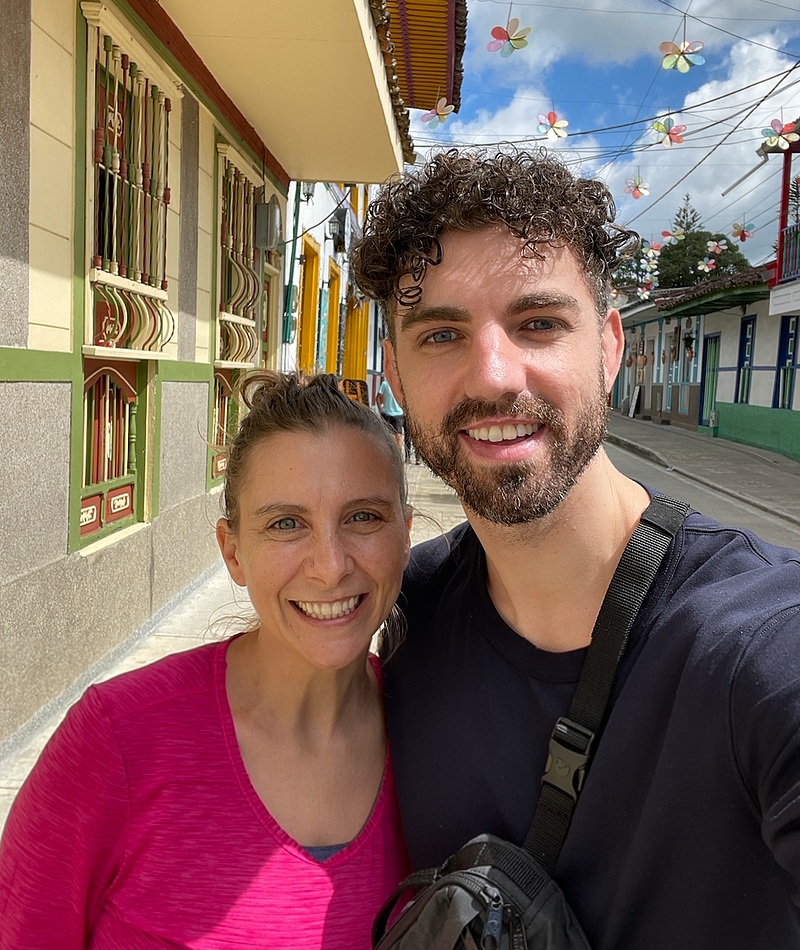
During my 4-week writing holiday, I dropped all social media to focus on the basics:
- Writing
- Reflecting
- Observing
- Journaling
What I found is I returned home with not only a renewed sense of passion for writing, but the quality of my work improved. Despite posting 30% fewer articles this month, I’ve had one of my most profitable months, ever.
On a rare guest episode of Andrew’s podcast, along with famed music producer, Rick Rubin, the pair discuss the importance of engaging in unstructured activities that allow you to relax, mentally.
“There’s a beautiful experiment that explored when dopamine is released in the context of watching sport or comedy… every time there was a surprise… they’d measure dopamine levels.”
The results of the experiment showed that when people didn’t expect a hit of dopamine (whether it was from a punchline or three-pointer), they experienced a larger spike. This study illustrates the importance of letting go once in a while — to embrace the role of ‘willing passenger’.
For Rick, it’s watching pro wrestling.
"It’s one of the few things that I can watch that really makes me feel relaxed. It relaxes me. I don’t feel like I have to think about it. I can just relax and enjoy it.”
Just like less is often more when it comes to building muscle, losing weight, or learning anything new, giving your brain time to unravel often allows it to come up with its best ideas.
Final Thoughts: It’s Already Working Wonders for Me
Although I didn’t plan to come up with a new productivity routine as part of a New Year’s Resolution — it sort of happened that way.
The information above combined with an intuitive sense of what my body and brain want has been one of my most welcomed gifts of 2023.
If you adopt even 3 of the practices above, I’m sure they’ll work wonders for you too.
To summarize — maximize your levels of dopamine by engaging in any of the following 5 habits:
- Cold-shock therapy
2. Heat-shock therapy
3. Getting enough sleep
4. Going for walks/being in nature
5. Taking more time to let your mind unwind
Finally, I hope this helps you live a little healthier, happier, and more productively.
Hi, I’m Hudson! I hope you enjoyed this story. If you did, consider becoming a Medium member. For $5 a month, you’ll get unlimited access to stories like this one. Plus, you’ll be helping support me as a writer, as I will receive a portion of your membership fee at no extra cost to you. Click here to get started (+1,000 karma points). ❤️🙏
💸 Join 500+ people who enjoy getting free stuff (online store). 🧘