avatarHudson Rennie

Free AI web copilot to create summaries, insights and extended knowledge, download it at here

3881

Abstract

we feel threatened, our bodies kick into a fight-or-flight response. Our minds use stress and anxiety to focus in on the task at hand. Like staring at one piece of a large puzzle.</p><p id="bf0e">Activities that create ‘<a href="https://www.forbes.com/sites/forbescoachescouncil/2020/11/18/three-neuroscience-insights-to-help-you-perform-during-uncertainty/?sh=4ee95f3533d9">forward ambulation</a>’ (the sense of moving forward), have the opposite effect on the brain — reducing stress, anxiety, and letting you see the big picture.</p><p id="16f8" type="7">And, this phenomenon is not only reserved to walking.</p><p id="176f">Neuroscientist and popular podcast host, <a href="https://readmedium.com/why-does-walking-boost-creativity-c45f5feef64b">Andrew Huberman</a> explains why walking offers such creative benefits,</p><blockquote id="e844"><p>“Any forward movement that creates optic flow (objects moving past your peripherals) decreases stress and anxiety.”</p></blockquote><p id="408f"><i>This includes:</i></p><ul><li><i>Walking</i></li><li><i>Cycling</i></li><li><i>Driving</i></li></ul><p id="e80b">So, if you’re feeling stuck, start moving forward — your brain will too.</p><h1 id="861d">2. Forceful forgetting:</h1><p id="8b14"><i>“Brain tidying”</i></p><p id="630e">Neuroscientist and author of the book, “<a href="https://www.goodreads.com/book/show/54895704-remember">Remember</a>”, Lisa Genova, shares that forgetting<i> </i>has been wrongfully demonized over the years. We look at forgetfulness as a bad thing, when in reality,</p><blockquote id="224e"><p><i></i>Forgetting is a normal part of being human.”</p></blockquote><p id="4a68">Our brains want to forget any information that is not vital to our survival or evolution. They’re constantly sifting through data and making room for what matters.</p><p id="85ec"><a href="https://www.ncbi.nlm.nih.gov/pmc/articles/PMC2864034/">A collection of peer-reviewed studies showed</a>,</p><p id="a8d2" type="7">The human brain can only remember 3–5 things at any given time — it’s called your working memory.</p><p id="f998">Much like tidying your home, when your working memory is full, your brain looks to either store data in your long-term memory centre or discard it.</p><p id="6846">As Mary Kondo says in her award-winning book “<a href="https://www.goodreads.com/author/quotes/5589647.Marie_Kond_">The Life-Changing Magic of Tidying Up</a>”,</p><blockquote id="27db"><p>“The best way to choose what to keep and what to throw away is to take each item in one’s hand and ask: “Does this spark joy?” If it does, keep it. If not, dispose of it.”</p></blockquote><p id="92f2">Whether it’s what parts of town to avoid or personality types that make you feel safe, your brain follows this logic.</p><p id="49b3"><b>It remembers what is important and wants to forget what’s not.</b></p><p id="3c21">One simple way to practice brain tidying is to let your brain do its thing. Understand that in order to remember, you need to forget.</p><p id="97fe">Some helpful practices to promote brain tidying are:</p><ul><li>Meditation</li><li>Journaling</li><li>Mindfulness</li><li>Deep breathing</li></ul><h1 id="7d1c">3. Functional fixedness:</h1><p id="e189"><i>“Its foe — inspiration”</i></p><p id="e3fb"><a href="https://www.verywellmind.com/what-is-functional-fixedness-2795484">Functional fixedness</a> is a cognitive bias in which we see the world as working in one, fixed way. It’s largely tied to our past experiences, which is why creativity often fades as we age.</p><p id="92c2">This classic riddle reveals functional fixedness in the form of gender bias:</p><blockquote id="a9d2"><p>“A father and son are in a car accident and are both badly hurt. They are both taken to separate hospitals. When the boy is taken in for an operation, the surgeon (doctor) says, ‘I can not do the surgery because this boy is my son’.

Options

How is this possible?”</p></blockquote><p id="a350"><b>The answer: the surgeon is the boy’s mother.</b></p><p id="861c">Although (hopefully), this riddle feels outdated, it outlines how seeing the world in a fixed way closes you off from solving the problem at hand.</p><p id="cd72">We have similar biases when forming new ideas.</p><p id="4c39">When drawing an image of a person’s face, we don’t think twice about the placement of the nose (because it obviously goes in the middle) — <i>but Pablo Picasso would beg to differ.</i></p><p id="46c8" type="7">These fixed rules are linked to our desire for habits — a true catch-22 of the mind.</p><p id="70e1">Habits embrace creativity but can also prevent us from zooming and seeing the big picture.</p><p id="a527">One easy way to break the rule of functional fixedness is to suspend reality by:</p><ul><li>Journaling</li><li>Daydreaming</li><li>Reading/watching fictional stories</li></ul><p id="d1d0">Anything to step outside of your <i>reality</i>, and discover a new one.</p><h1 id="3805">4. Flexible thinking:</h1><p id="2d09"><i>“Riding the fence”</i></p><p id="784d">Here’s a not-so-secret about me — I don’t like labels.</p><p id="c955">I feel as though they suggest there’s a right or wrong way to act, think, or feel. It’s my long-standing belief that there’s not.</p><p id="c985" type="7">Life is simply cause and effect.</p><p id="17e7">If you act, there will be a reaction:</p><ul><li><b>Some reactions, you may interpret as “bad”</b> — perhaps they cause you pain or regret.</li><li><b>Others, “good”</b> — bringing you pleasure or happiness.</li></ul><p id="ab37">But regardless of how they make you feel, they are just things that have happened.</p><p id="1805"><b>I try my hardest to embrace this thinking when forming opinions about people or events.</b></p><p id="fbac">Instead of categorizing what you’re experiencing, let it be. If it doesn’t affect you, don’t let it affect you. And if you’re not required to have an opinion, don’t.</p><p id="8603">The more you can seek to understand rather than be understood, the wider and more detailed the world becomes.</p><h1 id="0baf">Final thoughts: you’re an artist (yes, you).</h1><p id="1085">In life, it’s easy to feel like an imposter.</p><p id="0be8">To feel like you don’t belong or don’t deserve to pursue your passions. If anything, I hope this article has provided you with:</p><ol><li>A new outlook on what it means to be creative</li><li>A set of habits to practice and embrace the art of creativity</li></ol><p id="9568" type="7">Finally, to summarize:</p><ul><li>Creativity is inherently human</li><li>Habits build and make space for creativity</li><li>The 4 habits above will help you create a more creative self</li></ul><p id="82fc"><i>And yes, you are an artist. Your canvas may just look a little different than mine.</i></p><p id="c72b"><i>Hi, I’m Hudson. I write about living healthier, happier, and more mindfully. <a href="https://hudsonrennie.medium.com/subscribe">To have stories sent directly to you, subscribe to my newsletter.</a>👇</i></p><div id="864a" class="link-block"> <a href="https://hudsonrennie.medium.com/subscribe"> <div> <div> <h2>Subscribe, to have stories sent directly to your inbox. :)</h2> <div><h3>Subscribe, to have stories sent directly to your inbox. :) You’ll be notified whenever I publish a new story. By…</h3></div> <div><p>hudsonrennie.medium.com</p></div> </div> <div> <div style="background-image: url(https://miro.readmedium.com/v2/resize:fit:320/0*d0Eim6uuVNTXVzzX)"></div> </div> </div> </a> </div><p id="7344"><a href="https://linktr.ee/hudsonrennie"><i>💸 Join 500+ people who enjoy getting free stuff. 🧘</i></a></p></article></body>

Unlock Your Creative Potential With These 4 “F-Words” Of Creativity

Find your flow, anywhere… and anytime.
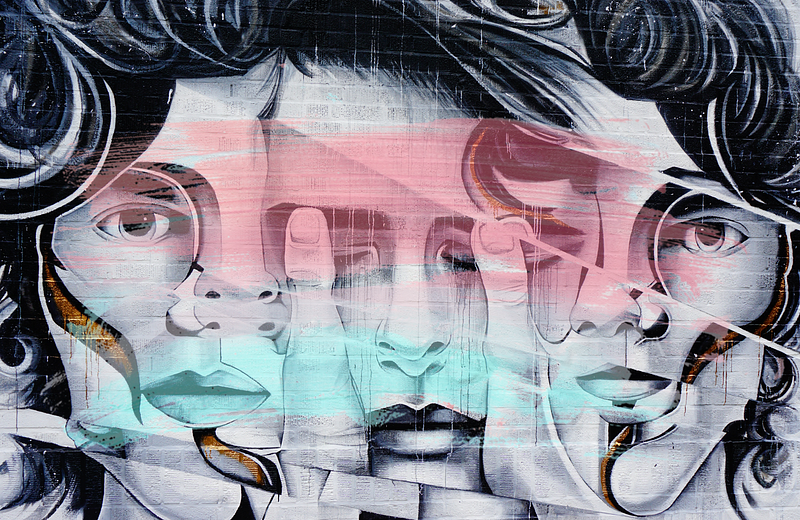
Photo by Dimitar Belchev on Unsplash (edited using Canva)

Creativity is a fickle beast.

It can be trained but never tricked. Controlled but never conquered. Like anything in life, accessing your creative self is a skill.

And like any skill — it can be developed.

As the prevalence of artificial intelligence continues to rise, so does the value of being human. Namely, the ability to create, innovate, and form new ideas.

Here’s how to 10X your value as a human by supercharging your creative self.

One f-word at a time.

Creativity is the formation of new ideas.

Naturally, it occurs in the frontal cortex.

There’s been a long-standing myth that not all humans were created… well, creative. That creativity is reserved only for the painters, sculptures, and writers of the world.

In reality, creativity is one of our most inherently human traits. As Charles Duhigg writes in “The Power of Habit”,

“Creativity is often thought of as a mysterious, elusive quality that only a lucky few are born with. But research suggests that creativity is not a single, inborn trait. Instead, it is a mechanism that can be trained and developed.”

From a survival standpoint, creativity works in tandem with the formation of habits. We, as humans, love habits because they allow us to save brain power for more complex challenges like creating shelter, weapons, or innovating new modes of transportation.

In other words, habits allow us to solve problems — to be creative.

So, whether you crunch numbers for a living, create beautiful spreadsheets to stay organized, or paint colourful landscapes in your free time, you are creative — because you’re human.

Here are 4 ways to naturally boost your creativity… for free.

The 4 “F-words” of creativity.

In life, everyone is looking for a competitive edge.

Yet, in my experience, I’ve found there are no shortcuts in life. Any expedited path comes with a detour — and the fastest way to get to where you’re going is to understand where you’ve been.

So, when it comes to developing the habit of creativity, it’s best to address it at its core.

Creativity is created through habits — and just like any habit, the easier it is to practice, the more you will.

Below, are 4 ways to naturally boost your creativity, for free, anywhere and anytime — no pills, powders, or prescriptions required.

1. Forward ambulation:

“Moving forward”

Results from a peer-reviewed study called “Give your ideas some legs”, showed that creative-thinking abilities are increased by up to 81% when walking on a treadmill.

From a biological standpoint, creativity occupies the same area of the brain as stress and anxiety — the frontal cortex.

When we feel threatened, our bodies kick into a fight-or-flight response. Our minds use stress and anxiety to focus in on the task at hand. Like staring at one piece of a large puzzle.

Activities that create ‘forward ambulation’ (the sense of moving forward), have the opposite effect on the brain — reducing stress, anxiety, and letting you see the big picture.

And, this phenomenon is not only reserved to walking.

Neuroscientist and popular podcast host, Andrew Huberman explains why walking offers such creative benefits,

“Any forward movement that creates optic flow (objects moving past your peripherals) decreases stress and anxiety.”

This includes:

  • Walking
  • Cycling
  • Driving

So, if you’re feeling stuck, start moving forward — your brain will too.

2. Forceful forgetting:

“Brain tidying”

Neuroscientist and author of the book, “Remember”, Lisa Genova, shares that forgetting has been wrongfully demonized over the years. We look at forgetfulness as a bad thing, when in reality,

Forgetting is a normal part of being human.”

Our brains want to forget any information that is not vital to our survival or evolution. They’re constantly sifting through data and making room for what matters.

A collection of peer-reviewed studies showed,

The human brain can only remember 3–5 things at any given time — it’s called your working memory.

Much like tidying your home, when your working memory is full, your brain looks to either store data in your long-term memory centre or discard it.

As Mary Kondo says in her award-winning book “The Life-Changing Magic of Tidying Up”,

“The best way to choose what to keep and what to throw away is to take each item in one’s hand and ask: “Does this spark joy?” If it does, keep it. If not, dispose of it.”

Whether it’s what parts of town to avoid or personality types that make you feel safe, your brain follows this logic.

It remembers what is important and wants to forget what’s not.

One simple way to practice brain tidying is to let your brain do its thing. Understand that in order to remember, you need to forget.

Some helpful practices to promote brain tidying are:

  • Meditation
  • Journaling
  • Mindfulness
  • Deep breathing

3. Functional fixedness:

“Its foe — inspiration”

Functional fixedness is a cognitive bias in which we see the world as working in one, fixed way. It’s largely tied to our past experiences, which is why creativity often fades as we age.

This classic riddle reveals functional fixedness in the form of gender bias:

“A father and son are in a car accident and are both badly hurt. They are both taken to separate hospitals. When the boy is taken in for an operation, the surgeon (doctor) says, ‘I can not do the surgery because this boy is my son’. How is this possible?”

The answer: the surgeon is the boy’s mother.

Although (hopefully), this riddle feels outdated, it outlines how seeing the world in a fixed way closes you off from solving the problem at hand.

We have similar biases when forming new ideas.

When drawing an image of a person’s face, we don’t think twice about the placement of the nose (because it obviously goes in the middle) — but Pablo Picasso would beg to differ.

These fixed rules are linked to our desire for habits — a true catch-22 of the mind.

Habits embrace creativity but can also prevent us from zooming and seeing the big picture.

One easy way to break the rule of functional fixedness is to suspend reality by:

  • Journaling
  • Daydreaming
  • Reading/watching fictional stories

Anything to step outside of your reality, and discover a new one.

4. Flexible thinking:

“Riding the fence”

Here’s a not-so-secret about me — I don’t like labels.

I feel as though they suggest there’s a right or wrong way to act, think, or feel. It’s my long-standing belief that there’s not.

Life is simply cause and effect.

If you act, there will be a reaction:

  • Some reactions, you may interpret as “bad” — perhaps they cause you pain or regret.
  • Others, “good” — bringing you pleasure or happiness.

But regardless of how they make you feel, they are just things that have happened.

I try my hardest to embrace this thinking when forming opinions about people or events.

Instead of categorizing what you’re experiencing, let it be. If it doesn’t affect you, don’t let it affect you. And if you’re not required to have an opinion, don’t.

The more you can seek to understand rather than be understood, the wider and more detailed the world becomes.

Final thoughts: you’re an artist (yes, you).

In life, it’s easy to feel like an imposter.

To feel like you don’t belong or don’t deserve to pursue your passions. If anything, I hope this article has provided you with:

  1. A new outlook on what it means to be creative
  2. A set of habits to practice and embrace the art of creativity

Finally, to summarize:

  • Creativity is inherently human
  • Habits build and make space for creativity
  • The 4 habits above will help you create a more creative self

And yes, you are an artist. Your canvas may just look a little different than mine.

Hi, I’m Hudson. I write about living healthier, happier, and more mindfully. To have stories sent directly to you, subscribe to my newsletter.👇

💸 Join 500+ people who enjoy getting free stuff. 🧘

Self
Mindfulness
Habits
Lifestyle
Creativity
Recommended from ReadMedium