
The Energetic Boost of Coffee Is a Myth: Here’s How It Actually Works
How to avoid your caffeine crash with 1 simple trick
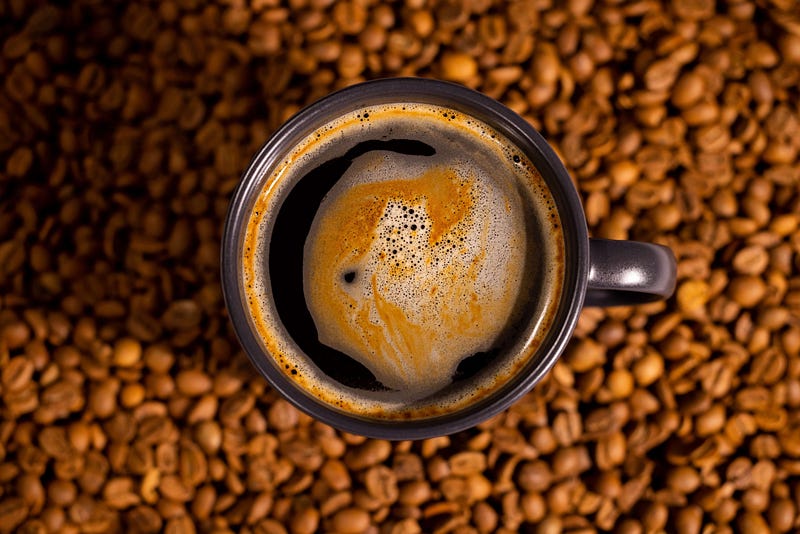
Listen, we all love coffee.
If not for its bold taste, for what it does to our brains. It makes you feel alert, focused, and gives you a boost of energy.
Or does it?
Recent research shows that coffee is more of a vigilante thief than a supplier of energy. Like Robin Hood.
Here’s how coffee actually works — and best practices for enjoying the delicious bean juice we use to fuel our lives.
Coffee doesn’t give you energy, it steals it.
Caffeine is an adenosine antagonist.
In simpler terms, coffee doesn’t give you energy. Or create it. It steals it from the future.
Adenosine is a chemical compound released by our brains to help regulate sleep. It makes you feel tired. The more adenosine your brain releases, the more tired you become.
In addition to helping regulate sleep, adenosine:
- Reduces inflammation in the body
- Regulates regular heartbeats
- Aids in digestion
Like most things, your body likes to sleep on a schedule.
It regulates adenosine on a circadian (24-hour) timer. Your circadian rhythm.
If you try to push yourself to stay up later than usual, you will feel more tired. This is because your body will release more adenosine than normal to help you fall asleep at your normal resting time.
When you consume caffeine, your body doesn’t stop producing adenosine. Your receptors are simply temporarily suppressed.
You don’t feel tired even though you are.
There are millions of ways to describe this phenomenon. It’s like:
- A kinked hose
- Maxing out your credit card
- Gravity (what comes up must come down)
But neuroscientist and Stanford professor, Andrew Huberman, calls it sleep hunger.
If you’re a visual thinker, picture this:
- Sleep is like a royal feast locked away in the pantry of a castle.
- Adenosine guards the food and rations it to the townspeople each day.
- Coffee is a mythical vigilante thief (like Robin Hood).
When you drink coffee, imagine a little caffeine archer wearing tights dropping out of a tree and bonking the adenosine guards on the head. Ironically, putting them to sleep.
When they awake, the pantry has been robbed and the townspeople are enjoying a magnificent feast. Giant turkey legs, wine, the whole deal.
For that day, caffeine is a hero. But eventually, it becomes a villain.
The townspeople are fat, happy, and full of vitality for weeks, maybe even months.
As caffeine continues stealing tomorrow’s energy to feed to the townspeople of today, eventually the pantry will run dry.
This causes a riot — burnout.
Here’s how to avoid burnout.
Caffeine is one of the last accepted recreational drugs in our society.
Perhaps one day, it will be sold behind a locked counter only to adults like alcohol, cannabis, and other prescription drugs.
But until then, it’s up to you to nurture a healthy relationship with it.
The first step, is education.
Here are 3 little-known facts about coffee:
- It has a half-life of around 5 hours. This means drinking 1 cup of coffee 5 hours before bed is equivalent to drinking a 1/2 cup right before bed.
- Coffee is literally stress in a cup. Coffee provides mental focus by triggering our stress response (fight-our-flight). Stress accounts for 90% of all illness and disease.
- Adenosine needs time to wear off in the morning. Many important hormonal processes happen when you first wake up.
The second, is intentional action — practical habits.
Here are 3 simple ways to regulate a healthier sleep cycle and avoid caffeine crashes:
- Stop consuming caffeine 10 hours before bed. To make sure it’s completely out of your system. This will also help your body align its release of adenosine with your bedtime.
- Use physical exercise to burn off residual stress. If you feel anxious or jittery during the day, go for a walk or work out.
- Wait 90 minutes after waking up before drinking coffee. This gives your adenosine receptors time to naturally wear off before suppressing them artificially.
Andrew Huberman shares that waiting 90 minutes after waking up before consuming caffeine is the best way to avoid afternoon caffeine crashes.
Final thoughts: make coffee a hero in your life.
Not a villain.
For most of us, coffee is a necessary life-enhancer. It helps us gain control of our lives by choosing exactly when we want to use our energy.
But, there’s a fine line between heroes and villains.
Remember that any energy you gain from coffee today, must be paid off tomorrow. And as if I hadn’t used enough metaphors throughout this story…
It’s like an energetic credit card.
Be mindful of your coffee consumption to use its superpowers for good.
To summarize:
- coffee steals energy from the future
- Be mindful of your relationship with caffeine
- Remember to pay off your energetic credit card balance
- Maintain a healthy circadian rhythm by following the 3 steps above
Hi, I’m Hudson. I hope you enjoyed this story. If you did, consider becoming a Medium member. For $5 a month you’ll get unlimited access to stories like this one. Plus, you’ll be helping support me as a writer, as I will receive a portion of your membership fee at no extra cost to you. Click here to get started. (+1,000 karma points). ❤️🙏


