
The 90/10 Diet — Eliminate Hunger Cravings With Little-to-No-Effort
90% of diets fail — here’s how you can live in the 10%
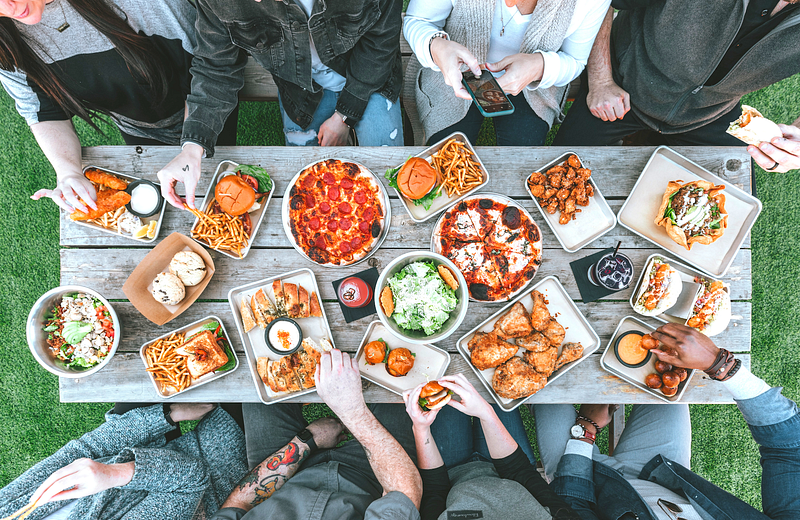
Losing weight is easy – in theory.
Eating less, exercising more, and avoiding specific foods will inevitably help you lose weight.
Keeping it off, that’s another story.
Biologically, we’re wired to crave food physically, mentally, emotionally, even habitually.
This means even with all the willpower in the world, if tempted enough, you’ll eventually break.
90% of diets fail because they ignore basic human programming.
Instead of focusing on eating differently, think differently. Eliminate hunger cravings by focusing on what really matters.
Why you crave food in the first place.
Why do we love food so much?
Food is one of life’s greatest pleasures – but it wasn’t always.
Biologically, food is a survival mechanism.
We crave sugar because it’s our quickest-acting form of energy. Delicious fats comfort us because they act as slow-burning energy.
We’re wired to adore food – to marvel at it.
Every aspect of food is programmed into our brains to be tantalizing. The look, smell, feel, it all calls out to us. Begging for us to put it in our mouths.
To keep us alive.
The problem is, most humans have moved past the point of needing to eat to survive. In North America, we eat primarily for pleasure — even the thought of missing a meal can make us feel hangry.
Food is so available that it’s become irresistible.
In the U.S. alone, $173 billion is spent on healthcare for obesity.
Our desire to consume is matched only by our desire to look and feel healthy. It’s why the health and wellness industry is valued at nearly $5 trillion.
Being that we’re wired to love food, simply trying to eat less food, different food, or less frequently, isn’t enough. In a battle of biology vs. willpower, biology always wins.
So, instead of working against your body, work with it. Understand where your hunger comes from to stop unnecessary cravings at the source.
The 2 factors that determine 90% of your hunger
According to professionals, the top 5 reasons why we crave food are:
- Diet
- Stress
- Lack of sleep
- Hormonal resistance
- Psychological dependency
**One recent study showed that gut health plays a role in hunger cravings as well.
That being said, 5 things is too many things to remember. So, let’s keep it simple. All of these factors can be covered by addressing 2 of them (1.5, really).
The first, is stress.
The silent killer.
Research shows that 90% of all illness and disease is stress-related. Let that sink in for a moment.
As a society, we work too much, worry too much, and increasingly, exercise too much. All in hopes of achieving an idealistic self-image.
But the truth is, all the diet and exercise in the world won’t do you any good in you’re in a constant state of stress.
Here’s why:
Stress has almost endless negative byproducts when it comes to weight management. It slows down your metabolism, interrupts REM sleep, and creates hormonal imbalances.
Prolonged stress at the cellular level, known as oxidative stress, speeds up the aging process as well, leading to numerous neurodegenerative diseases.
Sleep deprivation caused by stress negatively affects two hormones in particular that are responsible for healthy eating habits:
- Ghrelin: the hormone that tells you you’re hungry. When you’re sleep-deprived your body kicks into survival mode — it produces more ghrelin. More ghrelin means more hunger cravings.
- Leptin: the hormone that tells you you’re full. When you’re tired, you produce less leptin. So you end up eating more.
Stress is meant to be temporary — it adjusts our hormone levels in anticipation of fighting or fleeing.
It’s not meant to be experienced for long periods of time.
Unfortunately, things like social media, societal expectations, and existentialism brought on by being too comfortable keep us in a constant state of stress.
This causes us not only to store fat and eat too much, but eat unhealthily as well.
The second, is hormonal resistance.
Specifically these two hormones.
Leptin is found in your fatty tissue — it makes you feel full. Too much stress, lack of sleep, and eating certain foods (ex. excessive sugar, processed foods, alcohol) can cause what’s known as leptin resistance.
Essentially, your body can’t tell when it’s full.
The result, is overeating.
Insulin is responsible for converting blood sugar into energy. Similar to leptin, diet, stress, and sleep all contribute to insulin resistance.
When your body becomes insulin resistant, it loses its ability to regulate blood sugar. This makes you crave sugar even though your body doesn’t physically need it.
Use the 90/10 diet to eliminate hunger cravings
For the majority of my life, I flip-flopped between eating too much and too little — never being able to find a healthy balance.
For the record, I’m not looking to win any physique competitions or run marathons. I simply want to feel comfortable in my own skin without starving myself.
To achieve this goal, I’ve tried calorie counting, calorie cycling, and various diets such as keto, vegetarian, vegan, carnivore… the list goes on.
Every time, with the same result:
It would work for a while, only to slowly fade away.
Eventually, I’d return to my base instincts and eat whenever I felt hungry – which was constantly or not at all.
Relying on willpower is like staring at your feet while you climb a mountain. Sure, you’ll be aware of each step you take but you’re much more likely to fall.
Dieting is easy — in theory. You can go online and find hundreds of diet plans that will help you lose weight, for free.
The hard part, is when you start to crave food you’re not supposed to be eating. Humans thrive on habits, and once you cheat, your body will start to crave more off-diet food.
When faced with a crossroads, we will always take the path of least resistance – delicious and comforting food. So, eliminate cravings altogether by addressing them at their source.
Insert, the 90/10 diet.
The basic principle behind the 90/10 diet is that 90% of diets fail due to constant hunger cravings. Instead of focusing on how or what you eat, spend 90% of your energy creating a system that allows for less hunger cravings.
**This means addressing the main contributors to unnecessary hunger spikes: Sleep, stress, mental health, and diet.
The other 10% can be focused more specifically on eating and exercising. You’ll be amazed at how easy dietary changes become can be when you address obstacles at their source.
Here are 5 simple habits to reduce hunger cravings, eat healthier, and effortlessly maintain a healthy lifestyle:
1. Create a steady-burning inferno
Dr. Andrew Huberman is one of my favourite health practitioners. He couples neurobiology with intuitive practices to improve everyday performance.
After hearing him outline his eating schedule for improved energy and hormonal balance, I came up with my own, called “The Fire Diet.”
Essentially, the concept is to feed your body its macronutrients in the reverse order it processes them.
Everyone’s body breaks down food the same way. In this order:
- 1st: Simple carbs
- 2nd: Complex carbs
- 3rd: Proteins
- 4th: Fats
To get more out of your body, feed it what it needs when it needs — much like building a good fire.
2. Give your digestive system a break
Everyone needs a break once in a while — especially your body.
When we eat constantly throughout the day, our digestive system works overtime. Part of the reason why we crave food so much is that we get into a routine of constant digestion.
But, our bodies are extremely adaptable.
Fasting (abstaining from eating) for long periods of time has been shown to have numerous health benefits. It gives your body a chance to properly digest your food, engage in cellular repair, and re-balance its hormone levels (including insulin and leptin).
One notable byproduct of fasting is that it suppresses hunger as well.
When you get hungry, it’s because your body is expecting food. But after an average of 12 hours, your body enters a fasted state. It’s at this time that it begins using the glucose (sugar) in your fatty tissue for energy.
Instead of craving sugar – you burn it.
I’ve been practicing intermittent fasting for years, and love it for many reasons. One of which is how efficient it is. Not thinking about food makes not eating, easier.
I practice the 16/8 method in which I don’t eat for 16 hours each day.
How to practice it:
You can adjust the timeframe to fit your lifestyle but I stop eating at 8 PM each night and start again at 12 PM the next day (a 16-hour window).
During this time, don’t consume any calories. You’re free to drink water, coffee, or any zero-calorie beverages.
For the remaining 8 hours, you eat your day’s worth of food.
You don’t have to fast every day. And don’t worry if you miss a day. Think of it as a digestive vacation – use as needed.
After holidays or weeks that I’ve been naughty, I’ll often do a 24-hour fast as a reset.
3. Drink this morning cocktail
Every morning, I have a similar routine. I wake up, move my body, and drink water. In fact, all successful morning routines come down to these 5 things.
Then, I drink this healthy cocktail:
- 1/2 a lemon’s worth of juice
- A splash of apple cider vinegar
- 1 thin slice of ginger
- A pinch of salt
I’ve written a whole article on the health benefits of this drink, but here’s a summarized version:
- Lemon juice — good for digestion.
- Apple cider vinegar — prevents insulin spikes.
- Ginger — prevents insulin resistance (and boosts immune function).
- Salt — improves hydration, digestion, stops muscle cramps, and more.
Disclaimer: this beverage is a staple in my life, but may not be right for you. Take this advice with a grain of salt (pun intended) and experiment with your body/lifestyle.
The main benefit of this drink is that it helps regulate blood sugar levels, which in turn, leads to reduced hunger cravings.
4. Eat these foods
I’ve had issues with my gut since… forever.
As such, I’ve been unable to eat the foods I want for the majority of my life. It wasn’t until I started seeing a naturopath that I learned how my gut health influenced my eating habits.
A 2018 study showed that unhealthy gut bacteria contribute to an increase in ghrelin, making you feel less satiated, and leading to overeating.
Although the first step to a healthy gut is eliminating harmful foods, the following foods will help regulate healthy levels of ghrelin, leptin, insulin, and make you feel more satiated:
- Lean protein
- Fibrous vegetables
- Healthy fats (nuts, seeds, olive oil)
- Dark chocolate
- Coffee / green tea**
- Ginger / cinnamon / cayenne pepper
- Fruits high in soluble fibre (apples, bananas, avocados)
**Be mindful of your coffee intake as it can raise stress levels.
A great rule of thumb is to eat whole foods and avoid processed foods.
5. Avoid these foods
Eating healthy is great — but it’s pointless if you also eat unhealthily.
Avoiding foods that trigger hormonal imbalances, hunger cravings, and contribute to unhealthy gut bacteria has made the biggest positive impact on my life.
If you do nothing else, remove the majority of these foods from your diet:
- Excessive sugar (even naturally occurring)
- Processed foods (especially sugar)
- White rice, bread, pasta**
- Fried foods
- Alcohol
**White rice, bread, and pasta aren’t necessarily unhealthy — but they’ve been shown to contribute to insulin resistance if eaten in excess.
The 90/10 diet (prepared 3 ways)
The 90/10 diet is a great, holistic approach to healthy eating. It creates a foundation for healthy eating by eliminating unneeded hunger spikes.
Being that over 90% of our actions are unconscious, use the 90/10 diet to create sustainable healthy eating habits.
To summarize:
- Focus 90% of your energy on reducing hunger cravings.
- Stress contributes to 90% of all illnesses and diseases. Reduce stress to drastically improve your quality of life.
3. 90% of your actions are unconscious. Rely on small habits to make big changes in your life.
I hope you enjoyed. :)


