
I Tried Cold-Shock Therapy For 30 Days Straight. Here’s What Happened.
W-w-was it worth it?
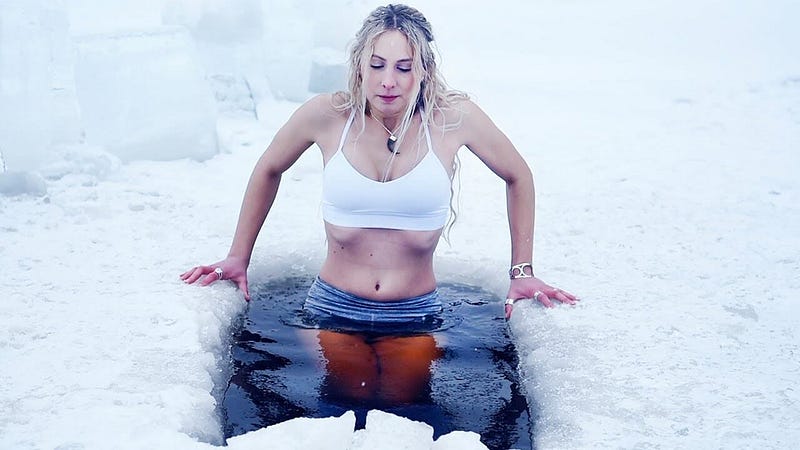
This summer, I decided to try something I had been avoiding.
I’ve taken cold showers in the past, but never adopted them as a daily practice. Mainly, because it felt like overkill.
Being a staple habit for productivity gurus, I’ve always associated cold-shock therapy with society’s hyper-fixation on money and doing more — something I’m resistant to.
With that said, if I’m being honest, the main reason why I haven’t adopted cold-shock therapy as part of my daily routine is:
It’s just so darn cold — shockingly cold, in fact.
But, after taking the plunge and trying it for myself, I can safely say it’s not only a great productivity tool, but highly effective for leading a healthy and balanced life.
Here’s everything I learned from exposing myself to subzero temperatures for 30 days straight. And why it’s become a staple habit in my life.
Not to mention a form of… well, therapy.
Why I decided to try it.
I’m currently in a phase of wealth-building in my life.
Not necessarily money, but a collection of habits that contribute to a balanced and fulfilling life. It took all of my 20’s to understand what wealth meant to me — and now, at 30, I’m beginning to build a foundation of it.
This year, I quit my 9–5 to pursue my life-long dream of writing full-time.
Although I’m not rich, famous, nor do I deem myself an entrepreneurial expert, I’m surviving.
That alone is comforting.
Lately, I’ve felt the tides begin to tip in my favour. And with it, a pull to share what I’ve learned with others.
Speaking on camera has been uncomfortable, to say the least. But it’s a great opportunity for me to tackle my life-long battle with disfluency.
And, the catalyst for my cold-shock experiment
Cold-shock therapy is cliche — and for good reason.
If you hear any successful entrepreneur or high-functioning human talk about their morning routine, they all include at least 1 of these 3 habits:
- Brain work
- Body work
- Getting straight to work
What you do first thing in the morning says a lot about your priorities. So, it’s no surprise that cold-shock therapy has become a staple of getting more done, as it’s been shown to:
- Improve mood
- Increase energy levels
- Boost immune function
- Contribute to better sleep
- Increase mental and physical performance
Everything an ambitious entrepreneur needs to achieve their goals.
For me, the most beneficial aspect of cold-shock therapy is that it promotes deep breathing.
Cold temperature stimulates your parasympathetic nervous system, causing you to hyperventilate. Controlling your breath during this time triggers a mental state similar to what you experience after an intense workout.
A euphoric, focused calm.
Cold-shock therapy also helps your body produce dopamine and endorphins, reducing anxiety and helping you think more clearly.
All of this is incredibly beneficial for speaking — as it slows down activity in the frontal lobe. The area of the brain largely responsible for speech.
This is the main reason why I began:
- Taking cold showers
- Sitting in an ice bath
- Sitting outside in the cold
**Any of these 3 habits for a minimum of 2 minutes each day.
To help put me in the necessary state to speak as fluently as possible. Like free speech therapy.
Although speaking may not be your goal, I’ve experienced numerous and diverse benefits. Some I expected — others, came as pleasant surprises.
Here’s everything you can expect to gain from cold-shock therapy…
The major benefits I experienced.
Consistently and immediately.
What made this habit so easy to adopt was that the benefits were immediate. It’s not like diet or exercise where you must be patient to see results.
The second you step out of your shower or cold bath, you feel invigorated. As if you’ve tackled a major accomplishment — even if it’s just turning your faucet to the left for a few minutes.
Cold-shock therapy embraces the age-old truism, ‘what doesn’t kill you makes you stronger.’
Here’s how it works in a nutshell:
Exposing yourself to cold temperatures causes your body to adapt in many ways, including:
- Releasing norepinephrine (your stress hormone) and dopamine. This creates a sense of mental focus, motivation, and alertness.
- Regulating your core temperature. Your body will naturally adjust its core temperature to regulate your heat. This, in turn, helps regulate healthy energy levels throughout the day, and contributes to better sleep.
- Helps your body produce brown apidose tissue (or “brown fat”). One of the benefits of brown fat is that it helps your body break down glucose and fatty tissue to regulate heat. Research shows this leads to reduced body fat.
**In addition, cold-shock therapy helps your body produce cold-shock proteins, which have been shown to build a stronger body at the cellular level, contributing to increased longevity.
Although I don’t love the expression bio-hacking, it’s a fitting way to describe cold-shock therapy. Manipulating your body into becoming stronger and sharper, while maintaining a sense of balance.
Here’s what I experienced every day for 30 days — and what I continue to experience every time I expose myself to cold temperatures.
1. Elevated mood:
Andrew Huberman is a popular neuroscientist who specializes in human optimization. The brilliant doctor and I have a one-sided, on-and-off-again relationship:
- It’s one-sided because he has no idea who I am
- It’s on and off again because he delves out too much information for me to grasp at one time
So, for the past few months, I’ve been mulling over a few of his core concepts about optimizing mood and energy.
One of his staple habits is to expose your body to cold early on in the day. Amongst a litany of benefits, mood is near the top of the list for most people. Myself included.
We live in a unique time, with ever-rising expectations. With this, comes a rise in anxiety.
Although modern science is yet to find a direct link between cold-shock therapy and reduction in mental health disorders, it’s widely accepted as a mood elevator. Particularly by minimizing feelings of depression and anxiety.
One study published in “Medical Hypothesis” showed that cold showers activate the parasympathetic nervous system, increasing dopamine and endorphins. The result is a feeling of euphoric accomplishment, much like the high after a good workout.
“An increase in impulses from peripheral nerve endings to the brain, which could result in an anti-depressive effect.”
Just like overcoming anything difficult in life, cold-shock therapy puts life in perspective. And boosts levels of satisfaction.
Personally, I look at it as an intense form of meditation. There’s nowhere to hide, and you’re forced to face yourself.
2. Silky, smooth hair:
Although the age-old debate of shampoo vs. conditioner, started by one Billy Madison, may never be settled — one thing is for certain:
Cold exposure leaves your hair “silky and smooth”.
Dr. Kevin Mun, co-founder of “Venn” skincare shares that running your head under cold water helps:
- Strengthen hair
- Prevent sun damage
- Add a nice shine to hair
- Increases blood flow to the scalp
When it comes to anything in my life, I like to take a holistic approach — and try my hardest to avoid topical fixes. It’s for this reason that I don’t shampoo or condition my hair.
Instead, I simply rinse my hair with water and let my natural oils do their thing.
I’ve been living this way for years, and have found my hair to be healthier than ever. That said, any time I feel overstressed or I’ve been eating unhealthily, my hair will feel weak and become frizzy.
Although most hair research is anecdotal, stress has been linked to dry scalp and dry, weak, and frizzy hair. Although I always try to address my diet and lifestyle first, knowing the effect cold water has on my hair has been a nice little back-pocket fix.
Anytime I rinse my hair with cold water, I notice it feels healthier, fuller, and adds a nice shine to it.
3. Increased energy and focus:
This year, I turned 30. Although I don’t feel any different, I’ve become very aware of how much time I have vs. how much I’d still like to accomplish in life.
And, after 10+ years of working unfulfilling jobs has seemingly gone by in the blink of an eye, I’ve begun to realize how fleeting life is.
It’s marked a definitive shift in my mentality — and lifestyle. As part of this 3rd-stanza-epiphany, I’ve cut out:
- Negative media
- Negative people
- Unhealthy foods
- Excessive screen-time
Coffee is one of my last guilty pleasures.
And, like anything, the pleasure I gain from it is directly linked to how I use it. So, I try not to drink it every day or in excess. To help it remain a nice little treat.
What I’ve found is that cold showers have almost the same effect as coffee — only less intense.
And without the crash.
It makes sense too, as they essentially do the same thing:
- Increase oxygen and blood flow throughout the body
- Help your body produce norepinephrine (your stress hormone)
Whenever I feel slow, sluggish, or just need a mental reset, I like to shock my system with a cold shower. This is incredibly helpful on days that I don’t consume caffeine.
Eventually, I’d love to replace my morning cup of coffee with a cold shower. But, at least for now, delicious bean nectar is one comfort I’m holding onto.
4. Deeper breathing:
Meditation and breath work are two incredibly simple habits packaged in a hard shell of complexity.
The image of steel drums, tranquil music, and crystals, although calming, can be intimidating to the average person.
In reality:
- Meditation is simply being aware
- Breath work is simply breathing deeply
You don’t need a certification or to pay expensive premiums to practice either. I like to practice meditation in micro-doses, by simply doing nothing.
And since breath work can be quite an intense practice, I like to combine it with cold-shock therapy. Being that it’s now turning to fall, I’ve moved my makeshift ice bath into storage and have begun taking cold showers as my primary cold-shock method.
Simply turning the faucet all the way to the left and letting cold water wash over you for 10–15 breaths is enough to experience the benefits.
👉I prefer to count breaths instead of time — here’s why.
Aside from stimulating your skin, cold-shock therapy causes you to hyperventilate, as a stress response. Instead of giving in to the panic, breathe intentionally, pushing all the air in/out of your lungs.
This helps offload c02 from your body, contributing to many of the practice’s benefits.
👉Here are some more powerful breathing techniques.
Cold-shock therapy has become a staple of my pre-filming routine, as it acts as a great way to warm up my lungs, which in turn, helps me speak clearer.
The hardest part of speaking, for me, is gaining momentum. Just like anything in life, once you get started, it gets easier.
5. Heightened cold resilience:
I’m a notoriously cold human — despite being born and raised in Canada.
I often kid that I’m secretly European as I don’t fair well with the cold. And the fact that everyone thinks I’m Italian.
For 8 months out of every year, I’m cold — and during the winter I wear a neck warmer all-day long (yes, even inside). Perhaps the most pleasantly surprising benefit of cold-shock therapy is that I’ve become more resilient to the cold.
Your body naturally regulates its heat as it is linked to autonomic functions such as releasing hormones at specific times during the day.
When you expose your body to cold, your core temperature raises to regulate your heat.
As a general rule of thumb, your body raises its core temperature in the early portions of the day (to promote action) and lowers them at night (to help you fall asleep).
This epiphany has given me the courage to brave the cold for at least a few minutes each day, knowing that it contributes to self-sustaining warmth. The human body can do amazing things if you let it.
As we now begin to move into fall, I’m finding myself getting less chilled than in the past.
6. Increased physical recovery:
It’s funny, in the past, I thought the sole function of cold-shock therapy was to recover from physical exercise.
Now, it’s one of the last benefits I think about.
That said, this alone is enough to add cold exposure to your post-workout routine. Sitting in an ice bath of 10–15 degrees Celsius (50–59 Farenheight) or taking a cold shower for a few minutes (or 10–15 breaths) has been shown to:
- Speed up recovery
- Reduce inflammation
- Increase flexibility and mobility
Cold exposure can also be a great way to warm up for endurance activities like running or cycling.
How to practice cold-shock therapy at home.
Our bodies are incredibly adaptable.
Exposing your body to cold temperatures is one of the best ways to build a stronger and more functional body. And, you don’t need a fancy ice bath or drill holes into a frozen lake to practice it.
Here’s how you can practice it at home:
The easiest and most available way is to simply turn the water cold after a shower. It’s not only cost-effective, but is a nice way to ease into it — making you more likely to practice consistently.
That said, sometimes giving yourself too much control can be a detriment. It’s why many people prefer taking ice baths — once you’re in, you’re in.
This is exactly what I did in the summertime, before laying out in the sun to dry out. One of life’s simple pleasures.
I bought this 120 L plastic bin for $30 from my local hardware store — it did the trick just fine:
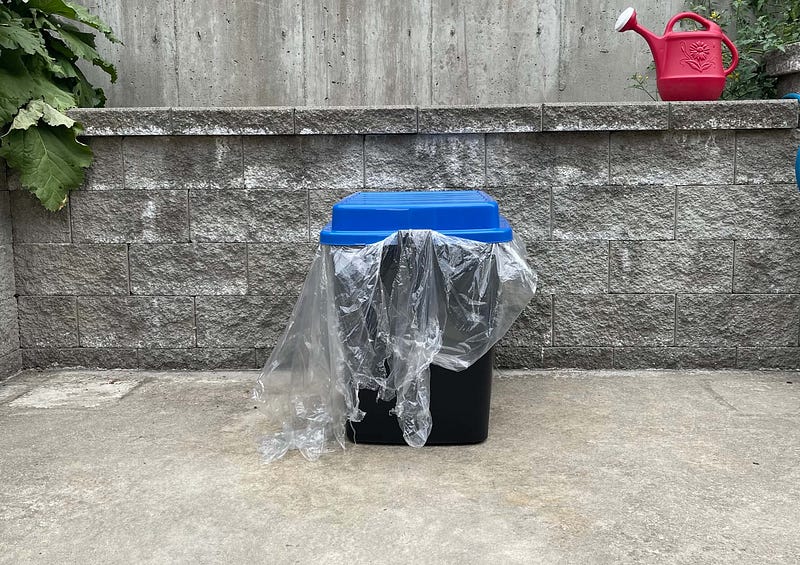
**Although it’s a tight squeeze, I’m able to curl my lanky 6'3 frame into the bin and be covered in water up to my neck.
Final thoughts: it all starts with asking ‘why’.
Like most things in life, the gap between what you ‘want to do’ and ‘actually do’ is often bridged with a strong ‘why.’
For me, the idea of money or increased productivity wasn’t enough for me to brave the cold on a consistent basis. But, the idea of performing better on camera was.
Your why will likely be something completely different.
I hope the benefits above will help you find it.
To summarize — find your why. Or pick one:
- Elevated mood
- Silky, smooth hair
- Increased energy & focus
- Deeper, controlled breathing
- Heightened resiliency to cold
- A happier, healthier, more mobile body
Lastly, try it for yourself. See what it does for you.
Hi, I’m Hudson. I hope you enjoyed this story. If you did, consider becoming a Medium member. For $5 a month you’ll get unlimited access to stories like this one. Plus, you’ll be helping support me as a writer, as I will receive a portion of your membership fee at no extra cost to you. Click here to get started. (+1,000 karma points). ❤️🙏


