
The Art of Situational Note-taking: Running the “GAP” Project
Two types of “Gap” Projects
This post is part of the “Art of Situational Note-taking” project.
My approach to note-taking is represented in the diagram below.
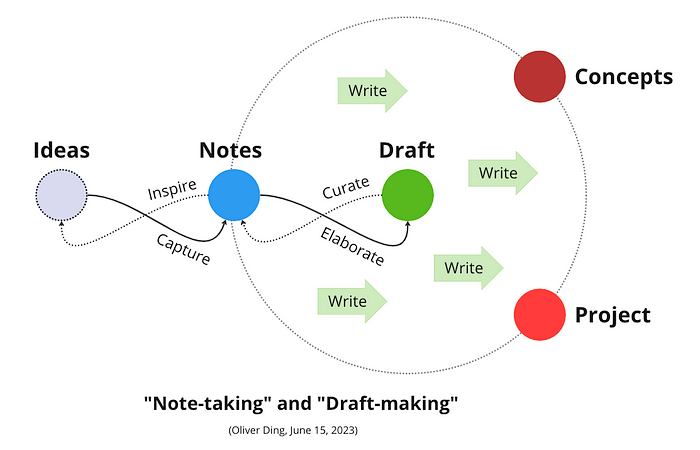
My model is more about developing a concept system for a project than producing a book. You can find more details in Situational Note-taking: Capture Significant Insights Outside the Room.
Today I’d like to share one of my habits: Running the “GAP” project.
1. The “After” Project
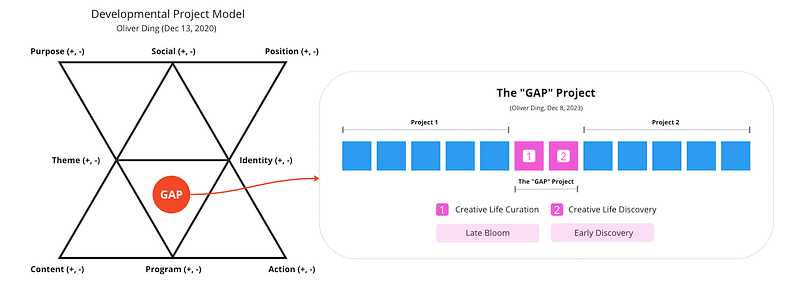
I use the “GAP” project to refer to some informal projects between two formal projects. The idea was inspired by the Gap year:
A gap year, also known as a sabbatical year, is a period of time when students take a break from their studies, usually after completing high school or before beginning graduate school. During this time, students engage in a variety of educational and developmental activities, such as traveling, working, volunteering, or taking courses. Gap years are not limited to a year-long break and can range from several months to a few years.
Source: Wikipedia
We can use the “After | Before” structure to define two types of “GAP” projects.
- The “After” Project: such as Creative Life Curation
- The “Before” Project: such as Creative Life Discovery
Let’s start with the “After” Project.
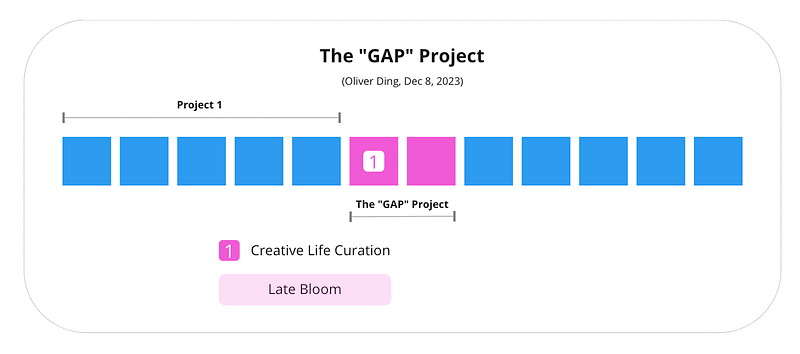
I often reflected on my life experiences and wrote notes and blog posts. In 2022, I turned this habit into a professional knowledge framework and wrote a book.
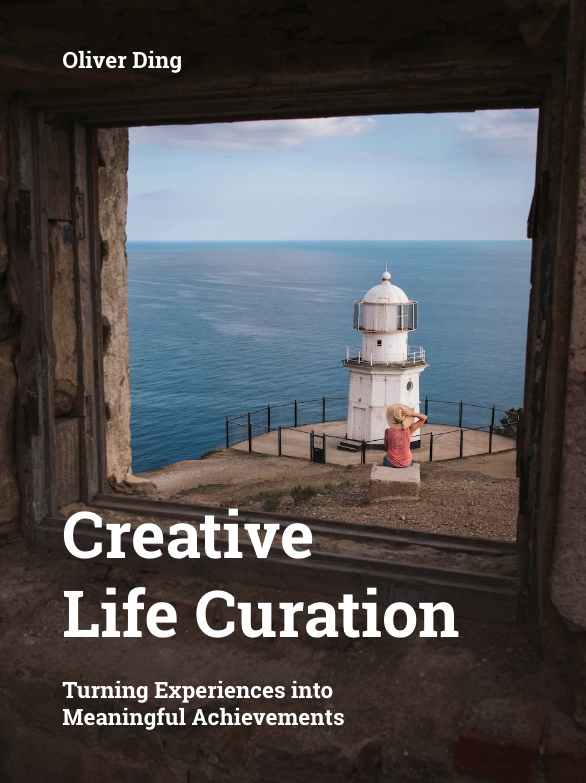
The Creative Life Curation project is part of the journey of building the knowledge enterprise of Curativity Theory.
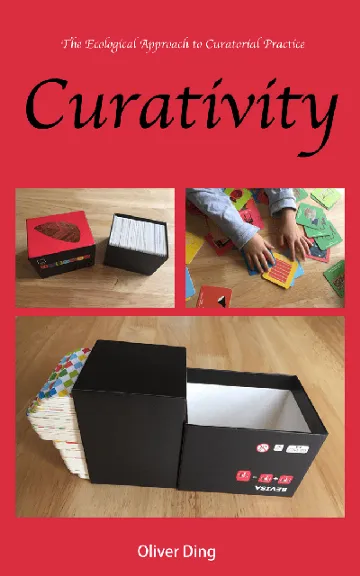
In 2019, I wrote a book titled Curativity: The Ecological Approach to General Curation Practice.
I have been working in the curation field for over ten years. I was the Chief Information Architect of BagTheWeb which was an early tool for content curation (We launched the site in 2010). This experience inspired me to make a long-term commitment to the Curation theme. After having 10 years of various curation-related practical work experience and theory learning, I coined a term called Curativity and developed Curativity Theory which became a book.
The new term Curativity refers to “curating pieces into a meaningful whole” which means general curatorial practice. The reason why I coined the term is that I was not satisfied with the specific view of curation such as “professional curation means art and museum.” I argued that there is a need to redefine “curatorial practice” as a general social activity and a universal experience. In other words, I was calling for an interdisciplinary view of curation or curatorial practice.
From 2019 to 2022, I worked on several general curation projects.
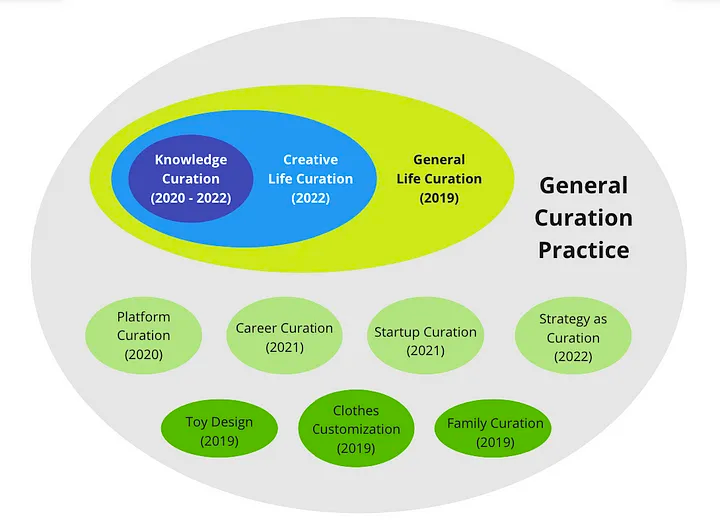
The primary project was the Knowlege Curation project (Phase 1, 2020–2022). This project aimed to Connect THEORY and PRACTICE by turning Pieces into a meaningful Whole.
- Started on June 26, 2020
- Closed on Oct 18, 2022
From Oct 2022 to Dec 2022, I worked on the Creative Life Curation project.
The notion of “Creative Life Curation” refers to turning Life Experiences into Developmental Resources, and Meaningful Achievement. I consider “Creative Life Curation” as a specific life strategy for knowledge creators.
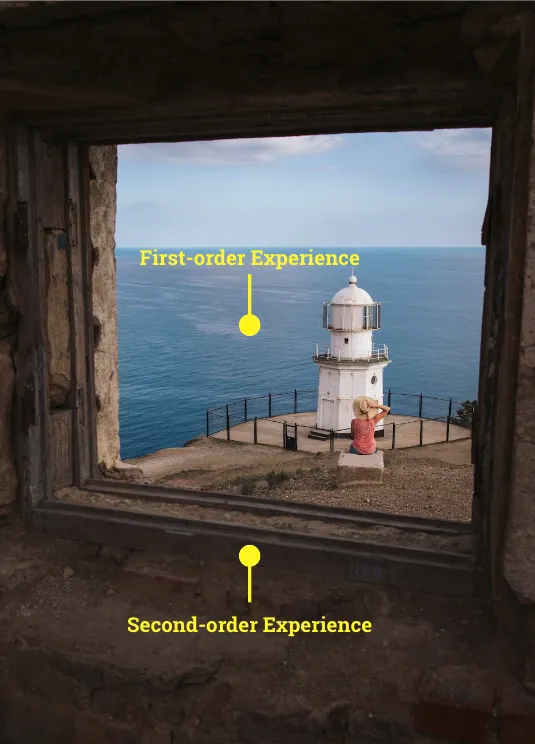
First-order Experience refers to normal life experiences. The girl sees the ocean.
Second-order Experience refers to Creative Life Curation. We need to curate pieces of normal life experiences into a meaningful whole.
How can we do it?
According to Curativity Theory, we need a container to turn pieces into a meaningful whole.
We need a frame to frame life experiences.
The frame brings us Second-order Experiences.
I also developed five units of analysis for the Creative Life Curation project:
Action > Project > Journey > Landscape > Lifescape
I have developed a Creative Life Curation framework containing five analysis units.
1. Creative Actions 2. Creative Projects 3. Creative Journey 4. Creative Landscape 5. Creative Lifescope
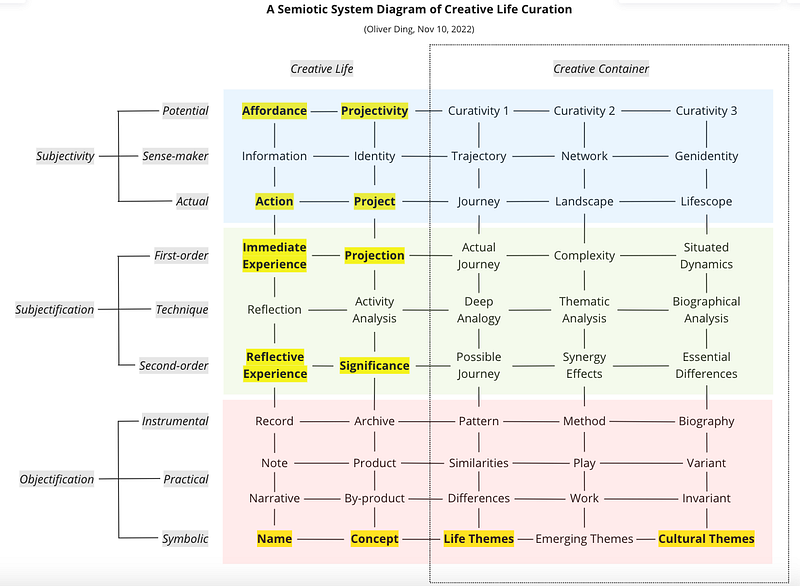
The framework also highlights the following three types of “Curativity”:
- Curativity 1: Turning pieces of Projects into a Journey as a meaningful whole
- Curativity 2: Turning pieces of Projects into a Landscape as a meaningful whole
- Curativity 3: Turning pieces of Actions and Projects into a Lifescope as a meaningful whole
It’s an open framework!
If we can discover a new significant aspect of Creative Life and develop a corresponding method, we can add Curativity 4 and related keywords to the diagram.
You can find more details in Creative Life Curation: Turning Experiences into Meaningful Achievements.
2. Situational Note-taking for Creative Life Curation
As mentioned above, the Creative Life Curation framework offers five units of analysis. The second unit of analysis is Creative Projects. It is about reflecting on a single project.
Let’s see three examples:
- How did I develop the “Product Engagement” Framework? — March 21, 2023
- The ECHO Trip: A 10-day Road Trip and Creative Life Curation — July 27, 2023
- Engaging with Lui’s Theoretical Sociology — August 9, 2023
2.1 Developing the “Product Engagement” Framework
In Feb, I wrote a series of articles about Product-centered Business Development within two weeks. Business is a large field of social practice, I only focus on Product-centered Business Development activity. I used the Theory-based Reflection approach to adopt two theoretical approaches to develop a new Perspective called “Product Engagement”.
I started the project on Feb 6, 2023, and closed the project on March 2, 2023. The outcome of the project is a possible book (draft) as a collection of my articles.
- 4 Parts
- 29 articles
- Total 613 min read
- Total 162,445 words (about 325 single-spaced pages)
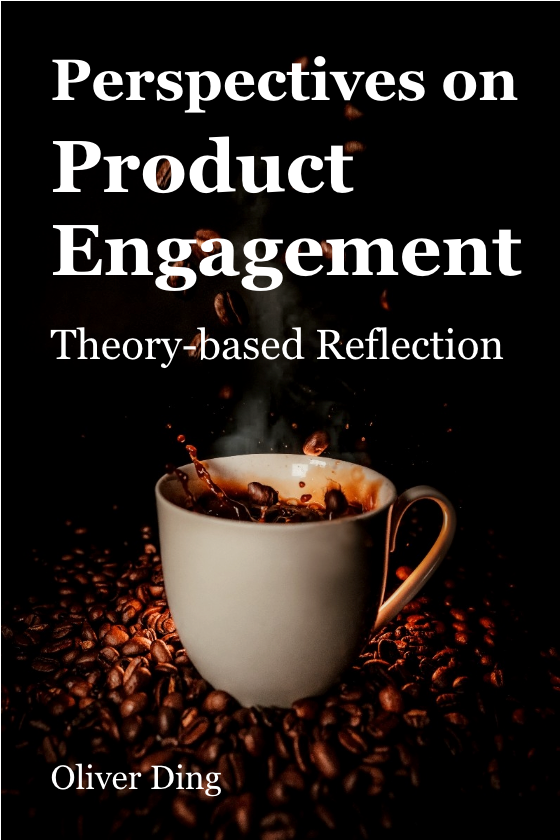
On March 21, 2023, I wrote an 8-minute article to reflect on the project. We can see this article as a tiny “Creative Life Curation” project.
How did I do it?
I used the Knowledge Discovery Canvas to review the creative process of the project. You can find more details in Slow Cognition: How did I develop the “Product Engagement” Framework?
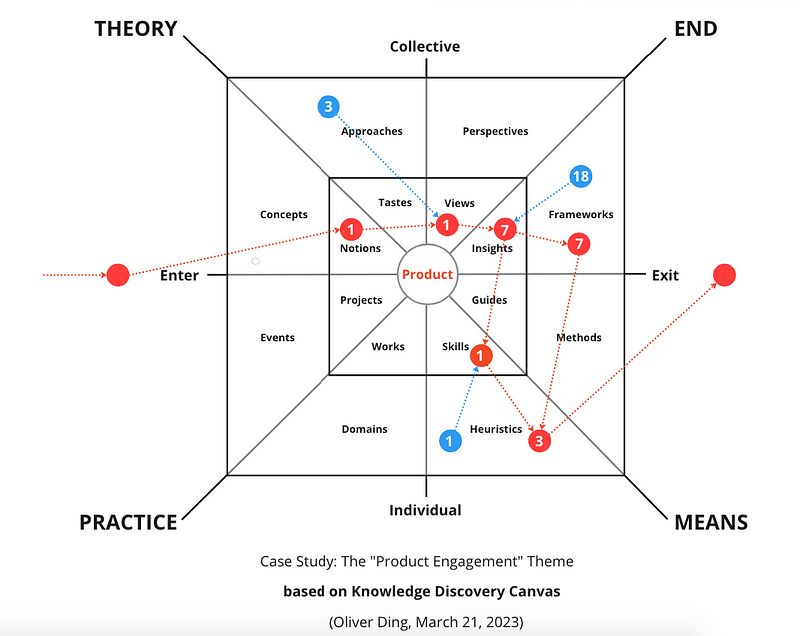
How did I start this short journey? I looked at my notes and found it started on Jan 25, 2023.
- Jan 25, 2023 — I made a possible theme called “Product Langue”.
- Feb 3, 2023 — I received an email titled “Idea Management” from a friend and we started a conversation about “Idea Engagement v.s. Idea Management”
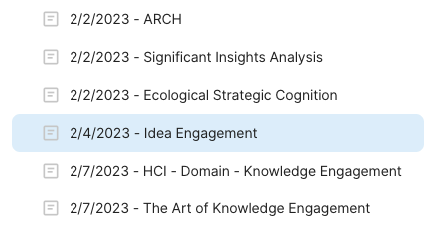
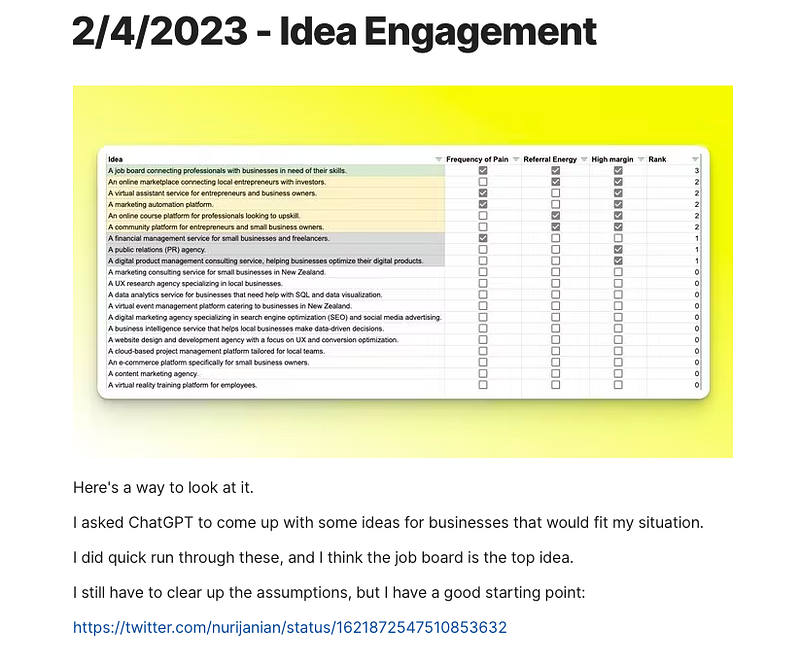
- Feb 4, 2023 — I wrote a note titled “Idea Engagement”
- Feb 4, 2023 — I designed a diagram titled “Product Engagement” and shared it on LinkedIn
The theme of “Product Langue” was inspired by George Nurijanian’s tweet about Lenny’s newsletter.
Langue and Parole is a theoretical linguistic dichotomy distinguished by Ferdinand de Saussure. Langue refers to the abstract system of language while Parole means concrete speech.
If we use the above diagram, then we can find four types of knowledge engagement about the theme of “Product”.
- Unobservable: Users’ subjective experience
- Observable: Product Managers and Researchers
- Parole: Experts who product knowledge about “Product”
- Langue: Knowledge curators who aim to turn pieces of Parole (speech) into Langue (language)
This is the seed of the Product Engagement project. Later I wrote a note titled “Idea Engagement” on Feb 4, 2023. See the screenshots below.
The note is also about George Nurijanian’s tweet.
I’d like to share more information about the theme of “Idea Engagement”. I had a private conversation about “Idea Engagement v.s. Idea Management” with Maurizio Goetz via Gmail and Linkedin from Feb 3 to Feb 15.
2.2 The ECHO Trip
The second example is the ECHO Trip which refers to a 10-day road trip.

I had a wonderful 10-day road trip with my wife and two little sons from June 24 to July 3.
During the busy trip, I couldn’t write notes with details. To record exciting moments and engaging experiences, I used short meaningful keywords to capture some insights while taking pictures.
These short meaningful keywords are Situational Themes of my life.
After returning to Houston, I listed 21 situational themes of the trip and wrote some notes. Eventually, I decided to use the ECHO Way model to reflect on the trip and conduct a “Creative Life Curation” project.
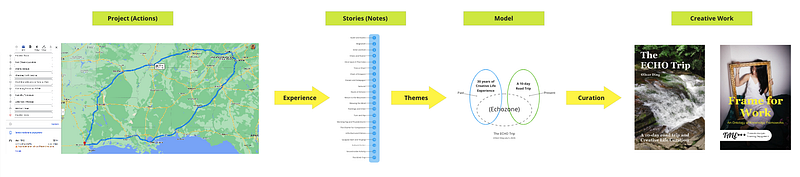
The above picture is the overview of the project.
- Project (Actions) → Stories (Notes) → Model → Creative Work
The 10-day road trip was a project that included a series of actions. After the project was completed, it became my life Experience.
I use “life as continuous flow” as a metaphor to describe Life and Experience. This metaphor is inspired by William James’ metaphor “Stream of Thought.” You can’t use a knife to cut a stream, you only can use a container to contain it.
If I do nothing with my subjective experiences of the 10-day road trip. It is only my memory. If I want to share it with others, I have to write notes, take pictures, record the trip, etc. In this way, I made Stories of the trip for a social communicative context.
Though I didn’t write notes with details, I made 21 situational themes of the trip. These themes are Personal Signs which refer to my Subjective Meanings of the trip. These themes can be seen as micro-stories.
As a “Creative Life Curation” activity, it goes beyond normal storytelling and social media sharing. It moves from the Story level to the Model level. I adopted the ECHO Way model as a tool to analyze the deep structure of these themes.
In this way, I can run a “Creative Life Curation” project and turn pieces of life experiences into meaningful Creative Work.
The outcome of a creative project could be a book, board, or cards. I made a series of Thematic Network Diagrams on a Miro board.
I also made a series of cards for 21 situational themes and created a board on Milanote.
It was fun to make 21 digital thematic cards and physical cards.
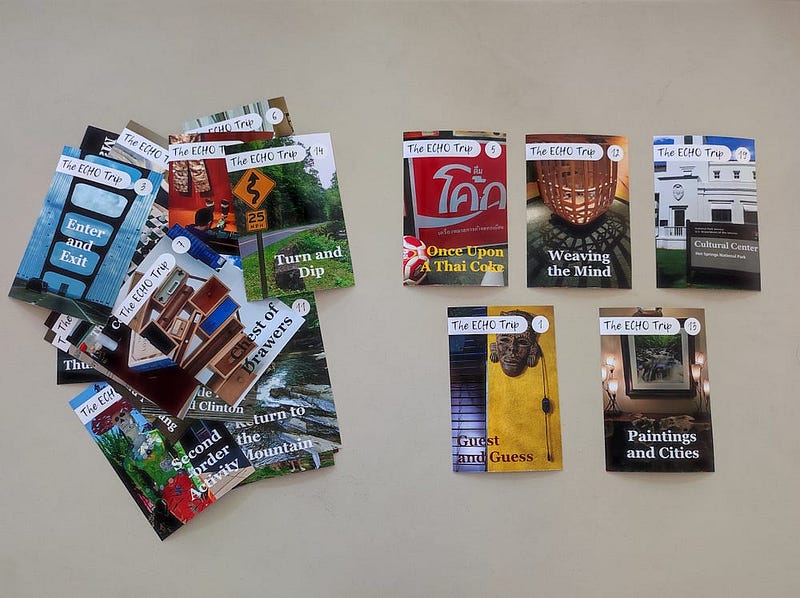
You can find more details in TALE: One 10-day Road Trip, 21 Thematic Cards.
2.3 Engaging with Lui’s Theoretical Sociology
The third example is “Engaging with Lui’s Theoretical Sociology”.
On May 15, 2023, I finished a “Creative Life Curation” project which is about my journey of engaging with Ping-keung Lui’s theoretical sociology from April 2022 to April 2023.
The outcome of the “Creative Life Curation” project is a 65-page thesis with several case studies about adopting ideas from Lui’s theoretical sociology and using them to develop the Creative Life Theory and other frameworks.
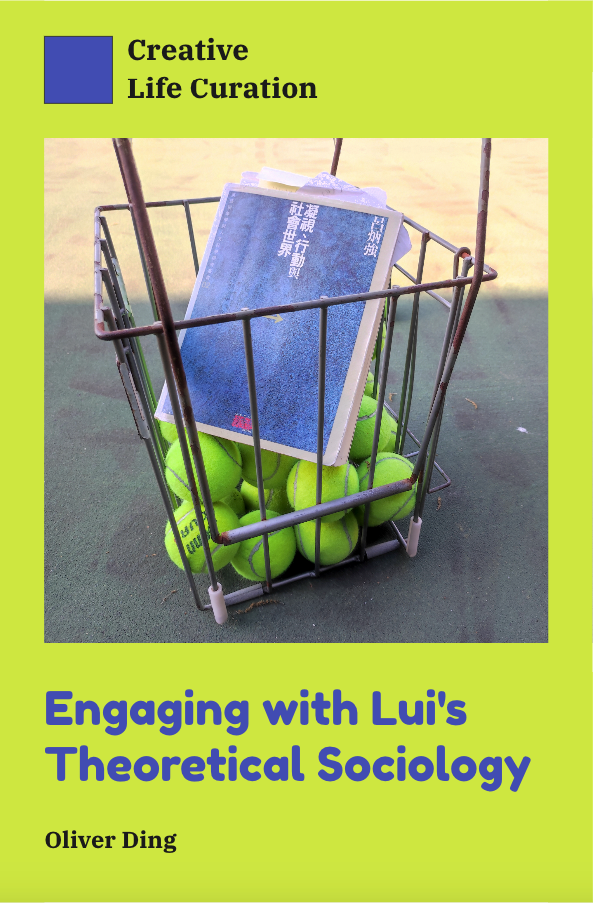
From April 2022 to April 2023, I read Lui’s papers and books. We had email conversations and Wechat discussions. While learning ideas about sociological theories from Lui’s approach, I also considered his 15-year journey of developing a brand-new theoretical sociology as a case for the Slow Cognition project.
In May 2023, I reflected on my journey of engaging with Lui’s Theoretical Sociology. In fact, it was a 3-week “Creative Life Curation” project.
- April 25 to May 12: Collected email conversations and wrote summaries
- May 12 to May 15: Designed diagrams to map the conversations and wrote the final report
I found 35 email conversations in my Gmail account from 2019 to Jan 2, 2023, and sorted them into the following three categories:
- Social: it refers to interpersonal connections. It was divided into four sub-categories.
- Communication: it refers to normal online discussions and thematic conversations. It was divided into eight sub-categories.
- Work: it refers to emails about my creative projects that were inspired by Lui’s theoretical sociology. It was divided into five sub-categories.
The final report was divided into three parts. Part One is the summary of 35 email conversations. Part Two is about W4 (How did I adopt knowledge elements from Lui’s theoretical sociology to inspire my creative projects?). Part Three picked two events from W4 for deep discussions.
I went to the W4-2.5 section titled Appropriating Lui’s Theoretical Sociology with a Thematic Network Diagram.
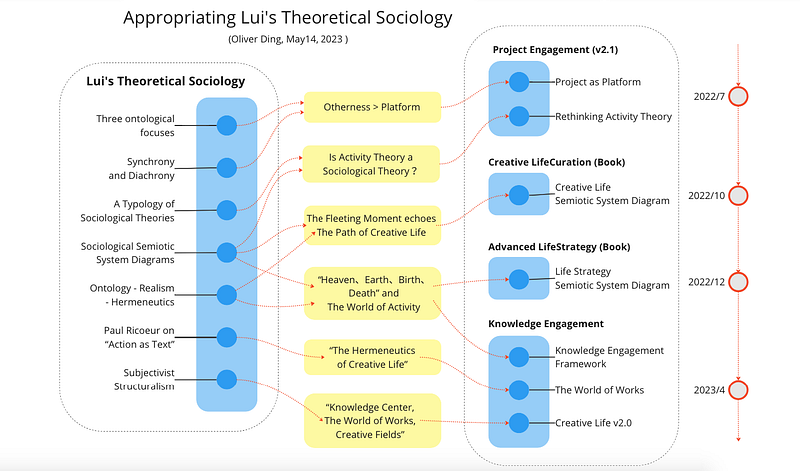
The above diagram summarizes the major mental moves between Lui’s knowledge center and my knowledge projects.
The left column lists 7 knowledge elements of Lui’s theoretical sociology while the right column lists ideas under my four knowledge projects.
The middle column uses a few words as clues of connections between the left column and the right column.
It represents the landscape of moving knowledge elements between two knowledge centers.
You can find more details in Value Circle #2: Engaging with Lui’s Theoretical Sociology.
2.4 Mapping Developmental Projects
What can we learn from the above three examples of “Creative Life Curation” projects?
- Case 1 — How did I develop the “Product Engagement” Framework? — March 21, 2023
- Case 2 — The ECHO Trip: A 10-day Road Trip and Creative Life Curation — July 27, 2023
- Case 3 — Engaging with Lui’s Theoretical Sociology — August 9, 2023
Case 1 is about a three-week writing project. Case 2 is about a ten-day road trip. Case 3 is about a one-year informal learning and thematic conversation project.
I used the same strategy to run three “Creative Life Curation” projects. I used the model below to organize these projects.
Project (Actions) → Stories (Notes) → Model → Creative Work
I relied on notes as raw materials to run the creative curation process. During the process of running a project, we could write some notes about the project. After closing the project, these notes could be reused for a “Creative Life Curation” project.
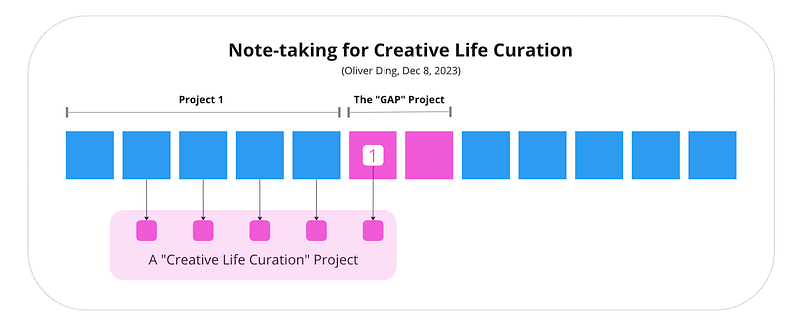
This is the reason that situational notes are very important to creative work!
The “After” projects started with situational notes.
3. The “Before” Project
While the “After” Project is associated with a previous project, the “Before” Project is associated with a potential project.
What does it mean?
It means the “Before” project is an informal project that doesn’t have a clear objective.
It may lead to a new project, or not.
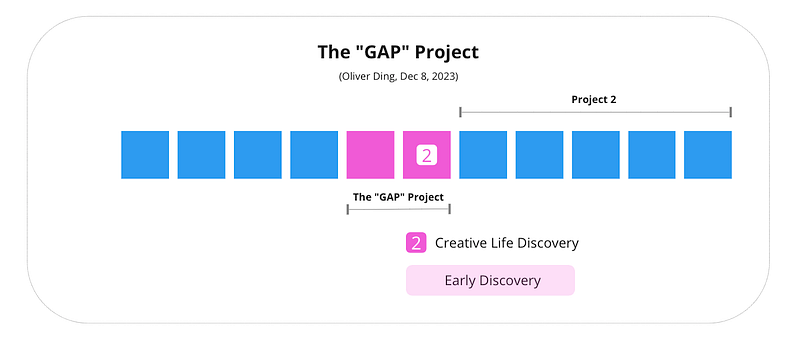
The “Before” project is about Creative Life Discovery.
In 2023, I moved to the Early Discovery of knowledge engagement. In June 2023, I edited a book (draft) titled Thematic Exploration: The Early Discovery of Knowledge Engagement.

The book introduced the “Strategic Thematic Exploration” framework for thematic creativity and thematic curativity at the stage of Early Discovery of knowledge engagement.
I believe that Thematic Creativity and Thematic Curativity are important to Creative Life Discovery too.
4. Situational Note-taking for Creative Life Discovery
Creative Life Discovery is harder than Creative Life Curation because the former doesn’t have clear objectives, raw materials, etc while the latter has a finished project that could generate enough information for curation.
In the past several months, I used the “Strategic Thematic Exploration” framework and the “Thematic Space Theory (TST)” framework to guide my “Creative Life Discovery” projects.
Let’s see three examples:
- The Mental Moves Project (Started on March 24 and closed on July 31)
- Projectivity as Cultural Attachance (Started on Oct 20 and closed on Oct 30)
- Discover Thematic Spaces of Creative Life and Thematic Space Theory (Started on Oct 31 and Closed on Dec 5)
4.1 The Mental Moves Project
On March 10, I wrote a post titled [Knowledge Engagement] How to develop a concept called “Attachance”? on Linkedin. To highlight this significant insight, I made a new possible theme called “Mental Moves”.
On March 24, 2023, I wrote a post titled A Possible Theme called “Mental Moves” and made a plan to edit a new possible book titled Mental Moves.
I use “The Attachances of Moving Mental Elements” as the cue for the theme of “Mental Moves”.
What does it mean?
It means that there is a concept called “Attachance” behind the theme of “Mental Moves”.
- Theme: Mental Moves
- Concept: Attachance
In this context, the “Theme — Concept” relationship is very clear. While a Theme frames a Thematic Space for a knowledge project, a Concept is a Resource for the knowledge project.
I decided to use “Mental Moves” to frame a knowledge project: we are going to curate more examples about “Moving between Thematic Spaces” and edit a possible book titled Mental Moves: The Attachances of Moving Mental Elements.
This statement indicates a First-order Activity because the project has a clear object and a simple program.
- Object: A new possible book
- Program: Collect more examples about “Moving between Thematic Spaces”
If we use the Knowledge Discovery Canvas, we can find more related things and we can see the big picture.
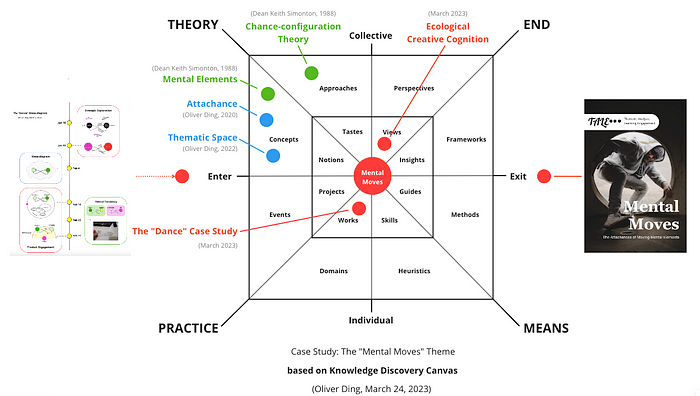
You can find more details of the plan in TALE: A Possible Theme called “Mental Moves”.
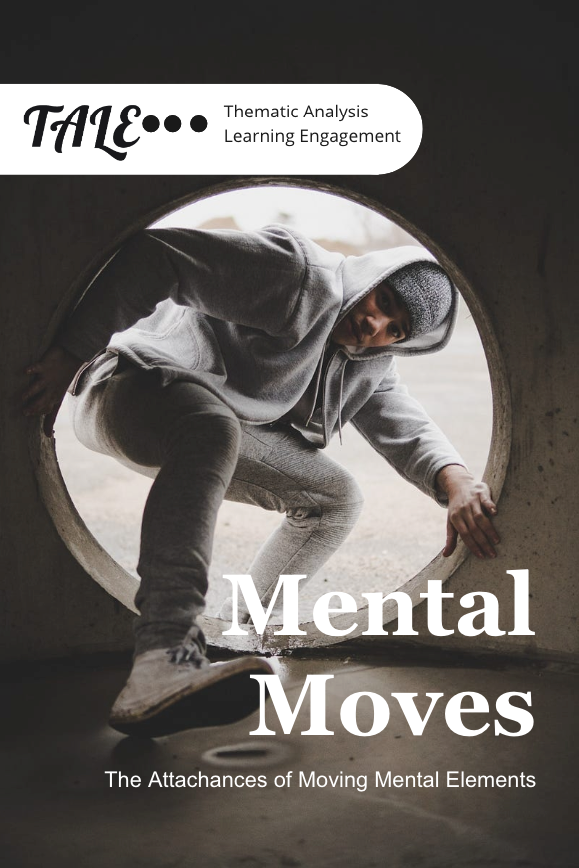
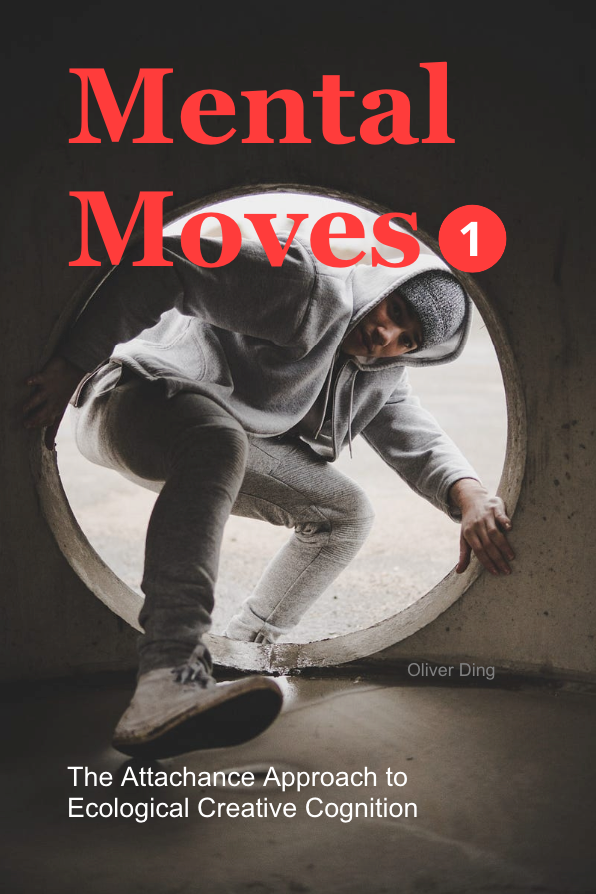
My original goal is to collect more examples about “Moving between Thematic Spaces” and edit a book as an archive. Later, I started working on case studies one by one.
On June 17, 2023, I mentioned a rough TOC (Table of Contents) framework in an email conversation about a thematic discussion about Note-taking and Knowledge Engagement.
On July 31, 2023, I closed the Mental Moves project with a new possible book (draft). I removed the logo of TALE from the cover image.
You can find more details in Mental Moves (book, v1) — Introduction and Mental Moves (book, v1) — Table of Contents.
4.2 Projectivity as Cultural Attachance
On Oct 20, 2023, I wrote a short post on Linkedin. This post inspired me to rethink the concept of Projectivity and connect it with the Ecological Practice approach.
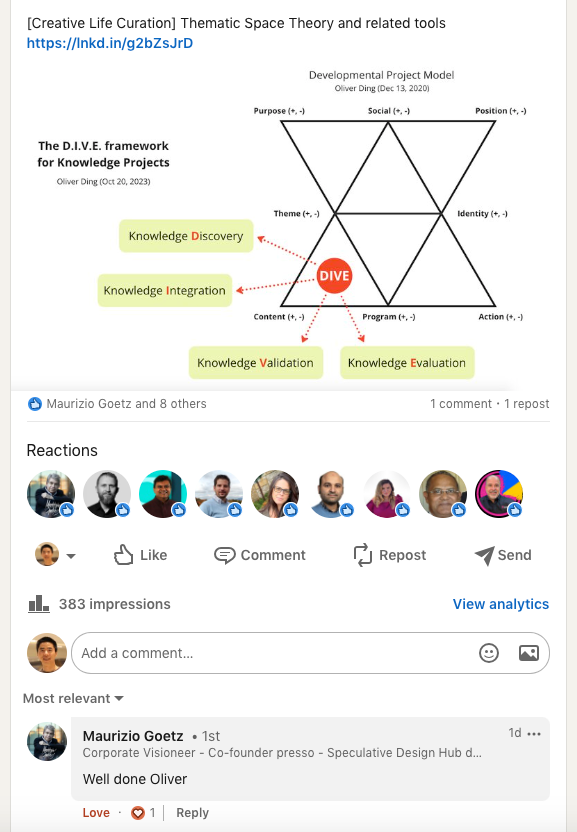
What’s the connection?
See the original content below:
[Project Engagement] The D.I.V.E. Framework for Knowledge Projects
The Developmental Project Model is a general framework. If we want to apply it to a specific type of project, we can develop sub-frameworks to expand it.
Let’s see an example.
The CALL for DIVE program is designed for running knowledge projects.
I developed a sub-framework called D.I.V.E. for guiding knowledge projects.
- Knowledge Discovery - Knowledge Integration - Knowledge Validation - Knowledge Evaluation
I placed it in the “Theme — Content — Program” thematic space.
Now, we can also use other thematic spaces to imagine new types of projects.
For example, what kind of projects should be placed in the “Social — Position — Identity” thematic space?
Again, this is the power of Thematic Space Theory!
(10/20/2023)
See also:
[Creative Life Curation] Thematic Space Theory and related tools https://lnkd.in/g2bZsJrD
Following the post, I made a series of new diagrams to explore more thematic spaces of the Developmental Project Model.
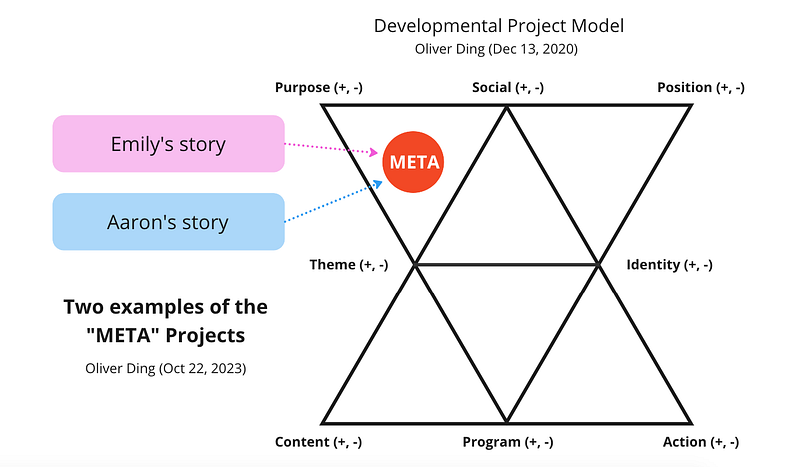
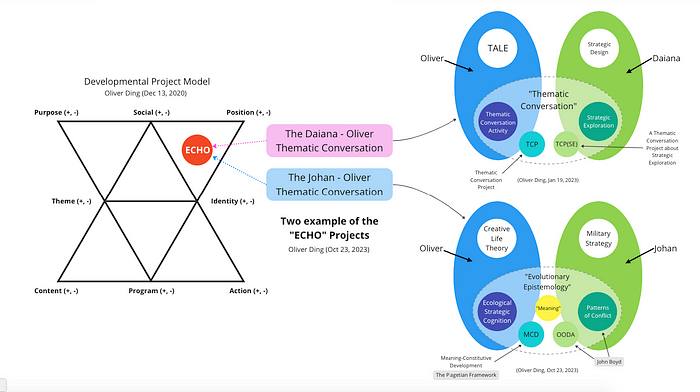
This was the most exciting moment of my creative life in 2023.
In fact, it was not only about the new version of the Developmental Project Model but also the Thematic Space Theory framework and the ecological approach to diagrams and diagramming. See the messages I sent to Maurizio Goetz on Oct 23, 2023.
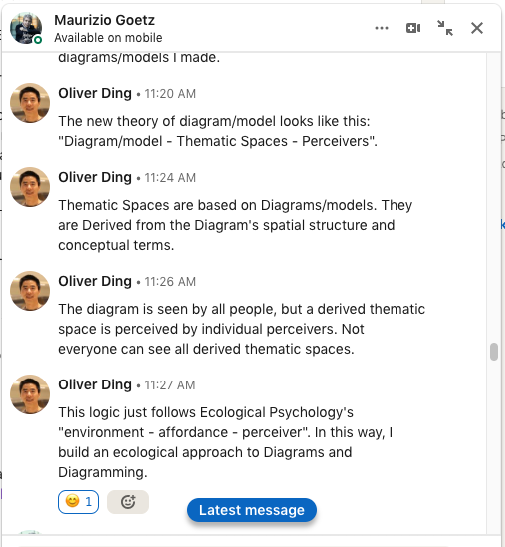
In Oct 2023, I wrote several private notes about the related ideas.
On Oct 30, 2023, I wrote a long article titled Projectivity as Cultural Attachance.
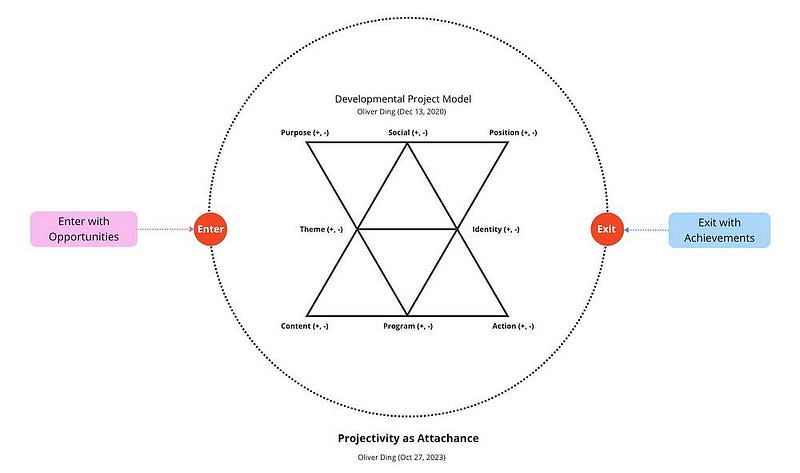
From the perspective of the Ecological Practice Approach, the concept of “Projectivity” can be understood as a sub-concept of “Attachance”.
Since I used Cultural Projection Analysis for the Project Engagement approach, I decided to use “Cultural Attachance” to connect “Projectivity” and “Attachance”.
4.3 Discover Thematic Spaces of Creative Life and Thematic Space Theory
On Oct 5, 2023, I discovered 5 thematic spaces from my Creative Life. See the diagrams below. You can find more details in CALL: The Development of Creative Life Theory (2020–2023, Part 7).
On Oct 11, 2023, I worked on a Creative Life Discovery project for a knowledge creator.
I used the Knowledge Discovery Canvas to discover several thematic spaces and placed his creative thematic network around the canvas. I didn’t use the canvas in its official way but used its white space for exploring potential thematic spaces.
To keep the client’s privacy, I applied the diagram to my own Creative Life on Oct 31, 2023. You can find more details in Creative Life Curation: Discover Thematic Spaces of Creative Life.
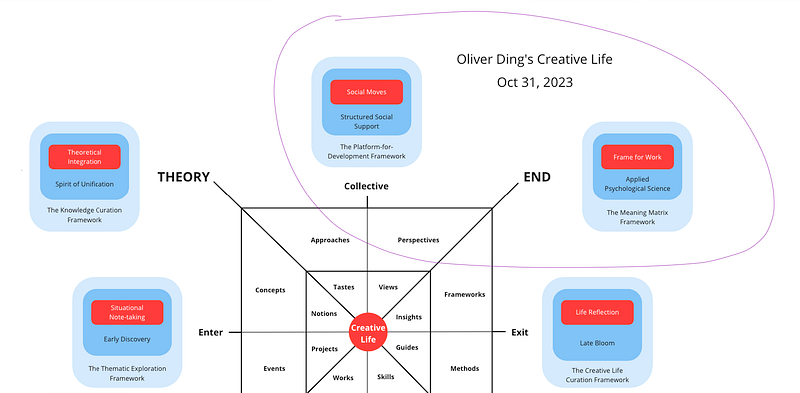
I also wrote a long article titled [Creative Diagramming] Graphic Space Affordances, Thematic Space, and Possible Paths on Oct 31, 2023.
These ideas refer to a new mental focus: “Thematic Space Theory”.
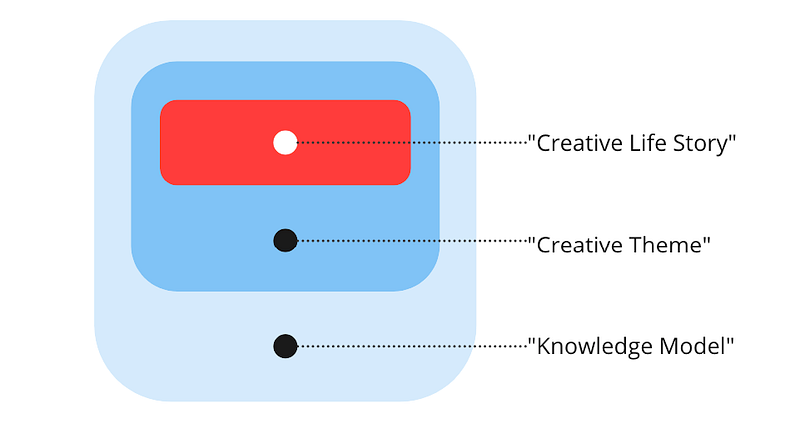
It is also connected to several related knowledge projects.
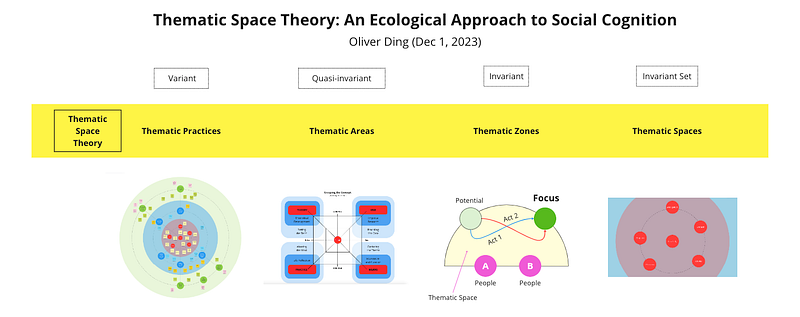
On Dec 1, 2023, I made the “Thematic Space Theory (TST)” Framework. See the diagram below.
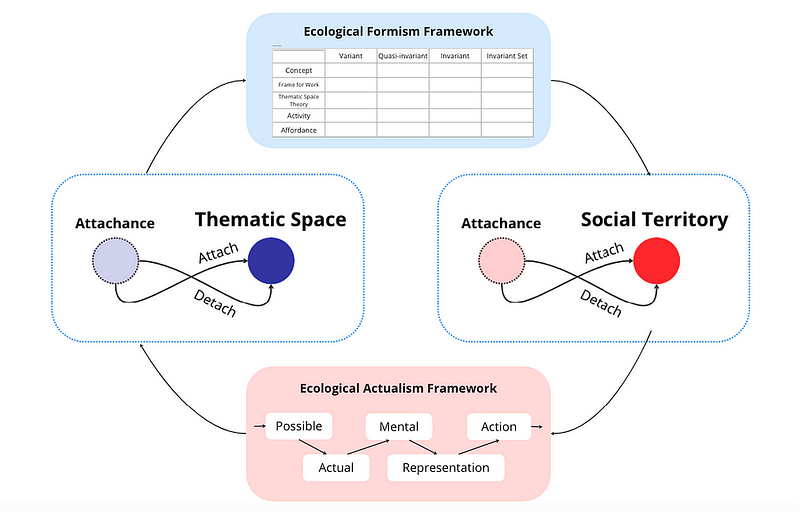
On Dec 3, 2023, I wrote a public note titled Situational Note-taking: Creative Life, Thematic Space, and the Social Moves Project.
On Dec 5, 2023, I turned the note into a long article and developed an integrated ecological approach to social cognition.
You can also find more background information about the journey in TALE: The Theme of “Conceptual Elaboration” (Dec 6, 2023) and Social Moves: Weaving the Mind and Clarifying the Order (Dec 7, 2023)
4.4 Capture Significant Insights
What can we learn from the above three “Creative Life Discovery” projects?
- Case 1 — The Mental Moves Project (Started on March 24 and closed on July 31)
- Case 2 — Projectivity as Cultural Attachance (Started on Oct 20 and closed on Oct 30)
- Case 3 — Discover Thematic Spaces of Creative Life and Thematic Space Theory (Started on Oct 31 and Closed on Dec 5)
Case 1 is about making a concrete plan for editing a book about the concept of Attachance. Later, I developed a model and used it to run case studies one by one. The outcome went beyond the original plan.
Case 2 is about embracing unexpected discovery. Originally, I considered the D.I.V.E. framework as a sub-type of the Developmental Project model. In visual representation, I placed D.I.V.E at the the “Theme — Content — Program” thematic space of the model. This action inspired me to try more actions of discovering thematic spaces on my diagrams. This was one of steps of developing the “Thematic Space Theory(TST)” Framework.
Later, I worked on connecting the concept of Projectivity with the concept of Attachance on Oct 30, 2023. I have highlighted the concept of “Projectivity” as the primary theme of the third-wave development of the Project Engagement approach in April 20, 2023. You can find more details in Slow Cognition: The Development of “Project Engagement”.
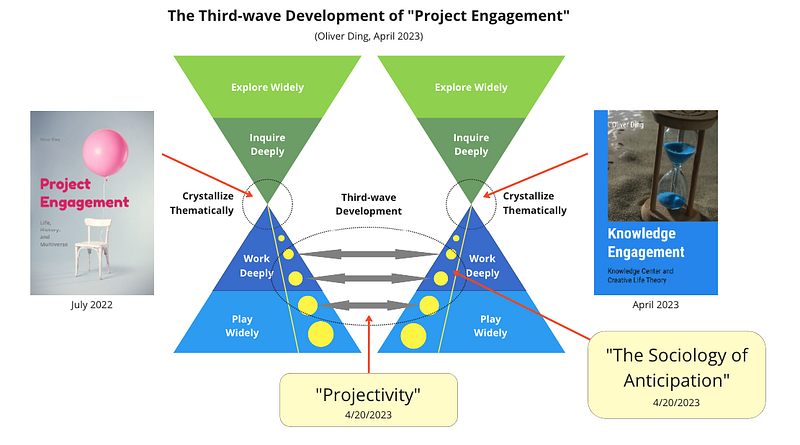
On April 20, 2023, I searched “The Sociology of Anticipation” on the web and found some related academic papers. I quickly realized that sociologists also use the concept of “Projecitivty”.
I captured this insight as a significant insight and defined this as the beginning of the third-wave development of the Project Engagement approach.
However, I didn’t worked on the theme of “Sociology of Anticipation” from April 2023 to Dec 2023.
Why? I was busy on developing Attachance Theory and Thematic Space Theory by working on the Mental Moves project, the Social Moves project, the Creative Life Theory (v2.0), etc.
Case 3 is about living with a messy set of ideas. In October 2023, I wrote a set of ideas about Attachance Theory, Thematic Space, Social Moves, Meaning Matrix, Creative Diagramming, etc.
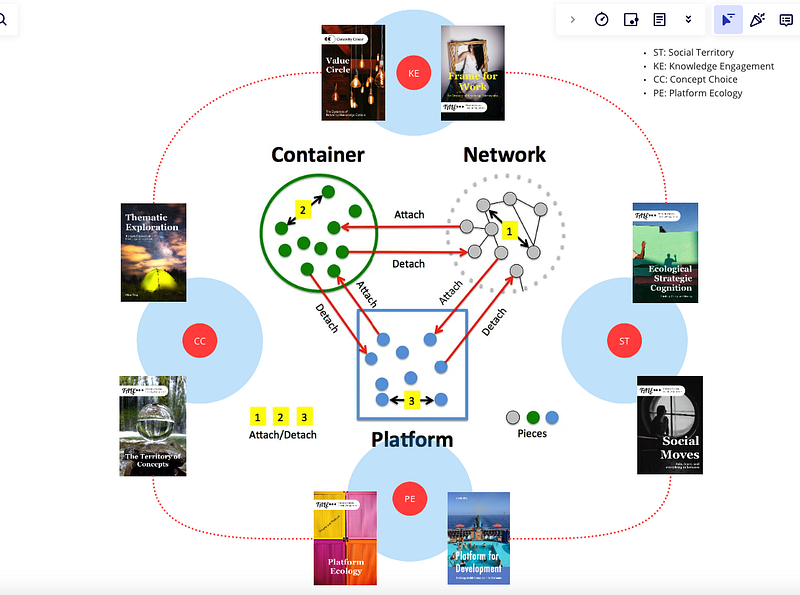
On Nov 30, 2023, I closed the “Territory of Concepts” project and edited a book (draft) titled Grasping the Concept.
On Dec 1, 2023, I revisited the diagram below and started to rewearving my mind around a set of projects, concepts, and themes. You can find more details in Social Moves: Weaving the Mind and Clarifying the Order.
The common thing of these three cases is Capturing Significant Insights.
I used the notion of “Significant Insights” for the Life Discovery Activity and consider it an important outcome of the activity.
A Significant Insight could directly or indirectly lead to a new activity. We don’t have to claim an insight as a significant insight when we are capturing an insight. We can reflect on our past experiences and identify significant insights if they lead to activities that change our life.
5. Close the CAP
From the perspective of the Anticipatory Activity System (AAS) framework, the two types of “GAP” projects are related to two gaps of AAS.
The Anticipatory Activity System (AAS) framework is inspired by Activity Theory and Anticipatory System theory. It aims to offer an abstract model for understanding “Self, Other, Present, Future”.
While the traditional Activity Theory focuses on “Exploitative Activity”, the AAS framework is more about “Exploratory Activity”.
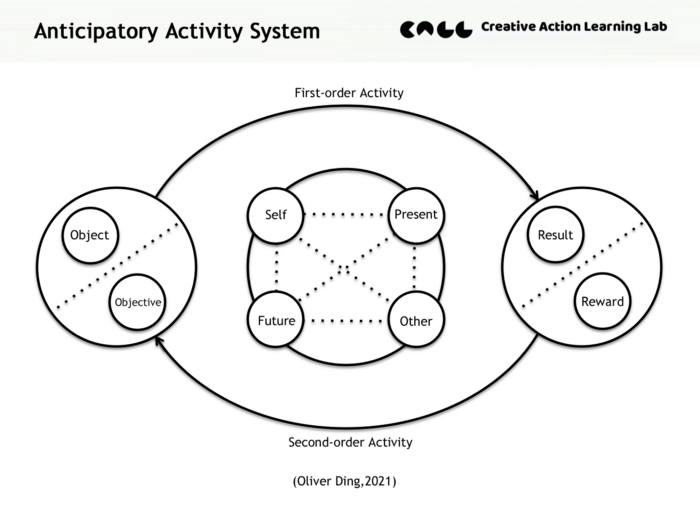
I developed the basic model of AAS in August 202.
From Jan 2022 to August 2022, I tested the basic model and discovered five movements of the AAS framework: Unfolding, Discovering, Producing, Modeling, and Storytelling.
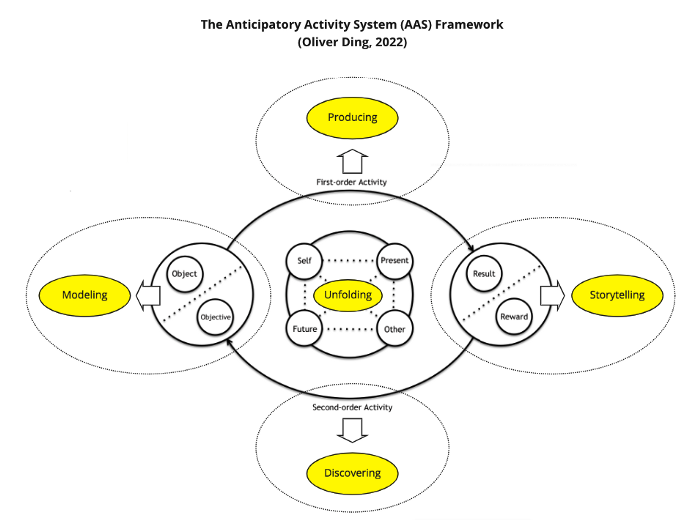
In Dec 2022, I edited a book (draft) titled Advanced Life Strategy: Anticipatory Activity System and Life Achievements. You can find more details in Advanced Life Strategy: Anticipatory Activity System and Life Achievements.
What are two gaps of Anticipatory Activity System?
- The “Object — Objective” Gap
- The “Result — Reward” Gap
5.1 The Object — Objective Gap
For the Anticipatory Activity System framework, it is clear that we have to use two terms because Objective (what is motive about) is about Future while Object (what is acted on) is about Present.
These two terms adopt both Leontiev’s object (predmet) which refers to motivation and Engeström’s object which refers to ‘the raw material’ or ‘problem space’.
The Anticipatory Activity System framework uses the diagram below to separate these two terms’ spatial positions.
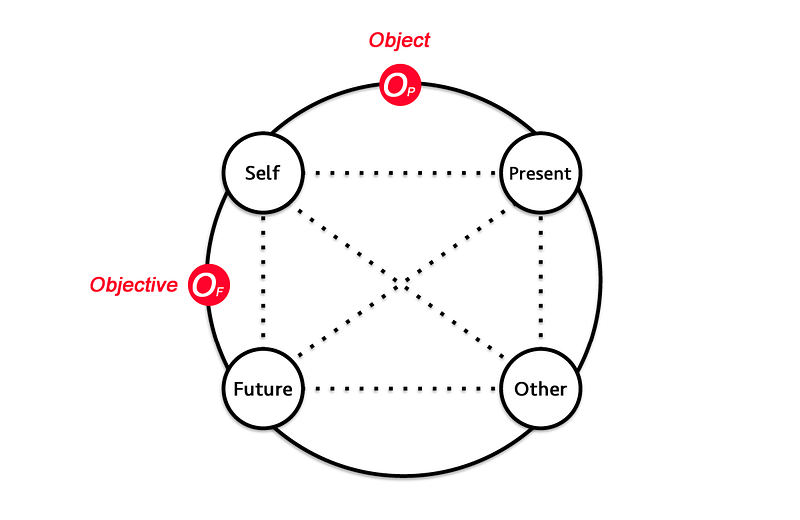
Creative Life Discovery aims to produce Significant Insights which lead to an Objective and related Objects for a new project.
Moreover, Objective is related to Anticipation while Object is related to Performance. They refer to two types of complexities. See the diagram below.
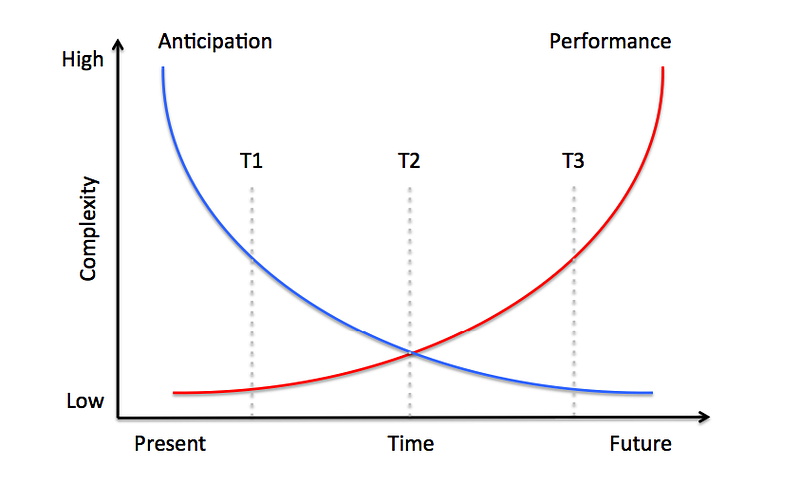
In the beginning, an Objective projects our anticipation about the future and the complexity of anticipation is high because we don’t know if we can achieve the objective. In the end of an activity, the complexity of anticipation becomes low because the outcome is there.
However, the complexity of Performance on Object is a different trajectory. In the beginning, we do less work on an Object. Then, the complexity of interaction with Object is getting higher and higher.
Now, we see the Object — Objective Gap. It is not a bug, but a wonderful key for unlocking the deep secret of the Anticipatory Activity System.
You can find more details in The “Object — Objective” Gap and Attachment.
5.2 The Result — Reward Gap
Creative Life Curation is about the Result — Reward Gap which connect the First-order Activity and the Second-order Activity. The concept of Result is inspired by the concept of Outcome from Activity Theory. The Reward is about human motivation.
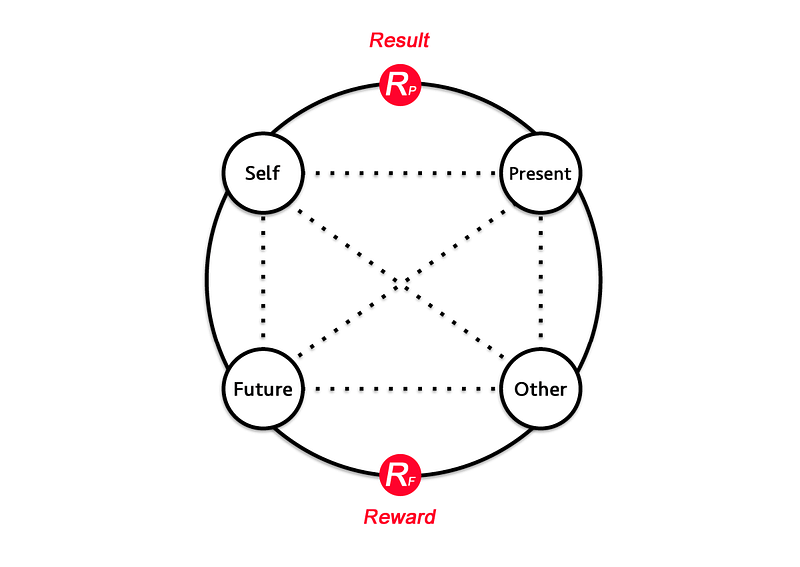
I prefer to use the above diagram below to understand the concept of Outcome in general and the concept of Result for the Anticipatory Activity System framework.
The key is the idea of By-product which is adopted from Howard Gruber. You can find more details from a previous article: Life-to-be-Owned: The Achievement Chain.
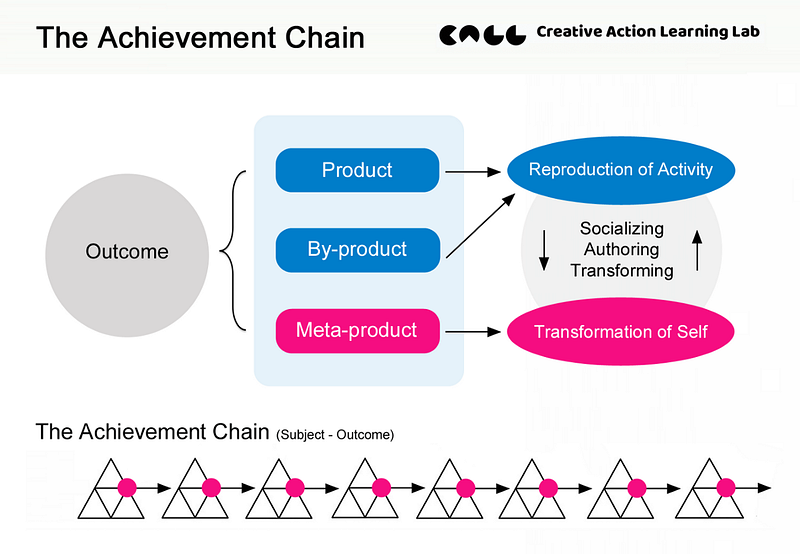
The Achievement Chain is inspired by the following theoretical resources:
- The Activity System Model (Yrjö Engeström,1987): Subject — Outcome.
- The evolving systems approach to the study of creative work (Howard E. Gruber, 1974,1989): By-product.
- The constructive — developmental approach (Robert Kegan, 1982, 2009): The Evolving Self.
The Product refers to the intended outcome within the original object of activity and the by-product refers to the unintended outcome beyond the original object of activity. The meta-product refers to the self. This notion means the transformation of self as the outcome of temporal activity chains.
Since the outcome of an activity can be a resource for a new activity, we can see the temporal activity chains as “Reproduction of Activity”. This notion is very useful for understanding the pattern behind a Possible Journey because it doesn’t have a plan for the path.
Moreover, the development of Creative Work is an interactive process of “Reproduction of Activity” and “Transformation of Self”. We have to pay attention to the creative person’s idea about “Self”. Gruber emphasizes, “Each creative person has certain conceptions of his or her life tasks. Although we think of the creative person as highly task-oriented, rather than ego-oriented (Amabile, 1983), it is also true that the set of tasks taken as a whole constitute a large part of the ego: To be oneself one must do these things; to do these things one must be oneself.”
I consider “Transformation of Self” as the Meta-product of activities.
5.3 By-Product
By-product is a normal phenomenon for experienced individual workers and teams. In his study of Charles Darwin, Howard Gruber (1974) showed that even a great scientist embraces by-productive thinking in his creative work process.
Gruber said, “In his beautiful book Productive Thinking, Max Wertheimer, founder of Gestalt psychology, focused his attention on the kind of direct thinking that goes to the heart of the probiel under attack. In Darwin’s long and twisting path, however, there are several striking examples of important steps toward the theory of evolution through natural selection being taken as by-products of efforts that seemed to move in other directions…The theory of coral reefs was based on an extrapolation from what Darwin has learned about the formation of continental mountain chains; if mountains are up-raised, he reasoned, the adjacent sea bed must sink; from this slow subsidence of the sea bed, the coral-reef theory followed. That theory does not deal at all with organic evolution, but it does provide a formal model quite analogous to Darwin’s eventual theory. Darwin did not have a five-year plan to move through this important sequence of ideas. It evolved. The monad theory, itself short-lived in Darwin’s thought and not entirely original, led him to his branching model of evolution. This became a cornerstone of his thought.” (1974, p.112)
On Sept 15, 2022, I used the basic model of Activity Theory to reflect on several projects. The diagram below is one of them.
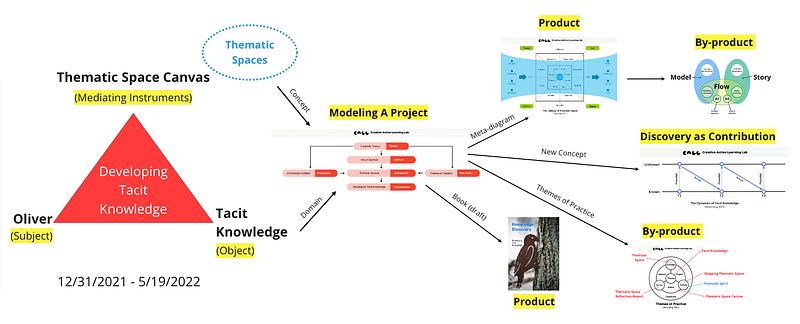
The above diagram uses “Model” and “Outcome” to expand the basic model of Activity Theory (Subject — Mediating Instruments — Object). You can pay attention to the yellow highlight:
- Subject
- Object
- Mediating Instruments
- Concept (the above case doesn’t have it)
- Modeling A Project
- Product
- By-product
- Solution as Contribution
- The Next Project
- Service (the above case doesn’t have it)
I used these Operational Concepts as keywords to analyze each project and made diagrams.
You can find more details in Slow Cognition: Mapping Thematic Journey (Engaging with Activity Theory, 2020–2022).
In contemporary knowledge work activities, there are many ways to generate by-products. Activity theorists also claim that the mediation of an activity can be transformed into an object of a new activity.
5.4 Purposefulness and Synthesis
Gruber also introduces another concept to explain how the individual maintains his sense of direction with the by-product effect: purpose.
According to Gruber, it refers to a person’s ability to imagine himself outside the perspective of the moment, to see each sub-task in its place as part of the larger task he has set himself.
He said, “This abstract purposefulness and perspective, this standing outside, is an activity undertaken in quite a different spirit from that in which the creative person immerses himself, lose himself in the material of nature. To accomplish his great synthesis Darwin had to be able to alternate between these two attitudes. To see more deeply into nature, he needed the perceptual, intuitive direct contact with the material. To understand what he had seen, and to construct a theory that would do it new justice, he had to re-examine everything incessantly from the varied perspectives of his diverse enterprises.” (1974, p.113)
From the perspective of Life-as-Activity, the purpose is the key to holding the complex temporal activity chains over long periods of time.
Related books (Drafts)
- Creative Life Theory: Building A Knowledge Enterprise
- Mental Moves: The Attachance Approach to Ecological Creative Cognition
- Knowledge Discovery: Developing Tacit Knowledge with Thematic Space Canvas
- Knowledge Curation: Turning Pieces into A Meaningful Whole
- Life Discovery: Biography, Journey, Program
- Perspectives on Product Engagement
- Diagramming as Practice
- Diagram Blending: Building Diagram Networks
- Creative Life Curation: Discover Thematic Spaces of Creative Life


%22%3E)