
Electric Vehicles
Tesla’s Next Generation Fast Charger Is on Its Way
The Tesla 615 kW Supercharger will be a drastic positive change.
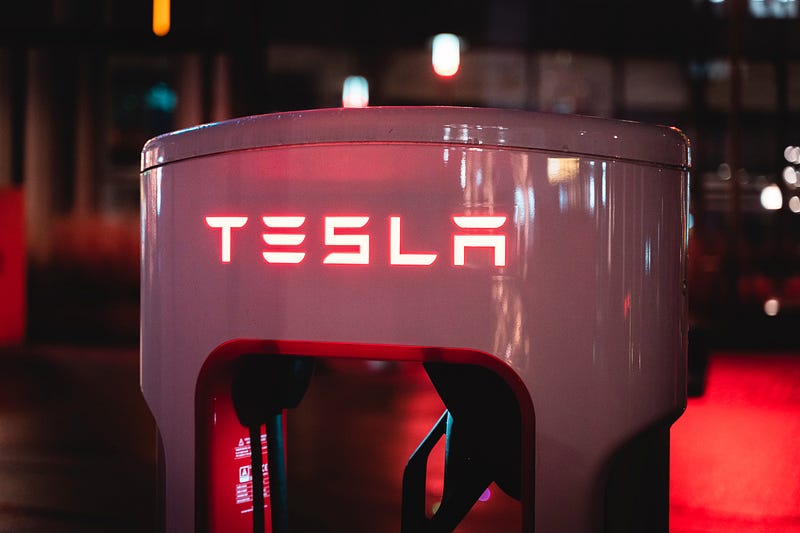
In a few previous stories, I have spoken about various different EVs (Electric Vehicles). These will be linked at the end of this post. In this post, I will talk about Tesla’s upcoming fast-charging technology.
What is an EV fast charger?
An EV fast charger, also known as a DC fast charger, is a type of charging station for electric vehicles that allows them to be charged much faster than standard Level 2 AC chargers. While Level 2 chargers typically take several hours to charge an EV battery fully, fast chargers can provide an 80% charge in as little as 30 minutes.
The key difference between fast chargers and Level 2 chargers is the type of current they use. Level 2 chargers use AC (alternating current) power, which must be converted by the vehicle’s onboard charger to DC (direct current) to charge the battery.
This conversion process is relatively slow, which is why Level 2 charging takes longer than fast charging. On the other hand, fast chargers provide DC power directly to the vehicle, bypassing the onboard charger and allowing the battery to be charged much more quickly.
Fast chargers typically use one of two different types of charging standards: CHAdeMO or CCS (Combined Charging System). A consortium of Japanese automakers developed CHAdeMO, which is primarily used in Asia and Europe.
CCS was developed by a consortium of European and American automakers and is used primarily in North America and Europe. Both standards can provide up to 350 kW of power, although most current installations provide between 50 and 150 kW.
To use a fast charger, an EV must have a DC fast charging port, which is typically an optional feature that must be added to the vehicle when it is purchased. Not all EVs support DC fast charging, so checking the vehicle’s specifications before using a fast charger is important.
One potential downside of fast charging is that it can cause increased wear and tear on the EV’s battery. The high charging speeds generate heat, leading to battery degradation over time. To mitigate this issue, many fast chargers use liquid-cooled cables to help dissipate the heat and keep the battery temperature under control.
EV fast chargers are a key component of the electric vehicle infrastructure, allowing drivers to recharge their vehicles quickly and conveniently. As the technology continues to improve and more fast chargers are installed, the range anxiety that has traditionally been a barrier to EV adoption will likely become less of an issue.
Why is the Tesla 615kW Supercharger a game changer?
One of the primary concerns for electric vehicle (EV) owners is the time it takes to charge their vehicles. With even the fastest charging stations in the UK requiring nearly an hour to charge an EV fully, range anxiety remains a significant barrier to widespread EV adoption.
However, Tesla’s new V4 Supercharger offers a theoretical 615kW charging speed, which is nearly double what is currently available anywhere in the world.
The Tesla Model S Long Range currently has a maximum charging speed of 250kW and takes approximately 27 minutes to charge from 10% to 80% at this speed.
However, if this car were capable and plugged into the new V4 Supercharger, its charging time could be reduced to just under 11 minutes, which would be a significant improvement. Furthermore, other EV drivers could also benefit from faster charging if they can access the Supercharger network.
For example, the Kia EV6 and Hyundai Ioniq 5 currently offer some of the highest-rated charging speeds on the market when plugged into a 350kW charger. It takes approximately 18 minutes for these cars to charge from 10% to 80% at this speed.
However, if they could support 615kW charging and were plugged into a 615kW charger, their charging time would be reduced to just over 10 minutes. This would be a significant improvement and could help to reduce the queues at fast charging stations.
Shorter charging times would also lead to a reduction in overall journey times for EV drivers. If they could top up their EVs in almost the same amount of time it takes to fill a petrol tank with fuel, it would make longer journeys more feasible and less stressful.
Another significant concern for EV owners is range. However, we are seeing the range of new models slowly increasing, and new EVs will likely offer over 400-mile ranges on average in the near future. This would help to alleviate range anxiety and make EVs more practical for longer journeys.
At present, the new V4 Superchargers are only available at a single location in The Netherlands and are limited to the same 250kW charging speed as the V3 Superchargers. However, it is hoped that their full potential will be unleashed as more EVs become capable of using them.
Tesla’s new V4 Supercharger offers an exciting glimpse into the future of EV charging. Its theoretical 615kW charging speed could significantly reduce the time required to charge an EV and help alleviate range anxiety.
As more EVs can utilize this technology, we could see faster charging times become the norm, making EVs more practical and appealing to a broader audience.
Final Words & Takeaways
Tesla’s new V4 Supercharger has the potential to revolutionize electric vehicle (EV) charging, with a theoretical 615kW charging speed that is nearly double what is currently available anywhere in the world.
This would significantly reduce the time required to charge an EV and alleviate range anxiety, making EVs more practical and appealing to a wider audience.
Shorter charging times would also reduce overall journey times for EV drivers and make longer journeys more feasible and less stressful.
While the V4 Superchargers are currently only available at a single location in The Netherlands and are limited to the same 250kW charging speed as the V3 Superchargers, it is hoped that their full potential will be unleashed as more EVs become capable of utilizing this technology.
As the EV infrastructure continues to improve and more fast chargers are installed, the range anxiety that has traditionally been a barrier to EV adoption will likely become less of an issue.
If you enjoy my posts and would like to stay updated on the latest gaming-related news, technology advancements, design trends, and social media insights, I invite you to follow my profile.
I will continue to share my thoughts and insights on a wide range of topics in the world of entertainment and technology.
With that being said, thank you for reading my post, and have a good one.
Here are a few of my stories relating to electric vehicles:
About Me
I write articles in my field covering gaming, film-making, social media, and design. I am also a YouTuber. Thank you for subscribing to my account to get notifications when I post on Medium. I also created a new website to share my content for free and promote stories of writers contributing to my publications on Medium. Let’s connect on Twitter and LinkedIn.
I own two publications on Medium. One for video gamers and another for YouTubers and Podcasters. I also support Illumination Integrated Publications as a volunteer editor and participate in collaborative activities in the Slack Workspace. Writer applications for my publications can be sent via this weblink. Please add your Medium ID.
If you are new to Medium, you may join via my referral link. You may also consider being a Vocal+ member to monetize your content. I write for both platforms and repurpose my content to reach a larger audience. Here is more information about Vocal Media.
This post includes my Medium and Vocal Media referral links.


