
Telomere Length in the Elderly: What Does It Really Tell Us About Age?
Telomeres are often considered a marker of biological age, but findings in elderly people force us to rethink this
Marks of age
To establish our age, we look at the calendar. This gives us only our chronological age, the time that has passed.
While this is useful information, it is not a perfect match for our biological age. Some eighty-year-olds are fitter than the average twenty-year old. Another illustration of the difference between chronological and biological age occurs when you haven’t seen someone for a long time and then meet them again. You can go ‘wow, you haven’t aged a day’, or ‘wow, time has not been kind to you’.
Measuring biological age, though, is less straightforward than checking boxes on a calendar.
Of course, there are a few telltale signs: wrinkles and saggy skin, a changing body shape, reduced muscle tone. Still, recall the fit eighty-year-old and you’ll realize that these signs are not always accurate.
The quest for accurate markers of biological age continues.
Mix biochemistry with machine learning in aging research and we might identify certain molecules that could be lifespan ‘clocks’. Certain combinations of blood proteins may serve as aging clock as well.
The telomere DNA shield
The biological aging clocks identified via machine learning are quite complex, consisting out of changes in the concentration of many molecules.
Could there be an easier way to measure biological age?
Telomeres, perhaps?
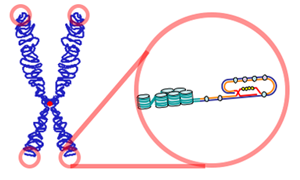
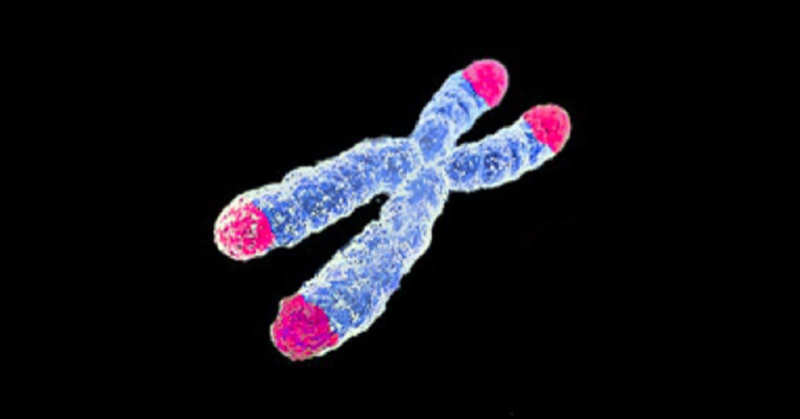
Telomeres are stretches of repetitive DNA at the end of chromosomes (their discovery was awarded with a Nobel Prize in 2009). Telomeres act as shield against DNA degradation. When our cells divide, a small bit of the chromosome tips is chipped away. If that small bit is repetitive telomere DNA: no great loss. But more divisions, means smaller telomeres, and eventually, when the telomeres are gone, DNA damage.
That sounds like a great way to assess biological age.
And yet, a new study comes along that questions this.
In the study, the telomeres of two cohorts of Spanish elderly (439 + 430 participants in total) were measured in blood samples. The participants were also scored on a frailty index, a general measure that uses several traits such as unintentional weight loss, exhaustion, and so on, to score the risk for a decline in health and independence. Mortality was also recorded.
The groups were followed up for 3.5 years.
Results:
TL [telomere length] at baseline does not predict incident frailty nor mortality among community-dwelling older adults aged 65 years and older after a mean follow-up time of 3.5 years. This lack of association was observed regardless of the degree of adjustment for potential confounders, including age, sex, age-related diseases, education level or disability.
So what is going on?
We don’t know for sure, but the authors offer some clues. (And they mention previous studies that found a similar lack of association between telomere length and frailty).
First, there could be differences in how much of the telomeres is chipped away at each cell division. If you have long telomeres, but they lose a big chunk at each division, you’ll still end up with exposed DNA quickly.
Second, all participants were 65 years of age or older. Maybe telomere length is more predictive earlier in life, but the small remaining telomere chunks in old cells are less informative.
Overall:
In conclusion, the analysis of two well-characterized cohorts of Spanish community–dwelling older adults shows that TL does not predict incident frailty or mortality. This suggests that TL is not a reliable biomarker of functional age.
The quest continues…