
Using Artificial Intelligence To Help Us Treat Aging
Machine learning and AI can be leveraged to understand and potentially mitigate age-related decline
Aging as disease?
Yes, you’ve read the title of this post correctly. Aging, not age-related diseases, but aging itself as something to ‘treat’. Or perhaps, slightly more accurate, senescence as something to treat.
Senescence, or the ‘gradual deterioration of functional characteristics’, differs from growth (which is also a process related to the passing of time and age). The key word is deterioration. While functional characteristics can change according to different life stages, what sets senescence (which I will call ‘aging’ in the rest of this post for the sake of simplicity) apart is the decline of function — even for functions suited to the stage of life.
For most people, it stills feels somewhat unconventional to call aging a disease. The case, however, has been made a few times by now.
However interesting that discussion may be, it is not the focus here. In fact, it is not actually relevant for the point of this post. For our purposes here, it suffices that we agree that, in the vast majority of people, advanced age is a period marked by various health problems. (If you follow me in calling age a disease, these various problems can actually be thought of as ‘symptoms’ of an underlying problem, i.e. age.)
That point is that aging is a systemic process that leaves no bodily function unaffected. It is, to use a few extra syllables, a multi-factorial problem. And, as we noticed in the discussion concerning AI for mental health, machine learning/AI systems are particularly suited to deal with such issues.
Enter AI
So, how can AI help us understand aging — and maybe even address the functional decline that goes along with it? Fortunately, a recent (open access) review addresses this question.
Biomarkers
The first area in aging research where AI can make an impact is in identifying and interpreting biomarkers of aging. Certain molecular and other ‘signals’ are already being used to measure biological age (in contrast to chronological age, which simply measures time passed). Telomeres are a well-known one. These ‘caps’ on the ends of chromosome appear to shorten with increasing biological age.
So far, however, these biomarkers of age have their limits. Many are used in the context of a specific (set of) physiological function(s). Seeing that aging is a systemic process, a lot of physiological functions are involved, functions which are very likely to affect each other as well.
To truly objectively quantify and measure biological age with an accurate assessment of health state likely requires a reliable panel of biomarkers. Such a panel also needs to include many different types of biomarkers (for example, molecular, imaging-based, epigenetic…). Combining different biomarkers into an interpretable panel means that not only we have to take into account markers that impart information on partially overlapping sets of functions, but also that the amount of information each marker gives about each function will differ.
Sounds like a job for AI/machine learning. (In an interesting coincidence, just as I was about to click ‘publish’, I came across this new study that applied deep learning to estimate biological age… The future is now.)
Targets and drugs
As we proceed from measuring to intervening, we need to know where to intervene for the best possible outcome. That is, we need targets for intervention.
Given that aging is a multi-factorial process that involves countless molecules, hormones, and so on in a multitude of highly complex, often intertwined pathways. For maximum effect, we are preferentially looking for ‘upstream targets’, or molecules/signals/genes/… that affect many pathways at once by influencing the first, basic steps from which many pathways diverge.
But before we get there, we need to wade through data. Lots of data. By now, you know what that means: a buffet for AI to dive into.
After knowing where to intervene, we also need to figure out how to intervene.
Beyond lifestyle factors (a brief nod to the Blue Zones: for healthy old age eat mostly plants, not too many calories, move gently throughout the day, spend time with family and friends, have a strong social support system, and find purpose), we’re also interested in drugs that could interfere with the decline caused by aging. Here too, AI can blaze a trail.
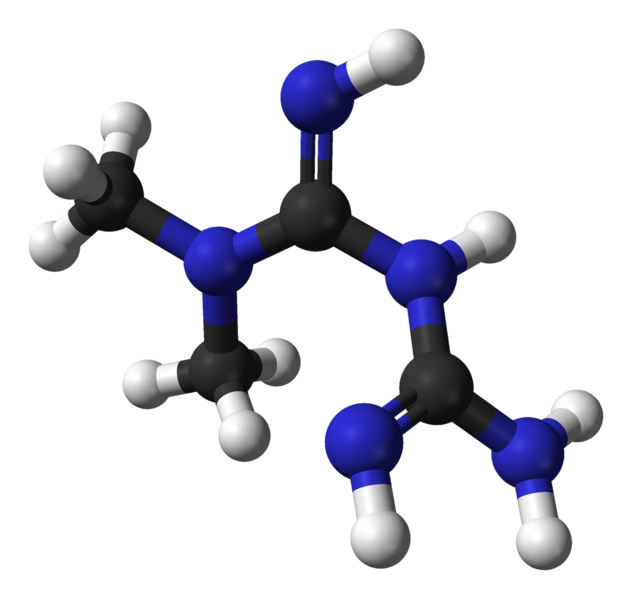
A first area in which AI may work its mojo is drug repurposing. By combing through databases of existing drugs, AI might identify some that intervene in the decline associated with aging. (A not-AI discovered example is metformin, a diabetes medication that mimics some of the effects of caloric restriction.) Some current candidates (such as metformin) look promising but are not without side effects (do not take metformin without talking to your doctor!). Maybe AI can help us find better ones.
We can use AI to screen existing drugs, but maybe also to design new ones. By accessing large, virtual chemical libraries containing information about a multitude of molecules with their properties, AI/machine learning systems can put together a new compound that might affect relevant aging pathways. It can also refine/redesign the structure of a molecule to achieve a certain intended effect.
Advanced machine learning systems can also do virtual tests to separate the ‘possibly working’ wheat from the ‘definitely not working’ chaff without having to laboriously test all of the drug candidates in the lab. One step further, and an AI-controlled robot could do some standard tests on promising candidates, ending up with a select few high-potential drugs for actual trials (an approach already being pioneered for medication against several tropical diseases).
Genes, immunity, and regeneration
Finally, AI, through unraveling aging’s pathways, will also be able to identify genes affecting those pathways.
There are already several candidate genes that have led to substantial increases in lifespan in animal models upon alteration, but who knows how much more lay waiting in the jungle of the genome? And, whether for already known or as-of-yet undiscovered ‘aging genes’, machine learning can even help us tweak (epi)genetic therapy options.
Likewise, AI may have a use in understanding why and how our immune system begins to falter as we grown older. This age-effect on the immune system leads to a higher susceptibility for various diseases, more severe consequences of infections, and cancer. Tackling this with tailored interventions would already be a great step forward in increasing healthspan, if not lifespan.
Finally, a promising recent development in preventing age-related decline in some functions is removing senescent cells. These old cells that have stopped dividing excrete pro-inflammatory molecules wrecking their neighbors. Removing those senescent cells may improve health and prevent some of the terrible effects of aging. However, just removing those cells is only step one. We need to replace them lest we lose all our cells (not recommended).
Machine learning can aid in refining stem cell therapies for this purpose. Developing protocols for ‘reprogramming’ cells into stem cells is step one. Step two, though, is also important. When we administer those stem cells to whichever tissue they will replenish we would also like to have a certain degree of control over their differentiation. We don’t want them to divide without brakes, causing cancer. That would defeat the purpose.
More than lifespan
It is clear that the implementation of machine learning/AI may be a boost for the anti-aging efforts already underway. However, there is an important remark that has to be made:
Simply living longer is not the goal. Living longer in great health is.
Or, in other words, all of the efforts discussed here are not — should not — focus solely on extending maximum lifespan, but on extending healthspan. Nobody wants to be become 150 years old if the last 50 years have to be spent in pain and misery.
Until we find the fountain of youth, take care of yourself. Your older self will thank you.


