avatarGunnar De Winter

Free AI web copilot to create summaries, insights and extended knowledge, download it at here

1789

Abstract

s in that data, learn how to classify those pattern, and — with additional, potentially self-guided training — could interpret those patterns and tailor those interpretations into predictions?</p><p id="fdf3">Over the past few years or so, machine learning techniques have been/are being developed that tick most, if not all, of those boxes. (And similar machine learning techniques are already <a href="https://readmedium.com/machine-learning-rewrites-history-d24def79dabe">rewriting history</a>).</p><p id="927b">Is AI being used in genomic research? Yes, it is. Machine learning techniques are finding their way into <a href="https://www.cell.com/trends/biotechnology/pdf/0167-7799(92)90173-S.pdf">genome sequencing and annotation</a>, <a href="https://blog.23andme.com/23andme-and-you/23andme-releases-first-of-its-kind-genetic-weight-report/">direct-to-consumer genetic testing</a>, and <a href="https://genomemedicine.biomedcentral.com/articles/10.1186/s13073-019-0689-8">genome-based clinical diagnostics</a>.</p><p id="5281">And that’s just the beginning.</p><h1 id="1b2b">From seeing to creating</h1><p id="0aa5">So AI can help us discern patterns in genomic data and interpret those patterns/data.</p><p id="1d35">But AI can’t change our genes, can it?</p><p id="8e55">Think again.</p><figure id="7a28"><img src="https://cdn-images-1.readmedium.com/v2/resize:fit:800/0*EFdMF8bRb6SiAwFU.png"><figcaption>The CRISPR-Cas9 system (Wikimedia commons, marius walter)</figcaption></figure><p id="799e">Despite some <a href="https://www.nature.com/articles/d41586-019-02162-x">regulatory head-scratching</a>, new gene editing tools (most notably the <a href="https://en.wikipedia.org/wiki/CRISPR_gene_editing">CRISPR-Cas system</a>) will usher in an age of easier, cheaper, and more accur

Options

ate DNA editing.</p><p id="c16e">Here’s the kicker: <a href="https://www.the-scientist.com/the-literature/could-ai-make-gene-editing-more-accurate-65781">Machine learning techniques can predict the changes that will occur following a ‘snip and repair’ by CRISPR</a>.</p><p id="25f2">From here, it’s not a terribly huge step to AI that designs specific guide RNA’s (gRNA in the figure above, that guides the Cas9, the ‘scissors’, to a specific location on the genome). Add an AI-designed DNA template to repair the cut et voilà: AI-mediated gene editing.</p><p id="52ca">Want more?</p><p id="bec5">Okay then, here we go.</p><p id="cff5">Consider this: an AI-supported video-monitoring system is already in use to <a href="https://www.newscientist.com/article/2231591-ai-is-being-used-to-select-embryos-for-women-undergoing-ivf/">select embryos for IVF </a>with the best chance of resulting in pregnancy, and it does so with a succes rate higher than that of experienced embryologists.</p><p id="79df">Add to this that machine learning can be implemented for the <a href="https://www.cell.com/cell-systems/fulltext/S2405-4712(19)30384-9?_returnURL=https%3A%2F%2Flinkinghub.elsevier.com%2Fretrieve%2Fpii%2FS2405471219303849%3Fshowall%3Dtrue">automated (!) design of stem cell organisation</a>. I think this quote from the research paper says it all:</p><blockquote id="a1f7"><p>…thereby enabling spatial control of multicellular patterning to engineer human organoids and tissues.</p></blockquote><p id="3b09">With all the above in mind, is it truly inconceivable that AI can uncover the genetic roots and modulation of various traits, and can then design the tools to alter those traits (possibly even pre-birth)?</p><p id="9070">Humanity maketh AI, AI remaketh humanity?</p></article></body>

AI for Human Genetic Enhancement

The increasing ability of machine learning techniques to detect patterns is helping us to understand the complexities of the genome. AI is poised to become an important tool in genetic engineering and enhancement.

The messy world of the genome

All our DNA, all our genetic material, all of our tens of thousands of genes (estimates vary), is coiled up into chromosomes. Nice and tidy, right? Unwind the bit you want to read, translate, and — presto — the desired protein is produced.
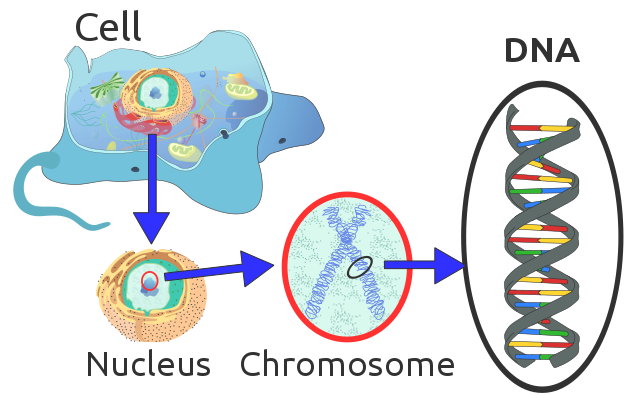
(Wikimedia commons, Tiger66)

Not exactly. The one gene one trait idea/dream has been put to rest a long time ago (with some notable exceptions). One gene can affect many traits, one trait can be affected by many genes.

It doesn’t end there. Gene expression can be ramped up or damped down by other stretches of DNA or molecules rambling around in our cells.

The genome and its workings are chaos.

Enter AI and pattern recognition

Well, of course it’s not completely chaos. Life would be very hard if it were.

Let’s say that there is method to the (genomic) madness.

But how do we find that method? How do we uncover the guiding patterns in a sea of data so vast that a human mind would drown in it?

What if there was tool to could handle vast amounts of data, detect patterns in that data, learn how to classify those pattern, and — with additional, potentially self-guided training — could interpret those patterns and tailor those interpretations into predictions?

Over the past few years or so, machine learning techniques have been/are being developed that tick most, if not all, of those boxes. (And similar machine learning techniques are already rewriting history).

Is AI being used in genomic research? Yes, it is. Machine learning techniques are finding their way into genome sequencing and annotation, direct-to-consumer genetic testing, and genome-based clinical diagnostics.

And that’s just the beginning.

From seeing to creating

So AI can help us discern patterns in genomic data and interpret those patterns/data.

But AI can’t change our genes, can it?

Think again.
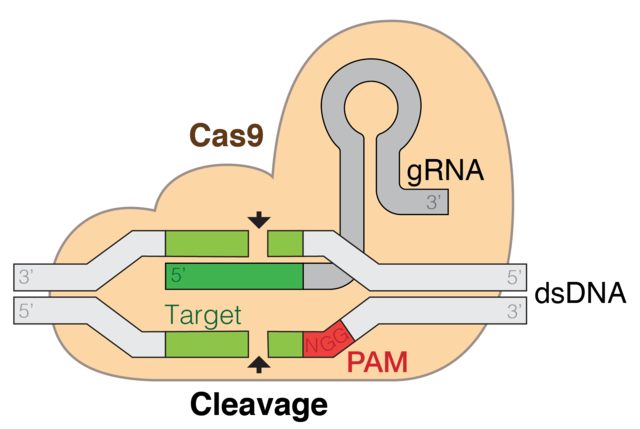
The CRISPR-Cas9 system (Wikimedia commons, marius walter)

Despite some regulatory head-scratching, new gene editing tools (most notably the CRISPR-Cas system) will usher in an age of easier, cheaper, and more accurate DNA editing.

Here’s the kicker: Machine learning techniques can predict the changes that will occur following a ‘snip and repair’ by CRISPR.

From here, it’s not a terribly huge step to AI that designs specific guide RNA’s (gRNA in the figure above, that guides the Cas9, the ‘scissors’, to a specific location on the genome). Add an AI-designed DNA template to repair the cut et voilà: AI-mediated gene editing.

Want more?

Okay then, here we go.

Consider this: an AI-supported video-monitoring system is already in use to select embryos for IVF with the best chance of resulting in pregnancy, and it does so with a succes rate higher than that of experienced embryologists.

Add to this that machine learning can be implemented for the automated (!) design of stem cell organisation. I think this quote from the research paper says it all:

…thereby enabling spatial control of multicellular patterning to engineer human organoids and tissues.

With all the above in mind, is it truly inconceivable that AI can uncover the genetic roots and modulation of various traits, and can then design the tools to alter those traits (possibly even pre-birth)?

Humanity maketh AI, AI remaketh humanity?

AI
Genetics
Science
Ethics
Machine Learning
Recommended from ReadMedium