
JIGSAW GENS
Stowegressives — A Legacy of Resolve & Foresight
The Stowegressives (“Negotiators” or “Pre-Missionaries”) forced America to confront its moral compass but romanticized exceptionalism
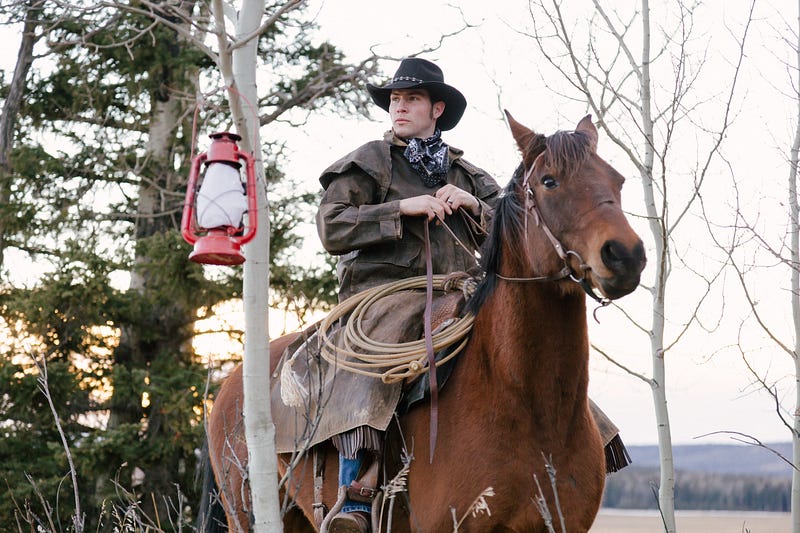
As part of my effort to promote intergenerational literacy, I released the first eight-part segment of my “Jigsaw Gens” series, earlier this year.
It features the eight generations born after the dawn of the Twentieth Century: Hemingrebels, GI-Gens, Traditionalists, Baby Boomers, GenXers, Millennials, Zoomers, and Alphas.
Now, I’m working backward to spotlight the generations of the Nineteenth Century.
My previous installment focused on the Missionary generation:
So who came before the Missionaries?
Why, that would be the generation whom I’ve dubbed the “Stowegressives.”
Who They Are
Stowegressives were born approximately between 1850 to 1861 — give or take a few years on either end. William Strauss and Neil Howe, as part of their historical storyboard of generational theory, consider them to be contained within a 17-year cohort of “artists” and “adaptives” — spanning from 1843 to 1859. However, I’ve honed in on a 12-year cohort from the Progressive generation who were born in the years leading up to (and during) the start of the Civil War.
This generation came-of-age as the North and the South battled to the death. Often, in their literal backyards. These kids transitioned into adulthood as the Union defeated the Confederacy, and Reconstruction began. I call them “Stowegressives” because abolitionist Harriet Beecher Stowe published Uncle Tom’s Cabin when the oldest members of their cohort were just learning to walk. The national division exacerbated by the Civil War would play out across a majority of the Stowegressives’ adult lives.
Other nicknames for Stowegressives could include: Pre-Missionaries, in order to acknowledge the impact their post-Reconstruction policies would have on the generation that immediately succeeded them; Negotiators, since they would try to hash out postwar compromises in what they hoped could be a peaceful manner of vainly keeping the Union together — as well as the negotiations that would ensue amidst the newly-empowered labor unions of the 1880s; Word-Smithsonians, because so many of their members were literary minds, songwriters, and fledgling journalists (L. Frank Baum, Ida Tarbell, Harry Bache Smith, Charlotte Perkins Gilman, Charles Dow, George Templeton Strong) who captured both the joy and sorrow of the Nineteenth Century’s second half, just as the Smithsonian Institution was opening its doors and gradually expanding; Highnotes, seeing how the vocalists and musical composers of their generation (John Philip Sousa, Lillian Russell, George Whitefield Chadwick, Arthur Foote, Emma Abbott, Victor Herbert) channeled the tumult of these decades with such memorable vigor; or Judicial Masters, in reference to how between 7–16 eventual U.S. Supreme Court Justices were born into this generation (or its surrounding “microgenerations”) — including the only person to have served as both a U.S. President and a U.S. Supreme Court Justice during his lifetime (William Howard Taft).
As per my tradition, I’ve coined several of these nicknames in order to bring context to their generational cohort.
What They Went Through
Being the children of the American Civil War, Stowegressives were raised to take Manifest Destiny for granted. Wagon trains heading to California and Oregon Territory were normalized for them, as was the brutality of the Mexican-American War. While many of them would come to accept the inhumanity of this era, others would know better — thinking for themselves when moved by the words of their own elders: Harriet Beecher Stowe, Frederick Douglass, William Lloyd Garrison, Angelina Grimké, Francis Ellen Watkins Harper, Wendell Phillips, and Sojourner Truth.
As many young Stowegressives approached puberty and adulthood, they witnessed the indignity of America’s first presidential impeachment when Andrew Johnson was tried and narrowly escaped conviction in 1868. Five years later, their entrance into legal adulthood was further marred by the Panic of 1873 (America’s original “Great Depression”).
Many of them were dragged by parents into the Western frontier against their will. Others were taught to hate any of their own family members who fell on the opposite side of the Mason-Dixon line. Slavery was a living nightmare that Black Stowegressives were born into, while Indigenous Stowegressives struggled to help their Tribal Nations fight for survival.
How They’re Misunderstood
Stowegressives were brought into a world in which their elders were desperately doing everything they could to avoid geographic secession. By compromising with soon-to-be Confederates, the Union was only delaying the inevitable. The Fugitive Slave Act, the Kansas-Nebraska Act, and the Dred Scott decision taught the wrong lessons to too many of them.
These divides would replicate into new iterations. Blue Yankees pitted against Gray Rebels. Within the Republican Party, it was the Stalwarts versus the Half-Breeds and Mugwumps. Upon Reconstruction, it became the Carpetbaggers battling the Ku Klux Klan. As the Stowegressives got married and tried to raise families of their own, there was always an oppressive force struggling for power — along with many who seemed to want to spite the wrongdoers just for the sake of spiting them.
Furthermore, the influx of new immigration beginning in the 1870s gave way to the Industrial Revolution. This increased competition for jobs signified the U.S. population truly becoming multiracial. Newcomers to the United States from China, the Kingdom of Hawai’i, the Philippines, Guam, Puerto Rico, Cuba, and Mexico added Latine and Asian influences into the White, Black, and Indigenous tapestry that already existed.
It was a culture shock for all sides — but especially for the young people from these groups.
If the horrors of the Civil War, the Spanish-American War, and the Philippine-American War weren’t bad enough, Stowegressives were in their twenties and thirties when America was shaken by Charles Guiteau’s assassination of President James A. Garfield in 1881. Twenty years later, they’d be in their forties and fifties when such tragedy hit again — this time with President William McKinley being assassinated at the hands of Leon Czolgosz.
Stowegressives sought to reconcile standing up for their beliefs and finding their moral center with craving some semblance of stability.
Why They Matter
Like so many generations, Stowegressives had to choose between two paths.
The first one was progressive, with the abolition of slavery and the women’s suffrage movement leading the way for self-determination. Members of the Stowegressive generation who spoke out against unbridled imperialism and favored peaceful dignity would set the stage for human struggle in America’s forthcoming decades.
By contrast, the second path was regressive. Those who supported slavery turned to Jim Crow laws and other displays of white supremacy. Many of them were quick to endorse America’s conquering of nations and territories overseas. In tandem, the genocide against Tribal Nations dominated the 1870s and 1880s.
Venn diagrams formed within this generation, with some Stowegressives cherry-picking which injustices they were going to fight — while sometimes enabling or boosting other concurrent atrocities.
Americans were looking for new heroes. The bulldog-like scrappiness of Presidents Zachary Taylor and Ulysses S. Grant served as a precursor for that of Theodore Roosevelt — the first Stowegressive who ascended to the presidency (following Garfield’s assassination). The three Stowegressive presidents — Woodrow Wilson, in addition to Roosevelt and Taft — embodied an honest and candid demeanor to governance.
As the smoke from the Civil War cleared but its tensions still flared, the Industrial Revolution paved the way for so many modern conveniences. Many of them — including telephone accessories, automated vehicles, protective clothing, navigational systems, medical anesthetics, and the expansion of electrical power sources — were shepherded by Stowegressives.
Additionally, the Industrial Revolution led to newfound exploitation of the American workforce. Thus, labor unions arose as a major power in the United States. Stowegressives — and the generations who would follow — had to decide whether they would side with organized workers or corporate bigwigs in a given situation.
Countless Stowegressives admired Theodore Roosevelt, who was known for his cowboy-like swagger. Their generation produced the final significant crop of gunslinging outlaws and prairie pioneers…even though westward expansion would continue beyond the turn of the century. Once World War I began, they entered their fifties and sixties. Most of these oldest-surviving Stowegressives died during The Great Depression or World War II.
As with every main generational cohort, Stowegressives were surrounded by two distinct “microgenerations.”
The “Late-Goldens” (born approximately from 1845 to 1849) included the oldest of the Stowegressives comingling with people born at the tail-end of the Howe/Strauss-designated Gilded generation. They included people whose adult years would encompass the end of the Gold Rush era and the waning decades of frontier culture while also foreshadowing the moral struggles of the upcoming Civil War.
This microgeneration has been personified by many well-known characters throughout history including Thomas Edison, Frances Hodgson Burnett, “Blind Tom” Wiggins, Lip Pike, and Wyatt Earp.
“Aucto-Progressives” (born approximately between 1862 and 1866) would be the youngest Stowegressives plus the oldest Missionaries. Their microgeneration (with the Latin prefix of aucto- meaning “enlarged” or “increased”) was forward-thinking yet had an affinity for the consumerism that would drive the Industrial Revolution.
Amongst their ranks were stalwarts of history such as George Washington Carver, Edith Wharton, Butch Cassidy, Robert Henri, and Nelly Bly.
Some of the more famous Stowegressives who’ve gone down in American history have included Theodore Roosevelt, Booker T. Washington, Annie Oakley, Nikola Tesla, and Walt Whitman.
A list of historical figures who were members of the Stowegressive cohort:
Click here to subscribe to my stories.


