
JIGSAW GENS
Missionaries — A Legacy of Exploration & Stamina
The Missionary generation (“Interbellum Elders” or “Reluctant Crusaders”) sought adventure and international dominance
After having profiled the eight named generations in modern American history, I decided to expand the scope of my “Jigsaw Gens” series. Thus, I’ll be working backwards to identify older generations whose births predated the dawn of the Twentieth Century.
The first eight installments of “Jigsaw Gens” can be viewed HERE:
Across the past 150 years, we’ve seen the coming-of-age for Hemingrebels, GI-Gens, Traditionalists, Baby Boomers, GenXers, Millennials, Zoomers, and Alphas.
So who came before the Hemingrebels?
You’re about to find out…
Who They Are
Missionaries were born approximately between 1867 to 1878 — give or take a few years on either end. William Strauss and Neil Howe, two famous authors/researchers on generational history, view them as part of a broader 23-year era of “prophets” and “idealists” — spanning from 1860 to 1882. However, I’ve narrowed down the core of the Missionary generation to those who were born as the Civil War ended and the Reconstruction period began.
This generation came-of-age during a period of rampant imperialism. They witnessed the U.S. federal government slaughter Indigenous populations and subjugate civilians in other countries for purposes of exploitation and/or conquest. Linguistically, “missionary” traditionally refers to those dispatched to assimilate other cultures into their own. Members of the Missionary cohort increasingly saw these travesties normalized.
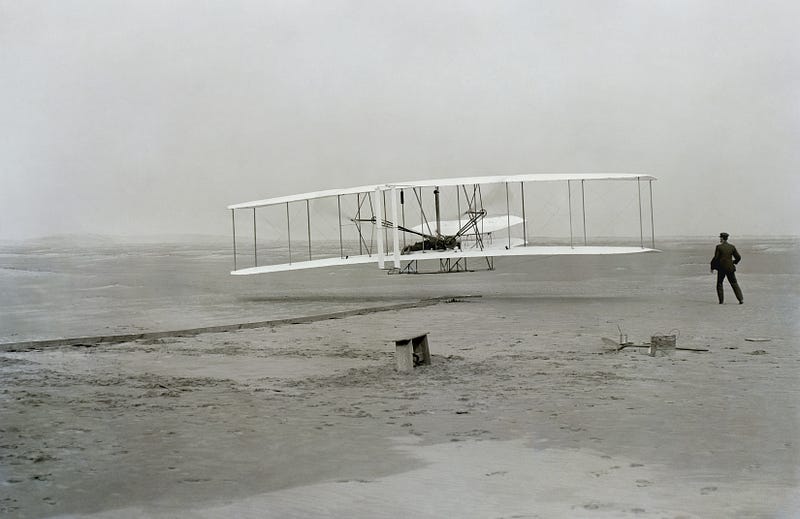
Other nicknames for Missionaries could include: Interbellum Elders, in order to acknowledge how they were in their mid-forties through their late-sixties during the Interwar (“interbellum”) period between both World Wars; Reluctant Crusaders, since many of them fought against Jim Crow, sedition laws, and U.S. colonization at great personal danger to themselves; Escalators, because — along with American department stores and similar businesses surging — the more corrupt and nefarious members of their cohort aided an increasing number of white supremacist, xenophobic, and imperialistic escalations at home and abroad; Fly Kids, seeing how American culture devoured passion for baseball (“fly balls”) and aviation (“flying machines”) as Missionaries aged closer to their golden years; or Wise Muckrakers, in reference to the rise of muckraking journalists amidst the Missionaries’ ranks coupled with how their politicians (viewed, accurately or inaccurately, as “wise men”) clung onto positions of legislative power well into the mid-Twentieth Century as a result of so many of their Hemingrebel sons dying in World War I.
Many of these nicknames have been coined by me, in order to frame the historical context surrounding their generation’s daily life.
What They Went Through
As I said earlier, Missionaries were born as the final days of the Civil War were waning. The Reconstruction Era spanned pretty much all of its members’ birthyears. Thus, they were raised in a climate where postwar racial battles first played out between Northerners and Southerners seeking revenge on one another for the consequences of the war. This was embodied by the political struggles amongst Radical Republicans and Dixiecrats.
The childhoods or adolescences of many Missionaries were marred by the 1881 assassination of President James A. Garfield at the hands of Charles Giteau. Twenty years later, the country would watch with horror as Leon Czolgosz assassinated President William McKinley.
Members of the Missionary generation — along with the Aucto-Progressives and the youngest Stowegressives — fought in the Spanish-American War as well as the Philippine-American War as ground troops. This reality, in part, desensitized Missionary youth to horrors such as the U.S. government’s slaughtering of Indigenous Tribal Nations or the xenophobia practiced against Southern European, Eastern European, and Chinese immigrants into the United States.
For these “Fly Kids,” war and carnage would come to be normalized with all the nuance of a vaudeville theater.
How They’re Misunderstood
Along with fighting in Pacific Islands and the Caribbean, this generation was taught that America’s federal government should be entitled to take over other territories or commonwealths. The Kingdom of Hawai’i, Puerto Rico, Guam, and the Philippines were just some of the places annexed by the U.S. during this time period.
Members of the Missionary generation entered young adulthood amidst internal American battles over tariffs. To divert attention away from class warfare, the ruling elite propagated the message that white supremacy, misogyny, and other aggressive injustices were somehow perfectly acceptable.
Missionaries grew up learning that censorship (via the Comstock laws) was a necessary evil. The Compromise of 1877 set the stage for Jim Crow laws to flourish in upcoming decades. Indigenous Americans were sentenced to genocide courtesy of abominations such as the Dawes Act and the Wounded Knee Massacre. Furthermore, The Chinese Exclusion Act of 1882 delivered xenophobia and xenomisia straight into schoolhouse lesson plans.
Americans of the early-Twentieth Century also revered President Theodore Roosevelt’s image as a fearless cowboy who claimed to be fighting for the people. While they were twentysomethings and thirtysomethings, Missionaries watched Roosevelt force the Square Deal onto businesses while revitalizing the U.S. Navy and establishing national parks. They cheered as President Roosevelt blocked Colombia from occupying the Panama Canal.
But even the romanticism of Roosevelt wore off, eventually. After surviving a 1912 assassination attempt, Roosevelt formed the ill-fated Bull Moose Party. The split between these self-titled Progressives and the supporters of incumbent President William Howard Taft gave way for President Woodrow Wilson’s victory — which ended up becoming one of the most uneven presidential administrations in American history.
Missionaries largely craved a return to “normalcy” following World War I and the Teapot Dome scandal of the early-1920s. They set a hedonistic example for their Hemingrebel children. Collectively, these actions would contribute to The Great Depression. As the Missionary generation entered their forties and fifties, Germany pulled the U.S. into World War II.
Undoubtedly, the more thoughtful amongst them began to regret the policies of the past three or four decades.
Why They Matter
Despite the behavior of those Missionaries who chose to go along with the U.S. government’s inhumane doctrines, others of them spoke out and mobilized against these reckless transitions.
Some of the positive developments that occurred during a bulk of Missionaries’ adult lives included: civil service reform, great strides in food safety, the upgrade of military equipment, and engineering transcontinental railroad routes.
On the flip side, inflation and speculative banking led to The Great Depression as these Interbellum Elders inched closer to their old age. While in their golden years, Missionaries had to watch their GI-Gen grandkids lose their lives in World War II.
Many members of the Missionary generation died during The Great Depression or on the homefront while World War II was raging. Others would succumb to death — back in North America, due to natural causes, illness, or foul play — shortly after the atomic bomb was introduced to the world via the bombings of Hiroshima and Nagasaki.
In the twilight of their lives, the oldest Missionaries got to see the New Deal implemented — along with the United Nations.
Slowly, the more enlightened members of their generation recognized the wisdom and humanity behind the Thirteenth Amendment. They began to view reasonable immigration policies, on balance, as being generally good for America. Their foreign policy incrementally rejected such blatant American hegemony. These more progressive, socialistic, liberal, moderate, and centrist Missionaries would pass along such ideas to future generations.
But resistance has persisted. Those who were stuck in the old ways of thinking have conditioned their protégés to impose new iterations of these conflicts well into the rest of the Twentieth Century and up through the present day of the Twenty-First Century.
As with every main generational cohort, Missionaries were surrounded by two distinct “microgenerations.”
“Aucto-Progressives” (born approximately from 1862 to 1866) included the very oldest Missionaries alongside of people born at the tail-end of the Howe/Strauss-designated Progressive generation. Based on the Latin word aucto (meaning “enlarged” or “increased”), they affirmed the mid-century social change popularized by the likes of Harriet Beecher Stowe while foreshadowing the Missionaries’ consumerism of the Nineteenth Century’s second half.
Aucto-Progressives included historical figures such as Henry Ford, Charles Marion Russell, Ida B. Wells, Minnie Fiske, and William Randolph Hearst.
“New Wordsmiths” (born approximately between 1879 and 1883) were the youngest Missionaries and the oldest Hemingrebels. Their microgeneration harnessed new modes of communication to enhance the spoken word. This cohort was inspired by the articulate nature of prominent influencers amongst the “Stowegressives” and “Missionaries” of the 1850s, 1860s, and 1870s. However, they laid important groundwork that would be carried forward by the rebellion of the Hemingrebels as the Twentieth Century developed.
Amongst the most accomplished New Wordsmiths were Franklin Delano Roosevelt, Helen Keller, Rube Goldberg, Margaret Sanger, and H.L. Mencken.
Some of the historical figures of the Missionary generation who made the greatest impact have been Laura Ingalls Wilder, W.E.B. DuBois, Harry Houdini, John Heisman, and the Wright Brothers.
A list of historical figures who were members of the Missionary cohort:
Click here to subscribe to my stories.