
Stop Comparing Black Lives Matter to Animal Rights
I can’t believe I have to say this
Content warning: This piece contains graphic descriptions of police-instigated murder and violence.
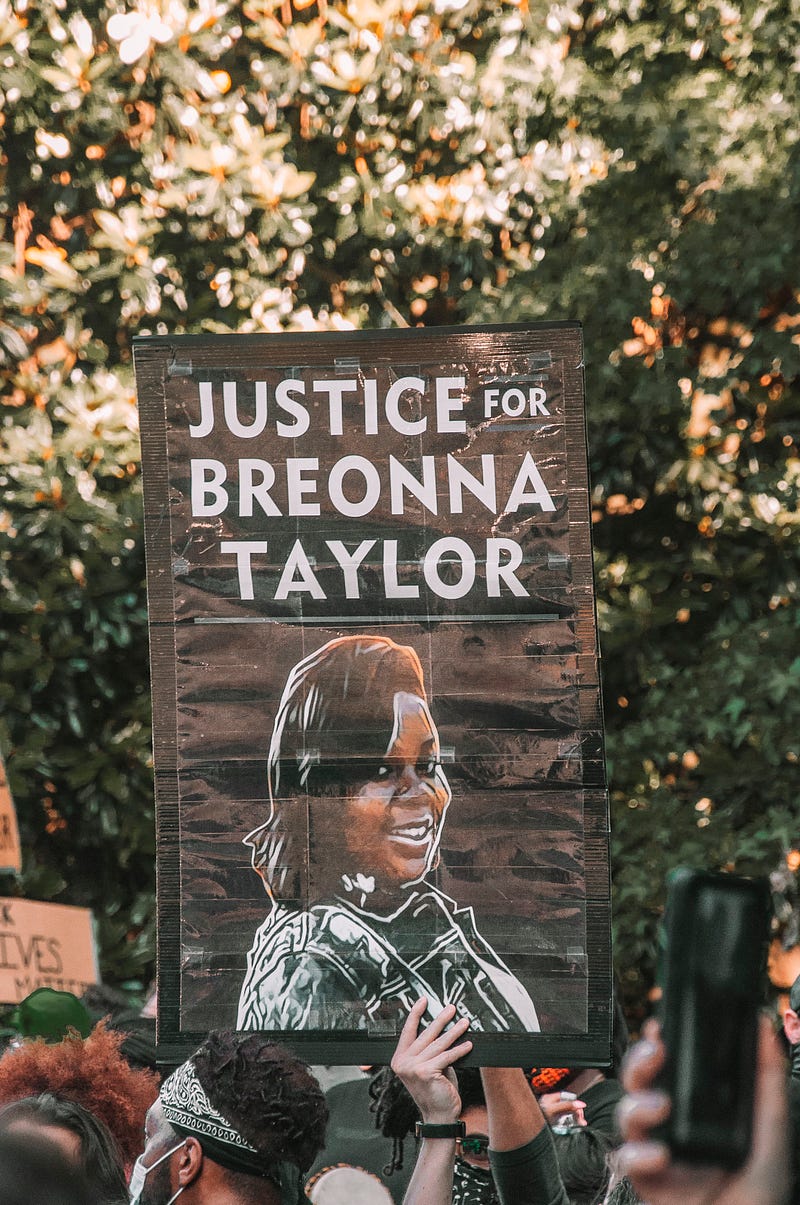
Over the past week, the United States has seen a massive protest action arise from the tragic recent murders of Black people, including (but not limited to, because the list stretches on and back for miles and miles) George Floyd, Breonna Taylor, Sean Reed, and Tony McDade. George Floyd was murdered on video as a cop kneeled on his neck. He begged for mercy as three other cops stood around and watched. Breonna Taylor, a 26-year-old EMT, was shot to death while sleeping in her bed after police entered her apartment with an illegal no-knock warrant. Sean Reed, an army veteran, was tasered first and then shot 13 times at a traffic stop. Afterwards, one of the officers was recorded joking, saying “I think it’s going to be a closed casket, homie.” Tony McDade, a Black trans man, was shot and killed. He was armed, but a witness says that police made no attempt to de-escalate, jumping out of a car and shooting him to death without asking him to drop his weapon.
Because of these abuses of force, people across the entire United States this week have taken to the streets to demand justice, reform, and accountability. In response to these protests, cops who are being protested have tear-gassed, shot rubber bullets, beaten people to the ground, run over them with trucks, and fired paint canisters at residents on their own front porches — all with overwhelming impunity and often praise from their local governments and police chiefs, regardless of political party.
The response from the Republican President of the United States, Donald Trump, has been to threaten governors that if they are insufficiently “dominant,” he will sic the United States military against its own citizens. Following his speech announcing the use of military force against Americans, an entirely peaceful protest in front of the White House was clouded with tear gas so that the President could hold a Bible for a photo op in front of St. Johns church. Reverends at the church, including the rector, had no warning of the President’s visit and were also tear-gassed.
The backdrop of this current show of horrific violence against Black Americans and their allies is the history of systemic racism in the United States since its inception, starting with the decimation of Native communities and the enslavement of Black people by white colonizers. The Civil Rights movement fought in the streets for legal equality for Black people over 60 years ago. 41 activists were killed and countless more beaten, and the movement’s most famous activist, Dr. Martin Luther King, often mentioned by white liberals as an example of “peaceful protest,” was assassinated. After the The Civil Rights Act of 1964 finally passed, Black Americans continued to be victims of systemic racism through housing discrimination (including from our current President), educational disparities, hiring bias, and, of course, horrific police violence, discrimination from the “justice system,” and mass incarceration.
In response to this, a number of prominent non-Black vegans have chosen this historic moment to conflate animal lives with Black lives, suggesting that the Black Lives Matter movement should encompass animal rights, or outright suggesting that animal rights activists should not also fight against racial injustice.
A few of the examples from this week:
- Controversial animal rights group Anonymous for the Voiceless made an Instagram video claiming that “Intersectionality has no place in the animal rights movement,” and going on to say that people who think animal rights is also about human rights are “ruining our movement.”
- Vegan subscription box service VeganCuts made an “All Lives Matter” social media post, depicting the catchphrase that is often used to dismiss Black activists in pastel tones. The business’s owner, Ashish Gupta, later issued an apology in a cute font and claimed not to know the term was offensive.
- Vegan influencer “Lauren Luvs Veggies” made a TikTok video saying, “Black lives matter… and animal lives matter,” claiming to support the current movement, but speaking far more about speciesism than she did about racism.
For many of us who have a familiarity with intersectionality and racial justice, the problems with these statements are obvious. But for many non-Black vegans, making connections between racism and speciesism may seem harmless — if we oppose all oppression, why not bring it all up at once?
After all, there are some obvious connections between different forms of oppression. We know, for example, that immigrants are disproportionately exploited by slaughterhouse working conditions, that Black Americans are often lactose intolerant but grow up with misleading messages about the nutritional value of dairy, that food deserts and a lack of food sovereignty mostly impact poor communities, and that areas with a nearby slaughterhouse have higher rates of domestic violence.
Choosing to center animals in conversations about racial justice is a privilege unto itself.
But those connections don’t mean that white American vegans, who are among the most privileged people on the planet, should ever compare Black humans to non-human animals in any context. Even the most radical, abolitionist, anti-speciesist non-Black vegan should resist the urge to ever make a comparison between the Black Lives Matter movement and animal rights. Why? The reasons why are multiple, but let me start with the most basic: You already enjoy the opportunities and privileges that Black people are fighting for.
You are an observer of oppression, not the oppressed.
For those people who are living with exploitation, violence and oppression all over the world, veganism could never be the only cause they choose, or an equal priority at all times. You have to put on your own air mask before you help someone else with theirs. In occupied Palestine, animal rights activists know that their imprisonment could mean the animals they care for going hungry. The violence of the occupation impacts everything they do for animals — and miraculously, they keep fighting for animals anyway. That’s incredible, but white vegans don’t have to make those kinds of sacrifices. Choosing to center animals in conversations about racial justice is a privilege unto itself.
If someone in your own family was about to die, would you leave their side to attend a slaughterhouse vigil? Of course not.
Black vegans do often make some connections between their own oppression and the oppression of animals, without comparing the two directly. In an interview with Tenderly, activist Soul Eubanks noted that he went vegan partially because “growing up as a young Black male, in a society where we’ve been marginalized, I’ve always had a certain awareness about suffering and oppression.” While listening to these voices can teach us a lot, it is paternalistic and hurtful for white vegans to ask Black people to put their own liberation on the same level as animal liberation.
“But anti-speciesism means treating every life as valuable, not just Black lives.” This is when the same arguments against ever using the phrase “all lives matter” apply best. Yes, of course, all lives deserve to be free from torture, exploitation, and murder. But it will be impossible for society to widen the circle of compassion to other species while members of our own species are still being treated as disposable by the same systems that make our lives easier.
To use a metaphor (so tempting!), if someone in your own family was about to die, would you leave their side to attend a slaughterhouse vigil? Of course not. We can and will continue to fight for animals, but that fight will be meaningless as long as our own species has not achieved full equality.
Comparing animal lives to Black lives has and will continue to turn many people who could be potential allies away from veganism forever, and makes BIPOC who are already vegan feel unwelcome in the vegan community.
We are fond of saying that humans are animals too — that’s why racism isn’t vegan. But it applies in a different way, too. While interspecies empathy is a thing in the animal kingdom, we would never expect any animal to prioritize the needs of another species over their own. Mink mothers sometimes chew off their own legs when they are caught in a fur trap, in order to return to their children. No mink would do the same to help a human child. Other animals matter, but it’s unnatural and unethical to change the subject when Black humans are begging the rest of us to care about their lives.
It is also beneficial to animals in the long run for vegans to allow themselves to focus on racial justice. When all humans are liberated and have their basic needs met, when they don’t have to live in fear of police violence or incarceration, we will all have more energy to fight against climate change, to see the injustice of factory farming, and to usher in a revolution for the animals. Comparing animal lives to Black lives has and will continue to turn many people who could be potential allies away from veganism forever, and makes BIPOC who are already vegan feel unwelcome in the vegan community.
Racism hurts animals directly, too. Non-vegan “animal lovers” like to circulate petitions to end dog fighting in immigrant communities, or advocate for banning exotic animal eating in Eastern countries, all while ignoring the much bigger cruelty factory that is American factory farming. Politicians are able to focus animal cruelty laws on practices like cock-fighting that, while they may indeed be cruel, hurt a tiny fraction of the billions of chickens bred and slaughtered for Western appetites. Using unfamiliar traditions to disgust white Americans distracts us from dismantling the systems that hurt the most animals. Meanwhile, actual white supremacists have used the lactose intolerance that is much more common in Black communities to turn “soy” into a racist dog whistle.
Please, vegans with privilege, I’m asking you to join me: Show up and fight racism without equivocation, suppress that impulse to compare the plight of non-human animals to the plight of your fellow humans, see that society’s compassion will never extend to animals before it extends to all humans, and recognize your privilege as a non-Black vegan to fight for animal rights without having to also fight for your own rights.
To learn more about how to be an antiracist vegan, consider some essential reading:
- Black VegFest’s “7 points of Allyship for the White Vegan Community in Defense of Black Lives”
- Aphro-Ism: Essays on Pop Culture, Feminism, and Black Veganism from Two Sisters by Aph and Syl Ko
- How to Be an Antiracist by Ibram X. Kendi
- Sistah Vegan: Black Female Vegans Speak on Food, Identity, Health, and Society edited by A. Breeze Harper
- The New Jim Crow by Michelle Alexander
- Between the World and Me by Ta-Nehisi Coates
- Black Marxism: The Making of the Black Radical Tradition by Cedric J. Robinson
- Veganism of Color: Decentering Whiteness in Human and Nonhuman Liberation by Julia Feliz Brueck et al.