
Working Class Veganism and the Connections Between All Struggles for Liberation
Speaking with Raechel Ann Jolie about her refreshingly candid new memoir, ‘Rust Belt Femme’

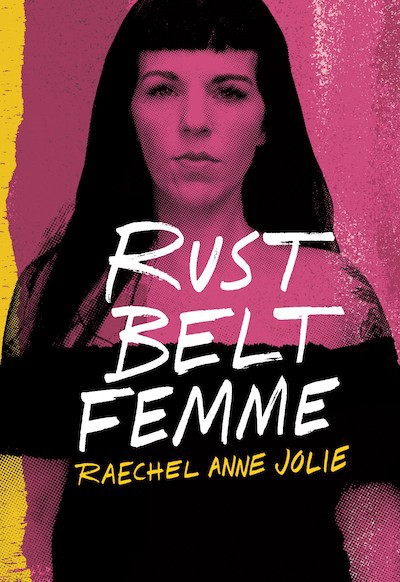
“Looking back, I am shocked they didn’t think I was a cop,” writes Raechel Ann Jolie in her new memoir Rust Belt Femme, of the note she sent to her local Ohio chapter of Food Not Bombs in the early aughts. Her language was so straight-forward, so nerdy: exactly what a bookish teen would write at the time. Jolie was just a young punk and new vegan seeking comrades in the anti-war movement, and she had heard about the organization from her ex-boyfriend—the one who turned her onto veganism when she was 16.
The experience would be hugely educational for her, and she’s gone on in her work as an academic, writer, and podcast host to bring a thoughtfulness and intersectionality to veganism that is often lost. Reading her memoir, one realizes it can all be traced back to this same sort of earnestness, openness to learning, and particular upbringing.
All of this is so rendered so refreshingly candidly in the book; Jolie’s voice is at once funny and heart-wrenching, putting every reader who wanted to be part of a scene back into their adolescent shoes. I asked her how veganism has fit in with the rest of her life, and what advice she has for those wishing to expand their sense of justice beyond animal rights.
Tenderly: Your book is grounded in your experience growing up in the working class. How did veganism fit into that? What was the reaction like from your mom and others around you?
Raechel Ann Jolie: A big thing I try to drive home in my book is that the working class is not a monolith. My particular experience in working class culture demonstrated to me that some parts fit the stereotype (and so, veganism was “weird”), and some parts totally countered stereotypes. My mom was concerned about protein at first, but adapted pretty quickly and was ultimately very supportive. The rest of my family didn’t really ‘get it’ but as long as I brought my own food to gatherings, everyone was fine.
Also, in case it needs to be stated explicitly, having a vegan diet was/is affordable for me. Granted, by the time I went vegan my mom had a stable job and I was working too, but there were times later in my adult life when I was making below poverty wages and had no problem eating good vegan food — beans, grains, and frozen veggies have been my go-to budget-friendly staples.
In your involvement with Food Not Bombs, you find that a radical left ethos goes hand in hand with the preparation and free distribution of food. How do you keep a leftist perspective alive today in the way that you eat, beyond just veganism?
It was a gift to learn about veganism via the antiwar movement because it was so deeply rooted in a broader intersectional lens: being vegan was about less fossil fuel emissions (which means less blood for oil), about the environment, about animals, about workers — it’s connected to all liberation struggles.
In practice, something I’m very committed to is worker-led boycotts. I think it’s great to buy local and buy fair trade, but I’m most compelled to not purchase things that workers themselves organize us to stop consuming. Real power comes from the shop room floor, or the farmland, or the restaurant kitchen, and I think boycotts are strongest when they’re led by the people who are on the ground. So, for example, the Coalition of Immokalee Workers, or the Driscoll worker boycott, both of those were led by the people who were most impacted by working conditions. That to me feels more potent than individual consumer choices without any organizing behind it. Having radical Left analysis as a vegan means you have to think about the means of production and working conditions. So I think about tipping and living wage, whether or not food workers are unionized, supporting restaurants who are known to hire and support undocumented workers and *not* call ICE, and so on.
If a vegan is hoping to expand their activism, what texts or resources would you recommend to them that helped you recognize the intersection of animal rights and anti-capitalism?
I really love The Vegan Vanguard podcast — they have excellent radical analysis and bring in decolonial, anti-capitalist lenses to animal liberation and environmentalism (as well as bring animal liberation lenses to other radical politics). I also recommend the Revolutionary Left Radio podcast for general Left political analysis—it can help you get acquainted with different strains of thought in radical politics.
You can always go straight to the source and read Marx’s Capital, Peter Kropotkin’s The Conquest of Bread, among others in the sort of radical Left canon — they won’t talk about veganism, but it will be pretty tough to read those and not see how capitalism is antithetical to liberation for humans and animals. Finally, I think Emergent Strategy is an essential read for our time; it’s also not a vegan book, but the author adrienne maree brown talks about change in relationship to the natural world in a way that I think would be appealing to a lot of vegans.