
The Troubling History of Race and Dairy in the United States
How we became a nation dependent on a beverage that less than half of the world’s population can easily digest
High up on the list of my favorite Twitter posts is a thread published earlier this year by Innes McKendrick. “for reasons i cannot fully articulate,” he writes, “i just had dinner in the cafeteria of a small town californian junior high school. here is a comparative ranking of all of their posters about milk.”
I highly recommend reading the entire thing, but here are some highlights: At the bottom of the list, garnering a meager 3/10, is an uninspired piece featuring a large container of milk and the vaguely ominous phrase “YOUR CHOICE CAN MAKE AN IMPACT.” Another featuring Usher receives 8/10. The only one to get a perfect score is deemed “deeply concerning.”
When I first read through the tweets, I found this school’s interior design choices oddly hilarious, and McKendrick’s commentary filled me with a pure and wholesome mirth. But I have a tendency to overanalyze things until they devolve into joyless husks, great sources of anxiety, or some mixture of the two, and my thoughts quickly turned more critical. Who puts ten milk advertisements in a single cafeteria? How big are these posters? How big is this room? The wall-to-poster ratio must have been pretty tight.
I appreciated McKendrick’s important work, but it left me with a number of unanswered questions.
So, I did what any normal human would do: I began researching the history of milk in the United States. And like many things having to do with U.S. history, I soon learned that the details are very complex and not particularly flattering.
I was happy to discover that this is a topic well-covered by a handful of scholars. After reading a number of articles and books, I ultimately learned that the privileged position milk currently holds in America’s public schools is a complex product of federal food policy, public health initiatives, racism, and what E. Melanie DuPuis, Jill Lindsey Harrison, and David Goodman describe as “perfectionist politics,” a term they use to name the common practice of attributing moral values to particular foods. We see this in action when a person calls something a “good food” or a “bad food” — or, god forbid, a “superfood.”
As early as the mid-nineteenth century, urban populations were drinking the “swill” milk sold by in-city breweries, but this product was poorly regulated, unsterilized, and a natural incubator for cholera, typhoid, and other foodborne illnesses. Still, the urban middle class grew more and more dependent on cow’s milk over the course of the century, which led to substantial food reform in the early 1900s. With the development of pasteurization and a helping hand from American industry, nature’s “perfect food” had been perfected.
The perceived dietary purity and nutritional perfection of milk made it an easy sell when many of the leading causes of death were infectious diseases, conditions exacerbated in part by the poor housing regulations, low sanitation standards, questionable medical practices, and rampant malnutrition that characterized the era. At a time when food access was limited, so-called “protective foods” were said to be especially powerful weapons in the battle against diet-related illnesses — and of these apotropaic items, biochemist Elmer Verner McCollum claimed that milk was one of the most potent.
In the decade following the publication of McCollum’s 1918 book, The Newer Knowledge of Nutrition, U.S. dairy consumption doubled. But this increase cannot be attributed to McCollum alone, and among the biggest influences was a fairly large surplus remaining from World War One. In an attempt to simultaneously boost post-war sales and ease malnutrition, the United States Department of Agriculture (USDA) collaborated with American dairy councils to tap a particularly plentiful demographic: school children. The result was a series of “milk-for-health” campaigns, which included dairy-themed stories, songs, and plays, but also regular check-ins that measured a child’s weight throughout the event. Using these numbers as a marker of overall health, the USDA ultimately claimed that they found a 12% “reduction in undernourishment” following the campaigns. All of this impacted the Department’s publications, which encouraged mothers to buy at least a pint per day for every family member. “Save on meat if you must,” one pamphlet warned, “but don’t skimp on milk.
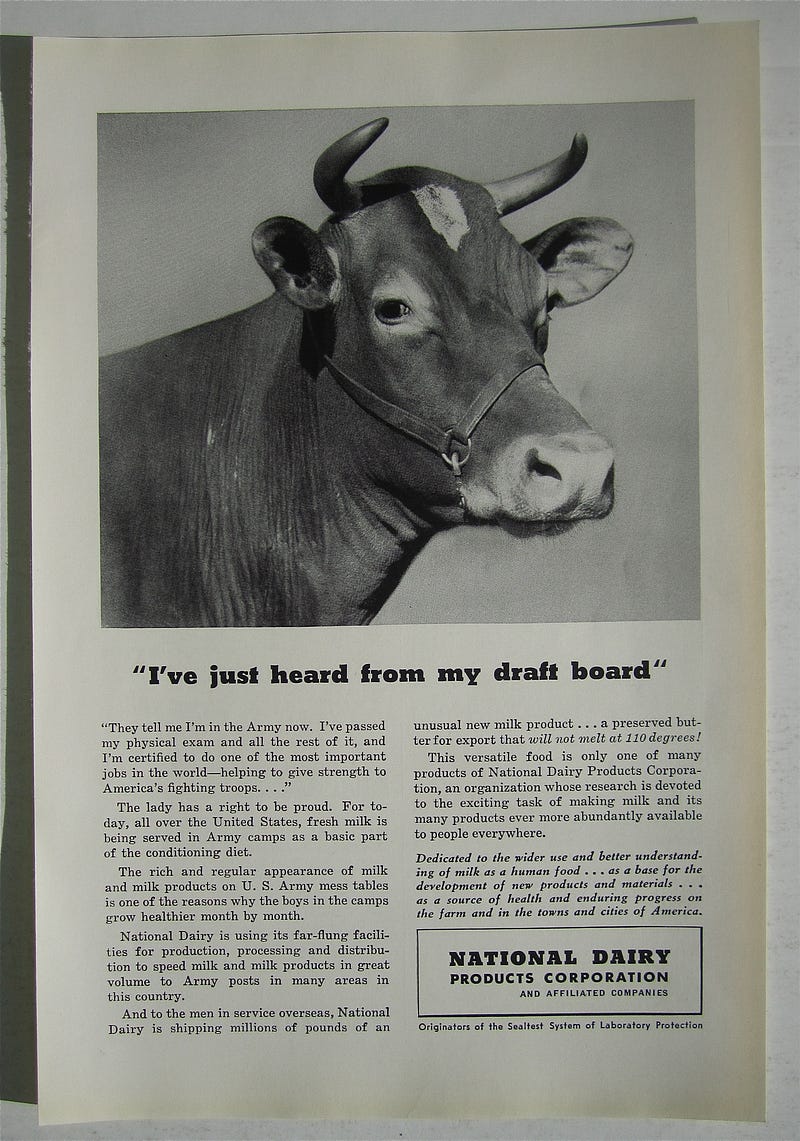
All things considered, I can see how this language would be very seductive to a population dying, on average, at age 47 from tuberculosis and other conditions traditionally associated with malnutrition.
However, some of the evidence used to defend milk’s excellence was less scientific fact and more scientific racism. “The people who have achieved, who have become large, strong, vigorous people,” McCollum wrote in a publication for the National Dairy Council, “who have reduced their infant mortality, who have the best trades in the world, who have an appreciation for art, literature, and music, who are progressive in science and every activity of the human intellect, are the people who have used liberal amounts of milk and its products.”
If this problematic milk discourse sounds familiar, you might be remembering that dark period in 2017 when a group of white supremacists, wielding academic studies of the human genome, chugged gallons of milk on camera. Although McCollum did not have access to the type of scientific data weaponized by this new breed of milk-loving racists, he correctly identified that people of central and northern European descent have longer histories of regular milk consumption. And because of this so-called “milking habit” (a term coined by cultural geographer Frederick J. Simoons that makes me very uncomfortable), descendants from those regions tend to produce high levels of the lactase enzyme that is needed to breakdown lactose into adulthood. Most other people do not have this history, and their ability to digest lactose is significantly reduced after weaning.
In terms of figures, the United States National Library of Medicine claims that approximately 65% of the human population has a reduced ability to digest lactose after infancy. The Physicians Committee for Responsible Medicine estimates that 95% of Asian Americans, 74% of Native Americans, 70% of African Americans, and 53% of Mexican Americans cannot fully digest lactose. The Food Empowerment Project, a vegan food justice organization, offers similarly high percentages, placing the numbers at 95% of Asians, 60–80% of African Americans and Ashkenazi Jews, 80–100% of American Indians, and 50–80% of Latinx. In contrast, only 6% to 22% of white Americans have a reduced ability to digest lactose.
Although there seems to be general consensus that, on average, people of color experience more difficulty digesting lactose than white people, some organizations, such as the National Institute of Health (NIH), emphasize that lactose malabsorption, or the reduced ability to digest lactose, is not the same as lactose intolerance, which is generally used to identify symptomatic responses to malabsorption, such as bloating, diarrhea, abdominal pain, and flatulence. In other words, while many people might be lactose malabsorbers, not all of these people will experience substantial side effects. The NIH claims that since milk and milk products remain significant sources of vitamin D and calcium for many Americans, individuals have a higher risk of becoming deficient in this vitamin and mineral if they cut dairy from their diet. Although there is great variation in how much lactose malabsorbers can consume without experiencing adverse symptoms, one study estimates that most can probably drink 8 to 12 oz. of milk per day, without issue. That’s about a glass and a half, or enough to get through a bowl or two of cereal.
Public health organizations seem primarily concerned with a decline in calcium consumption, however it can be difficult to isolate and study specific aspects of a given food. Calcium is a major factor, but other properties of milk might affect overall nutrient absorption.
It’s beneficial to investigate why institutions like the NIH fear Americans will become malnourished if they refrain from drinking one particular beverage; it seems to be a response to cultural habit more so than a testament to dairy’s unique perfection. In the United States, milk is basically the only food item explicitly and consistently associated with calcium. This is a result of many historical, social, economic, and political influences, including things like colonization, controversial advertising campaigns, federal food purchasing initiatives, and the Special Milk Program for Children, all of which make milk a familiar commodity that is relatively accessible and pretty cheap.
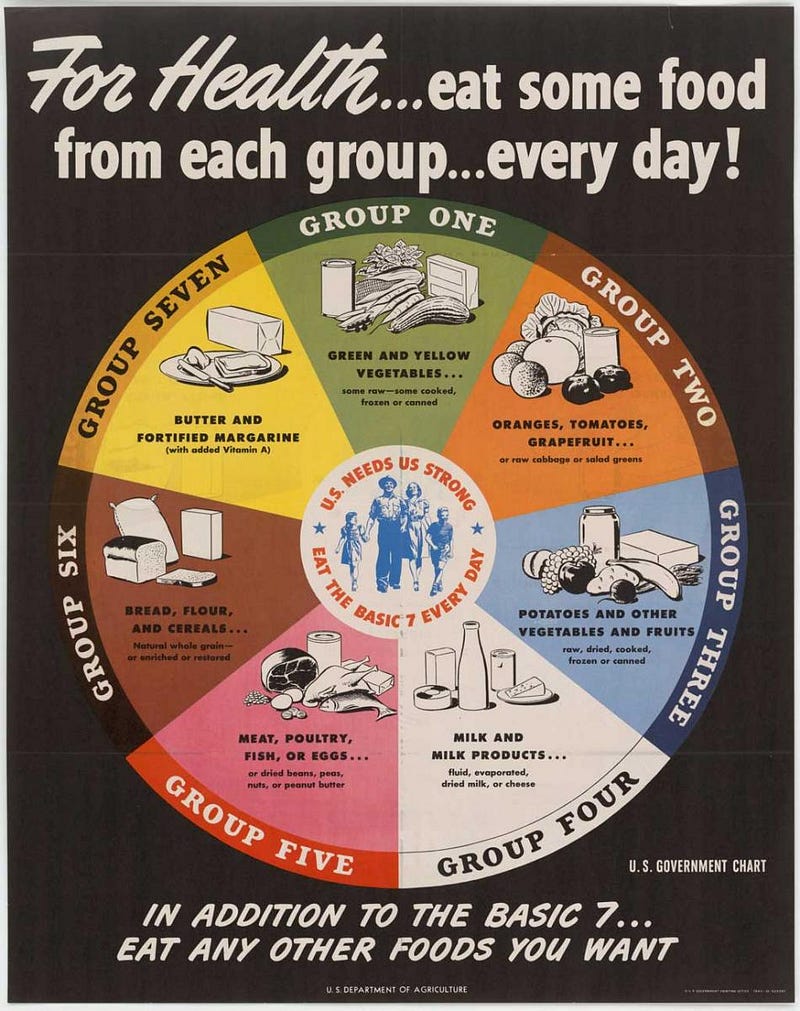
Although many factors are at play here, public health education undoubtedly plays a role. As some countries begin to de-prioritize milk in their dietary recommendations, the USDA continues to highlight dairy as the go-to source for calcium, recommending that everyone consume between 2–3 servings of dairy per day.
If you are confused about what counts towards your daily dairy intake, the USDA offers some clarification: Foods made from milk that retain their calcium content are part of the group. Foods made from milk that have little to no calcium, such as cream cheese, cream, and butter, are not. Within these guidelines, calcium is essentially the main marker of whether or not something actually belongs in the dairy group.
But this is not the “calcium” group — it’s the dairy group. Many other foods, including collard greens, kale, bok choy, soybeans, almond butter, and tempeh, are all considered a “good source” of calcium by the Academy of Nutrition and Dietetics. For some reason, these connections are left unmade by the USDA.
Although popular rhetoric likes to place the burden of health upon the individual, people — particularly those who have lower incomes or limited access to well-stocked grocery stores — often have little say in what they eat. “More than taste, preference, willpower, or a commitment to health and fitness,” Andrea Freeman, an Associate Professor of Law at the University of Hawai‘i at Mānoa, explains, “structural forces shape diets.” Often, the choices we make are in response to circumstances beyond our control.
Increased access to non-dairy products does not compensate for the systemic issues at play here, especially when all of these options are almost exclusively associated with middle- and upper-class white people. The whitewashing of veganism not only erases the vegans of color foundational to the movement — it also discourages the people most negatively affected by dairy from making use of any available alternatives. Food oppression is a product of whiteness, and it cannot be eliminated unless white vegans actively reflect on and correct the ways that we make our communities unsafe and unwelcoming to people of color. “Food justice cannot be a reality, vegan or not,” Dr. Amie Breeze Harper warns us, “if the overwhelmingly white food movements fail to engage in antiracism and critical whiteness-awareness activism.”
When we talk about choice, we must look beyond the individual. Our choices are a reaction to a century of politics that have made the U.S. heavily dependent on dairy. They are decided within a food system that makes the communities of color most affected by lactose intolerance the least likely to have access to calcium-rich alternatives. Our choices happen amidst discussions that set whiteness as the default and unjustly pathologize the biology of those with different, but not aberrant, bodies. They are made in cafeterias that display ten milk advertisements.