
Celebration With a Purpose at Baltimore’s Vegan SoulFest
Brenda Sanders and Naijha Wright started Vegan SoulFest six years ago and the crowds have been growing ever since
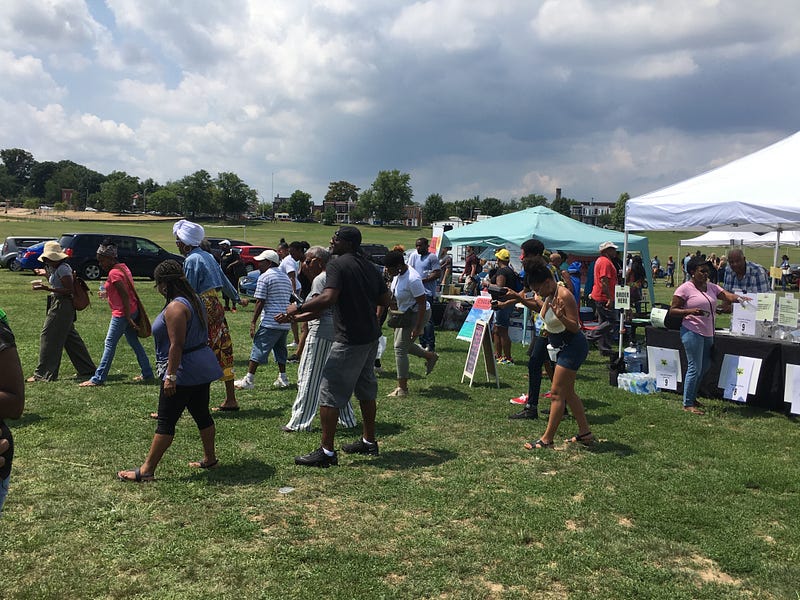
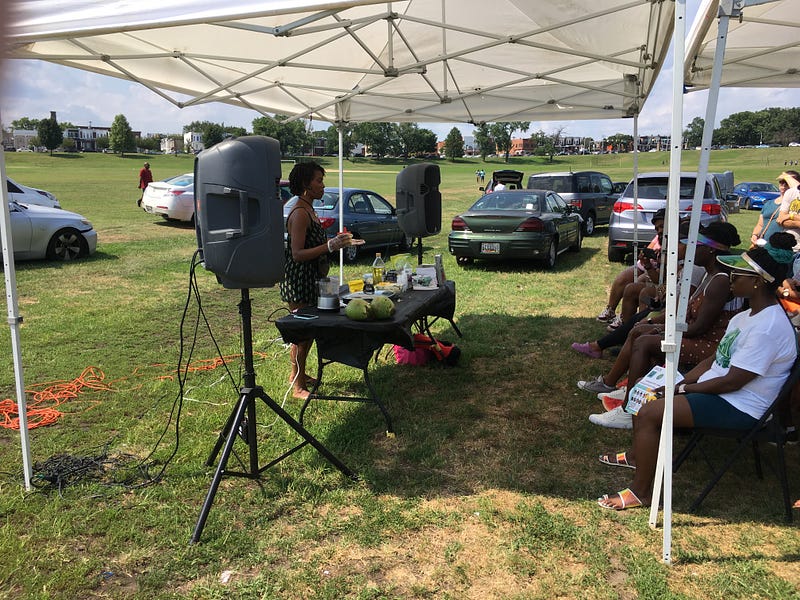
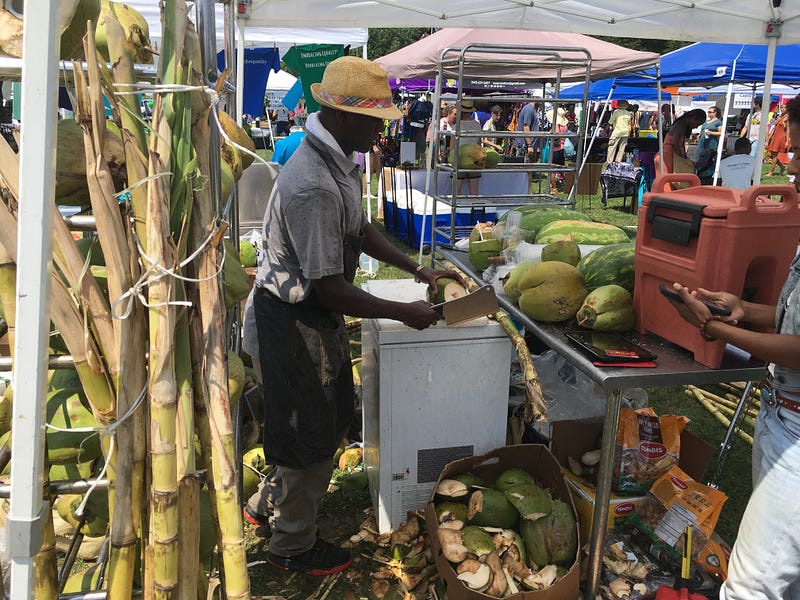
Overcast weather is blocking the sun but it’s still in the high 80s in Baltimore’s Clifton Park. Under a view of the Baltimore skyline, crowds of people meander along the aisles between tents and stalls set up in the middle of the grass. To the right, there are tents selling pizza, cheesesteaks and coconut water. To the left, people have set up in camping chairs and picnic blankets on a hillside to eat. This is 2019’s Vegan SoulFest.
Billing itself as “Baltimore’s premier celebration of veganism and culture,” the free event on August 3 was a chance to see much of what Baltimore’s vegan community has to offer. Local vegan eateries are well represented, as well as vegan and environmentalist non-profits in the area. You can pay for a chakra realignment, eat a vegan cheesesteak, or dance to reggae while the DJ shouts out “Mercy for animals!”
Six years ago, Vegan SoulFest was just an idea shared between two Baltimore vegans, Brenda Sanders and Naijha Wright, who were looking for a way to spread what Sanders calls the “lifesaving information” of veganism to communities where it is rarely talked about. “We had to question, what can we do?” Sanders said. “What can we do within our community to get this information out — but it has to be fun, and it has to be informational.”
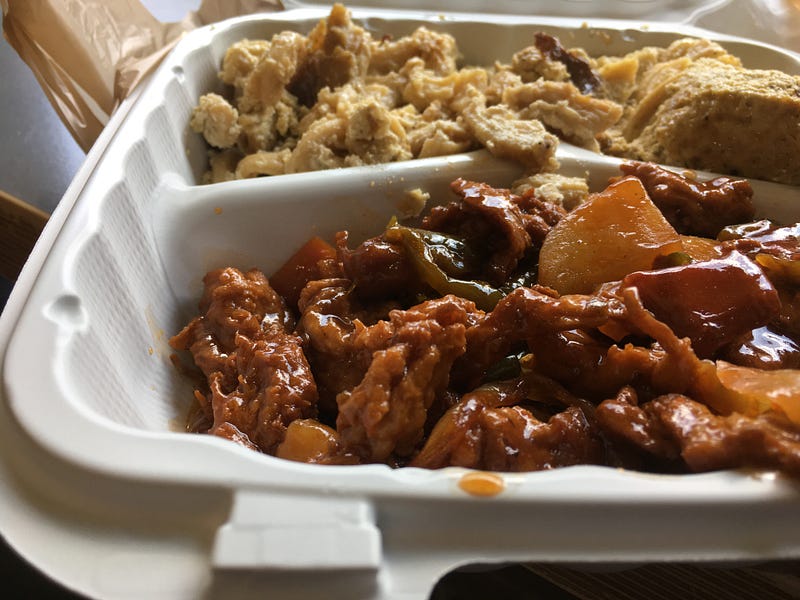
Sitting for an interview about a month and a half before the festival at Wright’s restaurant, Land of Kush, the two are comfortable with one another in the way you would expect from two people who have spent the majority of the year, for each of the last six years, bringing a festival of this size to life. We talked at a table in the corner of the restaurant, between the kitchen and a wall covered in paintings and news clippings commemorating things like the time Stevie Wonder dropped by. The menu offers some soul food greatest hits, as well as award-winning vegan crab cakes. After talking, I had lunch — try the barbecue seitan ribs and baked mac and cheese.
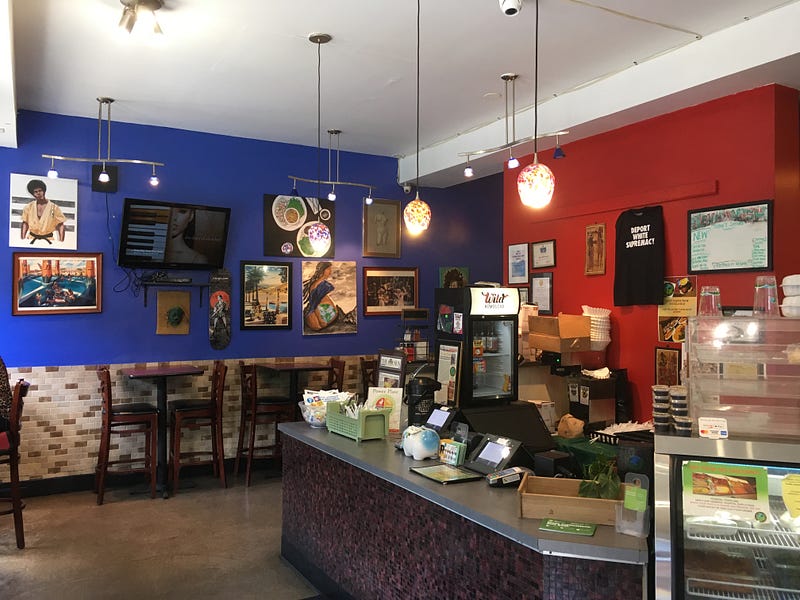
Sanders and Wright met at a happy hour for vegans at Land of Kush. Wright originally started eating a vegan diet to fight high cholesterol, and together with her husband — whom she met while he was reheating vegan lunches at the office where they used to work together — opened Land of Kush at its current location eight years ago. Now she’s also the co-founder of Maryland Vegan Eats, and the executive director of the Black Vegetarian Society of Maryland. In 2017, Land of Kush was given a shout out by the New York Times as part of a story on black-owned vegan restaurants.
As a restaurateur with an MBA, Wright understands the Vegan SoulFest through the lens of marketing. The “target markets” for the fest, she said, were the Latino and black communities living within the city. “People are looking for this type of event. It’s different: A lot of non-vegans or vegan-curious people come because they want to have a good time, they want to be in a non-judgemental environment and be able to learn and explore what [veganism] is.”
Sanders is an activist. She’s the cofounder of the Thrive Baltimore community center, the executive director of the Afro-Vegan Society and a co-owner of the Greener Kitchen, a vegan deli/co-op that opened a brick and mortar location in Baltimore last September. “My goal is to create an alternative to the animal based food system. If anybody were to ask me, ‘What is your work about?’ That’s what my work is about,” Sanders said.
The two take different approaches to spreading the word about veganism. According to Sanders, “Naijha is […] connected to everybody.” Naijha does work with non-vegan organizations, and she brings the vegan world to their events. “I call it infiltrating,” Wright interrupted. “I’m more like, ‘This is it how it is, this is how it should be, and here’s the information, now go out into the world and let’s see what you do with it,’” Sanders finished.
“That’s why we work well together, because I believe the yin and the yang has to be in balance,” Wright said. “I’m bad cop, is what she’s saying,” Sanders explained. (True to form, Sanders later flipped the interview back onto me, asking why I was “only” vegetarian and predicting, “You’ll be a vegan before you finish this interview.)
While they approach their work in different ways, the two agree that Vegan SoulFest is different and necessary for their city. They say the event is less commercialized than similar “veg fests,” and more grounded in local communities. “We don’t have big corporations that are helping us do this” Wright said. Sanders jumped in, joking, “If you know any, let us know. Like big, million dollar sponsors.”
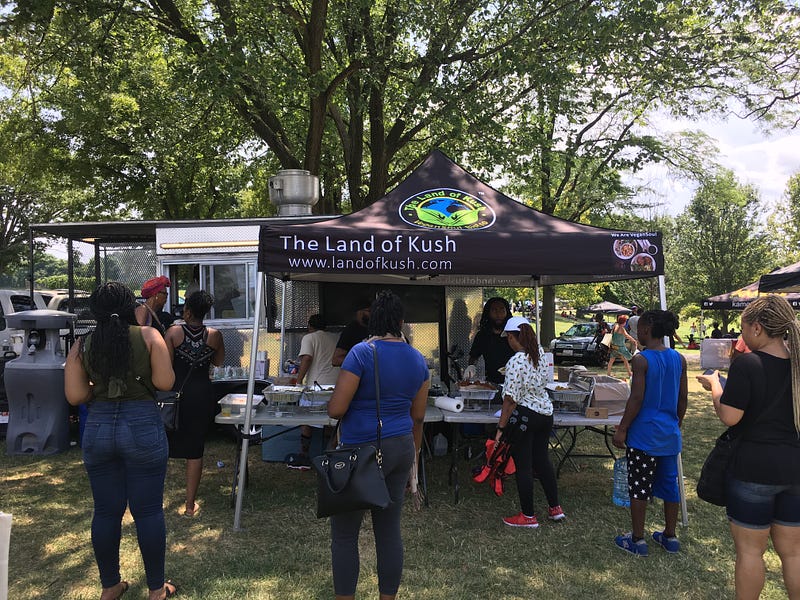
Sanders and Wright prioritize keeping their vendor entry rates low to make the fest as accessible as possible for entrepreneurs who can’t always pay to get into larger festivals. They spread the word about the event through networks they’ve built in their activist work, groups like the Thrive Baltimore center. The event is also free, and open to the public. Sanders explains, “We dedicated ourselves to making it free because we don’t want anybody to be excluded”
The event is also “mission-driven,” Sanders and Wright say. Among the vegan restaurants and local stores at the festival were other mission-driven groups like the Urban Youth Initiative Project, the Green Party, ForestPlanet, and Plant Dining Partnerships, a nonprofit that encourages restaurants to offer vegan options on menus.
The Vegan SoulFest has grown steadily since getting off to a strong start six years ago. At the first fest in 2013, Sanders and Wright say, they anticipated 35–40 vendors and 400–500 people. They more than doubled both expectations, with over 80 vendors and 1200 attendees. This year, they said they expected around 200 vendors and 20,000 attendees.
Another way the fest differs from most vegan festivals is that Sanders estimates that 80 percent of people there are not actually vegan — they’re there to learn about veganism, try the food, or just see what the large party in the middle of Clifton Park is all about. This speaks to what the two founders see as the real purpose of the event.
“We have a very specific mission to get this information to marginalized communities because nobody else is doing that, and it’s important for everybody to have access to it,” Sanders said. “Everybody should be able to make the choice to live vegan. And if you aren’t even getting this information, then you can’t even make the choice.”
The same New York Times piece that highlighted Land of Kush described a growing movement of black veganism, combining a black vegan culinary tradition with deep roots, sometimes in religions like Rastafarianism, with updated takes on vegan soul food and a more explicitly political mission. “We have a racist food system that is pushing unhealthy food specifically on these communities, so it’s an act of rebellion, it’s a revolutionary act, to be healthy for people who are in marginalized communities,” Sanders explained.
Still, what might look like a cohesive movement from a national perspective can look different on the ground. Sanders says the vegan scene in Baltimore is “fractured,” with vegans and other activists working within their own circles but rarely collaborating. From that perspective, Wright and Sanders’ most enduring achievement in the Vegan SoulFest might be gathering as much of Baltimore’s vegan scene as they can in one place and putting it on display, with as few barriers to entry as possible.
“We promote veganism as a solution to a lot of the problems that plague marginalized communities,” Sanders said. “That’s different from, ‘Come out and have fun at our veg fest. You’re gonna come and have fun, it’s gonna be the best thing ever—” Wright jumped in, “But you’re gonna leave with something.”


