
TRAVEL | HISTORY | RUINS | BULGARIA
Some Ancient Ruins Are Still In Use Today
And I’m sure there are many more than we know.
When I wrote my article about the off-the-beaten-track ruins that we found in Africa earlier this month, I had every intention of also writing about the ruins we have seen in both Europe and Central America. However, time has gotten away from me and my writing muse has not been as active lately as I would like.
But as I was reading the ruins submissions to the Globetrotters May monthly challenge, I read one that triggered a memory in me, and I can’t help but cheekily sneak in one last prompt response under the wire of our end-of-month deadline.
The story I speak of came from Rhonda Carrier — Speaking in a Roman Amphitheatre in Jerash, Jordan. She tells of an opportunity that she had back in 1996 to speak to a graduating class in an amphitheater that has been dubbed “one of the best-preserved ruins outside of Italy.” I couldn’t help but marvel at the fact that people have been using that theatre for thousands of years, but that such a select few people had actually had the privilege of speaking in such a place. What an honor it must have been for her!
She goes on to talk about the acoustics and how when she stood in one particular spot, her voice carried to all corners of the amphitheater without effort, but when she moved just a few inches, it all changed.
How incredibly fascinating it is that we humans can figure these things out.
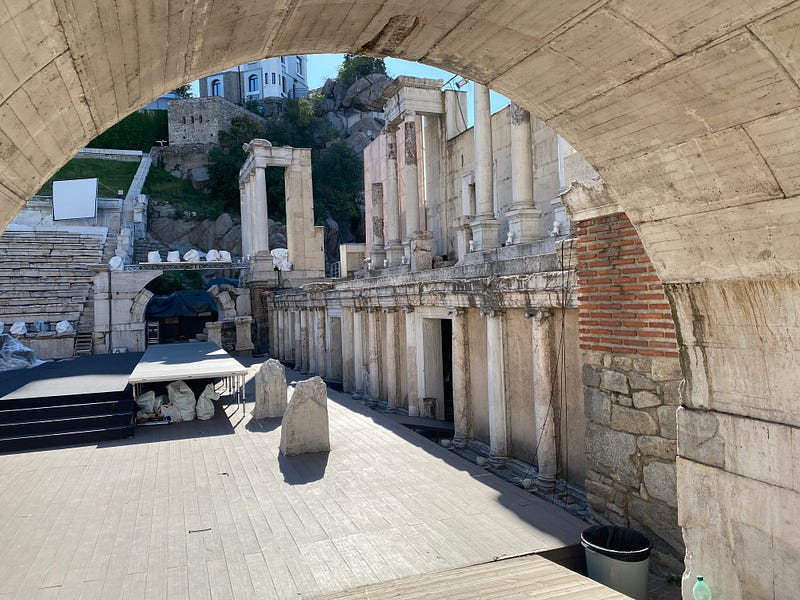
Reading her story brought up a memory in me of a ruin that we visited not that long ago in the city of Plovdiv, Bulgaria. Here they also have an amazing Roman amphitheater that is still in use today.
We arrived early one morning on an overnight bus from Istanbul. We were tired and exhausted from not only the trip there but the hassle we had in finding a place to stay once we did arrive. We were in a bit of shock by the lack of English we were finding in Plovdiv as the last time we visited Bulgaria in 2015, we had memories of many people speaking it.
We now realize that it is more of a generational thing and the older Bulgarians weren’t taught English. I mean, why would they be? Instead, they know Russian which is a language that most young Bulgarians have no interest in learning. In fact, they feel that by learning English, they are ‘sticking it to the man’, so to speak, and rebelling against the tyranny of what their parents and grandparents endured under the USSR dictatorship.
At least that is what they told us.
We slept for most of our first day in Plovdiv, but when we finally set out to do some exploring, we were amazed by what we saw. Neither of us had any idea that Bulgaria had Roman ruins in it, and this started a whole chain reaction of learning how bloody big the Roman Empire was at one time.
It is honestly shameful how little we are taught in North America about these things. My ‘history’ education in Canada centered mostly around World War I and II. The cold war, a bit about Hitler and Stalin, our historical relationship with the US, how North America was discovered, and the tiniest little bit about our indigenous people. At least that is as much as I remember.
I certainly don’t really remember learning about the Romans other than some strange mythology unit that they taught us in Grade 5.
Were the Romans involved in mythology? Maybe I am remembering incorrectly. History never was my strong suit. But we definitely weren’t learning about the Romans and how they once seemed to rule the world. At least that is what they probably believed since their territory was sprawling and massive at one time.
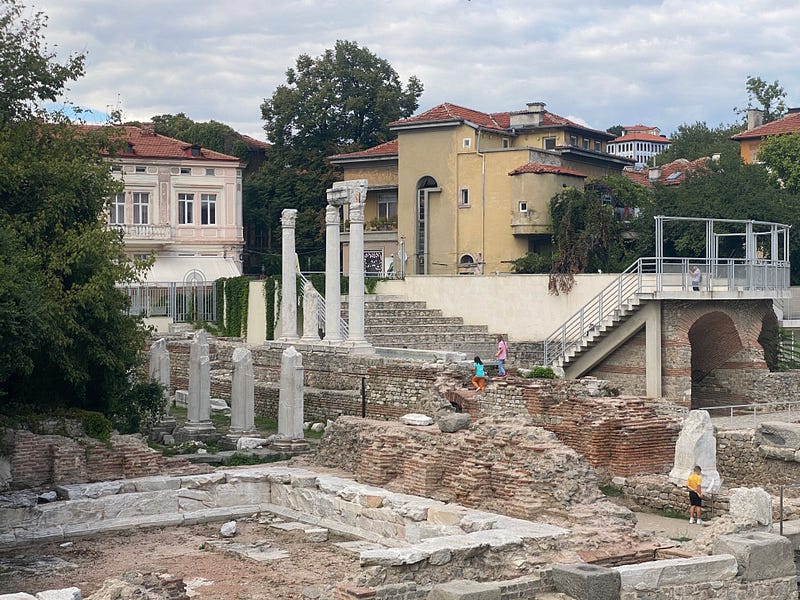
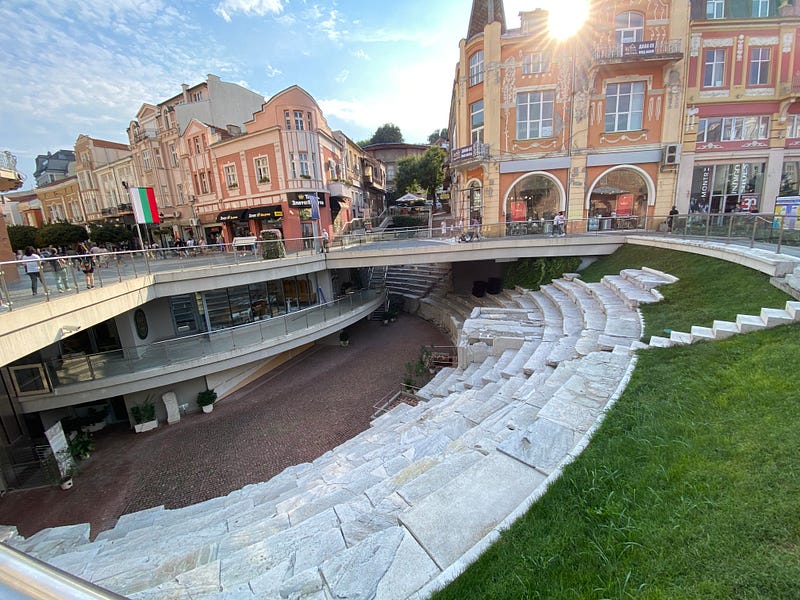
As we walked the pedestrian-only streets, we would come across thousands of years old structures that were preserved within the new construction around them. How nice, we thought, that such consideration was given to these ancient creations. I like to think that humanity is evolving and we are starting to realize how important it is to keep the secrets of our pasts alive and well, instead of tearing them down and burying them beneath the new and exciting of the future.
Many times while wandering places with ancient ruins, I find myself longing for a simpler time before technology and our fast-paced society these days. I get all romantic about how simply people lived with the land, how much more in touch they would have been with the earth. But then I learn about the wars that were fought and the bloody battles that took place amongst the streets, and I am thankful that we (mostly) seem to be moving forward in that regard.
After a few days in the city, following our noses, and roaming around as much as we could, we learned that there was one more important sight that we hadn’t seen yet. The creme de la creme, the Roman Theatre of Philipopolis. Turns out it was just a couple hundred meters from the hostel that we were staying at.
Fun Fact: Polis means city, and since Philip The Great, Alexander The Great’s father conquered it, he named it after himself. Philipopolis literally translates to Philip City.
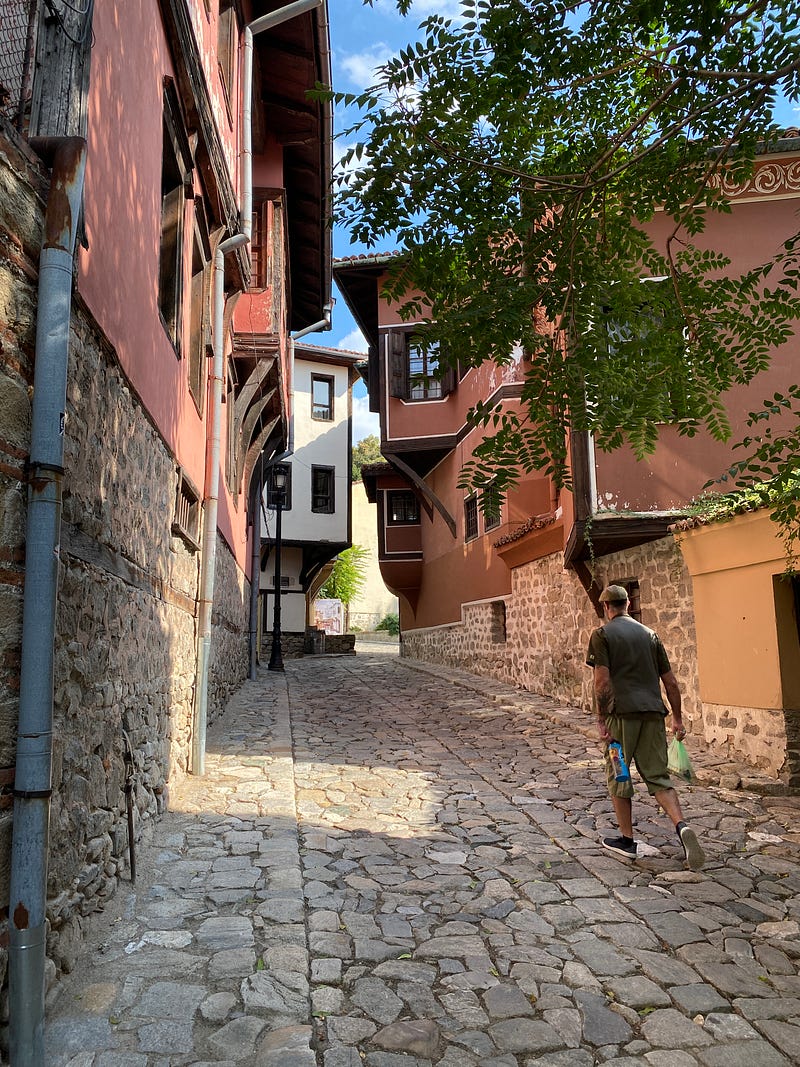
We wandered up the winding and twisting alleyways that led to the highest point of the hill that we were staying on and were not expecting the sight that we would see at the top.
We were a bit early to get in, so we just stood at the top gate and stared down through the barred fence. ‘Wow, is this for real?’ I couldn’t help but think.
The day before we had heard that the President of Bulgaria was in town to celebrate an important holiday in Bulgaria. I believe that it was their equivalent to independence day. We knew that he was there because everyone in the hostel was talking about the increased police presence in the city. But what we didn’t know was that he had attended celebrations at this theatre the night before.
I can’t remember who told me that information that morning, but I do remember a distinctly warm and fuzzy feeling coming over me as I realized that this theatre, which had been built almost two thousand years earlier, was still being used to this day.
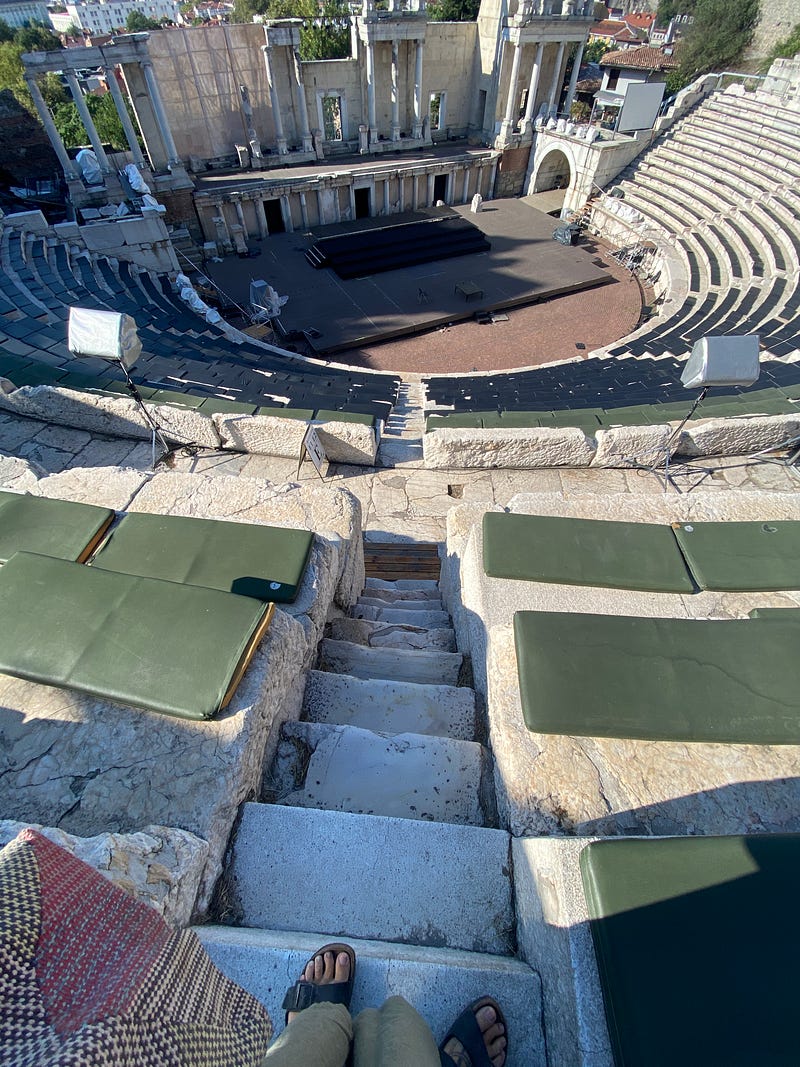
As I stood and looked down the steep and not-easy-to-navigate stairwell, I couldn’t help but be in awe of this beautifully intact structure. Knowing that I was standing where thousands of people had stood before me, thousands of years ago, made me feel honored and privileged. History like this doesn’t exist in Canada. At least not history from the Europeans.
The Indigenous people have a history that goes back much farther than we can comprehend, but they didn’t leave much of themselves behind for us to experience these days. At least not much that stood the test of the elements like these structures do.
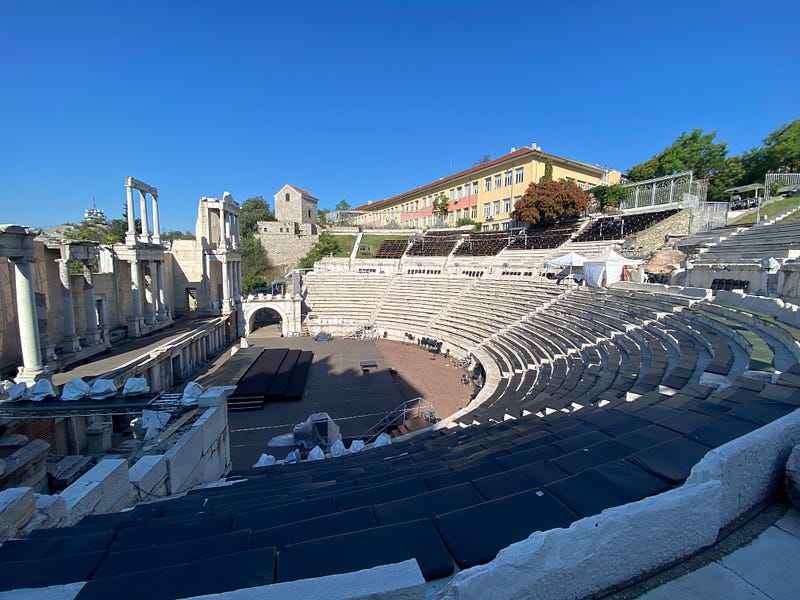
Massive columns of marble make up the theatre stage, along with huge bricks that create the benches and steps of the seating area. Moving these massive rocks must have been quite the feat on its own. Never mind assembling them into a perfectly balanced semi-circle with top-notch acoustics. Those Romans sure knew how to put on a show!
I wonder if they knew that they were leaving a permanent legacy of their time spent on the planet.
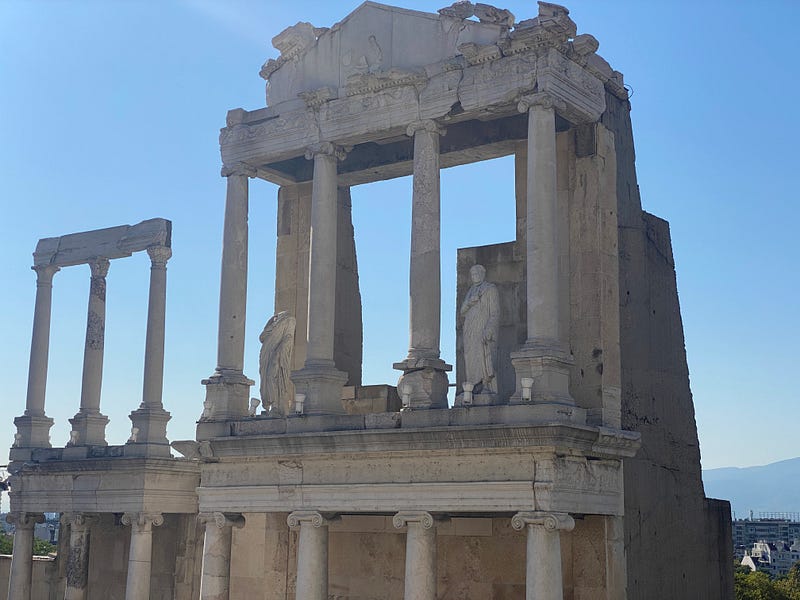
I wonder if they thought once about the future generations to come or if they worried about the longevity of their masterpieces. Did they know that thousands of people, thousands of years later would be wandering around on their structures, trying desperately to get a hint of what their lives must have been like in those days?
I sort of doubt it. I think they just took the time to build beautiful things. Some spent their entire lifetimes working on projects like these. Some projects, like the Acropolis in Athens, employed generations of people in its construction.
And now, multiple generations are working to restore it.
The world is an endlessly fascinating place. The more Chris and I travel, and the more we see, the more we realize that we really don’t know much. Before leaving Canada, I couldn’t imagine that ruins like this existed in the world. I truly figured that all of the ruins were major tourist sights. Like the Roman Coliseum, the Acropolis, and the Pyramids. I had no idea that we would stumble across equally as astonishing ruins as these ones, and learn that people are still using them to this day.
This is what travel does to us. It opens our minds, it broadens our perspectives and it molds and morphs us into different versions of ourselves. I will never tire of learning more about our planet and humanity, and I will never tire of traveling.
A special thanks to all of the Globetrotter writers who submitted such fascinating stories about Ruins in the month of May. If you are interested in seeing the 40 submissions that we received, click here for an absolute treasure trove of articles. I can assure you that you will certainly learn a thing or two about ruins and the different ways that humans have roamed the planet before us.
To learn more about the kinds of remnants left by the Pacific Coast Indigenous in Alaska, check out Erika Burkhalter’s article:
And another sad but favorite ruin response of mine was Kim Baker’s story about permanently losing ruins to a flooded dam:
More of my articles about Plovdiv and Bulgaria:

If you like my writing and want to read more, subscribe to Medium through my referral link. I will earn a small commission and you will get full access to thousands of Medium articles! Plus sign up here to get my articles by email. We have been full-time traveling since 2017 while painting murals around the world. Learn more about our projects by visiting our Ko-Fi page or our website.
Or, join our journey by hitting these links:
Website | Instagram | Facebook | LinkedIn| Patreon| YouTube | Medium


