
The Lost City of Hassankeyf
Submerged in the Name of Light
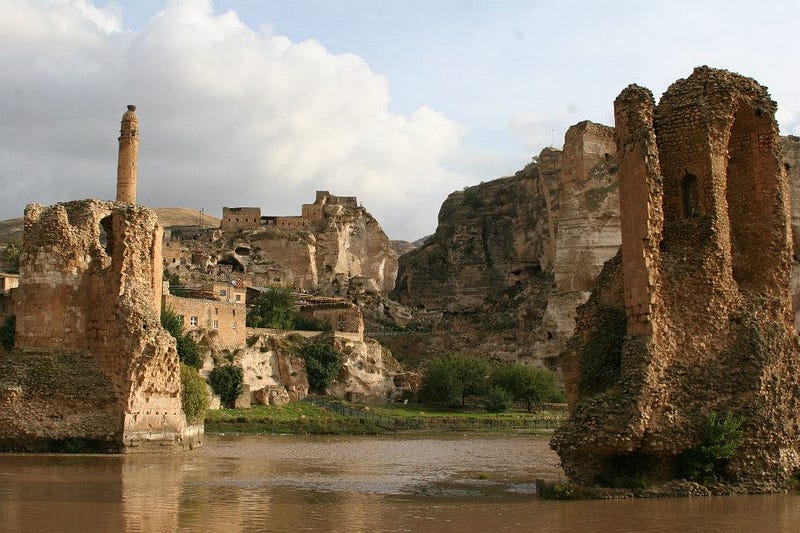
Much as Atlantis lies beneath the water, so does Hassankeyf, but unlike Atlantis, we know exactly where it is, because it was submerged in 2020, on purpose.
Not long ago, it was one of the oldest continuously inhabited cities in the world. It lay on the banks of the Tigris river, in the Batman province of Eastern Turkey.
When my brother and I first arrived in Batman (the city) we were tired and it was impossible to find food because of the Ramadan fasting. It was one of the holiest days of the year in Turkey and nothing was open. The streets were quiet except for a group of boys shooting each other with toy guns, alternately dodging bullets behind trash cans and returning fire. In spite of it being a bad travel day, and not being in particularly good moods, we couldn’t resist looking at each other, saying na, na, na, na, na, na, na BATMAN!
It was hard to believe that that was truly the name of this provincial capital but it was. It was named after a local river which in turn was named after a local unit of measurement that equals about 17 pounds or 7.7 kilos. Thinking about it this doesn’t make a lot of sense, as how do you weigh a river?
In spite of its promising name, there didn’t seem to be much to do or see there, so early the next morning we packed our bags and headed out on a bus. In 2005 traveling was different, the internet existed but we didn’t carry it around in our pockets so our travel guide was a clunky, heavy volume of the Lonely Planet, and according to it, a tiny village a few hours away seemed more interesting.
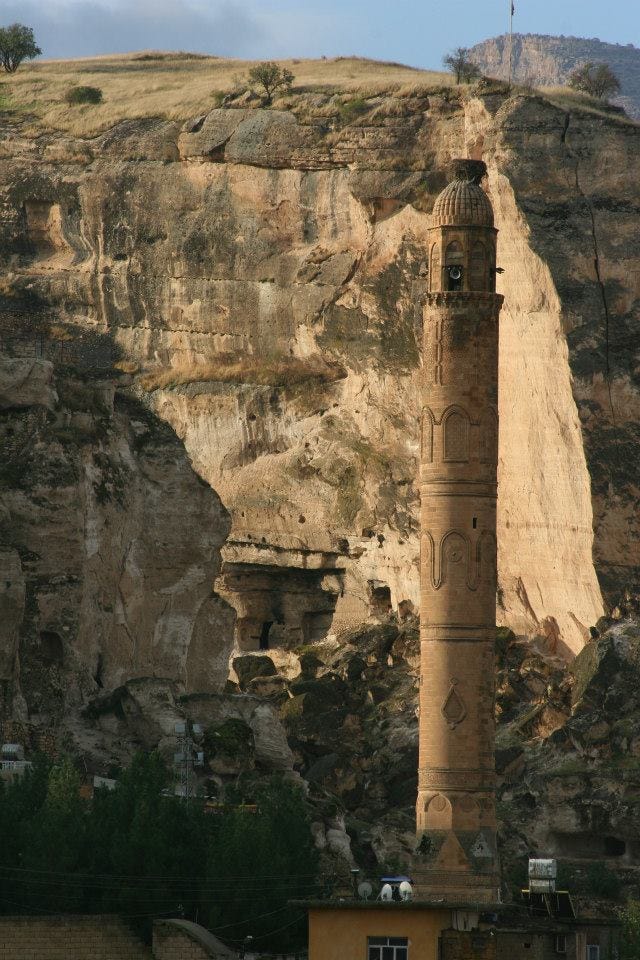
We got there fairly early, found a basic, uninviting hotel for desperate travelers on the highway, just over the bridge spanning the Tigris river, abandoned our backpacks, and headed for the river where fresh fish was served on wooden platforms with rugs and pillows.
Feeling happy to have escaped the city, we gazed at the flowing water, ancient ruined bridge, and towering minaret. Among the ruins of what was clearly once a larger city, were the houses of around 4,000 people. They had chickens and vegetable gardens, streets and modest houses. One family had even taken up residence in the room on top of the support for the old bridge, the part that spanned the river having long since fallen into it. They had hung out laundry and it flapped in the wind.
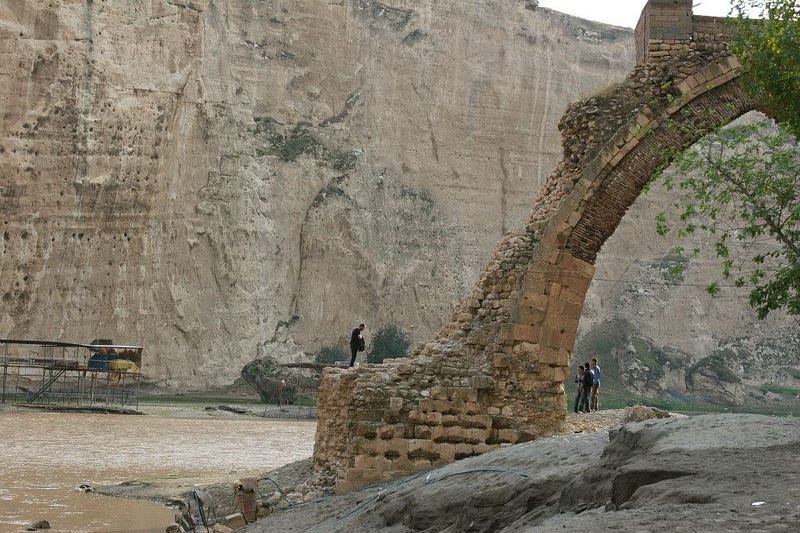
After finishing our meal, we began to wander up the river and soon found a canyon we could walk up. On either side of the canyon were the remains of houses carved into the cliffs. We were alone and felt like Indiana Jones stumbling around in what was left of a city. When I sat still and quieted my mind, I could imagine the thousands of years of lives that had unfolded here. Families, individuals, communities, strung one after another through these rooms and paths, until they weren’t. Until the way we live changed so much that people no longer wanted to live in houses carved into stone, they wanted to live in modern houses with glass windows and laminate flooring, so they left. And now I was there, and the voices were gone. They couldn’t tell me what life was like there, I had to just feel it.
Moving back toward the highway, there were still people, very much alive, and whose voices I could hear. What they told me made me anxious and sad. They were living out the last years here because just down river, a massive dam had been planned that would provide irrigation and power to the nation. It would also flood the whole area. They were desperate for the world to hear about their town and save it. There was an international outcry, not for the people who lived there, but for the historical ruins that would be destroyed.
They told me that after it rained, if you walked around where the old treasury used to be, you could find coins. That reminded me of walking around the desert I grew up in in California, looking down and finding arrowheads. Tourists never found them, first, because there were no tourists and second because it took years of patient looking and luck to find them.
In Hasankeyf however, there were a few tourists, not many, but enough to justify some booths where crafts were sold. I bought some necklaces because they are small enough to fit into an already too heavy backpack.
We stayed several more days because there was so much to see and I feared it would be the last chance I would have to see it. It wasn’t, because years later, I moved to a city not too far away to work at a university and it was still there.
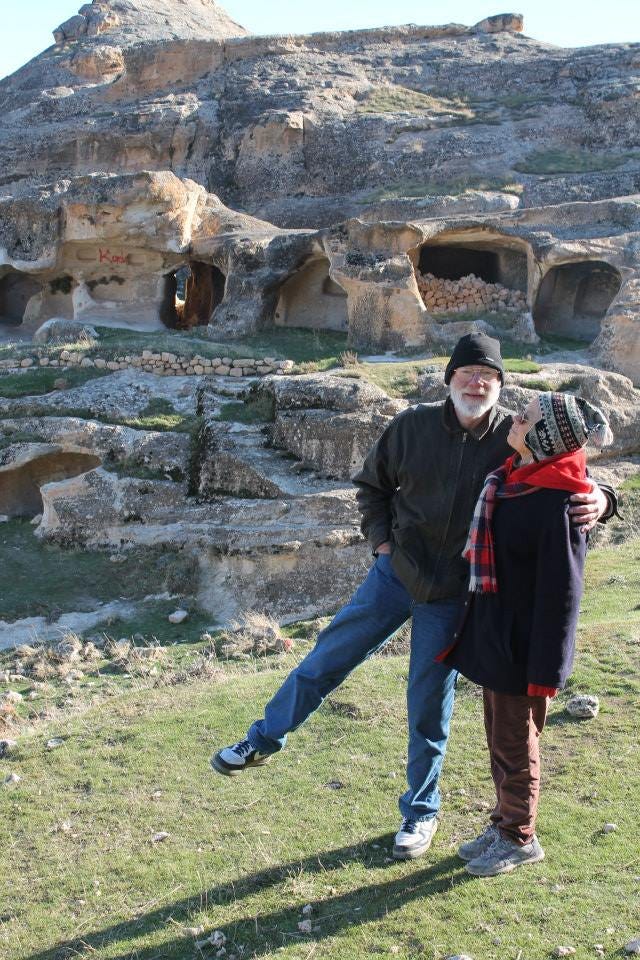
I took my colleagues and they loved it as much as I did. Then my parents came to visit and we discovered whole new areas of the city further up from the river. Every time we went it felt equally as timeless and every time we went, we were warned that the clock was ticking.
It had been 10 years since my first visit and I hoped that changing political climates and national priorities would save the past from the future but it didn’t.
In 2020, as the world lay frozen in a pandemic that forced us to spend the spring in our homes and then stretched into years of restrictions and fear, the dam was completed and the waters slowly rose.
The people were forced to move from their homes, surrounded by gardens, into a handful of generic apartment buildings higher up. Built to replace a place that had been continuously inhabited for up to 12,000 years, new and modern, fully hooked up to the electricity that was now being generated.
The ruins are still there but no one can sit surrounded by them. No one can wander the old streets, or find coins after the rain any more.
Thank you so much to the team at Globetrotters for this prompt. It took me days of thinking to figure out what I wanted to say and then digging through old pictures and more thinking before I sat down to write today. Hassankeyf has a special place in my heart and I am sorry that the only way you can experience it is through the memories of the people who were lucky enough to have been there.
Turkey is so full of ancient places, it would be hard to visit them all but here are a few more for you to experience. I really enjoyed reading about them and the authors brought me new insights, I hope you enjoy them too!


