
TRAVEL | BULGARIA | PLOVDIV | EUROPE | HISTORY
Roman History In Plovdiv — Bulgaria’s Second Largest City
The history of this city is mind-blowing!
We were last in Bulgaria in 2015 for just 2 weeks. During that time we saw a few different towns and had hoped to get to Plovdiv. I had heard that it was a cool university city with a youthful vibe, which was enough of a selling point for me, but it just didn’t work out with our short schedule then.
Last week, while looking into buses and trains from Istanbul to Sofia, Bulgaria's capital city, I realized that Plovdiv is on the way, and we could stop there if we wanted instead of going all the way to the capital. This was a win-win because it was; A) cheaper than going all the way to Sofia, and B) closer to the next town that we wanted to go to.
We are terrible at researching places before we go and prefer to be surprised when we get there, so you can imagine our surprise when we found Roman ruins in the center of the city!
We had no idea!
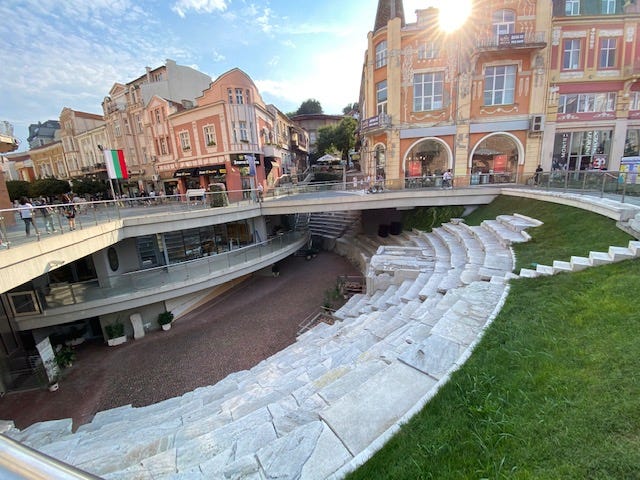
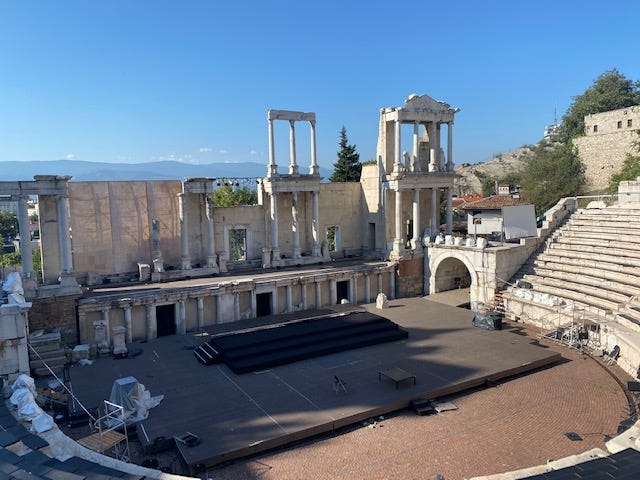
We were thrilled when we walked down into the center of the old part of town and saw the above Roman amphitheater set amongst modern-day walkways and architecture. They have done a great job of incorporating the history into the current version of Plovdiv.
The coolest part is that this is still used for functions!
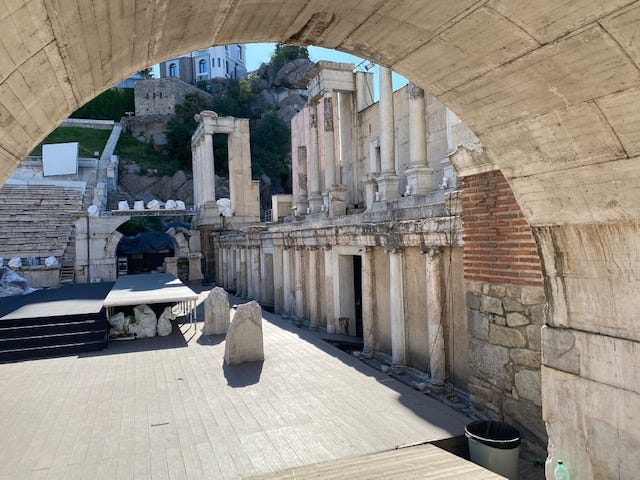
We also continued walking and found more Roman remnants nearby.
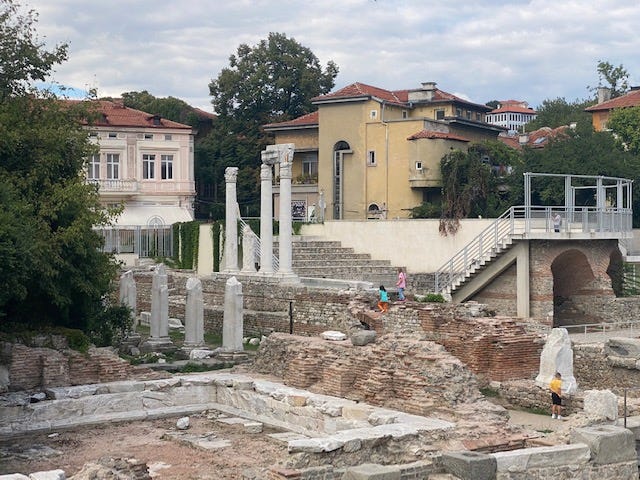
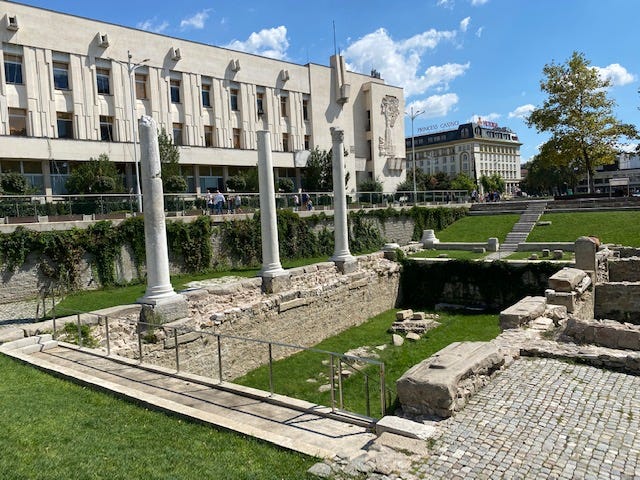
It amazed us that they didn’t put much of a barrier around the remains and we saw kids climbing and playing all over them. Definitely not something you see at many of these historical sights.
We were enamored with the tiny streets made of old cobblestone that crisscrossed right from the door of our hostel and spent much time wandering aimlessly amongst them.
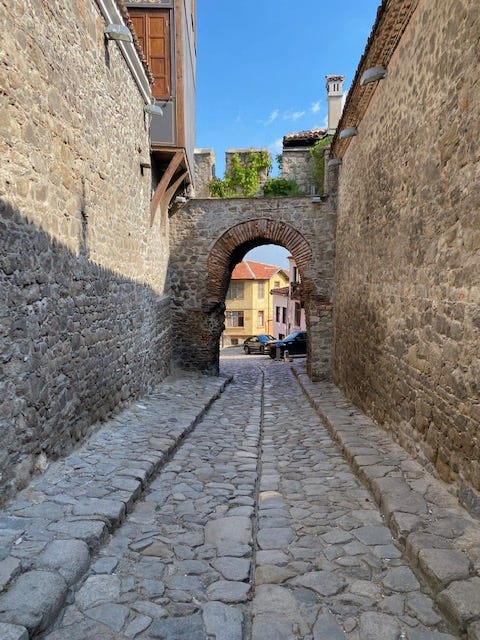
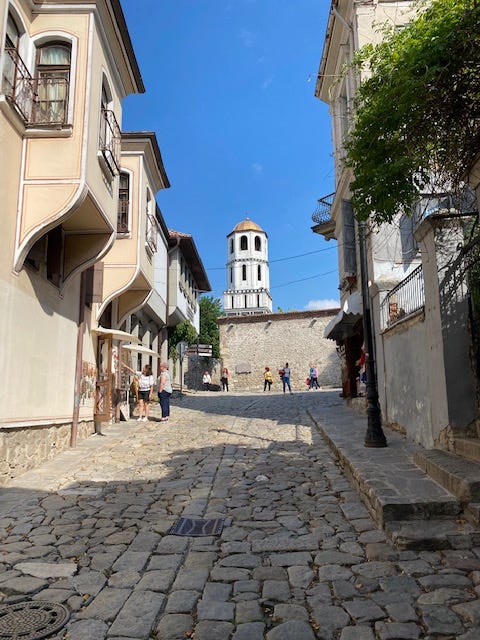
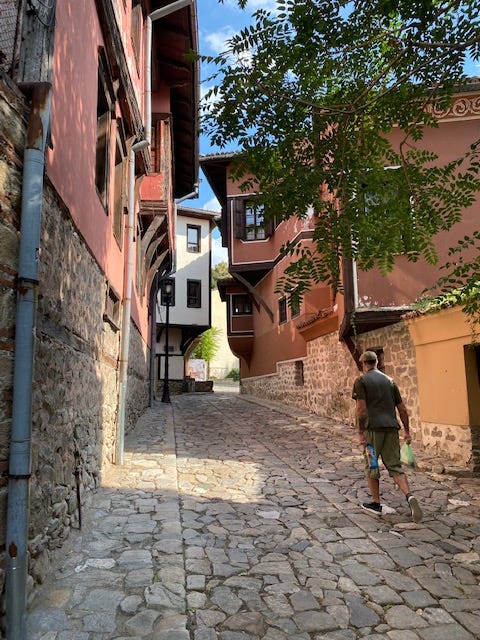
We also fell in love with many of the murals and art that graces the surfaces of buildings, plus the insides of courtyards and art galleries. Plovdiv is a very artistic city!
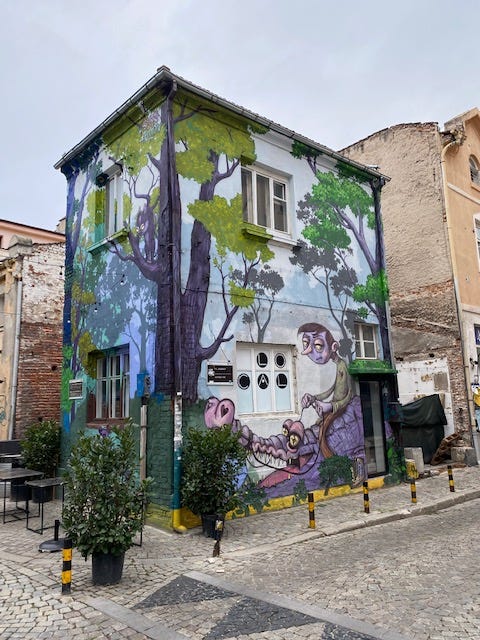
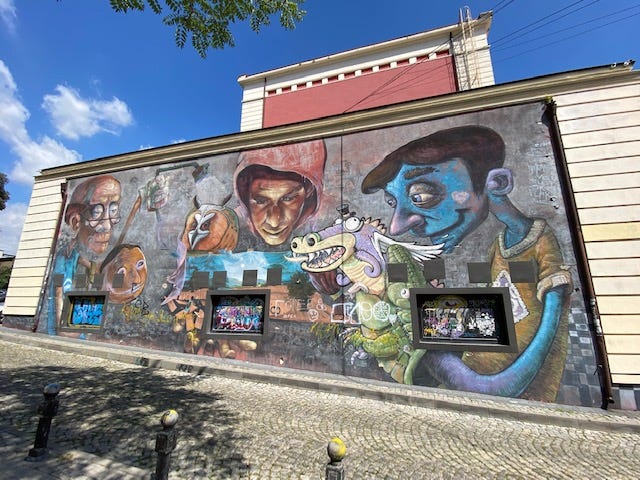
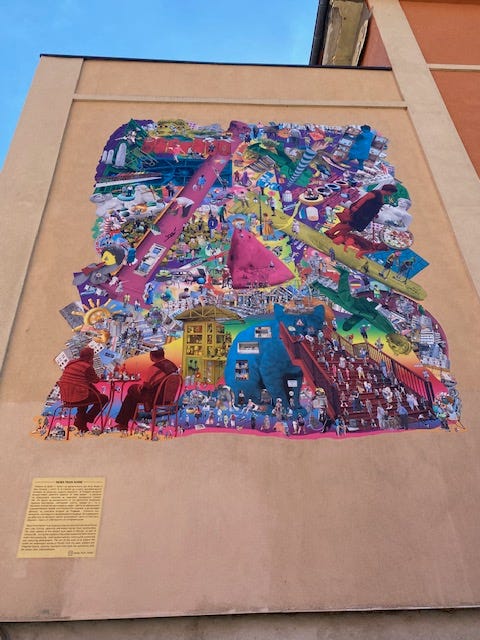
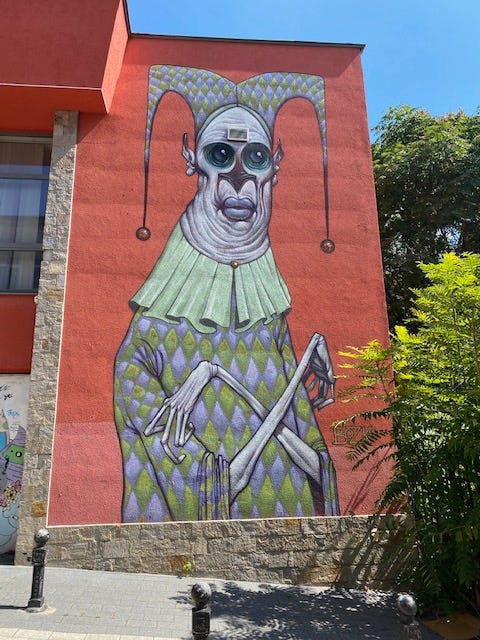
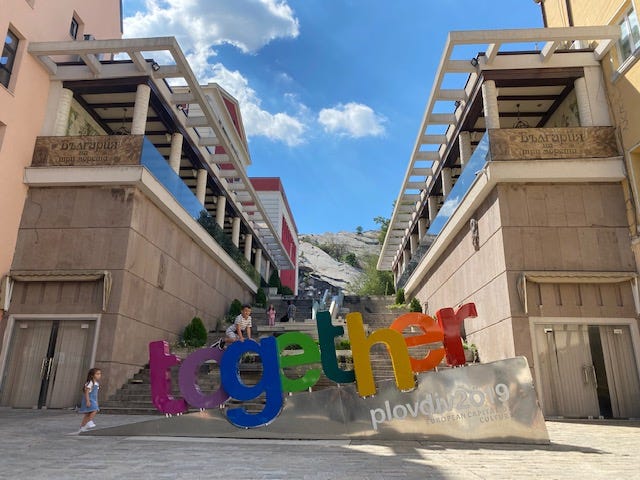
In fact, Plovdiv was named the European Capital of Culture in 2019!
The center of the city has a number of parks for residents to enjoy, and we were particularly fascinated with one that housed this beautiful turquoise fountain among others.
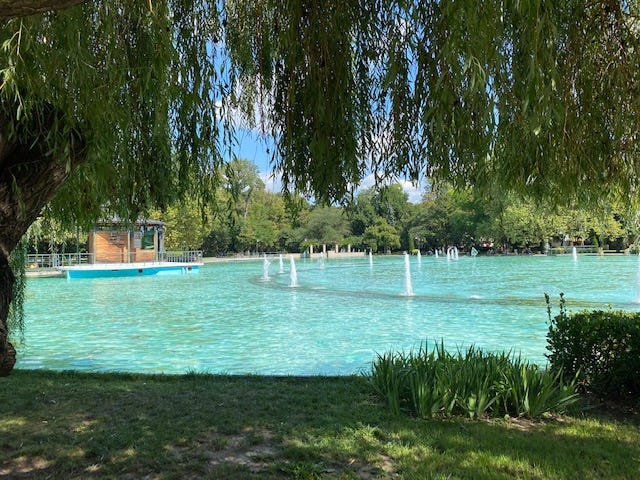
Numerous people were out enjoying the remains of the sunny summer days. The air is dry here and much crisper than we found in humid Istanbul. It reminded me a lot of September days back when I grew up in the mountains in Canada.
Warm but with a crisp bite in the air.
I was surprised when I did the research for this article that it is only 164m (538ft) above sea level, as it did feel higher than that.
Maybe we just aren’t used to how fall feels at this time of year after being in the tropics for so long.
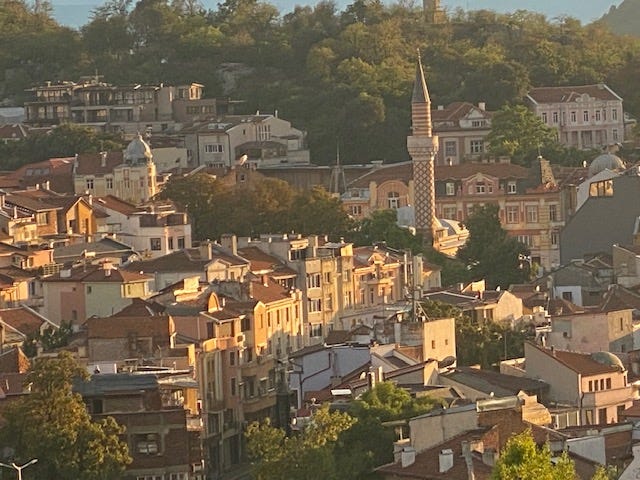
On our second night in the city, we discovered a lookout point that was close to our hostel. So we made it our mission to head up there for sunset on our final night. We enjoyed stunning views looking down over both the old and new parts of the city.
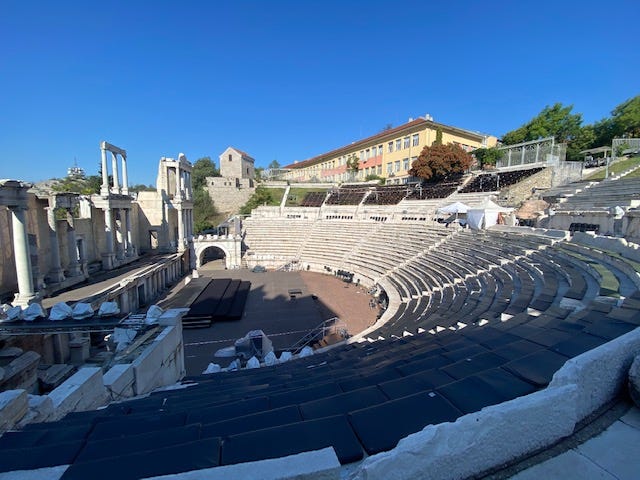
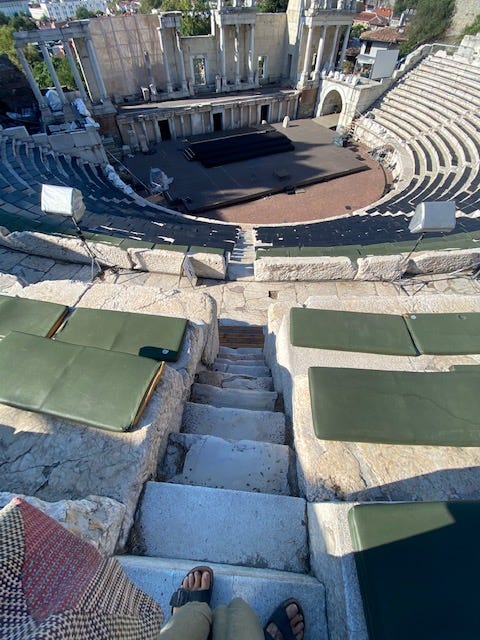
But the pinnacle of what we saw in Plovdiv was the stunning full Roman Theatre that sits high above the city, which you can also see in the lead photo. This theatre has been slowly getting restored and we were thrilled to learn that the night before we were there, they had used it for the country's Unification Day celebrations.
Apparently, Bulgaria's president was in town.
We missed all the excitement, I guess.
A Short History of Plovdiv
Admittedly, we are not history buffs. Some things interest us, sure, but overall we are far more interested in how people are currently living on the planet, than how they did way back when.
But occasionally, we will come across a place like this where I feel compelled to read a bit about how this place came to be. And I’m sure many of you are interested as well.
According to Wikipedia, Plovdiv was originally known as Philippopolis. The word ‘polis’ is Greek for the word city, and this city was founded by Philip The Great, Alexander The Great’s father.
Philippopolis literally translates to Phillip City.
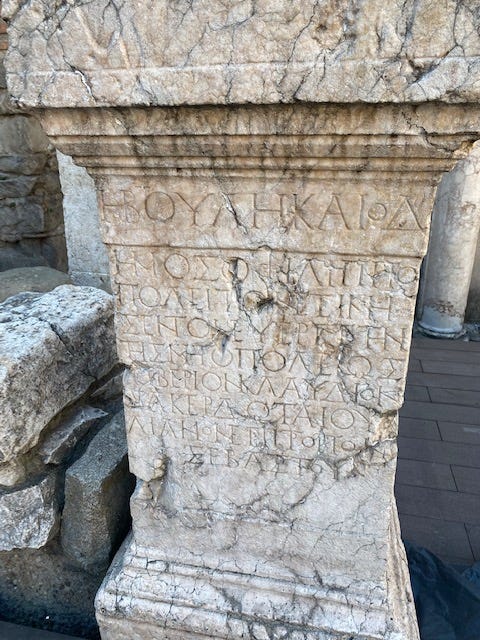
This all happened around 342 BCE.
Over time the Thracians and the Macedonians exchanged control of it since it was at a strategic point on a road network that led to the Aegean Sea, The Danube, and The Black Sea.
Walls were built and rebuilt around the city many times in its history as it was fought over during numerous battles, and it has been part of the Byzantine Empire, the Latin Empire, and the Ottoman Empire.
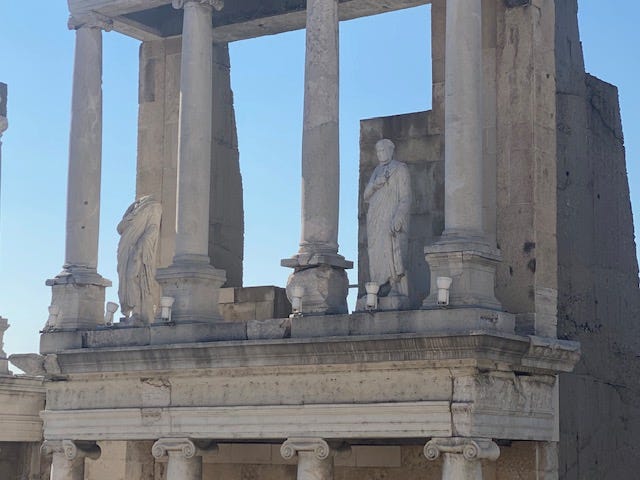
In 1885 it finally joined Bulgaria and stands as it is today.
While history does not thrill me, and the minute I read dates and names and a whole jumble of information, my eyes glaze over and I start to drift to la la land, I will admit that standing on these sights where so much history has taken place is awe-inspiring. Even just knowing that centuries of people have sat in that theatre over the years and that we continue to sit in the same seats that they did, truly has me lost for words.
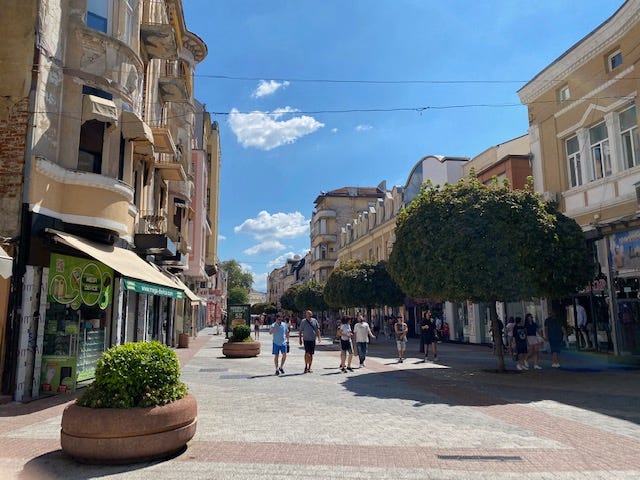
While modern buildings have taken over the ancient ruins now, the city has done a great job of preserving its history for all to enjoy. Plus the core of the city is walking access only which keeps it peaceful for its residents.
We were really impressed with Plovdiv and already feel like we need to go back to experience it more in-depth.
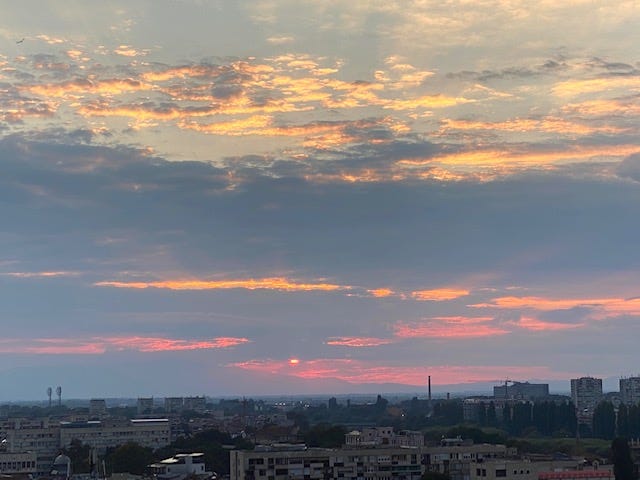
I’ll leave you with one last shot of the stunning sun setting on this year's Bulgarian Unification Day. Don’t ask me what Unification Day means, I have no idea!
Happy Travels!
xo Jill

Hi there, we are 2 Canadians, Jill and Chris from Artistic Voyages. We have been nomadic since 2017 living in numerous different countries, and experiencing the life and diversity of our planet on the ground and firsthand. We paint FREE murals in exchange for accommodation. Consider tipping us on Ko-fi!
Subscribe to Medium through my referral link (I will earn a small commission) to get full access to my writing plus thousands of others! Plus sign up here to get my articles by email!
Join our adventure by hitting the links below!
Website | Instagram | Facebook | Twitter | Patreon| YouTube | Medium