
Travel, Archaeology
Ancient Stories Etched in Stone
Exploring the mysterious Petroglyph Beach of Wrangell, Alaska
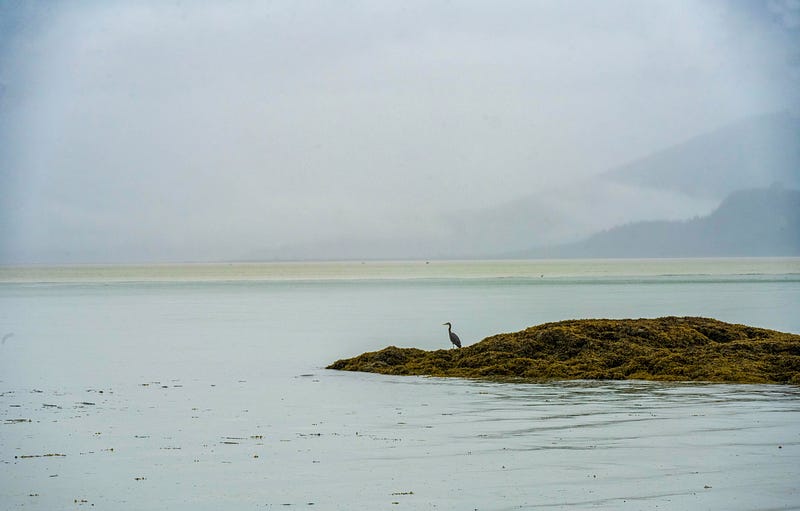
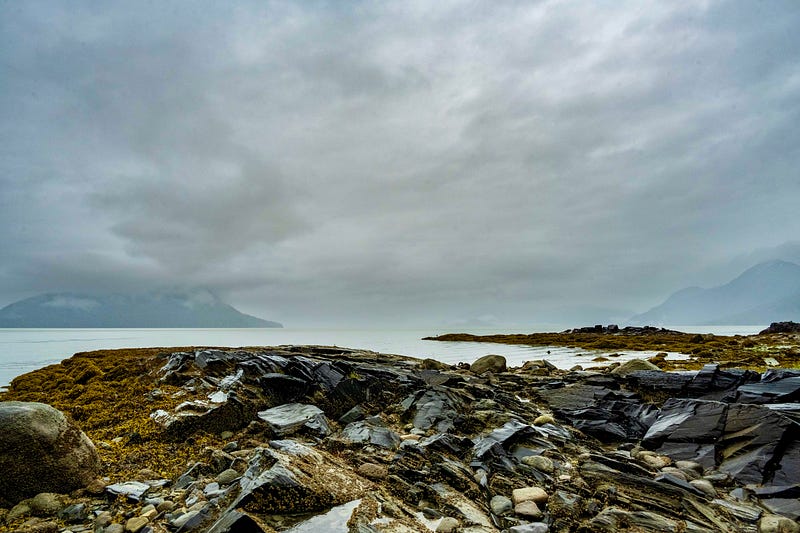
Icy shards of rain prickled our skin, and fragments of shell mixed with tiny round pebbles, worn smooth from the wild Alaskan seas, crunched underfoot. Tendrils of fog drifted over the bay and gathered into a low-hanging tapestry of mist hovering over the water. A lone cormorant, a silent sentry to the remains of this primordial world, sat, perched on a lichen and seaweed-crusted rock, a keen eye out for the movement of fish to catch for his lunch.
All around us, the lapping of waves, the soft sound of rain on the sea, and the rising tide sloshing against the coastline summoned a sense of something primal inside of me. I could almost feel them, the ancient ones, still here, hovering just beyond the mist.
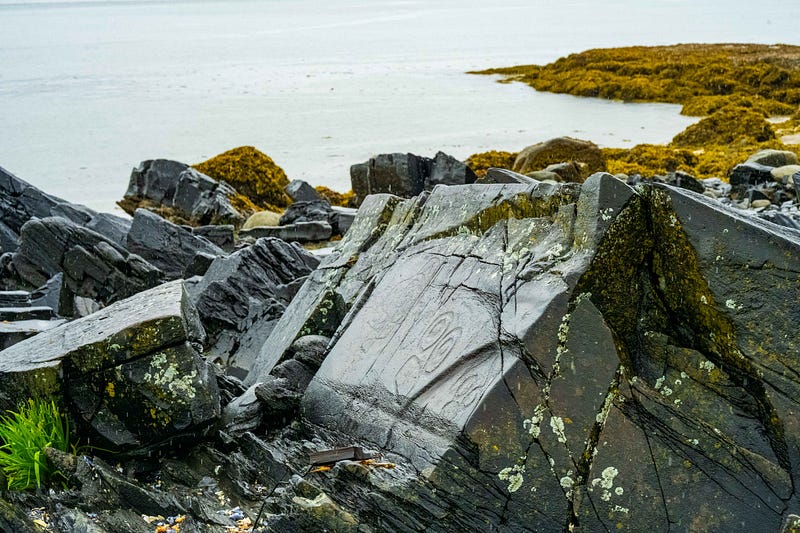
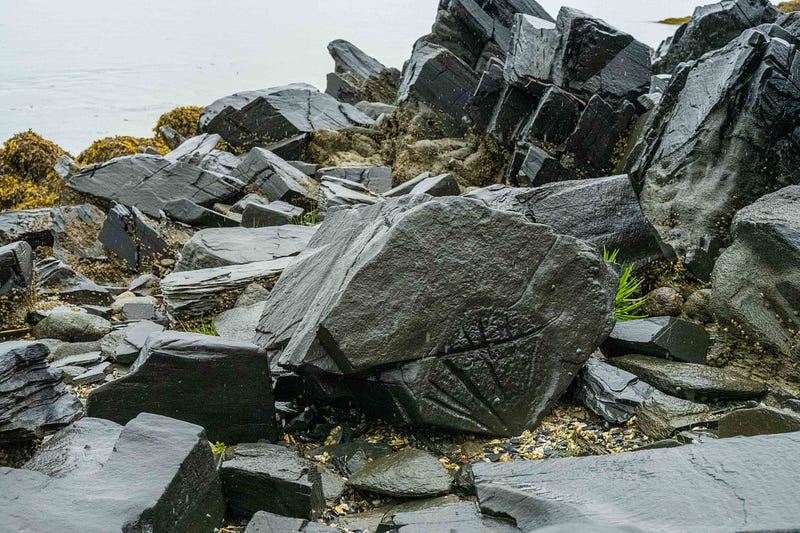
At first, you almost couldn’t see the petroglyphs through the barnacles clinging to the rocks. But then, the glint of sunlight on wet rock catches in the crevices. And, before your very eyes, a fish etched in stone appears.
A mighty whale? An offering to the gods? A prayer for salmon?
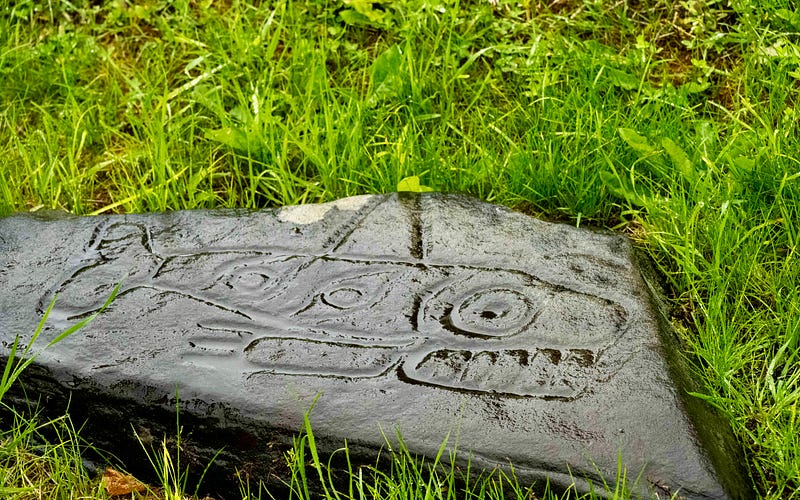
We’ll never know exactly what this ancient petroglyph, or any of the other forty or so of them scattered across the beach in Wrangell, Alaska was meant to communicate.
Archaeologists believe that these carvings are as old as 8,000 years.
I am told by our local guide from Wrangell, Alaska, an island town in the Inside Passage, that it is probably actually a killer whale, an orca. Our guide is of the Tlingit clan and she says that the design is very reminiscent of carvings made on totem poles and outside of clan meeting halls.
Petroglyph State Park stretches over two acres of coastline and is home to at least forty petroglyphs, although there may have been more at one time.
Scattered across the shoreline — pounded by rain, ice, and snow — these artistic offerings were carved into a type of easily-fractured metamorphic stone prone to damage. It boggles the mind that they have remained intact for so long. And it also makes one wonder about how many of these petroglyphs have been lost to time.
Could they have been a plea to the gods to send salmon to spawn? Or might they have been a thank-you for bountiful harvests? Archaeologists have also suggested that the designs might have served as territorial markers for a good hunting area or ownership of a fishing ground.
Some of the designs seem to be universal. I’ve seen spirals like these all over the Southwestern United States.
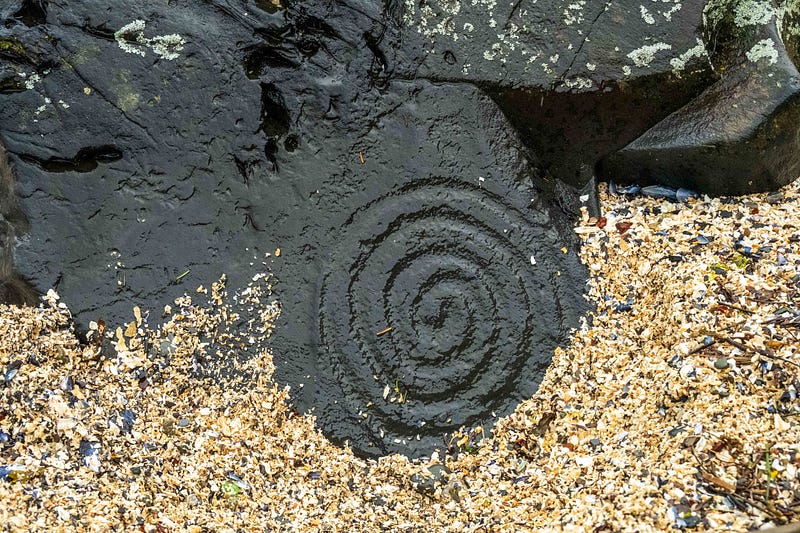
They might represent the circle of life, expanding consciousness, or the seasons. No one really knows for sure.
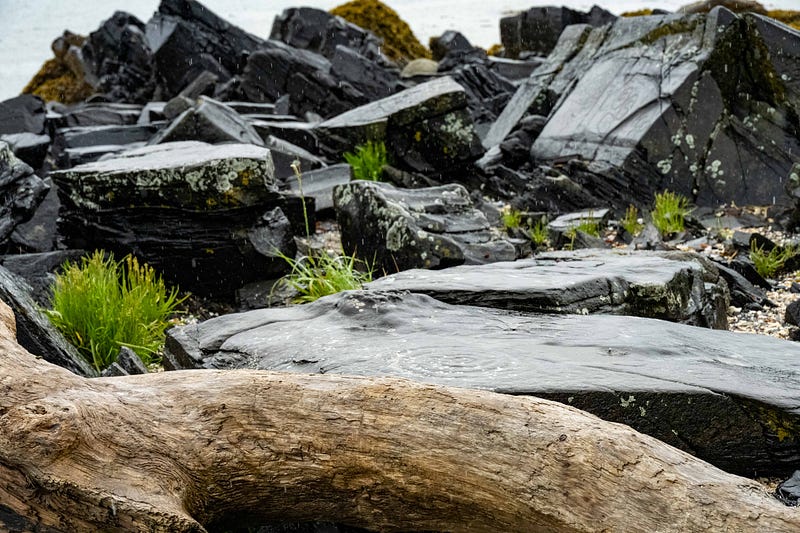
The meanings of others are more obscure. Our guide thinks that this one represents octopus tentacles.
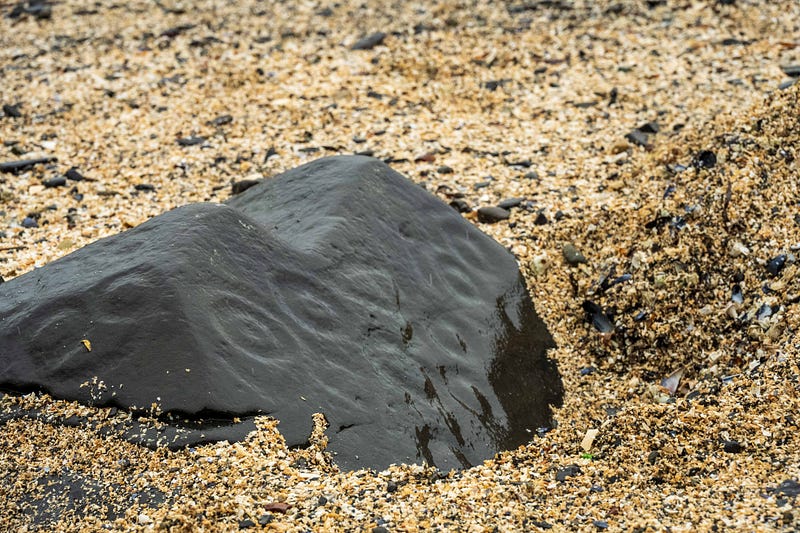
This one really looks, to me, like a turtle.
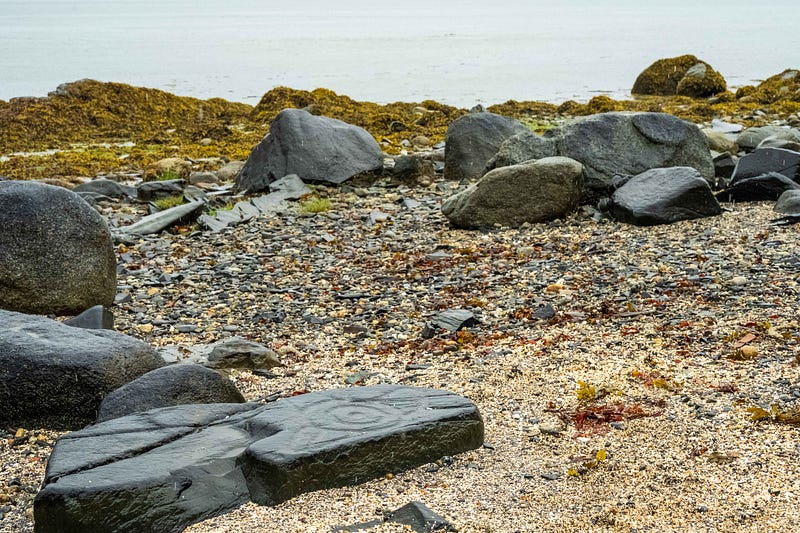
And this is, surely, a fish. Could it be a mighty salmon? Salmon are an integral part of native life in Southwest Alaska.
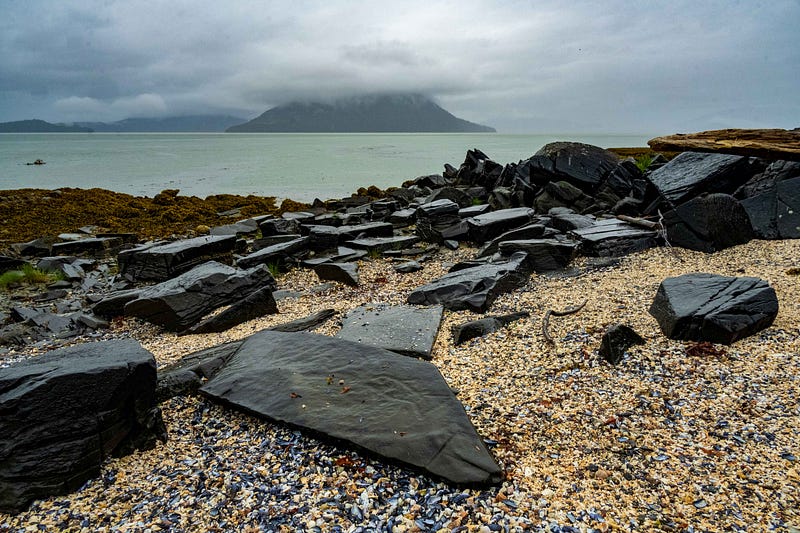
Could this represent a shell?
This looks a little like a frog.
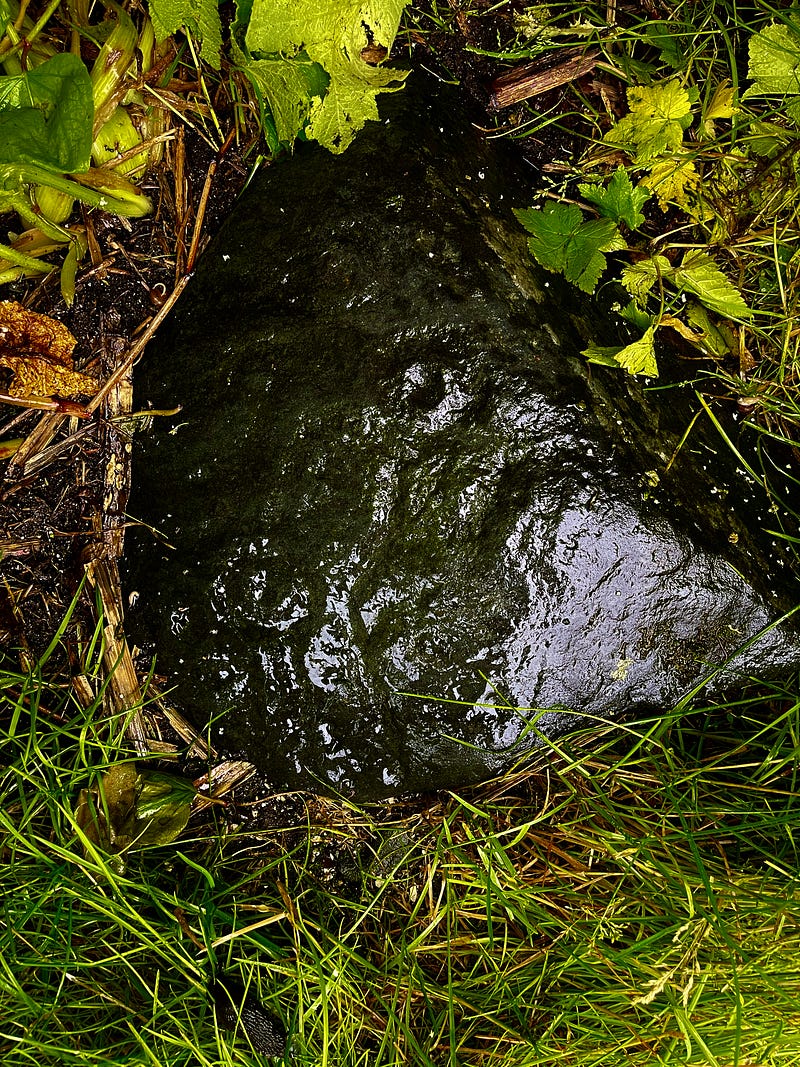
This looks a lot like the cormorant we saw on the rocks.
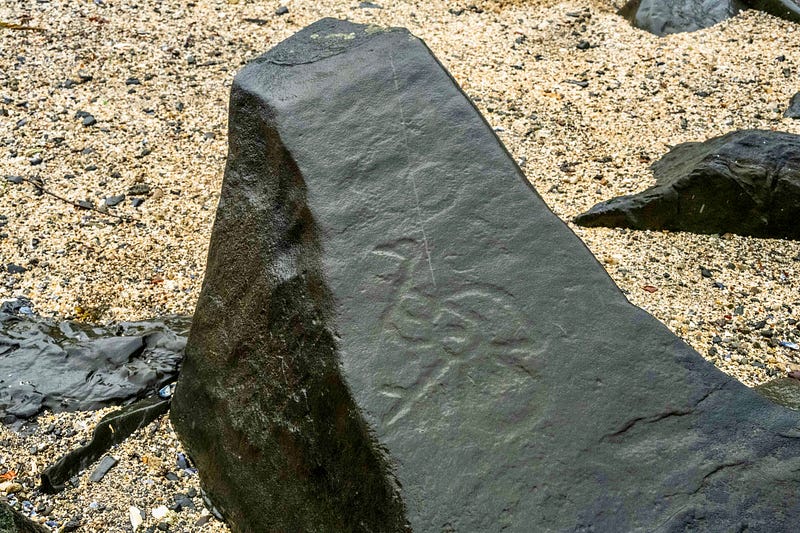
Our Tlingit guide told us about an oral history that has been passed down through the ages through their tribe. She said that they believe that they have been here forever, but that the people had to flee a long time ago when the water suddenly rose. They went inland for many, many years, but they “remembered” the taste of salmon.
One day, several warriors and a mystic went down through a hole in the ice to see if they could find their native land. They thought that they had died. But, eventually, they popped out at the coast and knew that they were home. They went back over the land and brought everyone back.
We’ll never know for sure what these ancient messages were meant to tell us. But the memory of the ancients and their whispered tales live on in the petroglyphs of the cold Arctic realm of Alaska.
Thank you to the editors at Globetrotters (JoAnn Ryan, Anne Bonfert, Jillian Amatt — Artistic Voyages, Adrienne Beaumont, Michele Maize) for this month’s challenge on “ruins of the world.”
I have quite enjoyed reading some of the other stories from this challenge:
I particularly liked Vidya Sury, Collecting Smiles article about Somanathapura because I have visited this site a couple of times:
And Matthew David’s piece about finding hidden ruins in Delhi was fabulous:
Erika Burkhalter is a yogi, neurophilosopher, cat-mom, photographer, and lover of travel and nature, spreading her love and amazement for Mother Earth’s glories, one photo, poem or story at a time. (MS Neuropsychology, MA Yoga Studies).
You might also enjoy my photo essay on a season of daffodils:
If you enjoyed this piece, you might consider subscribing to my stories. You’ll get an alert whenever a story gets published. While I do normally post my stories with free “friends” links on social media, if you enjoy reading on medium, you can help the many talented writers here by joining. It helps to support the arts and to keep us writing! And if you’re ever interested in purchasing a photo, just leave me a note.
Photos and story ©Erika Burkhalter. All rights reserved.


